
February 18, 2026
Price Intelligence
Price intelligence is the strategic process of gathering and analyzing competitor pricing data to inform business decisions. It enables retailers to optimize their pricing strategies by understanding market trends and consumer behavior.
Drishti, Manager - Digital Marketing

Table of Contents
- What is Price Intelligence?
- Benefits of Price Intelligence
- How Does Price Intelligence Work?
- How Can Retailers Use Price Intelligence Effectively?
- How is Price Intelligence Different from Price Monitoring?
- What is Price Positioning?
- What is a Price War and How Price Intelligence Helps Avoid It?
- Optimize Your Pricing Strategy with Flipkart Commerce Cloud
Price Intelligence
Price intelligence is the process of gathering market pricing data to optimize business strategies. It involves tracking competitors' prices and analyzing internal metrics to improve profitability.
Retailers leverage this data to adjust their pricing structures dynamically in response to market shifts. This strategic approach ensures competitiveness while maintaining healthy profit margins across various sales channels.
- It provides comprehensive visibility into market dynamics and competitor behavior for better decision-making regarding pricing strategies.
- Advanced algorithms analyze vast amounts of external data to identify optimal price points for specific products.
- Businesses utilize these insights to forecast consumer demand and manage inventory levels more effectively across regions.
- The technology empowers retailers to respond instantly to competitor price changes and aggressive promotional activities.
What is Price Intelligence?
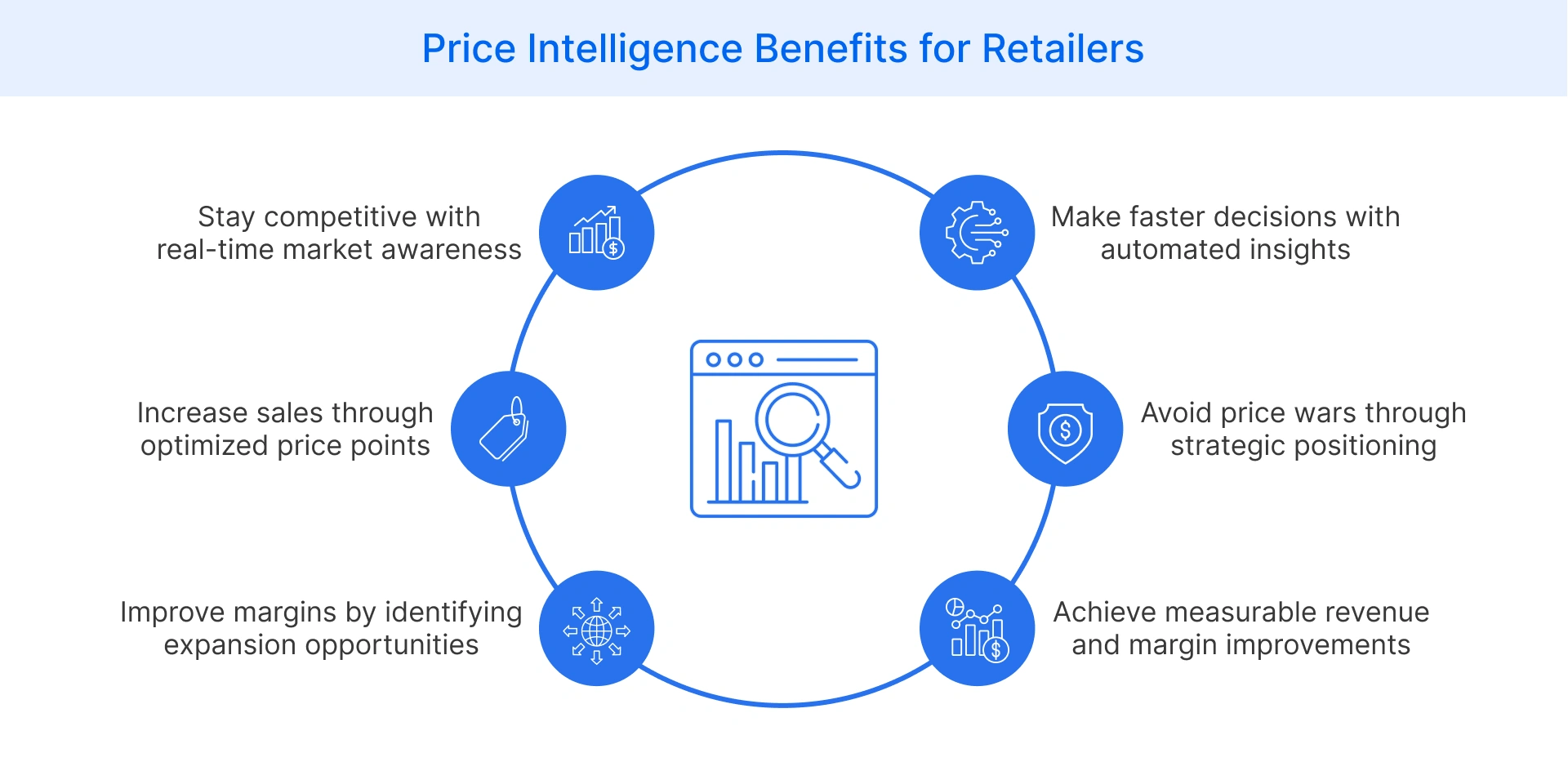
Price intelligence is the systematic collection and analysis of competitor prices and market data to make smarter pricing decisions. It empowers retailers to understand their market position relative to competitors. By leveraging this data, businesses can identify opportunities to increase margins or capture more market share.
It goes beyond just watching prices; it includes understanding why prices change and what action to take. This process involves analyzing historical data to predict future trends with high accuracy. Retailers use these insights to implement dynamic pricing strategies that align with consumer expectations and overall business goals.
Benefits of Price Intelligence
The process relies on a robust retail price intelligence tool to gather data and translate it into actionable strategies for retailers.
- Price crawlers scan websites: Automated bots visit competitor sites to efficiently extract pricing information and product details. These crawlers navigate complex site structures to gather accurate competitive pricing data points from multiple sources simultaneously.
- SKU matching identifies products: The system compares your products with competitor offerings to ensure exact matches or similar items. High-accuracy algorithms analyze product titles and specifications to link identical stock-keeping units.
- Data Collection Happens Continuously: The pricing intelligence software aggregates pricing data around the clock to capture every market fluctuation. This continuous flow of competitor price intelligence data ensures that retailers always have access to the most current market information.
- Analysis reveals patterns: Machine learning models examine the collected data to identify trends and competitor price movements. This step identifies historical patterns and seasonal behaviors that influence market pricing.
- Recommendations guide actions: The system suggests specific pricing adjustments based on the analyzed data and your business rules. These actionable insights help retailers implement changes that maximize revenue and protect margins.
How Does Price Intelligence Work?
This process relies on advanced technology to gather data and transform it into usable strategies for retailers.
- Price crawlers scan websites: Automated bots visit competitor sites to efficiently extract pricing information and product details. These crawlers navigate complex site structures to gather accurate data points from multiple sources simultaneously.
- SKU matching identifies products: The system compares your products with competitor offerings to ensure exact matches or similar items. High-accuracy algorithms analyze product titles and specifications to link identical stock-keeping units.
- Data Collection Happens Continuously: The software aggregates pricing data around the clock to capture every market fluctuation. This continuous stream ensures that retailers always have access to the most current market information.
- Analysis reveals patterns: Machine learning models examine the collected data to identify trends and competitors' pricing strategies. This step identifies historical patterns and seasonal behaviors that influence market pricing.
- Recommendations guide actions: The system suggests specific pricing adjustments based on the analyzed data and your business rules. These actionable insights help retailers implement changes that maximize revenue and protect margins.
How Can Retailers Use Price Intelligence Effectively?
Retailers must implement a structured approach to leverage data for optimal pricing outcomes and business growth.
- Set clear pricing goals: Define whether you aim to maximize margins or prioritize market share growth. Establishing these objectives early helps align your data analysis with your broader business strategy.
- Choose right competitors to track: Select a mix of direct competitors and aspirational market leaders to monitor closely. Focusing on the most relevant players ensures that your data remains actionable and specific.
- Define pricing rules: Establish guidelines on when to match competitor prices or maintain a premium position. These rules automate strategic pricing decisions and ensure consistency across your entire product catalog.
- Monitor and adjust regularly: Review reports frequently to test different price points and refine your established rules. Continuous evaluation allows you to adapt to changing market conditions and maintain competitiveness.
How is Price Intelligence Different from Price Monitoring?
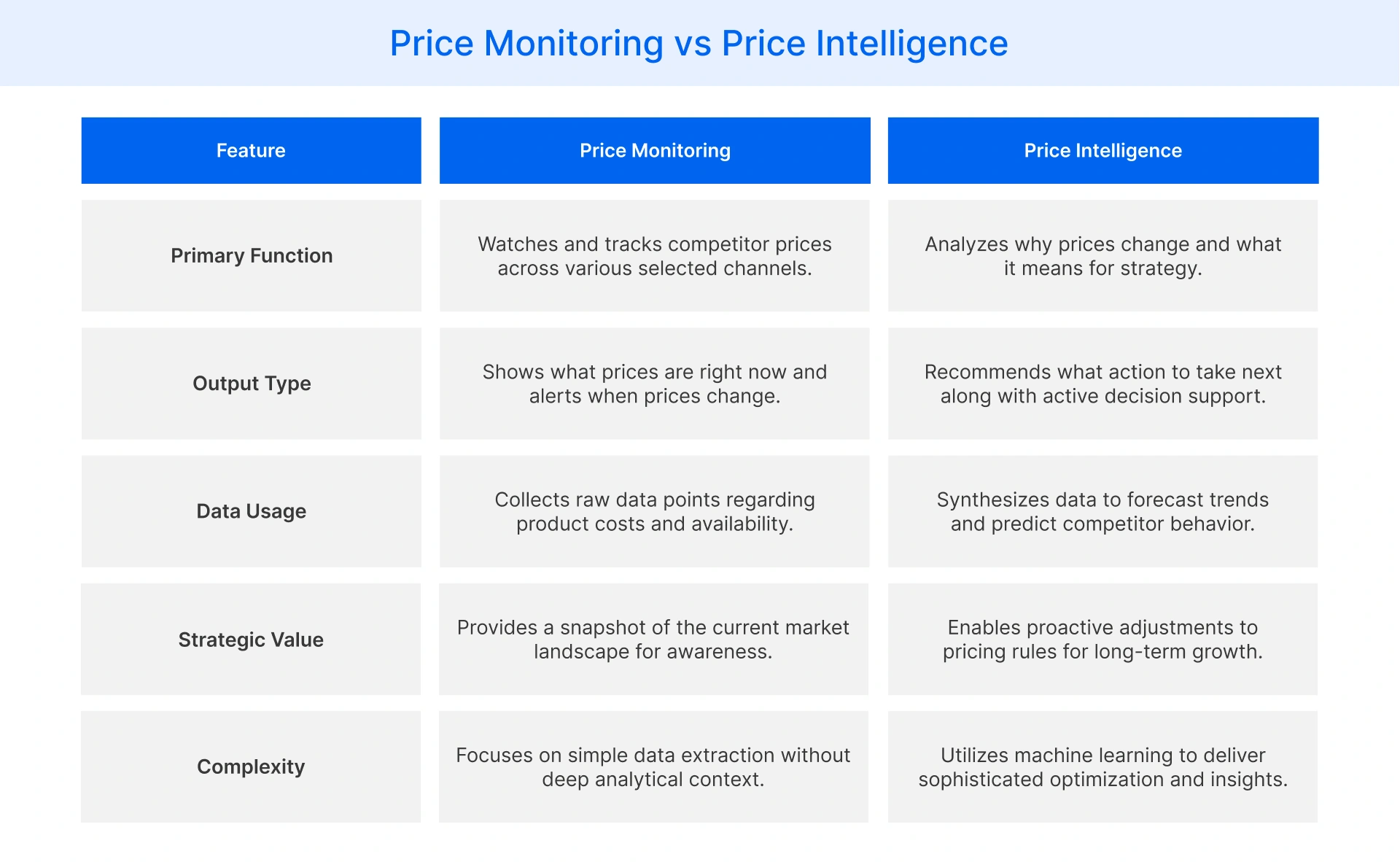
Price monitoring strictly focuses on tracking competitor prices at a specific moment in time. Price intelligence encompasses a broader scope by analyzing that data to provide actionable insights. It transforms raw numbers into strategic guidance for retailers seeking a competitive edge in the market while optimizing revenue.
What is Price Positioning?
Price positioning determines how a business wants customers to see their prices in the market relative to competitors.
- Premium positioning: This strategy involves setting prices higher than the market average to signal superior quality or exclusivity. Brands use this to attract customers who value prestige and luxury over cost.
- Value positioning: Retailers set prices slightly lower than competitors to appeal to cost-conscious consumers seeking a good deal. This approach drives volume by balancing quality and affordability.
- Budget positioning: The focus here is on offering the lowest possible prices to capture the most price-sensitive segment. This strategy relies on high sales volume and efficient operations to maintain profitability.
- Competitive positioning: Businesses match the prices of their direct competitors to eliminate price as a decision factor. This forces companies to differentiate themselves through service or product availability rather than cost.
What is a Price War and How Price Intelligence Helps Avoid It?
A price war occurs when competitors keep lowering prices to outbid one another and gain market share. Price intelligence helps avoid it by:
- Showing your actual price position versus costs to prevent unsustainable cuts that damage profitability.
- Identifying which products to compete on and which to avoid based on margin requirements.
- Revealing when competitors are loss-leading so you do not follow them into a financial trap.
- Recommending strategic responses beyond just lowering prices such as bundling or value-added services.
Optimize Your Pricing Strategy with Flipkart Commerce Cloud
At Flipkart Commerce Cloud our pricing solutions deliver effective price intelligence with advanced technology to help you stay ahead of the competition.
- Real-time price crawlers: We monitor competitor prices across thousands of websites 24/7 to ensure you never miss a change. Our system provides continuous visibility into market movements to enable immediate reactions.
- 98% SKU matching accuracy: Our advanced algorithms identify exact and similar products despite catalog differences or naming variations. This precision ensures that you compare apples to apples when analyzing competitor data.
- ML-powered analysis: We use machine learning to spot patterns and recommend optimal price positioning for your inventory. This technology uncovers hidden opportunities to adjust prices for maximum impact.
- Instant violation alerts: You can track pricing compliance and receive alerts when sellers break agreements or map policies. This feature helps maintain brand integrity and prevents unauthorized discounting in the market.
- Historical insights: Our price intelligence software provides access to complete pricing history to understand seasonal trends and competitor strategies over time. Analyzing past data helps predict future movements and refine your long-term planning.
- Proven results: Our retail partners achieve 3-5% revenue increases and 4-7% margin improvements through our solutions. We drive tangible business outcomes by transforming data into profitable pricing actions.
Take charge of your pricing strategy today. Schedule a personalized demo to see how our real-time intelligence safeguards your margins and drives sustainable revenue growth for your retail business.
FAQ
Price intelligence specifically focuses on pricing data and strategies related to product costs. Competitive intelligence is broader and includes analyzing competitor marketing, product launches, and general business strategies. While both involve monitoring competitors, price intelligence deals strictly with the financial and pricing aspects of the market.
Retailers should check prices as frequently as their market demands, which often means daily or real-time. High-velocity categories like electronics require constant monitoring due to frequent fluctuations. Slower markets may only require weekly checks, however real-time data always offers the most significant competitive advantage.
Yes, because unique products still compete for the consumer's limited share of wallet. Understanding market trends helps in setting a price that maximizes profit without deterring buyers. Even with unique items, knowing the general pricing landscape ensures you position your brand correctly.
Retailers use it to maintain competitiveness and protect their profit margins in a crowded market. It allows them to automate pricing decisions and respond instantly to competitor changes. Without it, businesses risk pricing themselves out of the market or leaving money on the table.
Pricing data changes constantly, especially in e-commerce where algorithms adjust prices millions of times daily. Major retailers and marketplaces utilize dynamic pricing engines that fluctuate based on demand and competition. Staying updated requires continuous monitoring to ensure your prices reflect the current market reality.