Modern marketers understand that when it comes to ads personalized for individual consumers, the difference between generic campaigns and targeted ones can make or break your ROAS. Today, 37% of brands leverage first-party data to personalize customer experiences, a significant 6-percentage-point jump from 2021 alone. This shift toward personalized advertising represents a fundamental change in how e-commerce brands connect with their target audience.
However, achieving true personalization in ads on e-commerce platforms presents unique challenges that most marketers struggle to overcome.
The Personalization Challenge in Ecommerce
Two critical barriers prevent most e-commerce businesses from implementing effective personalized ads:
Infrastructure Limitations: Most e-commerce platforms weren't designed with an ad personalization strategy in mind. They lack the native capabilities to segment the audience effectively or deliver relevant ads based on consumer data.
Data Gaps: The personal information and data points necessary to create truly personalized ads at scale simply don't exist within standard e-commerce platforms. Without robust data collection mechanisms, marketers can't identify potential customers or understand their specific needs. This is precisely where first-party data becomes a powerful tool for transforming your marketing efforts.
What is Ads Personalization?
Ads personalization (also called personalized advertising) is the practice of using consumer data to deliver relevant ads to specific audiences based on their behavior, preferences, and demographics. Unlike generic ads that broadcast the same message to everyone, ads personalized for individual users leverage data points like browsing history, order history, and social media activity to create ad content that resonates with each person's unique interests.
The meaning of personalized ads extends beyond simply inserting someone's name into an email. True personalization in ads involves understanding the customer journey, anticipating specific needs, and delivering the right message at the right time through different channels.
Understanding First-Party Data
First-party data is consumer information you collect directly from your audience through your website, mobile apps, customer loyalty programs, surveys, or other owned touchpoints. This personal data provides valuable insights that second-party or third-party data simply cannot match.
By collecting and analyzing first-party data, you gain a deeper understanding of your potential customers than you ever could with aggregated consumer data from external sources. This advantage is increasingly critical as privacy regulations tighten and Google phases out third-party cookies, data traditionally collected, aggregated, and sold to various parties.
Unlike third-party data, first-party information comes directly from your audience segments, making it more accurate, reliable, and compliant with privacy laws in the United States, European Union, and other regions enforcing strict data protection standards like the General Data Protection Regulation.
How Personalized Advertising Works
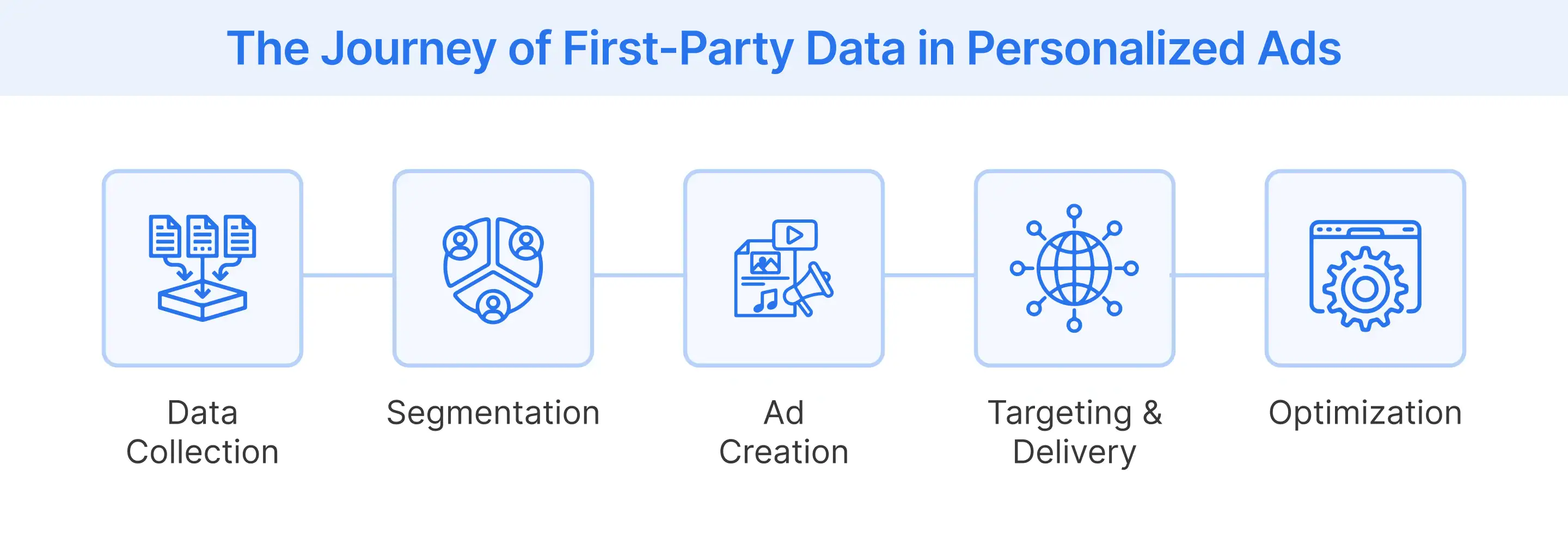
The mechanics of personalized advertising involve combining data collection, machine learning, and strategic targeting across various advertising platforms. Here's how the process works:
Data Collection: Brands gather personal information through website interactions, mobile apps, social media activity, and direct customer touchpoints. This includes browsing history, geographic location, email addresses, and behavioral data points.
Customer Segmentation: Using this consumer data, marketers create detailed audience segments based on demographics, behavior patterns, purchase history, and specific needs. Advanced platforms use machine learning to identify patterns and group similar users.
Ad Content Creation: Marketers develop targeted ad content designed to resonate with each segment. This might include display ads, Google Ads campaigns, or social media advertisements tailored to specific audiences.
Strategic Delivery: Ad platforms utilize contextual targeting and behavioral signals to serve relevant ads to the right users across various channels, including Google Maps, social media, and third-party websites.
Optimization: Continuous testing and refinement based on performance data ensures ads personalized for each segment deliver maximum impact while respecting privacy concerns.
The Main Types of Personalized Ads in Digital Marketing
Personalized advertising plays a pivotal role in delivering targeted content that resonates with users, improving engagement and conversion rates. To choose the most effective strategy for your marketing campaigns, it’s important to understand the various formats of personalized ads:
1. Behavioral Retargeting Ads
Behavioral retargeting ads aim to re-engage users based on their previous interactions with your brand. These ads target individuals who have visited your website, engaged with specific products, or abandoned items in their shopping cart. By reminding users of their past actions, you can encourage them to return and complete their purchase, capitalizing on their demonstrated interest in your products or services.
2. Demographic Targeting
Demographic targeting allows you to deliver ads based on user-specific data such as age, gender, geographic location, income level, marital status, or educational background. This type of targeting is valuable when you want to tailor content to a specific group that fits a defined demographic profile, ensuring that your message resonates with the audience most likely to convert.
3. Contextual Personalized Ads
Contextual personalized ads align with the content the user is currently engaging with, rather than relying on personal data. These ads are shown based on the context of the page or content a user is viewing, ensuring high relevance. For example, if someone is reading a fitness article, they might see ads for workout gear or healthy meal plans. This approach delivers relevance without overstepping privacy boundaries, making it an effective and non-invasive form of personalization.
4. Dynamic Product Ads
Dynamic product ads automatically display products that users have previously viewed, added to their cart, or expressed interest in during their online shopping journey. By leveraging browsing behavior and purchase history, these ads ensure that the products shown are directly aligned with the user’s interests. This type of personalization boosts conversion by reminding customers of the products they’ve interacted with and providing them with relevant recommendations.
5. Lookalike Audience Campaigns
Lookalike audience campaigns target potential customers who share characteristics with your existing high-value customers. By analyzing consumer behavior patterns, purchase histories, and demographic data from your best-performing customers, this strategy identifies new prospects that are likely to have similar needs or interests. These campaigns enable brands to expand their reach to audiences that closely resemble their current customer base, increasing the chances of attracting high-intent buyers.
Impact of First-Party Data on Ads Personalized
Utilizing first-party data transforms your personalized advertising capabilities in three critical ways:
Creating Lookalike Audiences
When you have robust first-party data, you can build lookalike audiences, groups of potential customers who share similar characteristics with your current customer base. This approach allows you to target people most likely to convert, leading to higher ROAS and more efficient marketing efforts. Ad platforms like Google Ads and Facebook use machine learning to identify these relevant audiences based on your customer information.
Enabling Dynamic Ad Personalization
First-party data powers dynamic ads personalized to each viewer in real-time. If someone visits your website and abandons items in their cart, you can serve display ads featuring those exact products. Or you might target them based on user behavior derived from anonymized data about individual browsing history and product searches.
This level of personalization in ads speaks directly to the consumer's immediate needs, dramatically outperforming irrelevant ads that waste ad spend and frustrate users.
Tracking and Attribution
First-party data enables precise conversion tracking and attribution back to specific ads, keywords, and individual customers. This valuable insight reveals which marketing campaigns perform well and which need optimization. You can map the entire customer journey, identify where users drop off, and refine your ad personalization strategy accordingly.
This data-driven approach helps you optimize not just your ads but your entire digital marketing funnel, from landing page design to checkout flow.
The Benefits of Personalization in Ads
Implementing personalized advertising delivers measurable advantages that justify the investment in data collection and customer segmentation:
Higher Conversion Rates: Relevant ads resonate with specific audiences, leading to better click-through and conversion rates compared to generic ads.
Improved Customer Experience: Users appreciate seeing ad content aligned with their interests rather than irrelevant ads that waste their time.
Better ROAS: By targeting specific needs with precision, ads personalized for each segment generate more revenue per dollar spent.
Enhanced Brand Loyalty: Consumers who receive relevant, helpful personalized ads develop stronger connections with brands that "understand" them.
Reduced Ad Fatigue: Strategic targeting means showing fewer, more relevant ads rather than bombarding users with generic advertising across every platform.
Competitive Advantage: As privacy concerns limit third-party data access, brands with strong first-party data foundations gain significant market advantages.
How First-Party Data is Acquired to Make Personalized Ads
Interactive content serves as an excellent vehicle for data collection, allowing you to gather personal information without disrupting the customer experience. Here are proven methods for acquiring first-party data on e-commerce platforms:
Quizzes
Quizzes are valuable sources of consumer data that simultaneously entertain and segment your target audience. A skincare quiz, for example, collects information about skin type, concerns, and preferences, enabling you to show personalized ads only to relevant audiences like those with dry skin or acne concerns.
Chatbots
Deploy chatbots to collect user information while providing customer service. Ask questions about needs and interests while gathering email addresses and contact details. This transforms your chatbot into a lead-generation engine. A chatbot inquiring about skin type can trigger follow-up email campaigns with personalized advertising examples and product recommendations.
Feedback Forms
Feedback forms reveal customer satisfaction levels, pain points, and improvement opportunities. This personal data helps you refine products, website navigation, and ad content. If feedback shows users struggle to find products, you can adjust your advertising platforms' targeting and your site structure.
Product Recommendation Tools
These interactive tools ask users questions about preferences and deliver tailored suggestions. They're perfect for upselling and cross-selling. When someone buys skincare, your system can recommend complementary products based on their customer information and purchase patterns.
Assessments
More detailed than quizzes, assessments work particularly well for complex products or educational content. An online course platform might use assessments to determine expertise levels, then recommend courses through personalized ads across different channels.
User Search Queries
Search queries provide powerful insights into shopping intent and behavior. Even without historical journey data, you can understand immediate needs and likely purchases. For certain ad formats like product listing ads (PLAs), these queries inform product placement in a way that feels native while driving real impact on sales and ROI.
How to Use First-Party Data on Ecommerce Platforms
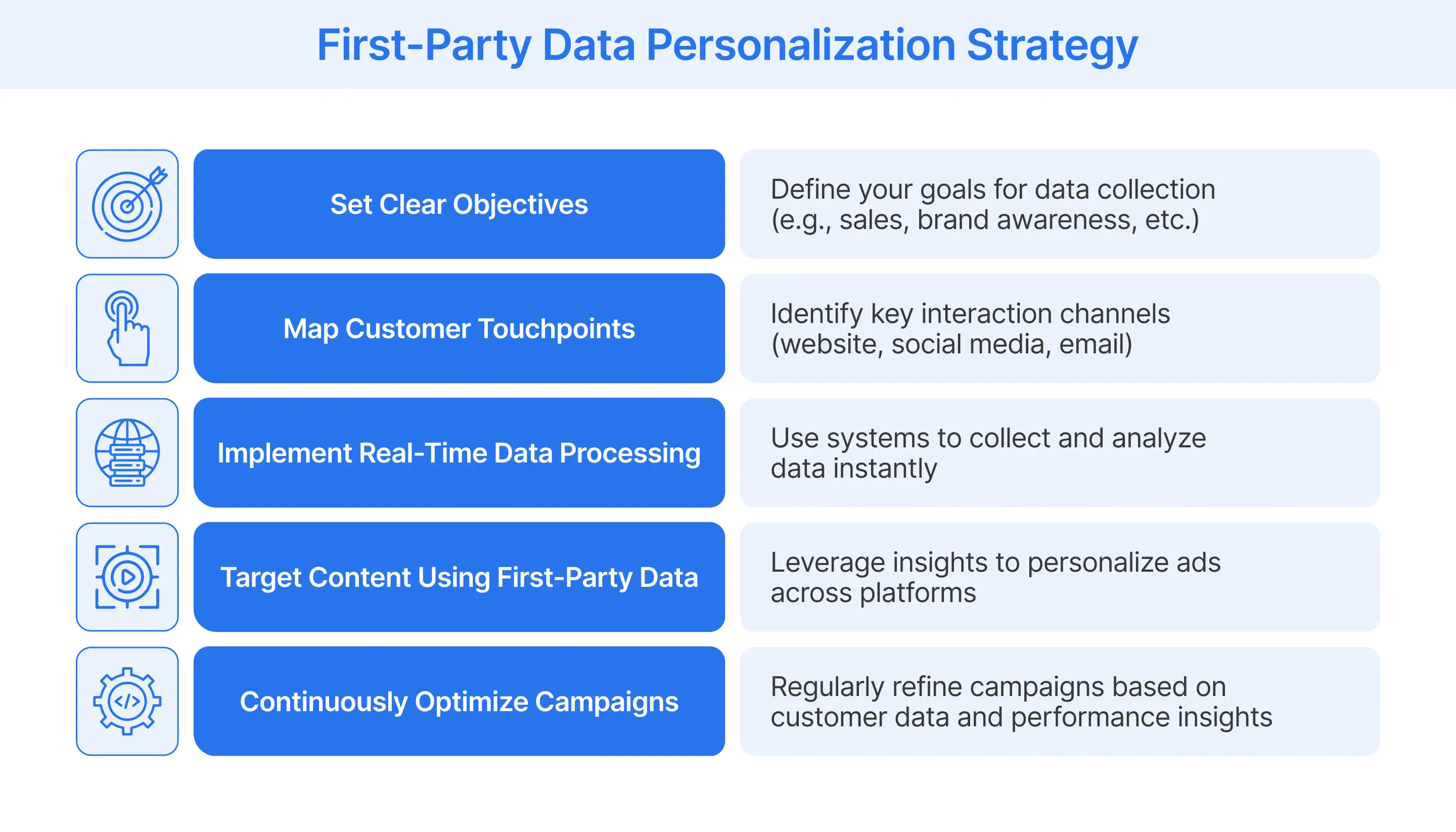
Now that you understand how personal data impacts ad personalization strategy, let's explore practical implementation steps:
Creating a Strategy
Before collecting data, establish clear objectives. Are you trying to increase brand awareness, drive traffic, or boost sales? Your end goal determines which data points you collect and how you use them. For sales-focused campaigns, prioritize consumer data that enables experience personalization and product recommendations.
Identifying Collaborative Touchpoints
Customers engage with brands across multiple channels, social media, email, mobile apps, websites, and more. Creating holistic customer segmentation requires identifying touchpoints where activities merge. For instance, integrate social media activity data with website browsing history to build comprehensive profiles that inform your online advertising.
Implementing Proactive Data Processing
Raw data alone doesn't drive results. You need systems that quickly transform incoming consumer information into actionable, valuable insights, reports, and marketing campaigns. A data management platform (DMP) can unify customer information from different channels, enabling faster decision-making for your personalized advertising efforts.
Incorporating First-Party Data into Personalization
Use your first-party data to create relevant ad content across advertising platforms. Recommend products based on order history, offer location-specific deals using geographic location data, and create display ads featuring recently viewed items. Layer in contextual targeting to ensure your personalized ads appear when users are most receptive.
Re-engaging Consumers
Abandoned carts plague e-commerce, with average abandonment rates around 70%. First-party data helps recover these lost sales. Use cart data to send personalized ads and emails featuring abandoned items. Include discount codes to motivate completion. This targeted approach to online advertising significantly outperforms generic remarketing.
Well-managed first-party data accelerates integration with AI/ML solutions and advanced ad platforms. Any retail-tech vendor will require a strong data foundation, long integrations, data leaks, and faulty attribution, all stem from poor data management. Partner with mature vendors who understand personal data handling and privacy regulations compliance while maximizing output.
Personalized Advertising Examples of Successful Campaigns
Understanding personalized advertising examples helps illustrate these concepts in action:
Amazon's Product Recommendations: Amazon uses browsing history, order history, and search queries to deliver highly relevant ads both on-site and across advertising platforms, driving significant repeat purchases.
Netflix's Personalized Thumbnails: While not traditional ads, Netflix personalizes show artwork based on viewing history, a principle applicable to display ads and social media advertising.
Spotify's Wrapped Campaign: This annual feature uses personal data to create shareable, personalized content that users eagerly anticipate, demonstrating how ads personalized around user data can build brand loyalty.
Sephora's Beauty Insider Program: By collecting consumer data through their loyalty program, Sephora delivers personalized advertising examples across email, mobile apps, and online advertising that reflect individual beauty preferences.
Best Practices Brands Should Follow for Personalized Ad Campaigns
Implementing effective personalization in ads requires adherence to proven best practices:
Prioritize Data Quality: Focus on collecting accurate, relevant personal information rather than accumulating massive amounts of consumer data. Quality trumps quantity when building audience segments.
Maintain Transparency: Clearly communicate your data collection practices. Users who understand how their personal details will be used are more likely to share customer information willingly.
Start with Segmentation: Before jumping into complex machine learning models, master basic customer segmentation. Group your target audience by obvious characteristics, then refine your approach.
Test and Iterate: Run A/B tests on different personalized ads to identify what resonates with specific audiences. Continuous optimization ensures your ad personalization strategy evolves with your audience.
Balance Personalization with Privacy: Just because you can personalize doesn't mean you should maximize every personal detail. Some users find excessive personalization creepy rather than helpful.
Use Multi-Channel Consistency: Ensure your personalized advertising maintains consistent messaging across different channels while adapting to each platform's unique characteristics.
Set Frequency Caps: Even relevant ads become annoying when shown too often. Implement frequency limits to prevent ad fatigue among your potential customers.
Flipkart Commerce Cloud: Businesses' Choice for Ads Personalization
Leveraging first-party data is no longer optional in today's digital marketing landscape; it's a competitive advantage. With changing privacy regulations and the decline of third-party cookies, your first-party data has become the cornerstone of effective, personalized advertising. Flipkart Commerce Cloud (FCC) is designed to help brands capitalize on this shift.
Imagine running dynamic ads that are precisely tuned to each customer's behavior, ads that not only speak to their needs but also guide them seamlessly through their purchase journey. That’s exactly what FCC’s Contextual Advertising Software offers. Whether it's dynamic product recommendations, behavioral retargeting, or contextual targeting, FCC puts the power of personalized advertising directly in your hands, ensuring you target the right customers at the right time. With powerful machine learning algorithms and real-time data processing to help optimize ad delivery, creating tailored ad experiences that improve click-through rates, conversion rates, and return on ad spend.
Ready to transform your advertising platforms' performance?
Book a demo now to start implementing these personalized advertising strategies with FCC and watch your ROAS climb as you deliver the right message to the right person at the right time.

FAQ
To stop personalized ads, you can navigate to your Google Account settings under Data and Privacy and toggle off the My Ad Center personalization switch. For social media platforms like Facebook or Instagram, you can adjust your Ad Preferences in the Accounts Center to limit the use of off-platform activity for targeting. Additionally, most modern browsers and mobile devices (iOS and Android) offer privacy settings to Limit Ad Tracking or opt-out of cross-app tracking, which forces platforms to show you non-personalized, contextual ads instead.
The meaning of personalized ads refers to digital advertisements that are dynamically generated or targeted based on a user's historical data, such as their search queries, website visits, and purchase history. These ads act as helpful recommendations that align with a consumer's current needs or journey stage, making the shopping experience feel more intuitive and less intrusive.
To make personalized ads, a business must first collect first-party data, such as web analytics and purchase records, and then use that information to create distinct audience segments. Once segments are defined, you can use Dynamic Creative Optimization (DCO) to automatically swap out headlines, images, and offers within an ad template to match the specific profile of the viewer. Partnering with ad tech specialists like Flipkart Commerce Cloud can simplify this process by providing the infrastructure needed to manage large datasets and deliver real-time personalized messages across various channels.
The ethical considerations when designing personalized advertising campaigns include ensuring transparency in data collection and usage. Marketers must inform users about how their personal data will be used and provide them with control over their preferences. Additionally, avoiding over-personalization is critical as ads that feel too targeted can become invasive, leading to a loss of trust. Protecting data security is also paramount, ensuring that personal data is stored securely and is only accessible by authorized parties.
Privacy regulations, such as GDPR and CCPA, impact personalized advertising by imposing restrictions on how consumer data can be collected, stored, and shared. These laws require businesses to obtain explicit consent from users before collecting personal data and provide easy opt-out mechanisms. Consequently, companies must ensure that their data practices comply with these regulations, shifting their focus to privacy-respecting first-party data for personalized ads, reducing reliance on third-party data.
More Blogs
See how retailers and brands are winning with FCC
Everything About Price Skimming Strategy Explained
Read More
What is a High-Low Pricing Strategy?
Read More
Ultimate Guide To Dynamic Pricing Strategy In 2026
Read More
Retail Pricing Strategies: Winning with Promotion Pricing in Competitive Markets
Read More
Ad Tags: Enhancing Ad Serving Efficiency in Large-Scale Campaigns
Read More