


How Does FCC’s Dynamic Pricing Engine Work?
Dynamic pricing relies on a complex interplay of data analysis, market conditions, and customer behavior. Here's a simplified breakdown of how it works:
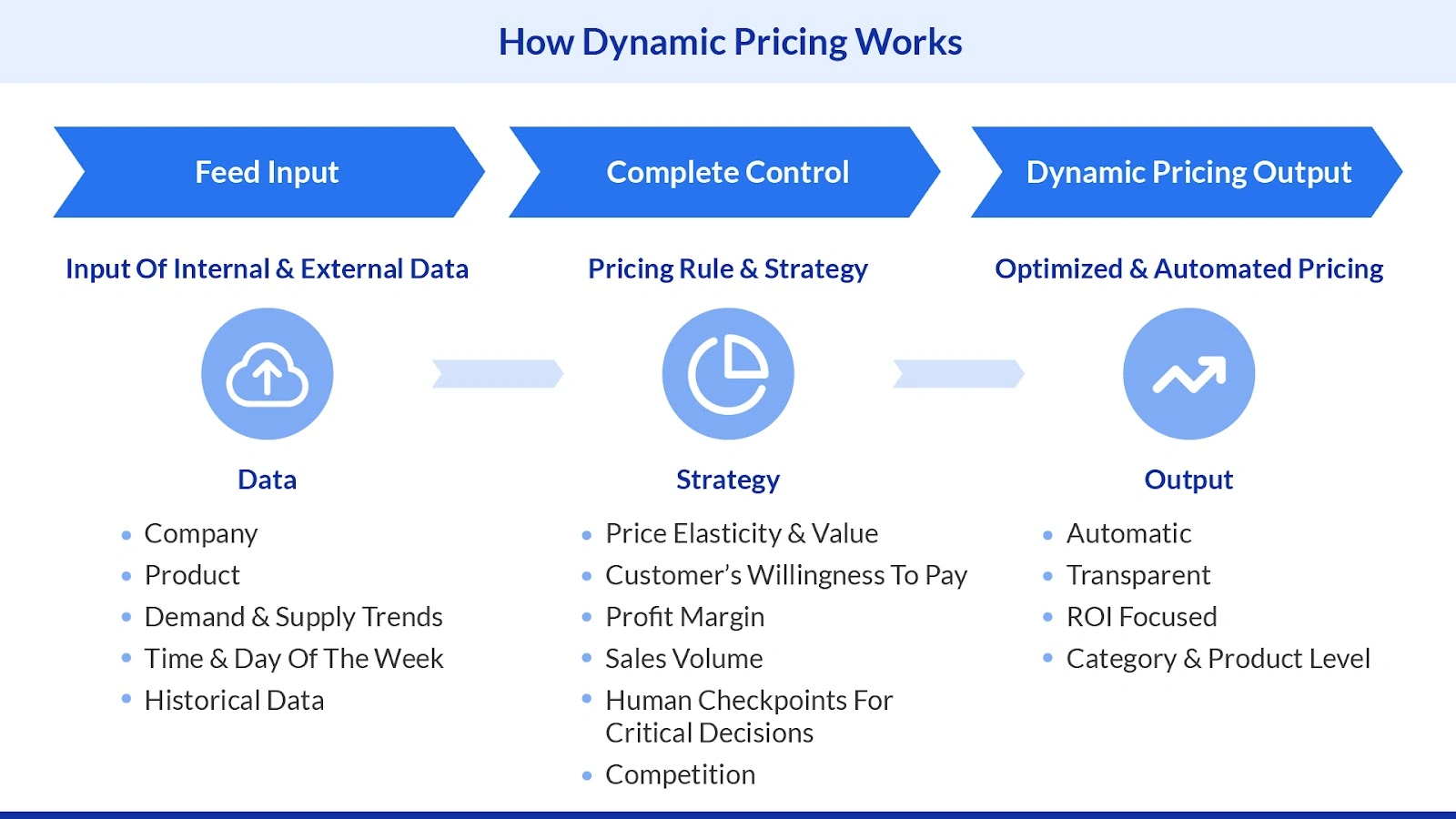
- Data Collection: Businesses gather a vast amount of data, including historical sales data, competitor pricing, demand patterns, customer demographics, and even external factors like weather or events.
- Algorithmic Analysis: Advanced algorithms analyze this data in real-time. They identify trends, seasonality, and factors that influence purchasing decisions.
- Pricing Adjustments: Based on the insights gained from data analysis, the pricing algorithm adjusts prices accordingly. Prices can be increased or decreased, and discounts or promotions can be applied, all in real time.
- Continuous Monitoring: The dynamic pricing system continuously monitors market conditions, competitor pricing, and customer responses to refine pricing strategies further.
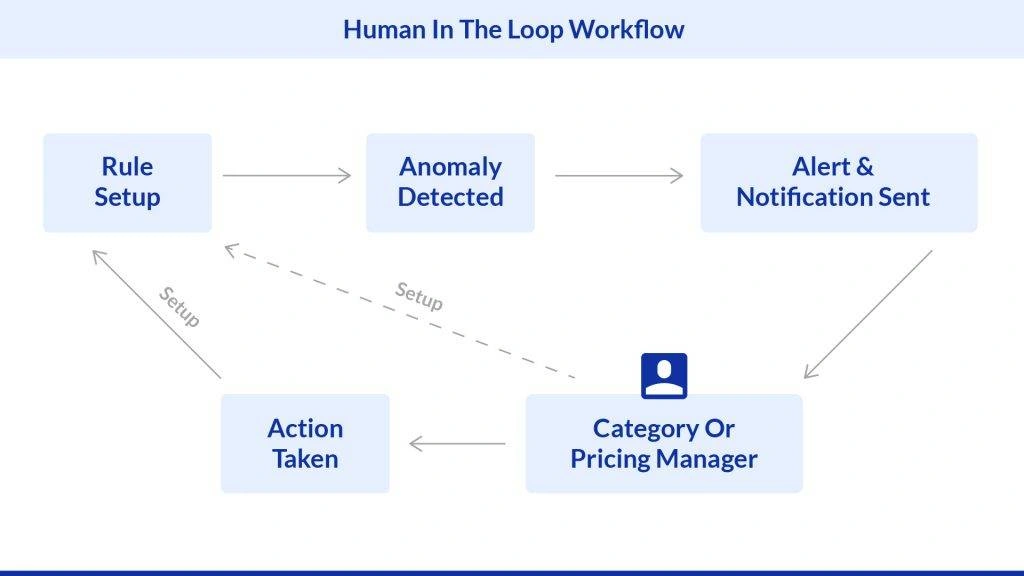
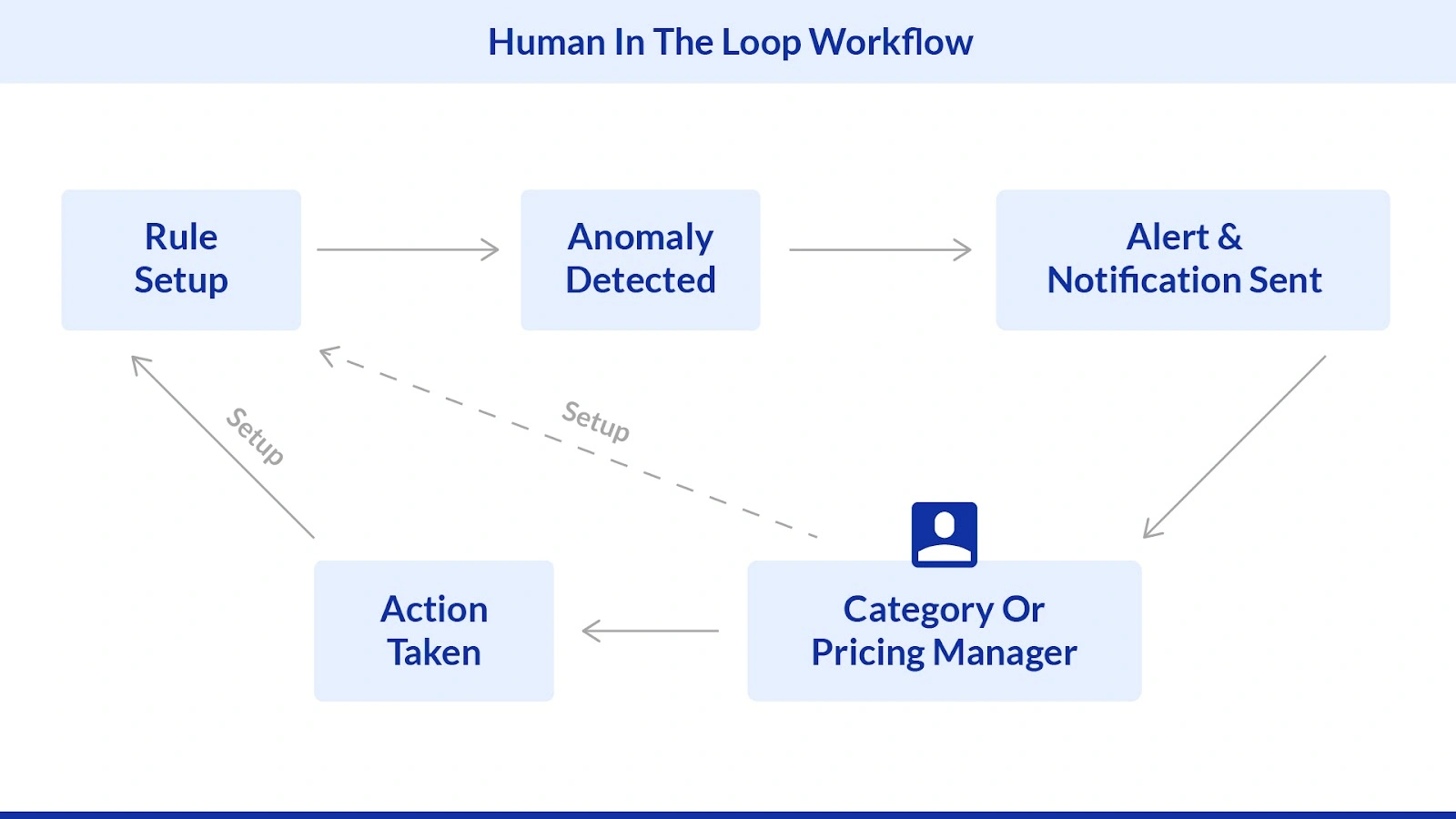
- Anomaly detection and alerts: The software detects anomalies in pricing and raises alerts to category managers to investigate promptly, ensuring pricing accuracy and integrity.
- Human-in-the-loop interventions: The businesses can set up guardrails and approval flows to tackle sudden changes in pricing that do not align with their long-term business goals. This involves human interventions to review and approve pricing adjustments in certain cases.
- Optimization: The ultimate goal is to find the sweet spot where prices are maximized while still appealing to customers. This often involves testing different price points to find the optimal balance.
The Do’s & Don’ts of Dynamic Pricing Strategy
Dynamic pricing is a powerful tool, but to wield it effectively, businesses must navigate a careful path. Here are the key do’s and don’ts to consider when implementing a dynamic pricing strategy.
Do’s:
- Analyze Data Thoroughly: Utilize data analytics to gather insights into customer behavior, market trends, and competitor pricing. A deep understanding of your market is essential for effective dynamic pricing. FCC’s dynamic pricing engine collects data from diverse sources, conducts thorough data hygiene and utilizes advanced analytics to gain pricing insights.
- Set Clear Objectives: Define your pricing goals. Whether it's maximizing revenue, increasing market share, or clearing inventory, having clear objectives will guide your pricing decisions. Category wise goals have to be defined to help build a granular strategy.
- Segment Your Customers: Create customer segments based on factors like demographics, purchase history, and behavior. Tailor your pricing strategies to each segment to maximize their perceived value.
- Monitor Competitor Pricing: Keep a close eye on your competitors' pricing strategies. Dynamic pricing should not be a reaction but a proactive approach to stay competitive.
- Use Real-Time Data: Implement pricing updates in real-time or as close to real-time as possible. Market conditions can change rapidly, so timely adjustments are crucial.
- Implement Price Testing: A/B test different pricing strategies to see which ones yield the best results. Experimentation can help you fine-tune your dynamic pricing approach.
- Communicate Changes Transparently: If prices fluctuate frequently, be transparent with your customers. Explain the reasons behind price changes to build trust.
Don’ts:
- Overcomplicate Pricing: Avoid overly complex pricing algorithms that are difficult to manage or understand. Simplicity often leads to more effective dynamic pricing.
- Ignore Legal and Ethical Considerations: Be mindful of legal and ethical considerations when implementing dynamic pricing. Understand pricing regulations in your industry and region, avoiding practices that could harm your brand's reputation. Note that while most dynamic pricing applications are legal and widely accepted, there are legal limits, such as the prohibition of price hikes during emergencies in the U.S. and restrictions on exploiting dominant market positions.
In Europe, compliance with data protection laws like the GDPR is crucial, requiring customer consent for personalized pricing based on personal data. Always ensure your dynamic pricing strategy operates within legal and ethical boundaries to maintain trust and credibility. - Discount Too Aggressively: Continuous deep discounting can devalue your products or services. Reserve heavy discounts for strategic occasions.
- Neglect Customer Perception: Consider how price changes affect customer perception. Rapid and frequent price fluctuations can confuse and alienate customers.
- Lose Focus on Quality: Don't sacrifice product or service quality for the sake of lower prices. Value should always be part of the equation.
- Ignore Customer Feedback: Pay attention to customer feedback and adjust your pricing strategy accordingly. Customer satisfaction should be a priority.
Use FCC’s Dynamic Pricing Engine
FCC's Dynamic Pricing Engine stands as a sophisticated solution that equips businesses with a comprehensive set of tools for optimizing their dynamic pricing strategies. At its core, the engine leverages advanced AI and machine learning algorithms to meticulously analyze market data, providing invaluable insights into demand patterns. This empowers businesses to make well-informed pricing decisions that align with market dynamics. One of its notable features is the ability to implement real-time price updates, ensuring that product prices remain accurate and competitive.
Furthermore, FCC's offering distinguishes itself by providing businesses with customizable pricing rules, granting them greater control and flexibility in shaping their pricing strategies. The user-friendly dashboards and insightful analytics reports are easy to use and can be scaled to an unlimited number of products and categories, which allow businesses to continuously evaluate pricing performance and make strategic refinements.
With the FCC Dynamic Pricing Engine, businesses are poised to increase sales by staying agile and responsive in an ever-changing marketplace.
Need help with your dynamic pricing? Talk to our experts today!
FAQ
Another name for dynamic pricing is real-time pricing, and in some contexts it is also referred to as surge pricing, demand-based pricing, or time-based pricing.
The first step in dynamic pricing is gathering and analyzing relevant data, such as historical sales, competitor prices, demand trends, and customer segments, to establish a baseline for informed and strategic price adjustments.
Dynamic pricing is used by industries such as airlines, hotels, ride-sharing services, e-commerce platforms, event ticketing companies, and utilities, all of which benefit from adjusting prices in response to fluctuating demand and market conditions.
The downside of dynamic pricing is that frequent price changes can confuse or frustrate customers, potentially harm brand trust, and require significant investment in technology and analytics to manage effectively.
The difference between dynamic pricing and price discrimination is that dynamic pricing adjusts prices for all customers based on market conditions at a given time, while price discrimination charges different prices to different customers for the same product or service based on factors like demographics or purchase history.
The difference between fixed and dynamic pricing is that fixed pricing remains constant regardless of market changes, while dynamic pricing fluctuates in response to factors such as demand, supply, and competitor actions.
The difference between variable pricing and dynamic pricing is that variable pricing changes periodically based on set conditions like season or location, whereas dynamic pricing changes continuously in real time based on live market data and demand shifts.
Dynamic pricing is not inherently considered price gouging, but it can cross into that territory if prices are raised excessively during emergencies or crises, which in many regions is regulated or prohibited by law.
More Blogs
See how retailers and brands are winning with FCC
Everything About Price Skimming Strategy Explained
Read More
What is a High-Low Pricing Strategy?
Read More
Retail Pricing Strategies: Winning with Promotion Pricing in Competitive Markets
Read More
Ad Tags: Enhancing Ad Serving Efficiency in Large-Scale Campaigns
Read More
Why Retailers Should Use Pricing Comparison Engine for Growth and Better Margins?
Read More