
June 30, 2025
What is a Supply Side Platform?
A Supply Side Platform (SSP) is a technology platform that enables digital publishers to sell their online advertising inventory programmatically at optimal prices. SSPs automate the process of selling by connecting publishers with multiple demand sources, maximizing the value of their inventory through real-time auctions and advanced yield optimization.
Drishti, Manager - Digital Marketing

Table of Contents
- What is a Supply Side Platform?
- What are the Key Functions of a Supply Side Platform?
- How Does a Supply Side Platform Differ From a Demand Side Platform (DSP)?
- How Do Supply-Side Platforms Support the Ad Selling Process?
- What Are the Core Components of an SSP?
- How Does an SSP Work in the Programmatic Advertising Ecosystem?
- What Benefits Do Supply Side Platforms Provide to Publishers?
What is a Supply Side Platform?
A Supply Side Platform (SSP) IS a programmatic advertising technology that helps publishers and website owners maximize their advertising revenue. This platform enables publishers to efficiently manage their available ad space across various digital channels, including websites, mobile apps, and video content. The SSP connects publishers directly to multiple potential buyers, ensuring their inventory reaches a broad spectrum of possible advertisers.
- SSPs facilitate real-time bidding auctions where buyers compete for available ad impressions on publishers' sites.
- Publishers gain access to a broader pool of potential advertisers, increasing competition for their inventory.
- Yield optimization algorithms automatically select the highest bidder for each available impression.
- Header bidding integration allows publishers to receive bids from multiple sources before making ad server calls.
- SSPs provide controls for managing floor prices, blocked advertisers, and creative quality standards.
What are the Key Functions of a Supply Side Platform?
Here are the key functions served by a supply-side platform:
- Inventory Management: SSPs allow publishers to organize and categorize their digital ad inventory. This includes display ads, video ads, and native advertising placements. They provide tools for efficient inventory allocation.
- Yield Optimization: These platforms employ algorithms to maximize the revenue generated from ad impressions. They analyze various factors to determine the best price for each impression. This ensures publishers earn the most from their available space.
- Demand Connection: SSPs connect publishers to a wide array of demand sources. This includes Demand Side Platforms (DSPs), ad exchanges, and ad networks. This broad reach increases bidding competition for inventory.
- Real-Time Bidding Facilitation: SSPs are central to RTB process. They receive bid requests from DSPs and manage the auction for each impression. This ensures quick and efficient ad delivery.
- Reporting and Analytics: Publishers gain access to detailed performance reports through SSPs. These reports offer insights into ad revenue, number of impressions, and advertiser performance. Data helps in making informed optimization decisions.
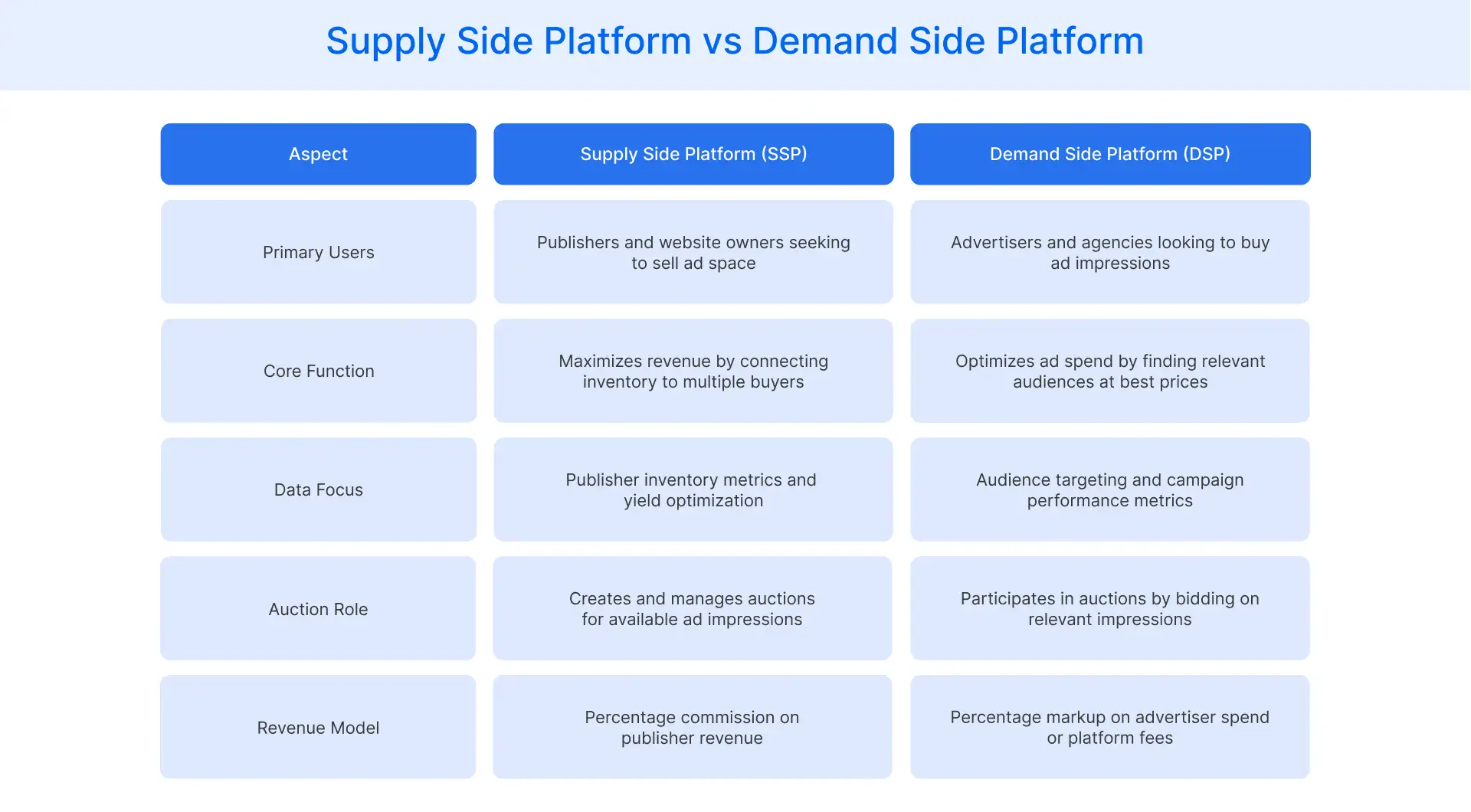
How Does a Supply Side Platform Differ From a Demand Side Platform (DSP)?
While both Supply Side Platforms (SSPs) and Demand Side Platforms (DSPs) are integral to programmatic advertising, their primary functions cater to different parties. An SSP empowers publishers to sell ad inventory, whereas a DSP allows advertisers to buy it, creating a complementary relationship within the digital ad ecosystem.
How Do Supply-Side Platforms Support the Ad Selling Process?
SSPs employ advanced SSP technology to transform how publishers monetize their digital real estate in the complex programmatic ecosystem. Here are the key aspects of this process:
- Auction Management: SSPs conduct various auction types, including first-price and second-price auctions, where advertisers bid for impressions in milliseconds as users load publisher pages, ensuring optimal competition for each ad opportunity.
- Yield Optimization: Through advanced algorithms, SSPs analyze historical performance data and current market conditions to determine hard price floors, predict impression values, and route inventory to the highest-paying demand sources.
- Demand Partner Management: SSPs establish connections with numerous demand sources, including DSPs, ad exchanges, and direct advertisers, enabling publishers to maximize fill rates and create competitive pressure that drives higher CPMs.
- Inventory Packaging: Publishers can use SSPs to create specialized deals like private marketplaces (PMPs) and preferred deals, allowing premium inventory to be offered to select advertisers at negotiated rates before entering the open auction.
- Transparency Controls: Modern supply side platforms provide tools for enforcing brand safety measures, blocking unwanted ad categories, and ensuring ads meet quality standards, thereby protecting publisher reputation and user experience.
What Are the Core Components of an SSP?
A modern SPP integrates several technological elements that work in unison to create an effective advertising ecosystem.
Real-Time Bidding (RTB) Engine
The RTB engine forms the core auction mechanism within supply side platforms, processing thousands of bid requests per second. This component evaluates incoming bids against publisher floor prices, auction rules, and advertiser targeting parameters to determine winners, all occurring within 100-200 milliseconds as a webpage loads.
Ad Server Integration
Supply side platforms connect seamlessly with ad servers through APIs to communicate available inventory, deliver winning advertisements, and track impressions. This integration ensures that once an auction concludes, the selected creative appears correctly on the publisher’s site while maintaining accurate delivery statistics for billing and reporting.
Header Bidding Wrapper
The header bidding component of modern SSPs enables publishers to simultaneously offer inventory to multiple demand sources before their ad server is called. This wrapper technology synchronizes bid responses from various partners, enforces timeout settings, and creates a unified auction that typically increases publisher revenue by 20-30% compared to traditional waterfall setups.
Data Management and Audience Targeting Capabilities
Advanced supply side platforms incorporate data processing systems that analyze user information, content context, and browsing behavior. These capabilities allow publishers to segment their audiences and enrich bid requests with valuable targeting signals, making their inventory more appealing to advertisers seeking specific demographics or interest groups.
Retail Media Solutions
Specialized supply side platforms designed for retail environments transform e-commerce sites and apps into valuable advertising channels. These retail media SSPs enable merchants to monetize their digital properties by offering advertising placements to brand partners and suppliers.
Platforms like Flipkart Commerce Cloud (FCC) leverage first-party shopper data, including purchase history, browsing behavior, and search queries, to provide highly relevant targeting capabilities. Retailers can offer multiple ad formats, such as sponsored product listings, display ads, and native placements, all managed through self-serve interfaces with transparent reporting.
These specialized SSPs preserve brand safety controls while connecting retailer inventory to programmatic demand sources, creating new revenue streams while maintaining the shopping experience.
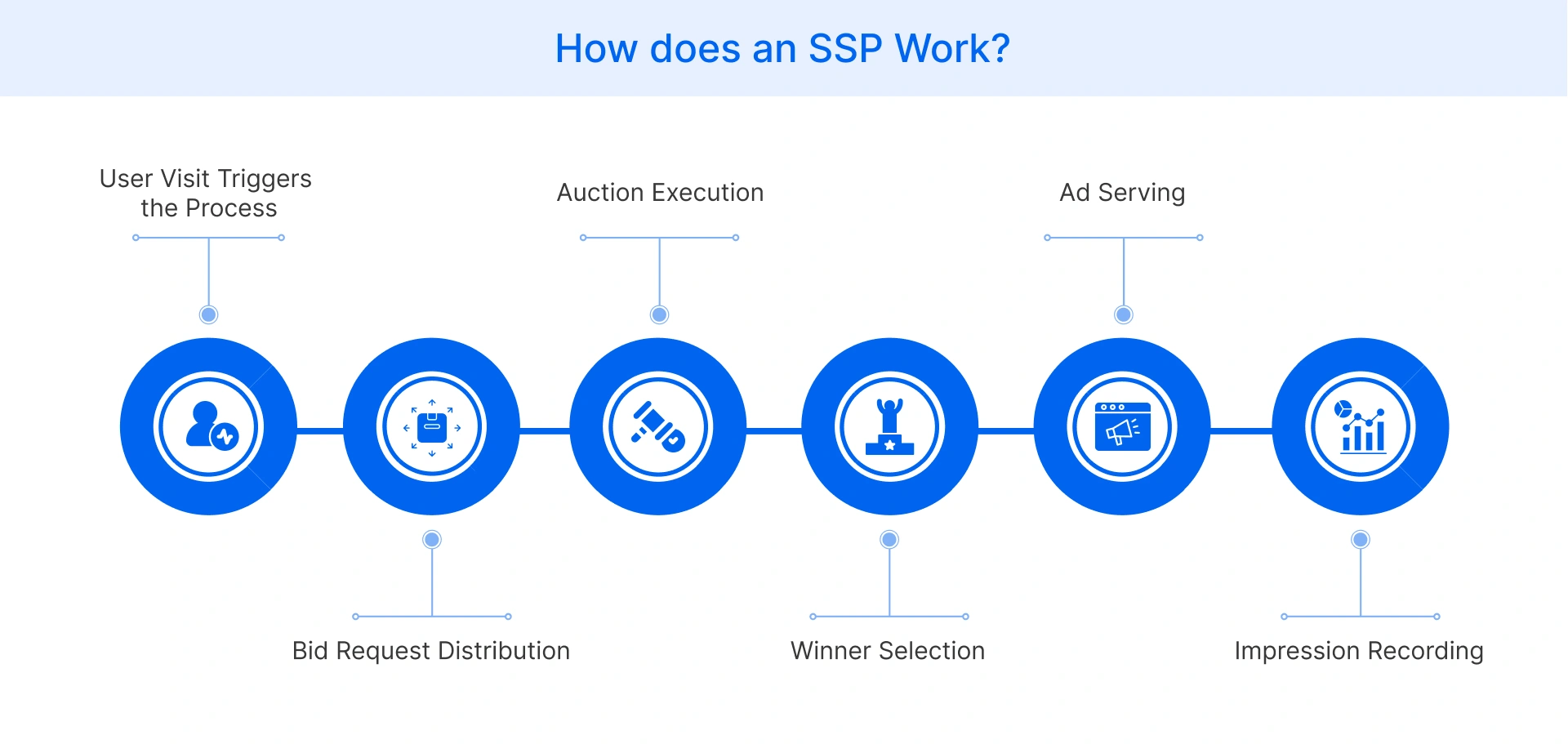
How Does an SSP Work in the Programmatic Advertising Ecosystem?
Supply side platforms follow a systematic process to connect publishers with advertisers, all occurring within milliseconds as users browse websites or applications.
- User Visit Triggers the Process: When someone visits a publisher's website, the page load initiates a bid request from the SSP to multiple demand sources, containing information about the available ad space.
- Bid Request Distribution: The SSP packages details about the impression, including page URL, user data, and placement specifications, then simultaneously sends this information to connected demand partners through real-time bidding protocols.
- Auction Execution: Demand sources evaluate the bid request against active campaigns and targeting parameters, submitting their bids within milliseconds to the SSP, which conducts either first-price or second-price auctions.
- Winner Selection: The SSP's decision-making algorithm determines the winning bid based on price and publisher-set rules such as floor prices, advertiser blocks, and creative requirements.
- Ad Serving: Once a winner is determined, the SSP notifies the winning bidder, collects the creative, and passes it to the publisher's ad server for immediate display to the user.
- Impression Recording: After successful ad delivery, the SSP records the transaction details, tracks the impression for billing purposes, and updates inventory availability in real-time.
What Benefits Do Supply Side Platforms Provide to Publishers?
Supply side platforms offer publishers numerous advantages beyond basic ad serving, creating opportunities for sustainable revenue growth.
- Revenue Maximization: Publishers achieve higher CPMs through increased demand competition, sophisticated floor pricing strategies, and smart allocation algorithms that ensure each impression sells for its optimal market value.
- Operational Efficiency: SSPs automate previously manual processes like insertion orders and campaign trafficking, freeing publisher teams to focus on strategic initiatives rather than administrative tasks.
- Demand Diversification: Publishers gain access to thousands of potential advertisers simultaneously, reducing dependency on a limited set of direct relationships and creating resilience against seasonal or market fluctuations.
- Inventory Monetization Intelligence: Detailed performance analytics provide publishers with actionable insights about which content, placements, and audience segments generate the highest revenue, informing content and monetization strategies.
- Technical Simplification: Modern supply side platforms handle complex technical challenges including browser compatibility, creative rendering, and video delivery, reducing the technical burden on publisher development teams.

Conclusion
Supply Side Platforms are indispensable technologies in the digital advertising landscape. They empower publishers by automating the sale of their ad inventory, connecting them to a vast network of advertisers, and optimizing revenue through sophisticated bidding mechanisms.
SSPs provide essential tools for inventory management, yield optimization, and valuable data insights. Their role is crucial for publishers seeking to maximize ad revenue and efficiently navigate the complexities of programmatic advertising.

FAQ
Supply Side Platforms generate revenue primarily by taking a percentage of the ad impressions sold through their platform. They act as facilitators, connecting publishers with advertisers in real-time auctions. This fee, often a share of the publisher's earnings, covers the technology, optimization, and transaction services the SSP provides.
Yes, small publishers can significantly benefit from using an SSP. SSPs provide access to a wider pool of advertisers and automated bidding, which can dramatically increase ad fill rates and revenue. They eliminate the need for manual sales, making programmatic advertising accessible even without a large ad operations team.
Several data privacy regulations impact SSP operations, notably GDPR in Europe and various state-level laws in the US, like CCPA. SSPs must ensure compliance by managing user consent, handling data transparently, and protecting personal information. This includes respecting user choices regarding data collection and usage.
SSPs combat ad fraud using sophisticated detection mechanisms. They employ various tools and algorithms to identify and block invalid traffic, bot activity, and suspicious bidding patterns. This proactive approach ensures that advertisers' budgets are not wasted on fraudulent impressions, maintaining a healthier ad ecosystem.
Publishers should consider an SSP's demand connections, supported ad formats, and yield optimization capabilities. Evaluate their reporting transparency, brand safety features, and customer support. Additionally, assess their compliance with data privacy regulations and overall reputation for reliable ad monetization.