
August 20, 2025
What is Real-Time Bidding?
Real-time bidding (RTB) is an automated system for buying and selling online ad impressions through instantaneous auctions. It allows advertisers to bid on ad space as a user visits a webpage, ensuring highly relevant ad delivery.
Drishti, Manager - Digital Marketing

Table of Contents
- What is Real Time Bidding?
- Why is Real-Time Bidding Important for Retail and Ecommerce Success?
- How Does the Real-Time Bidding Process Work in Retail Advertising?
- How Does Real-Time Bidding Differ From Traditional Programmatic Advertising in Retail?
- What Are the Different Real-Time Bidding Models Available to Retailers?
- What Benefits Does Real-Time Bidding Offer to Retail Advertisers?
What is Real-Time Bidding?
Real-Time Bidding (RTB) is an advanced automated auction system within programmatic advertising where digital ad space is bought and sold on a per-impression basis in milliseconds. RTB enables retailers to display targeted advertisements instantly as users browse websites or applications.
The technology facilitates immediate connections between advertisers and publishers through specialized platforms that evaluate and execute transactions in real-time. Here are the key features of RTB:
- RTB auctions occur in milliseconds while a webpage loads, creating seamless user experiences despite complex background processes.
- Specialized demand-side platforms help retailers identify and bid on the most valuable potential customer impressions.
- Supply-side platforms allow publishers to maximize revenue by connecting their inventory to multiple potential retail advertisers.
- Data management platforms enrich the bidding process with consumer insights, enabling precise audience targeting for retail campaigns.
- RTB transforms traditional media buying by replacing manual negotiations with algorithmic decisions based on predefined parameters.
Why is Real-Time Bidding Important for Retail and Ecommerce Success?
Real-time bidding is crucial for modern retail and ecommerce advertising strategies as it significantly improves ad targeting capabilities. By leveraging detailed consumer data, retailers can reach specific audience segments more effectively. This precision results in higher engagement and improved campaign performance.
Implementing real-time bidding also drives a stronger Return on Investment (ROI). Advertisers only pay for valuable impressions won through the auction. This cost-efficient approach minimizes wasted ad spend. It ensures advertising budgets are allocated optimally for maximum impact.
RTB also enables efficient budget allocation in competitive retail environments. Retailers can adjust bids and targeting dynamically based on real-time performance data. This agility allows for rapid optimization, ensuring campaigns remain effective and competitive.
How Does the Real-Time Bidding Process Work in Retail Advertising?
Real-time bidding operates through a sophisticated technological ecosystem that connects retailers with potential customers in milliseconds. Here’s how it works:
- User Initiates Request: When a shopper lands on a retail website or app, their action generates an immediate request for an ad space. This crucial first step signals the availability of an impression to the ad ecosystem.
- SSP Sends Bid Request: The Supply-Side Platform (SSP), representing the publisher, transmits comprehensive details about the available ad impression. This includes user data and ad format, preparing it for the upcoming instantaneous auction.
- DSPs Receive and Bid: Demand-Side Platforms (DSPs) receive and bid on this bid request, acting on behalf of retailers. They quickly analyze the impression’s value against their campaign objectives and budget, preparing their competitive bid.
- Auction Occurs Instantly: Competing DSPs then submit their bids in real-time, often within milliseconds. The highest bidder wins this rapid, dynamic auction, securing the right to display their advertisement to the user.
- Ad Server Delivers Ad: The ad server, upon identifying the winning bid, promptly delivers the successful retailer's advertisement to the user's screen. This ensures a seamless and instantaneous display of the relevant ad.
The Millisecond Auction Process
When a consumer loads a retail website, their browser triggers an instant chain reaction in the advertising ecosystem. Within milliseconds, the webpage sends bid requests containing anonymized user information to ad exchanges. They distribute these opportunities to thousands of potential advertisers through specialized platforms.
At the same time, retail advertisers’ systems evaluate each impression opportunity against campaign parameters, calculating precise bid amounts based on the user’s potential value. This evaluation incorporates factors such as demographic match, behavioral signals, and purchase intent indicators to determine the appropriate bid values for each specific consumer interaction.
The winning bid is selected, and the retailer’s advertisement is transmitted back through the chain to appear on the user’s screen, all before they notice any delay in page loading. This lightning-fast process, powered by complex algorithms and distributed computing systems, enables retailers to compete for consumers’ attention at the exact moment of highest engagement potential.
Critical Data Points for Bidding Decisions
Retail advertisers leverage multiple data categories to determine optimal bid values for each potential customer impression. These data points include:
- Demographic information including age, location, income level, and gender.
- Previous browsing behavior across retail websites and product categories.
- Past purchase history indicating product preferences and spending patterns.
- Current session activity revealing immediate shopping interests.
- Device type and time-of-day context affecting purchase likelihood.
By integrating these diverse data signals, RTB systems create highly personalized advertising experiences that present consumers with products matching their specific interests and shopping stage. This helps increase engagement rates and retail conversion potential.
How Does Real-Time Bidding Differ From Traditional Programmatic Advertising in Retail?
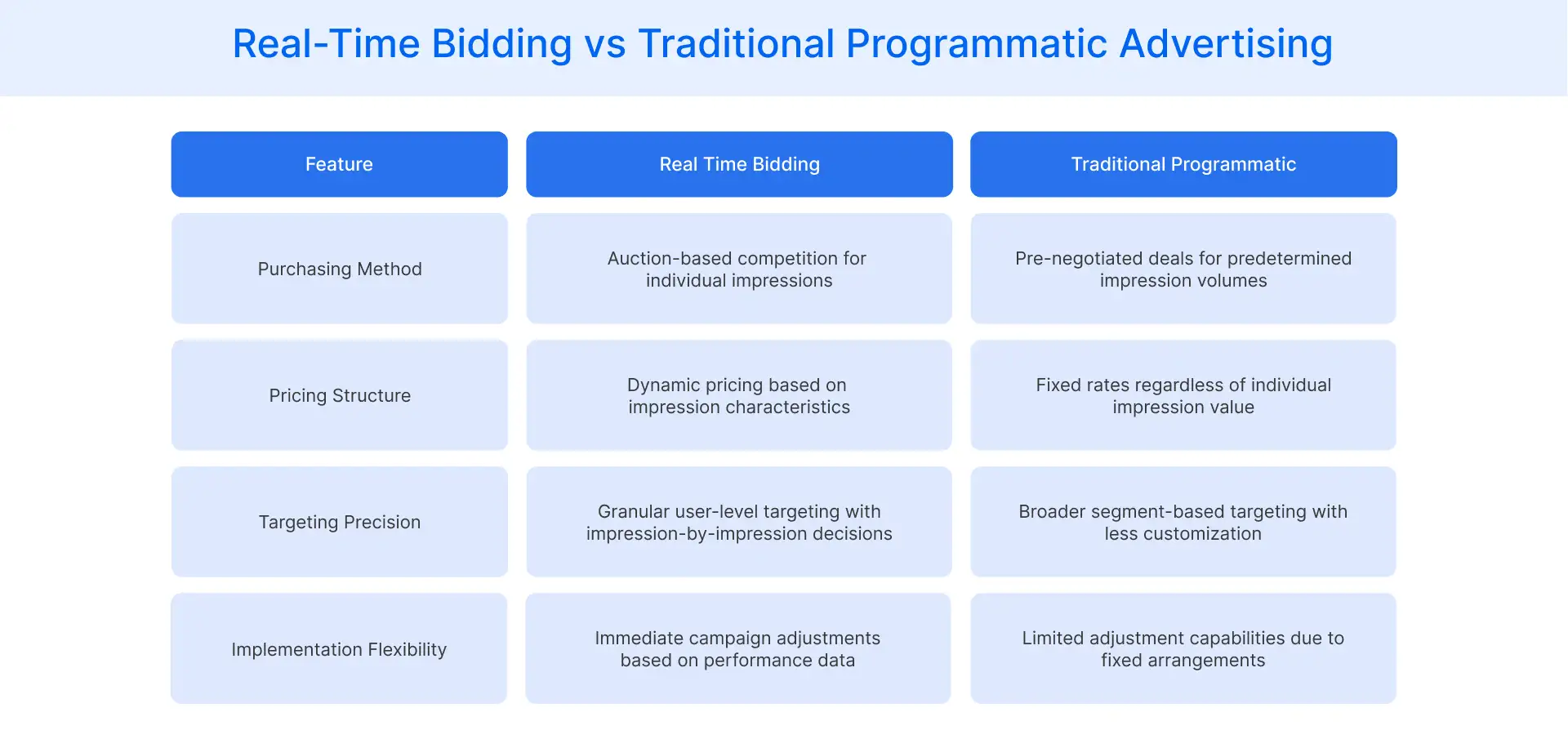
Real-time bidding represents a distinct approach within the broader programmatic advertising ecosystem, with key differences in auction mechanics and impression valuation. While all programmatic methods automate ad buying, RTB specifically enables individual impression auctions rather than bulk inventory purchases.
What Are the Different Real Time Bidding Models Available to Retailers?
Retailers can access various RTB implementation models, each offering distinct benefits depending on campaign objectives, target audience characteristics, and available advertising resources.
Open Auction RTB for Broad Retail Reach
Open auctions offer retailers access to massive impression volumes across numerous websites simultaneously, creating unparalleled campaign scale opportunities. This model operates as a public marketplace where:
- All qualified advertisers can participate without special invitation. This ensures broad market access for any retailer looking to buy ad space.
- Bidding occurs across thousands of publishers and millions of impressions. Retailers can reach diverse audiences on a vast network of sites.
- Cost efficiency results from true market-based pricing mechanics. Prices are determined by real-time supply and demand, optimizing ad spend.
- Rapid testing of multiple audience segments becomes possible. Retailers can quickly experiment with different targeting strategies to find effective segments.
- Campaign scale can be achieved quickly without individual publisher negotiations. This streamlines the ad buying process for widespread reach.
Open auction RTB serves as a practical foundation for retail advertising strategies focused on building broad awareness while identifying high-performing audience segments for more targeted future campaigns.
Private Marketplace RTB for Premium Retail Inventory
Private marketplaces create invitation-only auction environments where select retailers gain exclusive access to premium publisher inventory through established relationships. This curated approach provides:
- Brand safety assurances through pre-vetted publisher relationships. Retailers gain confidence that their ads appear in reputable, relevant contexts.
- Higher-quality inventory than typically available in popular ad exchanges. Access premium placements often reserved for direct deals.
- Reduced competition from fewer participating bidders. This can lead to better pricing and a higher win rate for desired impressions.
- Enhanced targeting through publisher-provided audience segments. Leverage unique and sensitive information from publishers for more precise audience reach.
- Premium contexts that complement luxury or high-consideration retail products. Ads appear alongside content that aligns with the brand image.
Private marketplace RTB enables retailers to maintain the efficiency benefits of programmatic while ensuring advertisements appear exclusively in brand-appropriate environments alongside relevant content.
Preferred Deals in Strategic RTB Implementation
Preferred deals establish privileged buying relationships between retailers and publishers while maintaining auction mechanics for pricing efficiency. This hybrid model creates strategic advantages through:
- First-look access to valuable inventory before open auction availability. Retailers get priority viewing and bidding opportunities on prime ad space.
- Negotiated floor prices that provide cost predictability. Agreements set minimum prices, offering budget stability.
- No volume commitments, preserving budget flexibility. Retailers can buy as needed, avoiding rigid spend obligations.
- Direct publisher relationships without resource-intensive manual management. Streamline communication and deal execution with key partners.
- Guaranteed access to specifically identified high-performing placements. Secure highly effective ad spots that align with campaign goals.
Preferred deals offer an optimal balance between traditional direct buys and open auction participation, combining relationship benefits with the efficiency and targeting precision of programmatic technology.
What Benefits Does Real-Time Bidding Offer to Retail Advertisers?
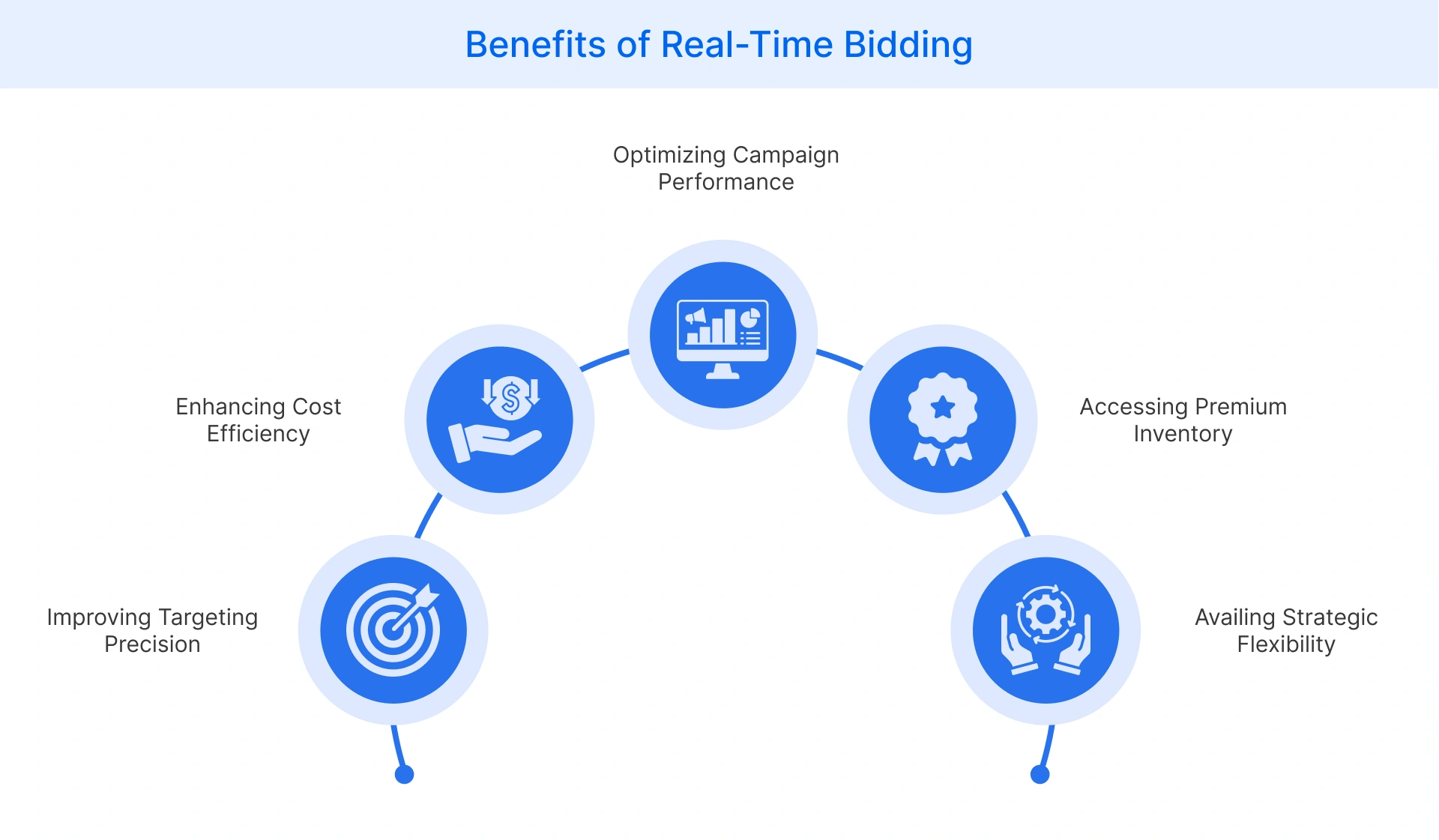
Real-time bidding offers retailers significant advantages, enabling them to optimize their advertising efforts and maximize their impact.
- Improving Targeting Precision: RTB allows advertisers to reach specific audience segments with unparalleled accuracy. It enables the delivery of highly relevant ads to consumers most likely to convert, optimizing campaign performance.
- Enhancing Cost Efficiency: Advertisers can bid on individual ad impressions in real-time, ensuring they only pay for valuable opportunities. This programmatic approach minimizes wasted ad spend, thereby maximizing the effectiveness of the display advertising budget.
- Optimizing Campaign Performance: Retailers gain immediate insights into campaign effectiveness through real-time data. They can quickly adjust strategies, bids, and targeting based on performance, continuously improving overall campaign results.
- Accessing Premium Inventory: RTB provides access to high-quality ad placements across a diverse range of publisher sites. Advertisers can compete for valuable ad space that was previously only available through direct deals, thereby expanding their reach.
- Availing Strategic Flexibility: Advertisers can adapt their advertising campaigns swiftly to changing market conditions or consumer behaviors. Real-time bidding allows for dynamic adjustments, ensuring ads remain competitive and relevant.

FAQ
The real-time bidding system is an automated, instantaneous auction process for buying and selling digital advertising impressions. As a webpage loads, advertisers bid on the opportunity to display an ad to a specific user, with the highest bidder winning the impression.
Consider a user browsing a fashion retailer's website. As the page loads, an RTB auction occurs for the available ad space. A shoe brand's ad, recognizing the user's past interest in footwear, might win the bid and instantly display its latest collection.
Real-time bidding is a specific method within the broader category of programmatic advertising. Programmatic refers to the automated buying and selling of ads, while RTB means explicitly that these transactions occur through instantaneous, impression-level auctions.
First-party data, gathered directly from a retailer's own customers, is invaluable for optimizing real-time bidding in ecommerce. It provides unique insights into purchasing history, browsing behavior, and preferences, enabling highly personalized ad targeting and enhanced campaign effectiveness.