In the digital world, a “cookie” is a small piece of data sent from a website and stored on the user’s computer by their web browser. It was designed to help websites remember important information, like items in a shopping cart or browsing history, preferences, and demographic data to create a seamless user experience. Advertisers can access this information to tailor their advertising campaigns specifically to the user’s interests and demographics, increasing the chances of engagement and conversion.
For example, let’s say you recently searched for hiking boots on an online retail website. The website may use cookies to track your activity and then display ads for hiking gear on other websites you visit. This personalized advertising approach aims to provide you with relevant content and increase the likelihood of you making a purchase.
However, the use of cookies has faced criticism due to privacy concerns, more on it in our next section. But before that let’s understand the types of Cookies in retail advertising
Types of cookies in advertising:
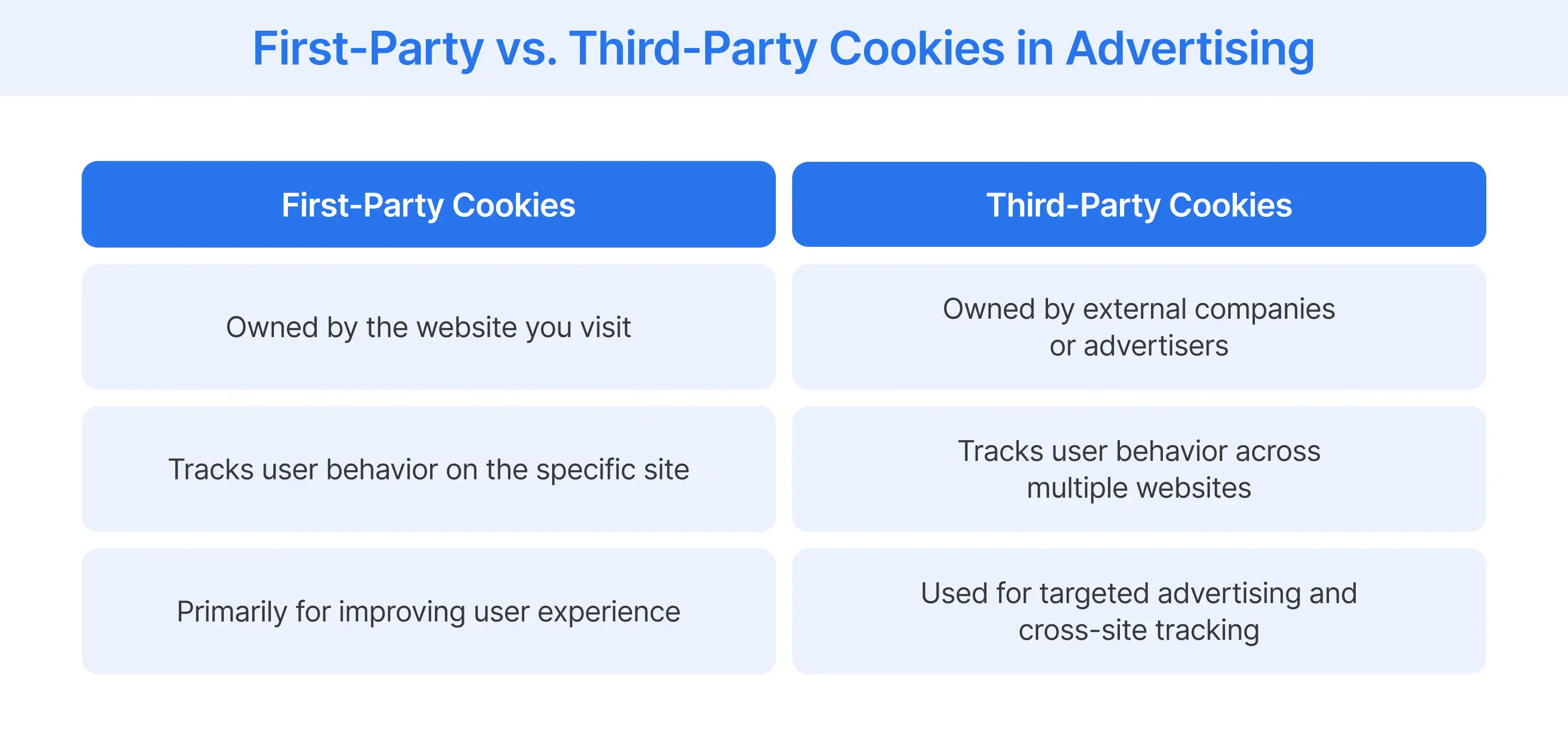
First-party cookies
The website sets first-party cookies the user is currently visiting and can be used for a variety of purposes, such as analytics, remembering login details, and storing items in shopping carts. These cookies are considered more user-friendly and compliant with privacy laws since they are set by the domain that the user is actively browsing.
Third-party cookies
Third-party cookies are set by a domain other than the one the user is currently visiting. These cookies are commonly used in advertising, including programmatic advertising, retargeting, and ad tracking. They allow advertisers to track users’ online activity across multiple websites, which can help them target ads more effectively. However, with increasing concerns about privacy and data protection, there have been discussions about replacing third-party cookies with alternative solutions that prioritize user privacy.
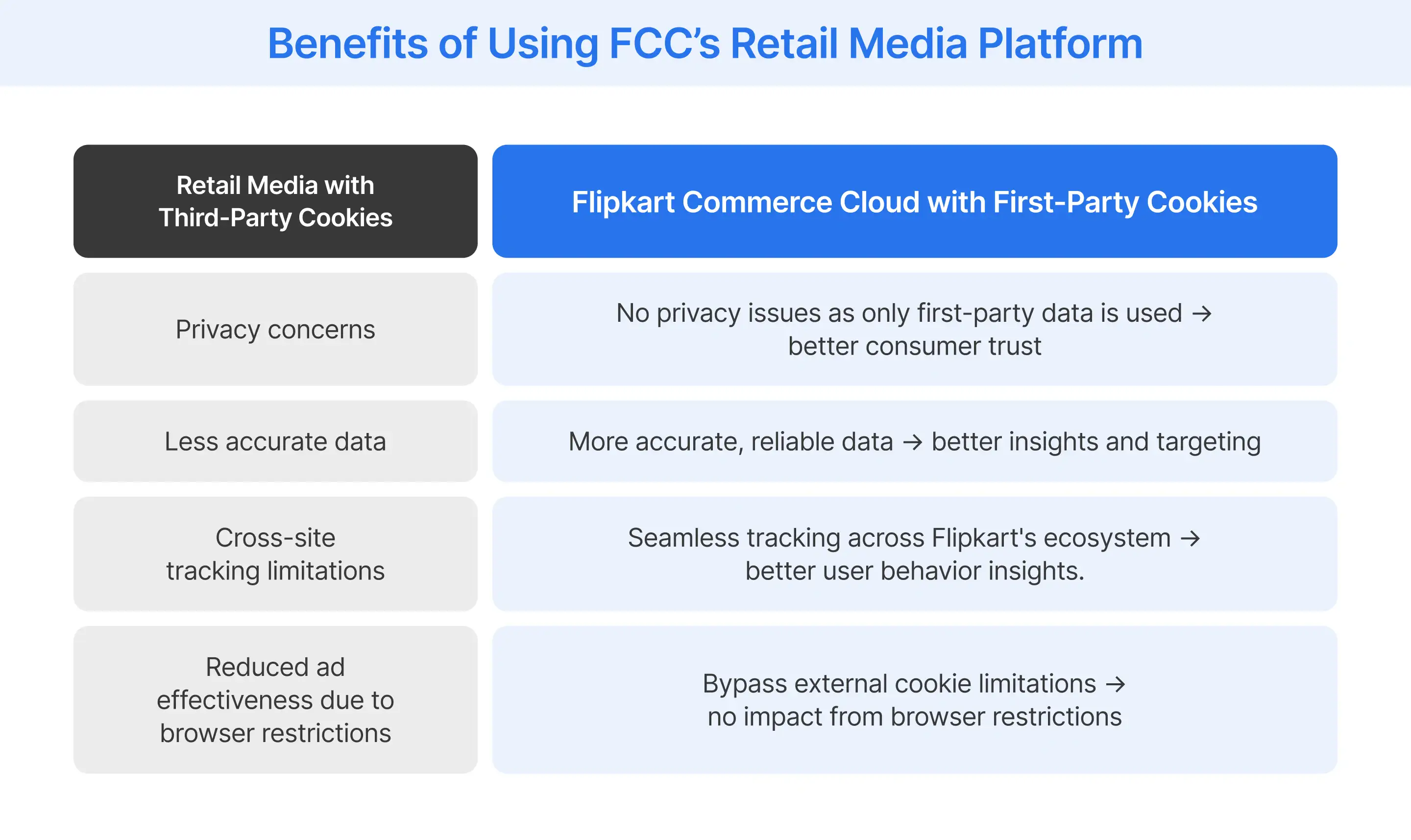
With the phasing out of third-party cookies, retailers are presented with a chance for innovation and growth. One solution emerging in the industry is retail media, which utilizes first-party data to deliver targeted and impactful advertising strategies for businesses.
Another alternative to cookies is contextual advertising, where ads are displayed based on the content of the webpage rather than the user’s browsing history. This approach ensures that ads are relevant to the user’s immediate context, without relying on tracking their online behavior. You can read more about contextual advertising in our blog.
Furthermore, advancements in machine learning and artificial intelligence are enabling retail media platforms to analyze large amounts of data without relying solely on cookies. These technologies can identify patterns and make predictions about user behavior, allowing advertisers to target their campaigns more effectively.
The digital landscape is evolving, and with the phasing out of third-party cookies, retailers are at a crossroads. To thrive in this new era, they must pivot and adapt, building capabilities that not only address the challenges of a cookieless world but also harness the opportunities it presents.
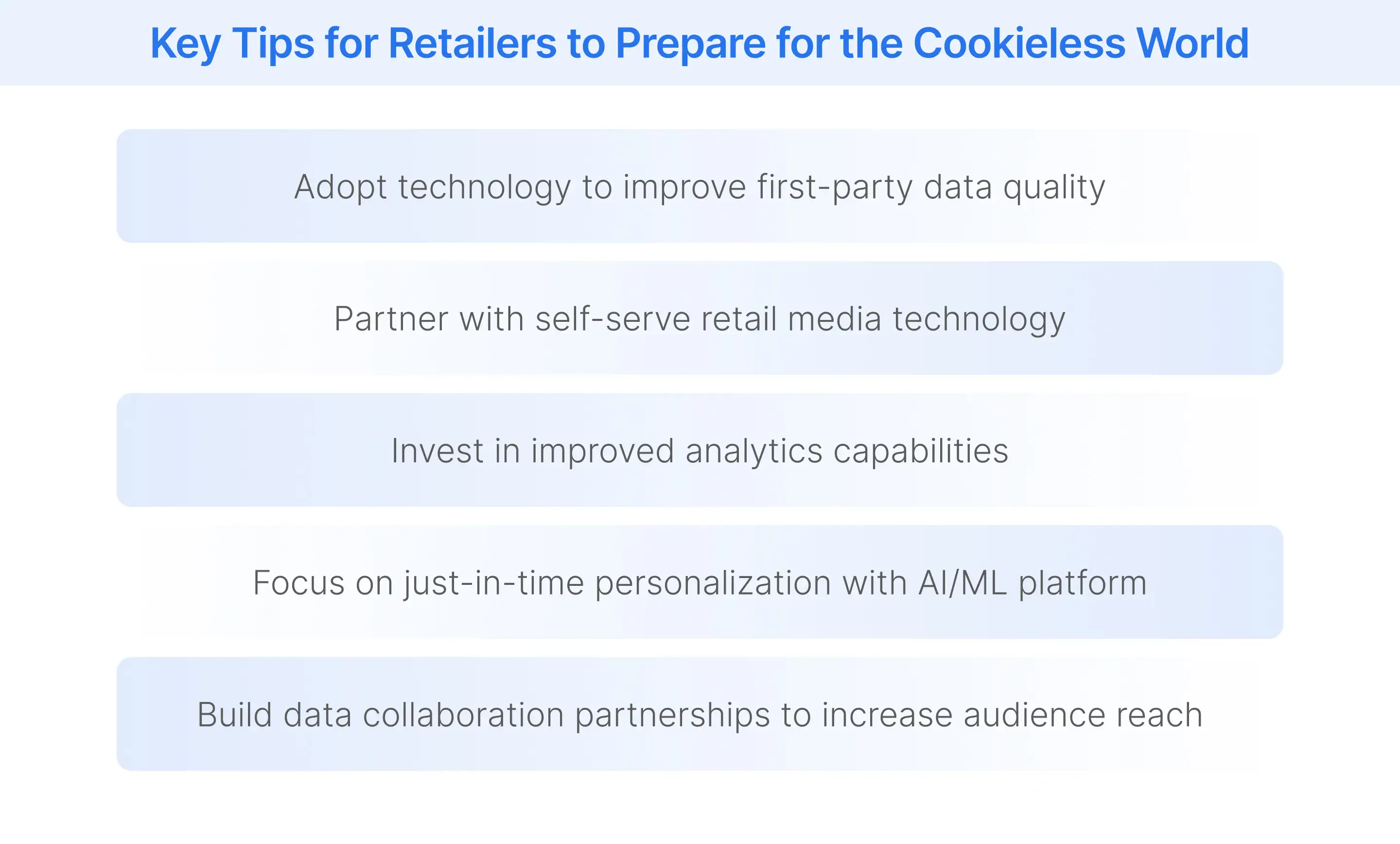
5 tips for retailers to prepare for the cookieless world:

FAQ
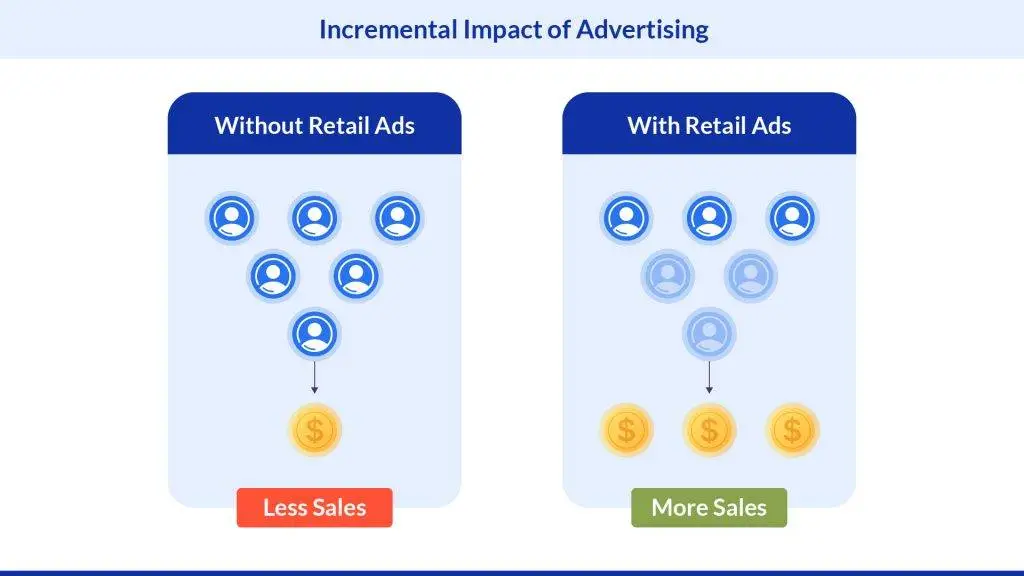
Retail media works for a retailer by effectively transforming its digital and physical storefronts into a high-value advertising platform, enabling the retailer to sell ad inventory to the brands whose products they carry. The retailer leverages its proprietary, highly valuable first-party shopper data to allow brands to target consumers at or near the point of purchase, generating a high-margin new revenue stream from the media spend and offering closed-loop attribution to the brands, a feature often built on technology solutions like FCC.
A retailer can offer a wide range of ad formats through retail media, which fall into three main categories: On-site formats like sponsored product listings within search results, display banners on the homepage and category pages, and video ads on product detail pages; Off-site formats, which use the retailer's first-party data for audience extension campaigns across the open web, social media, and Connected TV; and In-store formats, such as digital screens on aisles, at checkout, and on smart shelf labels.
Retail media does not apply only to online retail, but also to physical stores, as the strategy is rapidly evolving into an omnichannel offering. While digital retail media networks (RMNs) started online with sponsored search and display, the concept is being extended to brick-and-mortar locations through in-store retail media. This involves placing ads on digital screens, interactive kiosks, and smart carts, with targeting often linked back to a customer's loyalty program data for a closed-loop measurement of in-store sales lift.
Retail media can help improve inventory and demand planning for retailers by providing real-time, granular demand signals at the SKU level. Tracking which sponsored products or categories receive high engagement and cause rapid sales lift allows retailers to proactively adjust safety stock levels, prioritize replenishment of advertised items, and refine their overall demand forecasts by factoring in media-driven spikes, leading to fewer stockouts and reduced inventory carrying costs, especially when using predictive models built on platforms like FCC.
The kind of retailers that benefit most from building a retail media network are those with high transaction volumes, large numbers of endemic brand partners, and a robust first-party data asset, often solidified through a strong loyalty program. Grocers, big-box retailers, and large specialty retailers like home improvement or beauty stores fit this profile, as their scale and data richness make their audience segments highly attractive and valuable to advertisers.
Yes, Retail media could create conflicts of interest between retailers and brands, as the retailer is simultaneously a partner selling the brand's products and a competitor selling its own private-label products. This conflict arises if a retailer uses proprietary brand performance data to unfairly favor its own private labels or charges high ad prices to push out competition, necessitating strict transparency, clear operational rules, and ethical data governance to maintain advertiser trust.
Retailers should expect future trends in retail media to include the full convergence of online and in-store media via digital screens and smart devices; the massive adoption of AI and machine learning for automated targeting, bidding, and predictive optimization; and the expansion into off-site audience extension through more advanced partnerships with Demand-Side Platforms (DSPs) and Connected TV (CTV) providers to challenge the dominance of the major walled gardens.
More Blogs
See how retailers and brands are winning with FCC
Everything About Price Skimming Strategy Explained
Read More
What is a High-Low Pricing Strategy?
Read More
Ultimate Guide To Dynamic Pricing Strategy In 2026
Read More
Retail Pricing Strategies: Winning with Promotion Pricing in Competitive Markets
Read More
Ad Tags: Enhancing Ad Serving Efficiency in Large-Scale Campaigns
Read More