FAQ
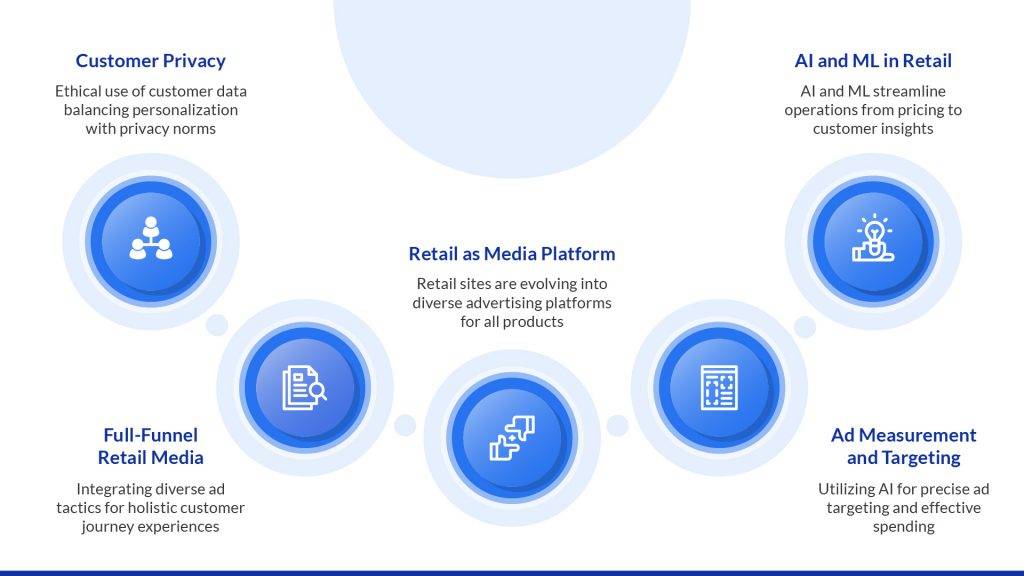
In 2026, retail media means a sophisticated, omnichannel advertising channel where retailers monetize their first-party transaction data by selling targeted ad inventory to brands both on their owned properties and across the broader web. It signifies the evolution from basic sponsored listings to full-funnel advertising networks that encompass sponsored search, on-site display, digital out-of-home (DOOH), and Connected TV (CTV) placements, all unified by the retailer's exclusive, closed-loop sales data.
First-party data is the foundation that directly influences retail media's effectiveness by enabling hyper-precise targeting and superior measurement. By utilizing data on actual past purchases, real-time browsing history, and loyalty program status, retailers can offer brands access to highly qualified, high-intent audiences. This allows for significantly more accurate ad placement and provides the deterministic data needed for closed-loop attribution, which proves the campaign's return on ad spend (ROAS).
AI and automation are critically important for the future of retail media, as they are essential for managing the sheer scale and complexity of the channel. AI is used to optimize bids in real-time auctions, automate campaign management, predict demand for inventory, and execute complex audience segmentation. Automation ensures that campaigns are constantly running at peak efficiency, maximizing the revenue captured from every ad impression, a capability that platforms like those from FCC specialize in providing.
Yes, competition is rapidly increasing among retail media networks (RMNs) as more and more major retailers—including grocers, pharmacies, and specialty stores—recognize the massive profitability of the channel. This increased competition is driving RMNs to invest heavily in better technology, offer more advanced off-site targeting capabilities, and establish standardized measurement practices, forcing platforms to differentiate based on the quality of their data and the ease of their user interface.
Yes, retail media is useful for both short-term sales and long-term brand building by offering distinct ad formats for different campaign objectives. For short-term sales, sponsored products and targeted search ads are highly effective for driving immediate conversions at the point of purchase. For long-term brand building, on-site display banners on high-traffic pages, and off-site video and display campaigns using the retailer's data, are used to increase awareness and influence consideration across the customer journey
Retail media benefits both retailers and brands through a mutually reinforcing ecosystem. Retailers benefit from a high-margin new revenue stream and strengthened relationships with vendors. Brands benefit from hyper-precise, performance-driven advertising that targets high-intent shoppers directly at the point of sale, offering the most accurate closed-loop attribution to prove their campaign's return on investment.
Retail media is one of the fastest-growing ad-channels because it offers brands the ability to reach shoppers at the high-intent moment of purchase. As third-party cookies are phased out, advertisers are shifting budgets toward retailers who own first-party transaction data, which allows for highly accurate targeting and personalization. This channel provides closed-loop attribution, enabling brands to directly link ad-spend to specific sales outcomes both online and in-store. Advanced technology from providers like FCC allows retailers to monetize these digital and physical touchpoints effectively, turning every shelf and screen into a high-margin revenue engine.
Shopper data privacy and regulation, such as GDPR and CCPA, are driving a massive shift toward consent-based first-party data strategies within the retail-media landscape. These laws restrict the use of third-party tracking, making the direct relationship between a retailer and its customers more valuable than ever for compliant advertising. To navigate these regulations, many retailers are adopting privacy-enhancing technologies like data-clean-rooms and Seller-Defined-Audiences (SDA) to share insights without exposing personally identifiable information. Platforms like FCC help retailers automate this compliance by managing user-consent and ensuring that all audience segments are built on anonymized, high-quality shopper data.
More Blogs
See how retailers and brands are winning with FCC
Everything About Price Skimming Strategy Explained
Read More
What is a High-Low Pricing Strategy?
Read More
Ultimate Guide To Dynamic Pricing Strategy In 2026
Read More
Retail Pricing Strategies: Winning with Promotion Pricing in Competitive Markets
Read More
Ad Tags: Enhancing Ad Serving Efficiency in Large-Scale Campaigns
Read More