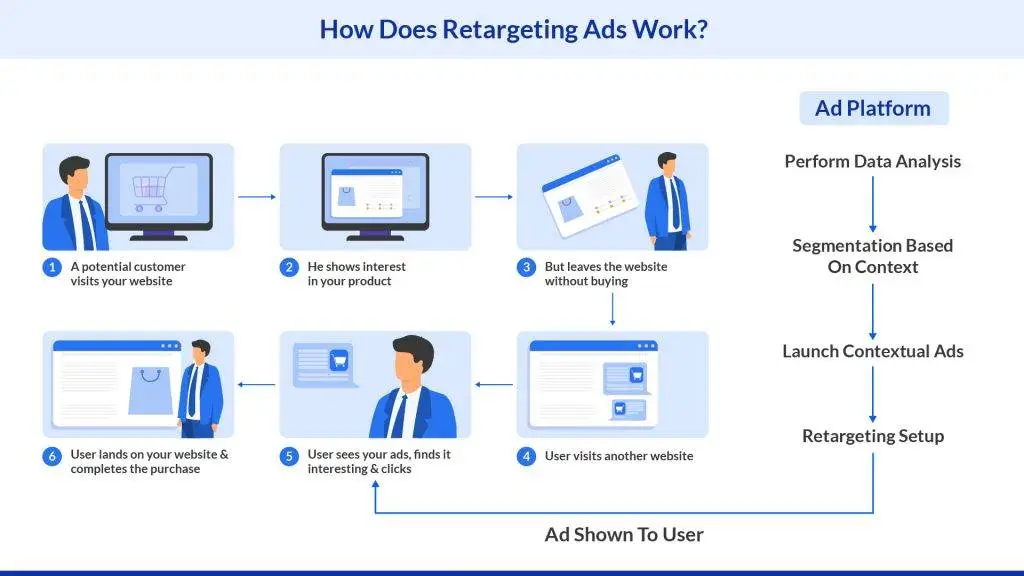


Forrester's report on shopping cart abandonment reveals that 88% of online shoppers have abandoned their carts before completing a purchase. Even more concerning, 70% of these abandonments occurred just before the final order was placed. Retargeting ads are widely used due to their effectiveness, with a click-through rate of 0.7%. They streamline the checkout process by directing customers to their abandoned carts when they click on the ad. To efficiently target these abandoned cart customers, businesses can incorporate tracking pixels on their checkout pages. This enables them to launch retargeting ads that remind customers about their incomplete transactions, often displaying visuals of the items left in the cart.
Why it works
- Closing the sales loop: With 70% of carts abandoned just before completing the order, retargeting ads is a crucial step in closing the sales loop and improving conversion rates.
- Relevance and timing: By reminding shoppers what they're missing out on and offering a seamless checkout experience, these remarketing ads capitalize on relevance and the psychological principle of loss aversion.
- Incentivization: Offering discounts or free shipping incentives can entice customers to return and complete their purchases, especially when they know their cart is at risk of expiring.

Credit : Best Buy
Best Buy's ad subtly prompts customers to review their selected items and emphasizes the convenience of free store pickup and shipping for orders over a certain amount, urging them to move forward with their purchase.
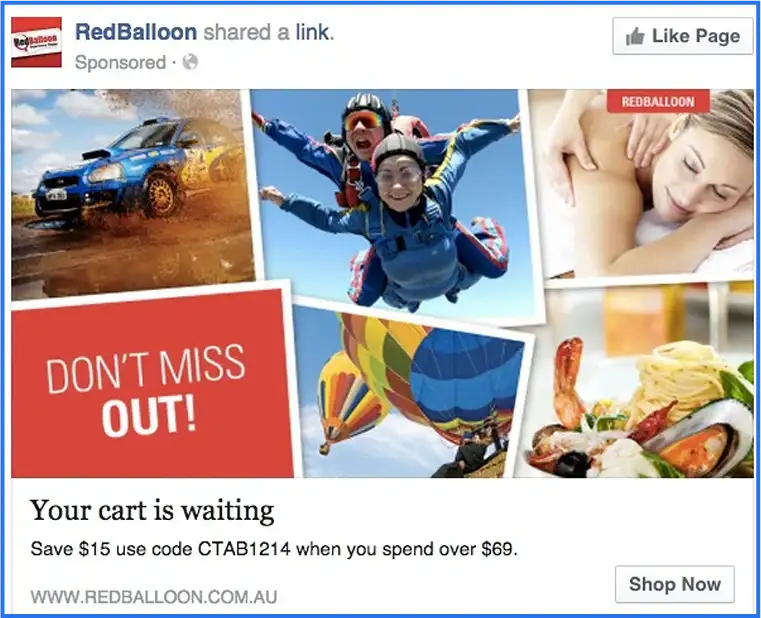
Credit: Redballoon
The RedBalloon ad encourages customers to finalize their purchase by offering a special discount code and conveying a feeling of urgency with a DON'T MISS OUT message. It also displays a range of experiences to cater to different interests.
Retargeting ad campaign idea #6: Use ads for cross-selling and upselling opportunities
The main goal of this retargeting ad campaign is to see a customer's conversion as just the beginning rather than the end. Studies show that selling to an existing customer is 60-70% more likely than selling to a new prospect.
Retargeting ads for cross-selling and upselling presents a strategic opportunity to increase sales and develop stronger relationships with customers. By understanding their needs and offering relevant deals, businesses can significantly boost revenue while improving customer satisfaction.
Why it works
-
Trust and familiarity: Existing customers have already established their confidence, making them more responsive to future offers.
-
Increased Average Order Value (AOV): Effective cross-selling and upselling enhance AOV, resulting in better revenue per customer.
-
Improved Client Lifetime Value (CLV): These strategies boost customer loyalty and CLV by consistently providing value.
-
Cost efficiency: Since acquiring a new client may be up to five times more expensive than selling to an existing one, retargeting for cross-selling and upselling is a cost-effective marketing strategy.
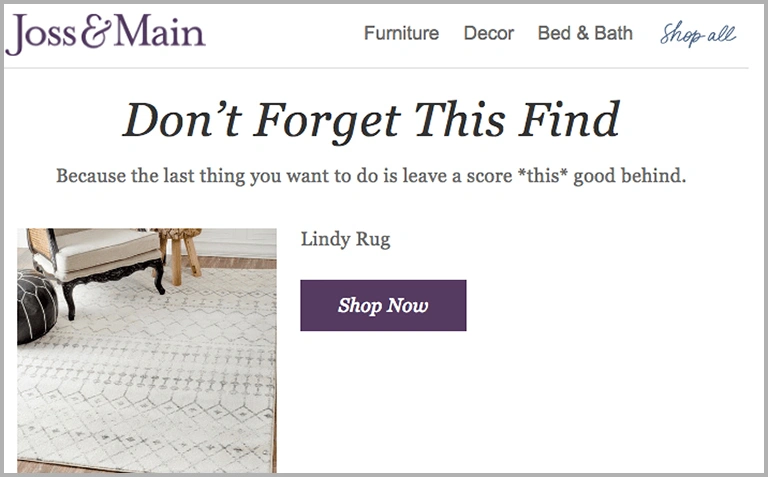
Credit: Joss and Main
This ad reminds the shopper of a missed item, offering a simple and direct path back to purchase, harnessing the power of suggestion and the FOMO.
The mini-cart advertisement is another example of retargeting, it cleverly recommends complementing items, such as matching lipstick, to persuade the buyer to add more to their bag to complete the look.
Run retail media ads with Flipkart Commerce Cloud
Step into the world of retail media advertising with Flipkart Commerce Cloud (FCC), a powerful platform designed to help businesses reach their target audience effectively. With its advanced targeting capabilities and valuable analytics, FCC is an essential asset for businesses looking to enhance their online presence and increase sales.
FCC's cutting-edge targeting features and in-depth analytics ensure that brands can connect with potential customers at the right time, guaranteeing maximum ad visibility. With customer insights and behavior patterns, FCC enables businesses to create personalized and impactful ad campaigns that boost brand recognition and drive sales.
Get in touch with FCC to take your retail advertising strategy to new heights.
FAQ
A retargeting ad campaign is a form of digital advertising designed to re-engage users who have previously visited a company's website or interacted with their brand but did not complete a desired action, like making a purchase.
An example of a retargeting ad is showing an ad for a specific pair of sneakers to a user on Facebook after they added those same sneakers to their shopping cart on the brand's website but abandoned the checkout process.
The primary goal of retargeting ads is to increase conversions by bringing warm leads (users already familiar with the brand) back to the website to complete a purchase, subscription, or other valuable action.
The difference between targeting and retargeting is that targeting focuses on reaching new users based on demographics or interests, while retargeting focuses on re-engaging users who have already shown intent or familiarity with the brand.
Historically, retargeting referred specifically to paid display ads served to users based on cookie data, while remarketing referred to collecting user contact info to send them follow-up content, like email campaigns. Today, the terms are often used interchangeably to mean re-engaging previous visitors.
Retargeting for Google Search campaigns works through Remarketing Lists for Search Ads (RLSA), which allows advertisers to customize their search ads, bids, and keywords only for users who are already on their retargeting list when those users perform a new Google search.
Retargeting is an effective strategy in PPC campaigns because the audience is pre-qualified (they’ve already shown interest), resulting in significantly higher click-through rates (CTR) and conversion rates compared to campaigns targeting cold audiences.
More Blogs
See how retailers and brands are winning with FCC
Everything About Price Skimming Strategy Explained
Read More
What is a High-Low Pricing Strategy?
Read More
Ultimate Guide To Dynamic Pricing Strategy In 2026
Read More
Retail Pricing Strategies: Winning with Promotion Pricing in Competitive Markets
Read More
Ad Tags: Enhancing Ad Serving Efficiency in Large-Scale Campaigns
Read More