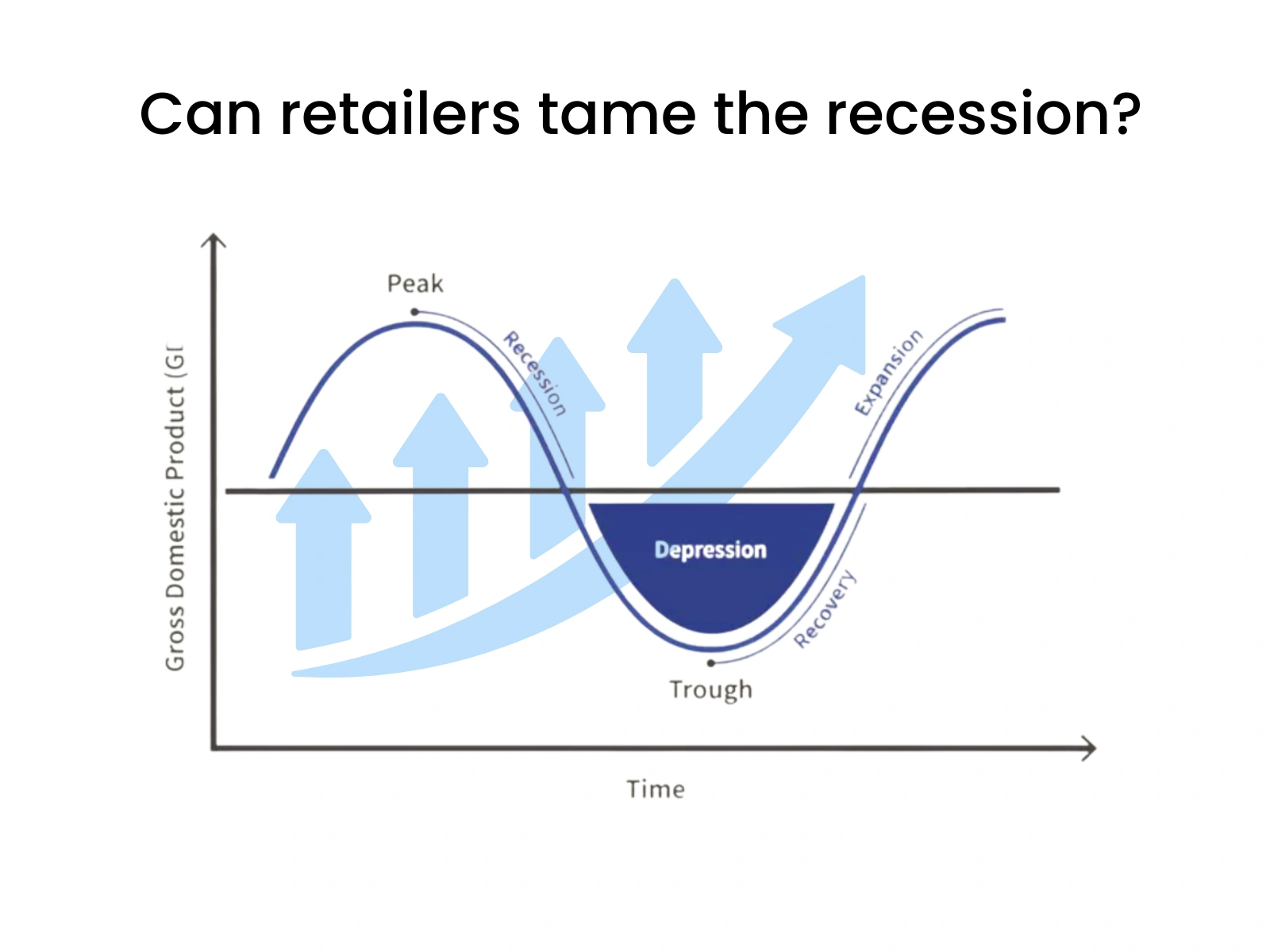
During June of 2022, the World Bank predicted a rather ominous economic year for the world. Global growth is expected to slump from 5.7 per cent in 2021 to 2.9 per cent in 2022, significantly lower than the 4.1 per cent that was anticipated in January. These concerns have continued to intensify to this moment, with global growth projected to further decelerate to about 2.4 percent amid persistent inflationary pressures.
This announcement further emphasised the fears of economists and consumers around the world. Some major developed economies had their own share of fuel cost crises and commodity shortages, raising the fear of a food crisis in Europe. The American Shipper reported an all-time high peak in fuel prices during the Russia – Ukraine war. It doesn't matter which side of the world you belong to as a retailer, rising fuel costs mean one thing for business – a higher cost of doing business.
And if the economic bodies are to be believed, we are in for another recession.
Higher costs and lower economic productivity have an ominous one-term description – Stagflation, a situation that the US economy is experiencing currently. Historically, such downturns have loomed on consumer goods and intermediate goods trade since the great depression, intermittently. The effects have been most pronounced in a post-globalisation world. Interdependent economies have led to an international impact, as was observed during the downturn of 2007 – 2009. Retailers around the world are keeping an eye on the crashing markets and adapting to the economic situation. Here are some mitigating steps and useful information that retailers across the globe can include in their long-term retail strategy to cushion themselves from the impact of the predicted recession.
1. Tailor Your Retail Strategy in Recession Economy by Region
Stagflation doesn't impact all markets equally. The current economic situation stems from multiple compounding crises: lingering supply chain disruptions from the pandemic, the ongoing Ukraine conflict affecting European commodity prices, and 2025 tariff policies that vary significantly by region and product category.
Southeast Asia, Europe, and North America are all experiencing inflation, but the drivers differ substantially. Manufacturing and agricultural economies like India and China maintain stocks of intermediate and capital goods, but consumer goods face scarcity due to higher import duties. Meanwhile, European retailers grapple with energy cost volatility tied to geopolitical instability, while North American retailers navigate tariff-induced price pressures on imported goods.
Retailers must customize action plans based on their specific geographic challenges, whether dealing with higher fuel and local transport costs or procurement difficulties for finished goods. Each market exhibits different supply-demand dynamics and consumer behaviors. Use granular customer data to understand micro-level market conditions rather than applying blanket strategies. Planning with predictive technology and regional expertise makes the critical difference between protecting margins and losing market share.
2. Price Transparently with a Data-Driven Pricing Strategy in Retail During Inflation
Raising prices during inflation tests the delicate balance between short-term profitability and long-term customer loyalty. However, research shows that customers accept reasonable, transparent price increases during economic crises, provided retailers avoid the perception of price gouging.
The key differentiator is pricing perception. Price skimming, aggressively raising prices on scarce items, destroys customer trust. Instead, apply data analytics to pricing management and eliminate experimentation that comes at customers' expense, especially during economic uncertainty.
As fuel prices fluctuate and shipping companies optimize costs, certain products become scarce. Planning and pricing teams face a critical decision: raise prices as demand increases and supplies dwindle, or maintain advertised prices to preserve customer goodwill. This requires comprehensive market intelligence, including competitive analysis, consumer segment behavior, and risk assessment.
Ensure your data management infrastructure is secure, robust, and instantly accessible. Successful price adjustments depend on understanding targeted segments and category-specific dynamics. Communication matters as much as the price itself; transparency builds trust. Replace pricing experiments with strategic, data-backed moves using automation, domain expertise, or both. Remember: customers tolerate necessary price increases when they understand the reasoning and trust the brand's integrity.
3. Leverage D2C Models and Local Sourcing in Your Stagflation Retail Strategy
Direct-to-consumer (D2C) brands demonstrate a proven model for stagflation resilience. By manufacturing and shipping products directly to buyers without traditional intermediaries, D2C companies control costs more effectively than conventional retail channels. This end-to-end control over production, marketing, and distribution creates competitive advantages when freight costs and supply chains become volatile.
The D2C advantage intensifies during economic downturns because these brands typically source and sell locally, insulating them from international shipping price fluctuations. Their business model naturally incorporates the supply chain resilience that traditional retailers must now build deliberately.
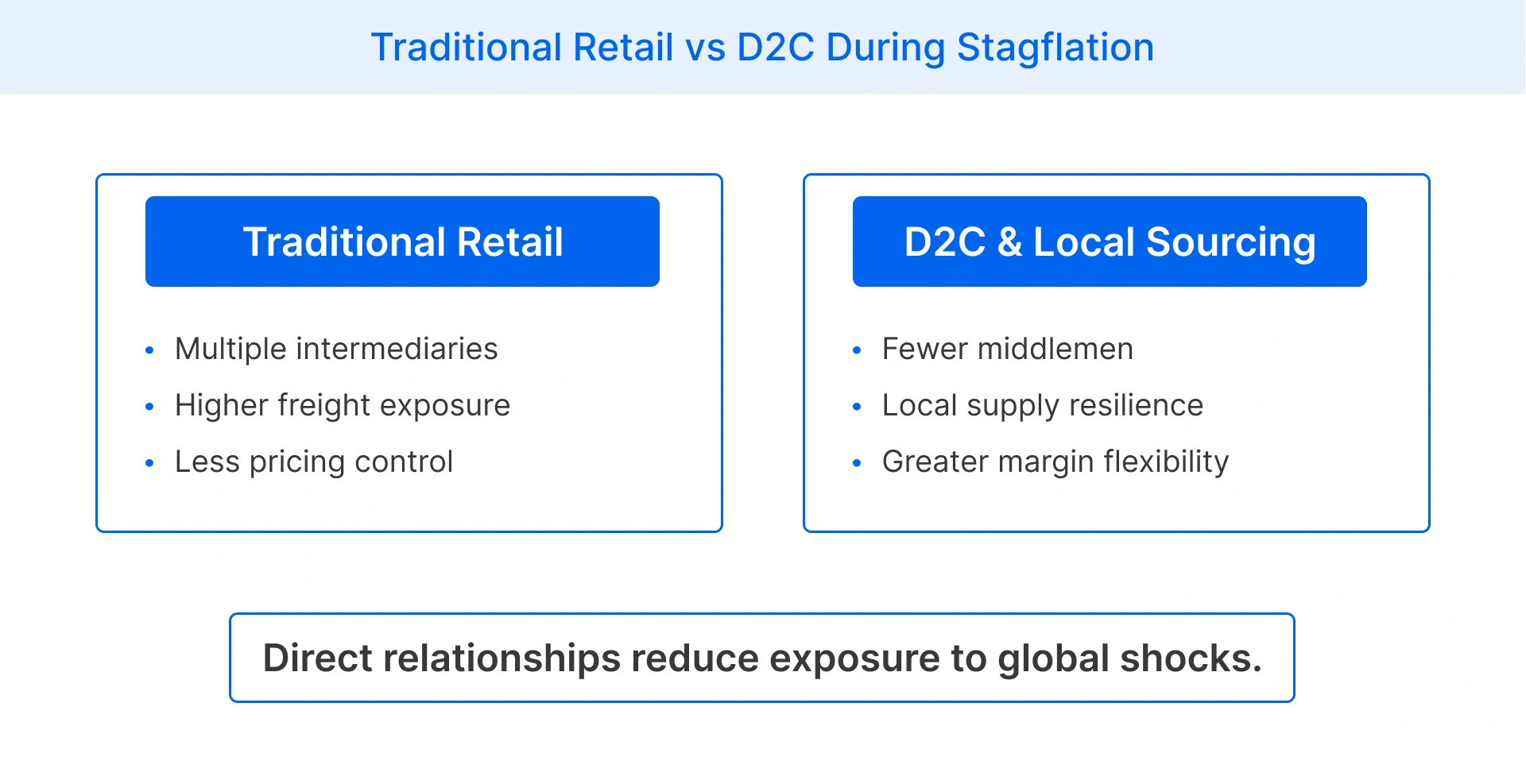
Traditional retailers can adopt D2C principles without completely restructuring operations. Consider launching direct product lines with local sourcing, establishing closer relationships with regional manufacturers, or creating brand-specific e-commerce channels that bypass traditional distribution networks. Even lifestyle and consumer goods brands can target 'well-to-do' and 'live-for-today' customer segments whose purchasing power remains stable despite broader economic turbulence.
The lesson from D2C success isn't to abandon established retail channels, it's to incorporate localized, direct relationships that provide flexibility when global supply chains face disruption. Lower operational costs create pricing flexibility that becomes invaluable when competitors struggle with inflated logistics expenses.
4. Optimize Product Assortment as Part of Your Retail Pricing Strategy During Stagflation
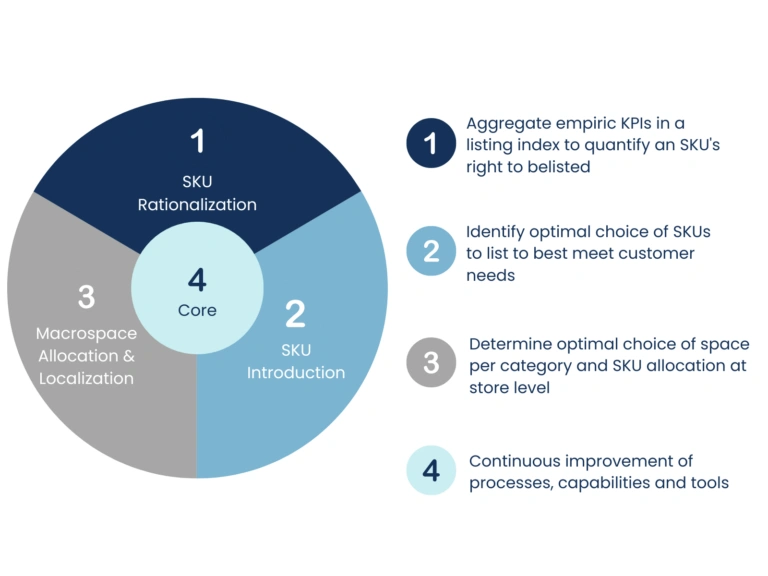
When demand declines, retailers must intensify focus on core product lines while eliminating complexity from non-performing or marginally differentiated items. This strategic consolidation reduces marketing expenses and improves working capital, critical when slow-moving inventory ties up cash that could otherwise buffer against economic uncertainty.
However, assortment optimization requires careful balance. While cutting underperformers protects margins, retailers must preserve their innovation pipeline. Novel products and improvements attract customer attention and drive purchases even during economic downturns; consumers still spend on items that deliver clear value or solve pressing problems.
Modern planning tools evaluate multiple factors simultaneously, such as sales velocity, margin contribution, inventory turnover, customer sentiment, and competitive positioning, to identify which products deserve continued investment versus which drain resources. Implement selection management tools or deploy specialized teams of risk analysts and planners to make data-informed decisions. The goal isn't simply reducing SKU count; it's concentrating resources on products that maintain customer engagement while delivering sustainable profitability during stagflation.
5. Build and Retain Customer Trust in Your Stagflation Retail Strategy
Despite economic turbulence, consumers maintain connections with known and trusted brands, which represent safe choices during uncertain times. This creates opportunity: retailers who reinforce customer relationships now position themselves advantageously for both survival and post-recession growth.
Demonstrate empathy through messaging that acknowledges shared challenges. Many successful brands have adapted their communications to resonate across customer segments, positioning products as valuable regardless of economic conditions. The message isn't 'buy despite tough times', it's 'we understand and we're here to help you navigate this together.'
Critically, maintain product quality even as sales decline. Customers notice quality reductions and interpret them as betrayal during difficult times. Instead, reward customer loyalty through recognition programs, exclusive offers, or enhanced service. These investments in relationships pay dividends when economic conditions improve and customers remember which brands stood by them.
Trust-building isn't just ethical, it's strategic. Acquiring new customers costs significantly more than retaining existing ones, and that cost disparity widens during stagflation when marketing efficiency decreases. Remind customers why your brand represents the trusted, safe choice, then deliver on that promise consistently.
6. Plan Long-Term Recovery in Your Retail Strategy in Recession Economy
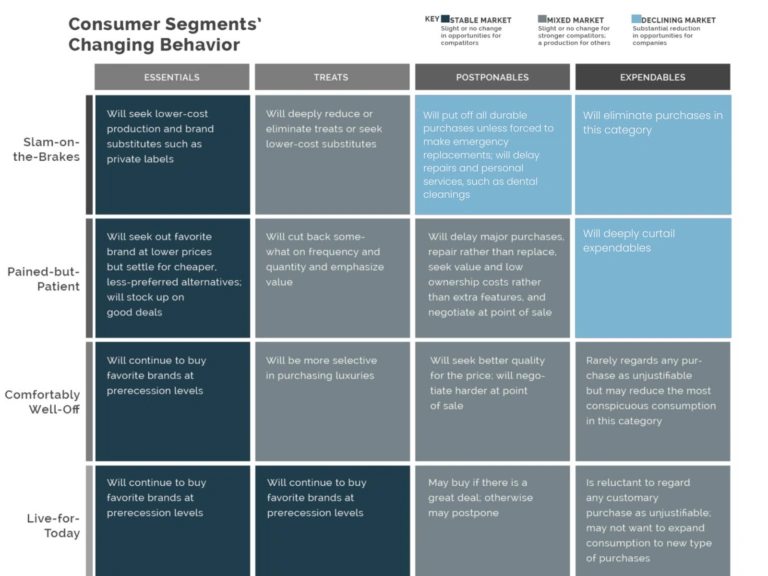
Both brands and consumers will emerge from stagflation changed. Consumer behavior undergoes significant shifts during extended economic stress, and companies must monitor and adapt to these evolving needs through messaging and product offerings that resonate with revised priorities.
However, behavioral changes aren't necessarily permanent. Consumer patterns typically normalize over time, anywhere from 1-2 years to nearly a decade, depending on the severity and duration of economic disruption. Current stagflation conditions, exacerbated by compounding global crises, suggest the recovery period may extend longer than previous recessions.
Less affluent consumer segments will likely maintain heightened economic anxiety and spending caution well beyond when macroeconomic indicators improve. These customers may approach businesses with skepticism, suspecting opportunistic profit-seeking at their expense. Retaining both trust and revenue requires a carefully formulated strategy that balances business needs with demonstrated customer commitment.
Prepare for sustained behavioral shifts rather than temporary adjustments. The positive side: stagflation has forced businesses to develop rapid response capabilities for unforeseen demand changes. This adaptability represents a competitive advantage that will serve companies well during recovery. Organizations that master agile operations during crisis conditions gain capabilities that compound returns when markets stabilize.
Execute Your Stagflation Retail Strategy with Flipkart Commerce Cloud
Implementing these strategies requires more than good intentions; it demands technology infrastructure capable of processing complex data, generating actionable insights, and adapting in real-time as market conditions shift. Navigating stagflation requires more than just strategy; it demands the right technology to execute with precision.
Flipkart Commerce Cloud (FCC) provides retailers with AI-driven tools specifically designed for challenging economic environments like stagflation:
Dynamic Pricing Intelligence: Advanced algorithms help implement the transparent, data-driven pricing strategy crucial during inflation. Balance margin protection with customer retention through real-time competitive intelligence and demand forecasting that eliminates guesswork from price optimization.
Smart Assortment Planning: Identify high-performing products and eliminate underperformers using comprehensive data analysis. Selection management tools optimize inventory while preserving innovation, essential for any retail strategy in recession economy where capital efficiency determines survival.
Predictive Consumer Analytics: Understand shifting customer behaviors before they impact revenue. Machine learning models help anticipate market trends and adapt your retail pricing strategy during stagflation with confidence, reducing reactive decision-making.
Supply Chain Resilience Tools: From local sourcing optimization to freight cost management, FCC helps build the operational flexibility required to weather economic uncertainty while maintaining service levels customers expect.
The difference between retailers who struggle through stagflation and those who emerge stronger often comes down to decision-making speed and accuracy. Technology platforms that consolidate data, generate insights, and enable rapid strategy adjustments provide the competitive edge that manual processes cannot match.
With the right strategies and the right technology partner, we will not only get through stagflation, but we'll be positioned for accelerated growth when economic conditions improve.
Ready to implement a proven stagflation retail strategy?
Book a demo to optimize pricing, assortment, and customer engagement during economic uncertainty.

FAQ
Stagflation is a rare combination of high inflation and stagnant economic growth that severely pressures retailers. This environment forces production costs higher while high unemployment rates limit consumer spending. Businesses must navigate these economic times carefully to maintain profit margins as shipping costs rise and slow growth impacts the overall retail strategy.
Pricing strategy is important for retailers during stagflation because traditional monetary policy often fails to balance higher inflation and slow economic growth simultaneously. As the Federal Reserve manages interest rates, Flipkart Commerce Cloud helps brands implement a retail pricing strategy during stagflation that protects margins against rising energy costs and persistent inflation.
Retailers can raise prices without losing customers by focusing on value perception and data-driven insights. During periods of high inflation, a precise retail strategy in recession economy conditions allows for surgical price increases on specific items. This approach mitigates the risk of loss while accounting for higher interest rates and production costs.
Retailers should cut product lines during stagflation only if they are non-performing assets that drain capital. Cleaning up assortments during this period of stagflation improves working capital and offsets a dramatic increase in operational expenses. Flipkart Commerce Cloud assists small business and enterprise partners in identifying high-margin items amid slow economic growth.
Consumer behavior changes in stagflationary markets as shoppers become hyper-focused on the personal consumption expenditures price index. During these economic times, people prioritize essential goods over luxury items due to job opportunities becoming scarce. Understanding these effects of stagflation is vital for maintaining a competitive retail pricing strategy during stagflation.
Retailers should handle inventory management during stagflation by utilizing AI to predict demand shifts and avoid overstocking. Since the last time the economy faced such conditions in the early 1980s, technology has evolved to manage stagnant economic growth. Efficient inventory prevents the risk of loss when consumer spending fluctuates unpredictably.
The risks retailers should be aware of when planning for stagflation include the inverse relationship between unemployment and higher prices. Central bank actions and the federal funds rate can shift market conditions overnight. Failing to adapt to the effects of inflation and rising energy costs can permanently damage long-term profit margins and growth.
Some examples of retailers successfully navigating stagflation include those that adopted agile technology and current market leaders using Flipkart Commerce Cloud. By optimizing their retail strategy in recession economy cycles, these brands boost growth through precise pricing. They successfully counter high inflation and shipping costs through automation.
More Blogs
See how retailers and brands are winning with FCC
Everything About Price Skimming Strategy Explained
Read More
What is a High-Low Pricing Strategy?
Read More
Ultimate Guide To Dynamic Pricing Strategy In 2026
Read More
Retail Pricing Strategies: Winning with Promotion Pricing in Competitive Markets
Read More
Ad Tags: Enhancing Ad Serving Efficiency in Large-Scale Campaigns
Read More