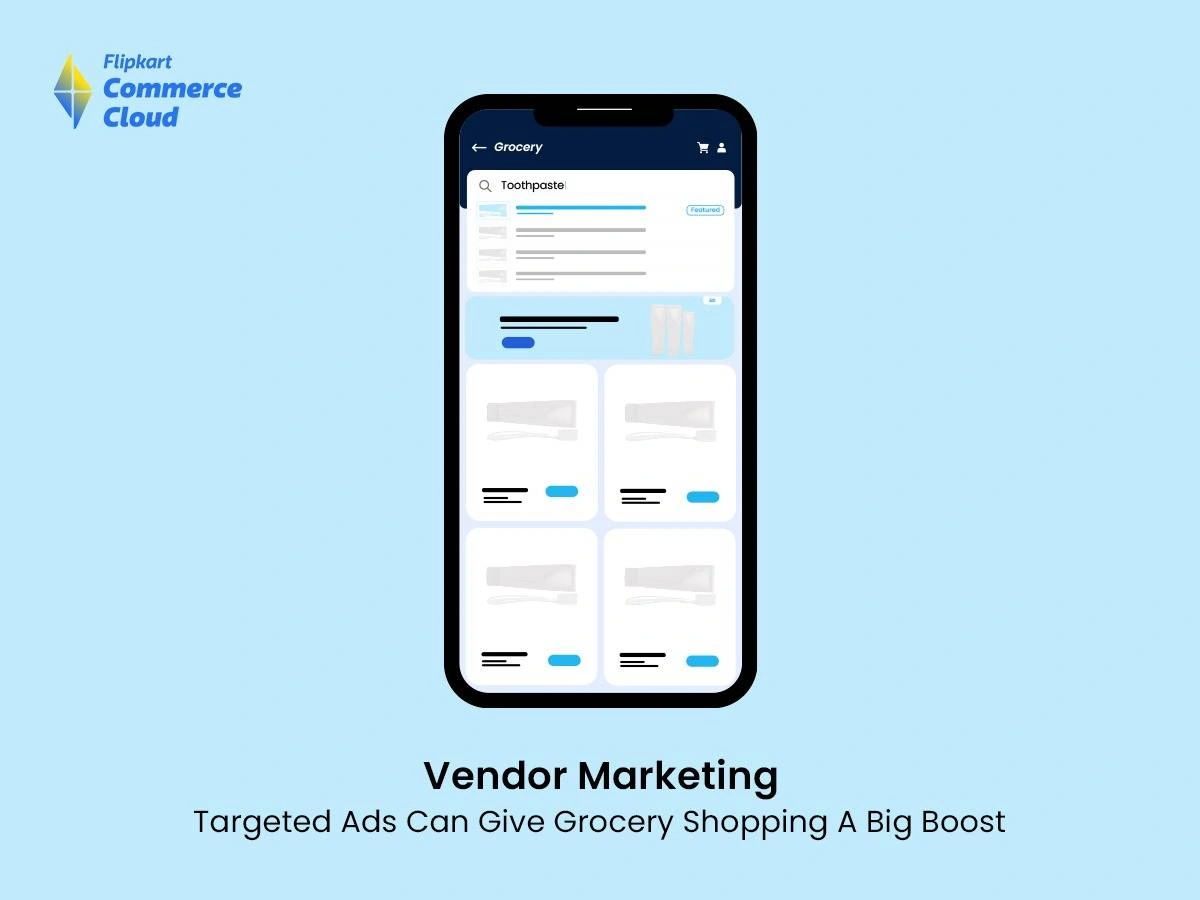
The global online grocery market has matured into a hyper-competitive ecosystem. While the industry was valued at USD 285.70 billion in 2021, the real story today is the shift from broad marketing to high-precision, targeted ads for grocery shopping.
Modern shoppers no longer just "go" to the store; they live in a state of continuous replenishment. With advances in ecommerce like multiple payment options and contactless delivery now standard, the new frontier is predictive convenience. Vendors are moving away from generic banners and latching onto the potential of retail media to capture attention at the exact moment a customer realizes they are out of milk or planning a weekend BBQ.
What Exactly Are Targeted Ads for Grocery Shopping?
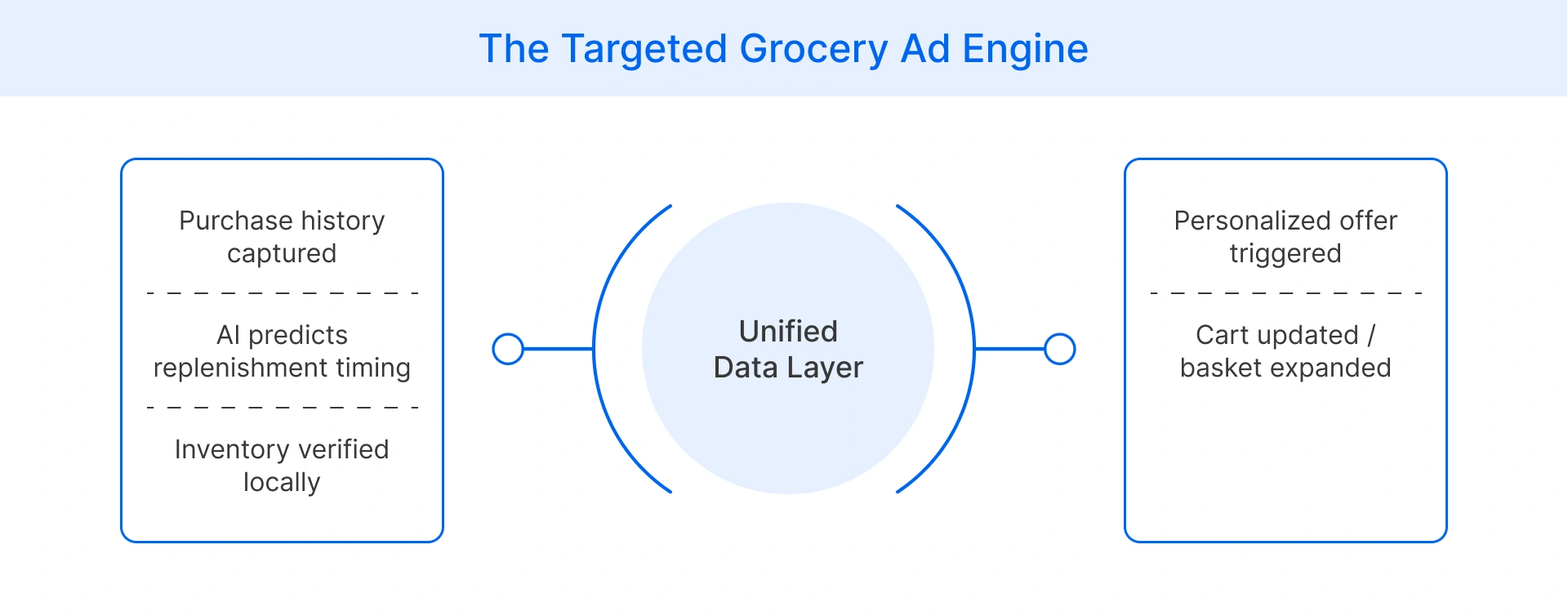
At its core, a targeted ad is an advertisement tailored to a specific shopper based on their unique data: their purchase history, location, dietary preferences, and even the time of day they usually shop.
In the grocery industry, this is particularly powerful because shopping is habitual. Targeted ads for grocery shopping act as "digital assistants." For instance, if you frequently buy organic produce, you won't see a generic ad for a soft drink; instead, you might see a promotion for a new line of organic smoothies.
This level of precision requires a unified data layer. Modern ecommerce platforms, like FCC’s Digital Commerce Engine, facilitate this by syncing customer purchase history directly with the storefront. This allows vendors to serve ads that feel like a "smart list" update rather than a random promotion.
Why Targeted Ads are the Primary vendor marketing for grocery ecommerce
Grocery retail is a unique industry because it is high-frequency and low-margin. Unlike buying a car or a laptop, grocery shopping happens weekly, and the items are often "generic" (like milk, eggs, or rice).
Targeted ads for grocery shopping are essential because they:
- Drive Loyalty in a Brand-Agnostic Space: Since grocery searches are often generic, targeted ads allow a specific vendor to capture a "milk" search and turn it into a branded purchase.
- Capitalize on Seasonal Cycles: Automated AI assistants, such as can analyze when a customer is likely to run out of a staple and surface a targeted reminder ad at exactly the right moment.
- Increase Basket Size: By suggesting complementary items (like suggesting "taco shells" to someone buying ground beef), targeted ads turn a single-item intent into a full-meal purchase.
Targeted Ads Retail Media Solutions for Grocery Shopping
In 2026, the success of a grocery business depends on "Share of List." Shoppers are increasingly splitting their weekly needs across multiple retailers based on value and availability. Targeted ads for grocery shopping are the primary tool used to win back those specific "missions."
1. Engaging Customers at the Right Time and Right Place
The digital grocery aisle is a fast-moving environment. Unlike discretionary shopping, grocery needs are often urgent or strictly routine. To be effective, vendor marketing for grocery ecommerce must lean on automated triggers that recognize these patterns.
For example, 2026 has seen the rise of "Agentic Commerce," where AI assistants help manage household stock. If a customer typically replenishes their coffee supply every two weeks, an ad served on day 12 is a helpful nudge; the same ad on day three is a wasted impression.
This is where an AI-powered Retail Media Platform becomes invaluable. Analyzing historical purchase data and shopping behaviour can help predict replenishment cycles, allowing vendors to surface the right products at the exact moment a buyer is most likely to add them to their cart.
2. Local Significance and Inventory-Aware Reach
Grocery shopping is fundamentally local. A shopper in a suburban neighborhood has different needs and a different local "pantry" than a city-center dweller.
Grocery retail targeted advertising works best when it is "inventory-aware." There is nothing more frustrating for a consumer than clicking a targeted ad for a specific yogurt brand only to find it out of stock at their local branch. In 2026, top-tier retailers use location-based data to ensure that digital ads are only shown if the physical product is ready for pickup or delivery nearby.
3. Targeted Initiatives and "Smart" Incentives
Incentives are no longer just generic coupons found at the bottom of a receipt. Today, targeted ads allow vendors to offer particular incentives, like free shipping on heavy bulk items or special discounts on "first-time" organic purchases, to specific customer segments.
Since grocery buyers often compare prices across apps, seeing a personalized review or a "frequently bought with" discount at the moment of decision can give a vendor a significant edge.
4. Opportunities for Personalisation
In 2026, personalization has moved beyond simply putting a customer’s name in an email. In the grocery sector, where dietary needs, allergies, and lifestyle choices dictate every purchase, targeted ads for grocery shopping have become a tool for curation.
The goal is to create a "Store of One." For a busy parent, this means seeing ads for quick-prep meal kits or bulk-sized healthy snacks. For a fitness enthusiast, it means the digital storefront prioritizes high-protein staples. This level of 1:1 curation is only possible when your ecommerce platform can unify a buyer’s unique purchase history with real-time inventory. When the ad matches the shopper's pantry needs, the marketing stops being a "pitch" and starts being a helpful service.
5. Opportunities for Innovation through "Agentic Commerce"
The most significant innovation in 2026 is the rise of Agentic Commerce. This is where AI doesn't just display an ad; it acts as an assistant that helps the shopper build their cart.
Instead of a shopper searching for individual items, they might tell their app: "I need ingredients for a low-carb dinner for four under $30." Innovation in retail media solutions for grocery allows your products to appear as the specific solution to that query.
This is where the industry is heading: moving from static search results to conversational outcomes. To keep up, vendors are using AI tools to analyze complex buyer requirements in real-time. Whether it's suggesting a high-quality alternative for an out-of-stock item or bundling complementary products together, this technology ensures the path to purchase is as short as possible.
6. Profitability in a Dynamic Retail Environment
Online grocery selling has traditionally been a high-volume, low-margin game. However, vendor marketing for grocery ecommerce has unlocked a new revenue stream that significantly offsets the high cost of logistics.
In 2026, the playing field is more level. Smaller, niche vendors can use targeted ads to reach a specific demographic (e.g., "shoppers interested in sustainable packaging") with extreme efficiency. Conversely, larger businesses are leveraging their vast resources to adopt a data-first approach, using retail media platforms and ML-powered pricing solutions to bring online insights directly to their sales teams. By knowing exactly what local customers are searching for, store managers can optimize their shelves in real-time, boosting both online and offline profitability.
The Challenges in Grocery E-commerce Marketing
While the shift toward digital-first grocery is a goldmine for growth, it isn't without significant hurdles. Vendors in 2026 face a unique set of obstacles that didn't exist a few years ago. Understanding these challenges is the first step toward building a resilient marketing strategy.
1. The Data Disconnect: Marketing Without Inventory Insight
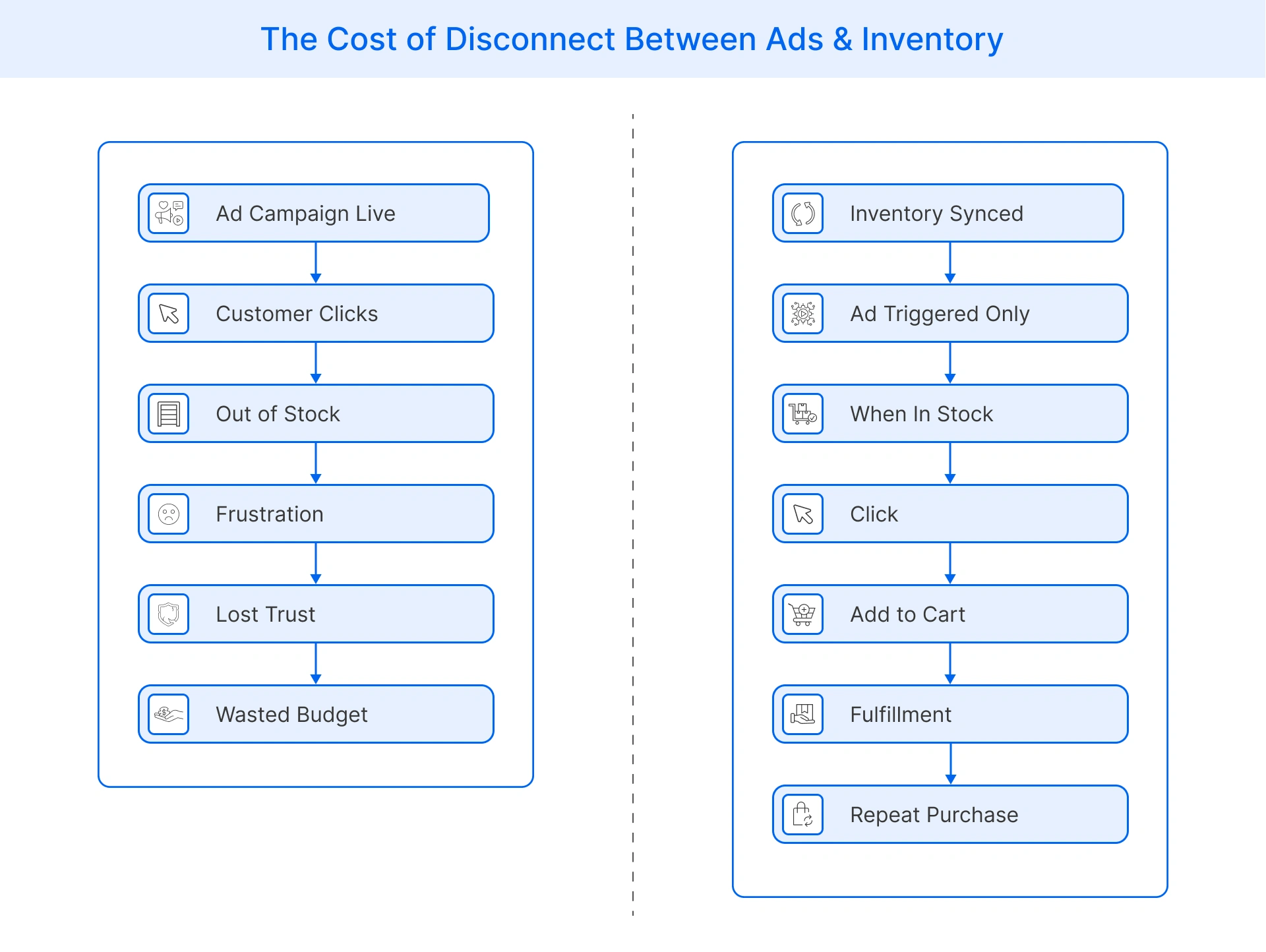
The Challenge: In the fast-paced grocery world, inventory levels fluctuate by the hour. A common pitfall for vendors is running high-budget targeted ads for grocery shopping for products that are currently out of stock or delayed in the supply chain. This results in "wasted spend" and, more importantly, customer frustration when their "click" leads to an empty digital shelf.
How to Overcome It: Vendors must move toward inventory-aware advertising. This means integrating your marketing platforms directly with your warehouse data. By ensuring that your ads only trigger when stock is available at the local fulfillment center, you protect your ROI and maintain consumer trust.
2. Breaking Through Generic Search Habits
The Challenge: Most grocery shoppers are "mission-driven" and search for generic terms rather than specific brands (e.g., searching for "Greek yogurt" instead of a specific brand name). In a crowded digital aisle, smaller or premium vendors often find it difficult to break the habits of shoppers who instinctively reach for the cheapest or most familiar option.
How to Overcome It: Focus on contextual relevance. Instead of just bidding on broad keywords, successful vendors use retail media solutions for grocery to appear within "solutions." For example, if a shopper is looking for "school lunch ideas," your healthy snack brand should appear as a suggested bundle item rather than a random banner. Providing value through recipes or meal-prep suggestions helps turn a generic search into a branded discovery.
3. Maintaining Brand Identity in a "White-Label" World
The Challenge: As retailers push their own private-label brands, third-party vendors often find their products pushed "below the fold." In a digital environment, if you aren't in the top three search results, you effectively don't exist.
How to Overcome It: Leverage first-party loyalty data. Vendors can overcome the "private-label squeeze" by using targeted ads to reach their existing customers with personalized "welcome back" offers or "subscribe and save" incentives. By owning the relationship with the customer through data, you ensure that your brand stays top-of-mind, regardless of how the retailer’s generic search results are weighted.
4. The Accuracy Gap in Field Sales
The Challenge: There is often a massive gap between what a vendor sees on their digital dashboard and what is actually happening on the physical grocery shelf. If a marketing campaign drives a 20% spike in demand, but the local store manager hasn't increased their order, the campaign fails at the "last mile."
How to Overcome It: Bridge the gap with real-time field intelligence. Equipping sales teams with mobile tools that show live digital demand allows them to walk into a store and provide proof to the manager that they need more shelf space. When your physical stocking strategy matches your digital ad spend, you eliminate the "out-of-stock" barrier to growth.
How Flipkart Commerce Cloud Approaches Grocery Retail Targeted Advertising
Choosing the right B2B ecommerce platform in 2026 isn't just about listing products; it's about aligning your technology with the rapid, "high-turnover" reality of the grocery business.
Modern grocery transactions demand real-time synchronisation between the warehouse and the storefront, dynamic pricing that updates instantly, and the ability to handle high-volume orders without friction. Most generic platforms struggle with this because they were built for slower-moving industries.
Flipkart Commerce Cloud(FCC) was purpose-built to support this high-velocity environment. Developed from 25M+ engineering hours and scale-tested on billions of Flipkart transactions, the platform provides:
-
Retail Media Platform: Think self-serve advertising that actually works. No third-party cookies, just smart targeting that puts your display ads, PLAs, and offsite campaigns in front of shoppers exactly when they're ready to buy.
-
ML-Powered Pricing: Your pricing stays competitive automatically. The system watches what competitors are charging and suggests adjustments in real-time so you don't have to manually track prices across dozens of products.
-
Digital Commerce Engine: This is the backbone that ties everything together. It's headless and composable (meaning it plays nice with your existing tech), manages your entire catalog, runs promotions at scale, and makes sure that when someone clicks your ad, the product is actually in stock and ready to ship.
Whether you're modernising your vendor marketing strategy or launching a branded grocery portal, FCC's real-time data and composable architecture help you eliminate wasted ad spend, increase basket size, and deliver the seamless experience today's buyers demand.
FAQ
Vendor marketing in grocery retail involves strategic partnerships where brands promote products directly within a grocery store ecosystem. These advertising campaigns use digital media to enhance brand visibility and drive grocery sales. By leveraging an online store, vendors improve customer engagement and ensure their new products reach the target audience effectively.
Targeted ads help grocery shopping online by improving the shopping experience through relevant items based on individual shopping habits. These ads boost conversion rates for the online grocery business by presenting "smart lists" to potential customers. Using a mobile app, shoppers receive helpful reminders that simplify online orders and increase customer satisfaction.
Targeted ads are important for grocery ecommerce growth because they maximize market share in a high-frequency, low-margin industry. These marketing efforts analyze customer behavior to drive customer loyalty and repeat purchases. Platforms like FCC help grocery retailers scale their online presence while significantly increasing the average online grocery sales per user.
Targeted ads can be location-specific for groceries by using demographic data to connect with local communities. This ensures grocery advertising only promotes items available for curbside pickup or delivery at nearby physical stores. Effective ad placements rely on real-time inventory syncing to bridge the gap between digital intent and local foot traffic.
Personalising grocery ads requires analyzing customer data such as purchase history, dietary preferences, and data analytics. Advanced machine learning tools within FCC's Digital Commerce Engine process this information to offer a curated online experience. By understanding the unique customer base, an ecommerce store can deliver digital coupons that feel like personalized services rather than generic promotions.
Targeted ads help smaller grocery brands compete online by allowing them to reach a specific niche via digital advertising. Instead of fighting for broad brand loyalty, small local businesses use retail media solutions for grocery to target high-intent shoppers. This precision increases their brand visibility and allows them to gain market share against larger competitors.
Grocery ecommerce platforms use retail media networks to increase vendor partnerships by offering high-value ad placements and transparent google analytics reporting. Providing the right platform helps vendors track conversion rates and customer engagement accurately. These retail media solutions for grocery improves the customer experience while boosting overall profitability.
Successful examples of vendor marketing campaigns in grocery ecommerce include how FCC helped a multinational retail giant transform its advertising business using FCC's Retail Media Platform. By introducing self-serve Product Listing Ads, the retailer empowered grocery and food vendors with cost-efficient, targeted advertising tools resulting in 5X year-over-year revenue growth and a 4X increase in vendor brand partnerships on the platform.
More Blogs
See how retailers and brands are winning with FCC
Everything About Price Skimming Strategy Explained
Read More
What is a High-Low Pricing Strategy?
Read More
Ultimate Guide To Dynamic Pricing Strategy In 2026
Read More
Retail Pricing Strategies: Winning with Promotion Pricing in Competitive Markets
Read More
Ad Tags: Enhancing Ad Serving Efficiency in Large-Scale Campaigns
Read More