

What is the difference between addressable advertising and programmatic advertising?
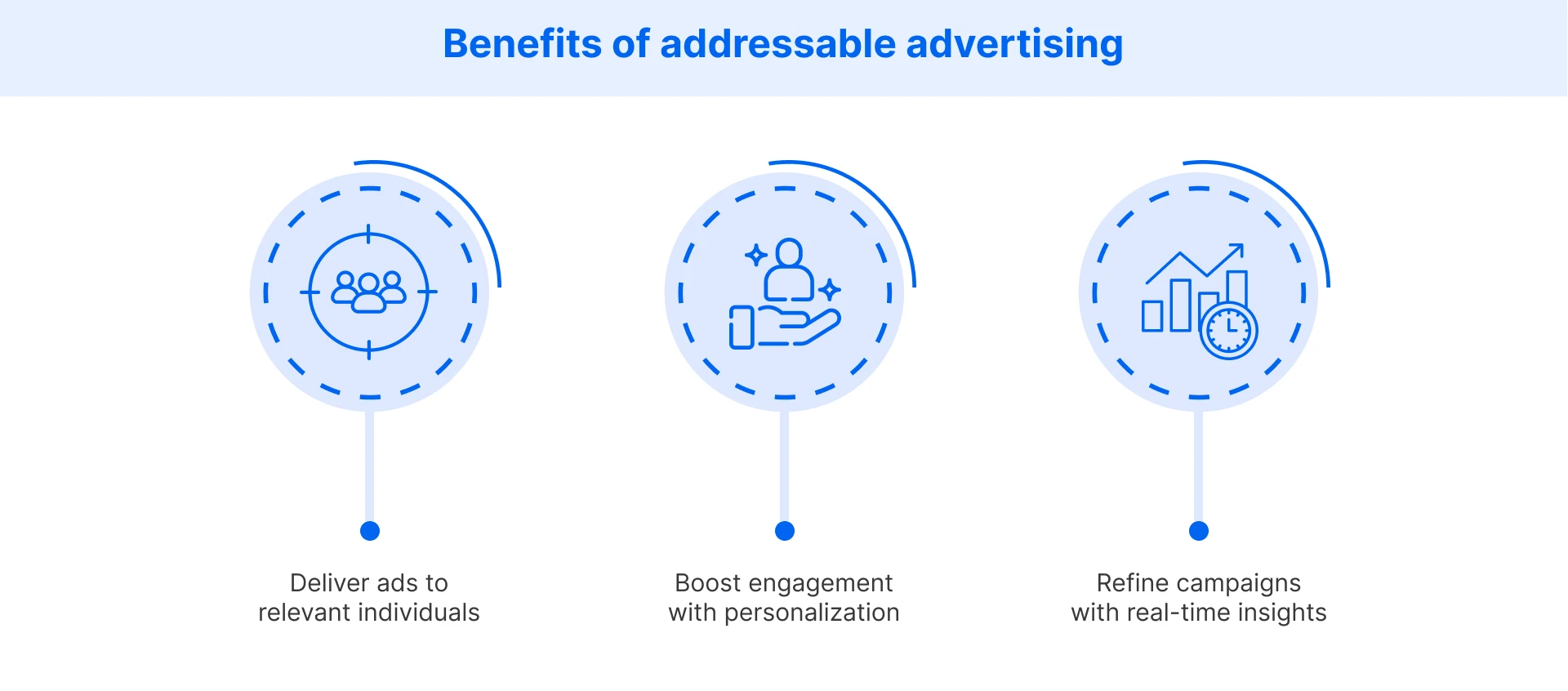
Benefits of addressable advertising

FAQ
The difference between addressable and non-addressable (or linear) advertising is that addressable uses data to personalize the ad seen by a specific household, whereas non-addressable broadcasts the exact same ad creative to everyone watching a specific channel or program in a given market.
You identify an addressable market by determining the total demand for your product or service within a specific geographic or demographic area that you can realistically serve with your current resources and distribution channels.
Addressable advertising is important because it reduces wasted ad spend by increasing the relevancy of ads, leading to higher engagement, better return on investment (ROI), and a more personalized viewing experience for the consumer.
Addressable CTV (Connected TV) advertising is the practice of delivering different ads to different households streaming content on internet-connected devices (like smart TVs and streaming sticks), based on household-level data and audience segments.
Advertising addressability works by matching an advertiser's target audience data (e.g., customer lists or demographic profiles) with the household viewing data provided by a distributor (like a cable or streaming service) to swap out a generic ad for a highly relevant, targeted one during the ad break.
More Blogs
See how retailers and brands are winning with FCC

Everything About Price Skimming Strategy Explained
Read More
What is a High-Low Pricing Strategy?
Read More
Ultimate Guide To Dynamic Pricing Strategy In 2026
Read More
Retail Pricing Strategies: Winning with Promotion Pricing in Competitive Markets
Read More
Ad Tags: Enhancing Ad Serving Efficiency in Large-Scale Campaigns
Read More