Commerce media is emerging as a major force in the digital marketing world, with McKinsey projecting its potential to generate over $1.3 trillion of enterprise value in the United States by 2026. Such rapid growth is forcing industry leaders to take stock of their existing strategies and rethink their best practices. This development has led to another crucial element gaining prominence in commerce media, which is contextual targeting.
Contextual targeting is reshaping how advertisers connect with audiences, promising a more relevant and engaging user experience. Let’s delve into everything that we need to know about contextual targeting in retail media.
What is Contextual Targeting?
Contextual targeting with ads means placing the ad based on the content of the page (its text, media, etc.) rather than the user’s personal information. This relevance ensures that the ads agree with the user’s current interests, making them more likely to engage and boost conversion rates.
Crucially, contextual targeting respects user privacy as it doesn’t rely on personal browsing history or demographic information.
How is it Different From Audience Targeting?
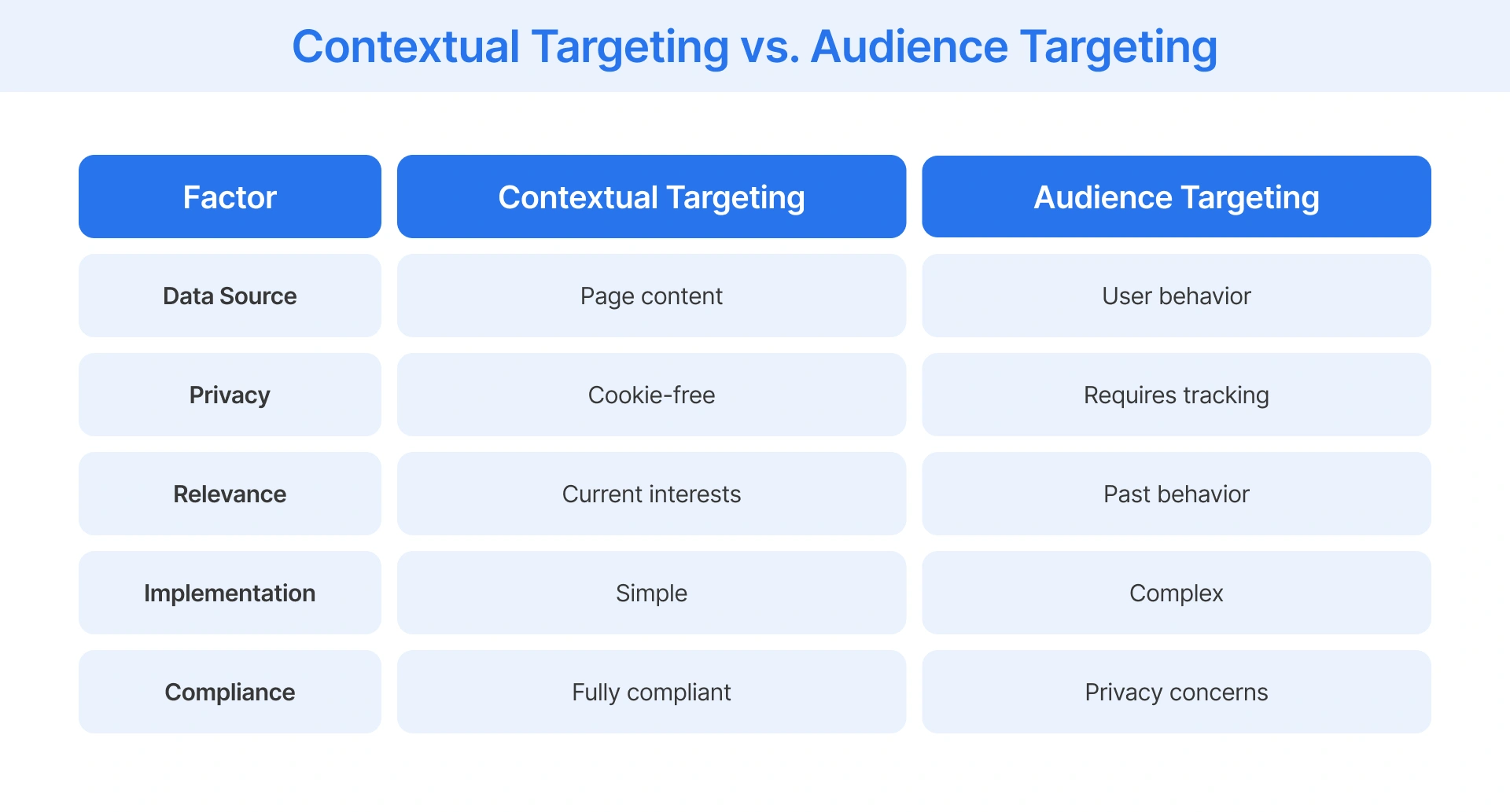 Context-based targeting is a modern and smart way of showing ads, different from the traditional method of audience targeting. While audience targeting relies on demographic and behavioral data to serve ads, contextual advertising targets users based on the content they are currently engaging with, allowing brands to deliver relevant messages while respecting user privacy As a result, contextual marketing strategies ensure that the ads resonate effectively with the immediate interests of the audience, leading to better engagement.
Also Read: What is Contextual Advertising
Benefits of contextual targeting in marketing
Contextual targeting offers multiple benefits for businesses seeking to connect with their audience effectively through
digital advertising. The benefits of contextual advertising lie in its ability to deliver relevant ads based on the user's current environment, enhancing engagement while respecting user privacy by avoiding individual tracking. Let’s explore these benefits in detail, particularly how they enable reaching the right customers without the need for third-party cookies or behavioral information.
1. Reach the Right Customers Without Third Party Cookies or Behavioral Information
Contextual targeting leverages the subject matter of content of a web page to determine where ads should appear. For example, ads for cooking utensils are placed on a recipe site, ensuring relevance to the immediate interests of viewers.
This content-based approach bypasses the need for third-party cookies or behavioral data, thus giving priority to user privacy. By focusing on the context rather than personal user information, contextual targeting complies with the data protection regulations and also ensures that the ads reach an audience which is actively interested in related topics.
These key aspects make this targeting strategy essential in a privacy-conscious digital world. Read more about how to advertise effectively without worrying about third-party cookies in our blog.
2. Provide Personalized Experience with Most Relevant Content
Contextual targeting ensures that advertisements are both relevant and engaging, improving the effectiveness of the ad campaigns and user satisfaction. By analyzing the topics, keywords, and overall theme of a webpage, this form of targeting shows ads that are contextually appropriate, making it a powerful tool for a marketer.
By focusing on present context rather than past user behavior, contextual advertising helps ensure a higher advertising ROI for companies. It also allows brands to build strong brand affinity as the ads are personalized and resonate well with the customers.
3. Pocket-Friendly and Easy to Implement
Contextual targeting stands out for its cost-efficiency and user-friendly implementation. Unlike more complex methods that require extensive data collection and analysis, this strategy simplifies the process by focusing on the content’s core aspects, such as keywords and themes.
Modern ad tech platforms further ease this process, offering self-service features that streamline ad placement based on webpage topics and themes. For example, a small business can easily place its ads on relevant blog pages without heavy investment, making this a viable option for companies with limited advertising budgets.
4. Contextual Targeting Helps Boost Sales
Contextual targeting directly contributes to sales growth by aligning ads with the user’s current online activity, ensuring a seamless and intuitive shopping experience. For instance, a user browsing a tech review site might encounter ads for the latest gadgets, leading to higher engagement and potential purchases due to the ad’s relevance to their immediate interest.
This strategy goes beyond just capturing attention; it connects products with an audience already inclined toward similar topics. Businesses leveraging contextual targeting often witness a significant uptick in sales especially while advertising in high selling periods like holidays and festivals as customers appreciate the content of the ads being displayed at the right moment on relevant web pages.
5. Offers Better Returns on Ad Spend (ROAS) and Less Ad Aversion
Contextual targeting significantly enhances the Return on Ad Spend (ROAS) by aligning ads with the content of the web page that internet users are actively interested in. For example, placing travel insurance ads on a travel advice blog taps into the target audience already considering their next trip, thus increasing the likelihood of conversion.
This relevant placement leads to higher engagement rates and more effective use of advertising budgets. Users are less likely to feel annoyed by irrelevant ads, which often leads to ad fatigue. Instead, they are likely to find value in the relevant ads as they align with their current browsing preferences.
6. Allows for Creative Marketing Campaigns and Offer Better Ad Placements
Contextual advertising opens up opportunities for creative marketing campaigns by allowing ads to be uniquely tailored to the content. This strategy elevates the ad’s impact by resonating with the user’s current visual experience.
Similarly, better ad placements are achieved by utilizing the nature of the content. An ad for sports equipment on a fitness blog, for example, benefits from the targeted audience’s existing interest in sports and fitness, ensuring effective ad placements. This contextual relevance ensures that ads are seen by an audience that is already inclined toward similar products or services, increasing the likelihood of engagement and conversion.
Also read: Example of Contextual Advertising
How FCC Helps with Retail Advertising and Contextual Targeting
Flipkart Commerce Cloud (FCC) offers cutting-edge solutions for retail advertising and contextual targeting, ensuring businesses can effectively reach their audiences in a privacy-complaint and engaging manner. The platform offers:
- Product Contextual Ads (PCA): FCC enables monetization of user traffic and drives higher awareness and visibility for partner brands through targeted ads based on buying intent instead of browser cookies.
- Keyword-Based Cookieless Targeting: FCC uses keywords to target ads instead of cookies that track personal data. This method aligns with the current trend toward user privacy and data protection in the digital world.
- Context-Based Ads for a Native Experience: FCC integrates ads into search results and pages in a way that doesn’t interrupt the shopping experience.
Get in touch with us for a personalized approach to achieving your retail advertising goals.

FAQ
The main benefits of contextual targeting include its ability to deliver ads that align with a user's immediate interests without the need for invasive tracking. This method typically results in higher engagement rates because the advertisements feel like a natural extension of the content being consumed rather than a disruptive interruption. By utilizing advanced solutions such as those offered by FCC, businesses can also benefit from improved brand safety and cost-effective performance marketing that reaches niche audiences more precisely than traditional behavioral methods.
Contextual targeting is important because it provides a sustainable and effective way to reach consumers in a digital landscape that is increasingly moving away from individual tracking. As browsers phase out traditional identifiers, this strategy ensures that brands can still connect with potential customers by focusing on the environment and the mindset of the reader in real time. For companies working with FCC, this approach is essential for maintaining a competitive edge and ensuring that marketing budgets are spent on placements that possess high relevance and clear consumer intent.
Contextual targeting does not require third-party cookies because it relies on analyzing the visible elements of a webpage, such as text, keywords, and metadata, instead of following a user's personal browsing history. Since the technology evaluates the theme and sentiment of the specific URL where the ad will appear, there is no need to store or exchange personal identifiers across different websites. FCC leverages this cookieless methodology to provide advertising solutions that remain functional and effective regardless of changes to browser privacy settings or the deprecation of tracking pixels.
Contextual targeting leads to better ad relevance by matching the subject matter of an advertisement to the specific topics a user is currently exploring. This immediate alignment captures the audience at the peak of their interest, such as showing hiking gear ads on a trail guide article, which makes the message significantly more meaningful. Advanced platforms like FCC use sophisticated machine learning to ensure these connections are accurate and timely, resulting in higher ad recall and a more positive perception of the brand among consumers.
Contextual targeting helps with privacy compliance by determining ad placements based on the content of a webpage rather than the personal data or browsing history of the user. Because this method does not rely on third-party cookies or persistent identifiers to track individuals across the internet, it inherently avoids the collection of sensitive personal information. This alignment with a privacy-first approach ensures that brands using FCC technology remain compliant with strict global regulations like GDPR and CCPA while still reaching their desired audience through relevant environment-based signals.
The advantages of using contextual targeting on connected TV platforms include delivering relevant ads based on program content instead of invasive personal tracking. This approach protects viewer privacy and ensures brand safety by placing ads in suitable environments, which increases engagement and recall. Leveraging the FCC platform allows brands to achieve this relevance at scale, providing a sustainable and effective strategy for the evolving digital landscape.
More Blogs
See how retailers and brands are winning with FCC
Everything About Price Skimming Strategy Explained
Read More
What is a High-Low Pricing Strategy?
Read More
Ultimate Guide To Dynamic Pricing Strategy In 2026
Read More
Retail Pricing Strategies: Winning with Promotion Pricing in Competitive Markets
Read More
Ad Tags: Enhancing Ad Serving Efficiency in Large-Scale Campaigns
Read More