Contextual advertising is the art of timely relevance. It is a strategic approach that positions brand messaging based on the specific environment of a webpage rather than a user’s private browsing history.
By aligning with immediate consumer intent instead of invasive data, contextual ads transform from "intrusive interruptions" into high-value resources. In a world moving away from tracking, this approach serves as a natural, seamless extension of the user experience.
The Challenge of Modern Visibility
Modern consumers are bombarded with over 10,000 ads daily. For brands, the digital landscape has become a "sea of noise" where traditional ads are often scrolled past or blocked.
Thankfully, contextual advertising solves this by shifting the focus from visibility to deep relevance. By delivering a targeted message at the exact moment a consumer is engaged with related content, brands can unlock genuine engagement.
Contextual Advertising Vs. Contextual Targeting
In digital marketing, contextual advertising and targeting are often used interchangeably, but each has a unique role. Contextual advertising is a powerful tool that involves strategically placing relevant ads in places that match what the consumer is interested in at that moment. For instance, putting up travel ads in a travel article makes sense because it’s likely to catch the eye of someone dreaming of a vacation. This approach makes the ads more relevant and boosts their appeal to potential customers.
In contrast, contextual targeting offers a more intricate approach. It zeroes in on users by analyzing the context of their online behavior, using contextual cues instead of third-party data. With the help of sophisticated algorithms, it analyzes the content of a web page and identifies the keywords, phrases, and topics that are most relevant to that page and maps it with user interests. Context-based targeting is becoming increasingly vital in a digital environment, shifting away from cookies and third-party data tracking, providing users with improved privacy.
How Does Contextual Advertising Work?
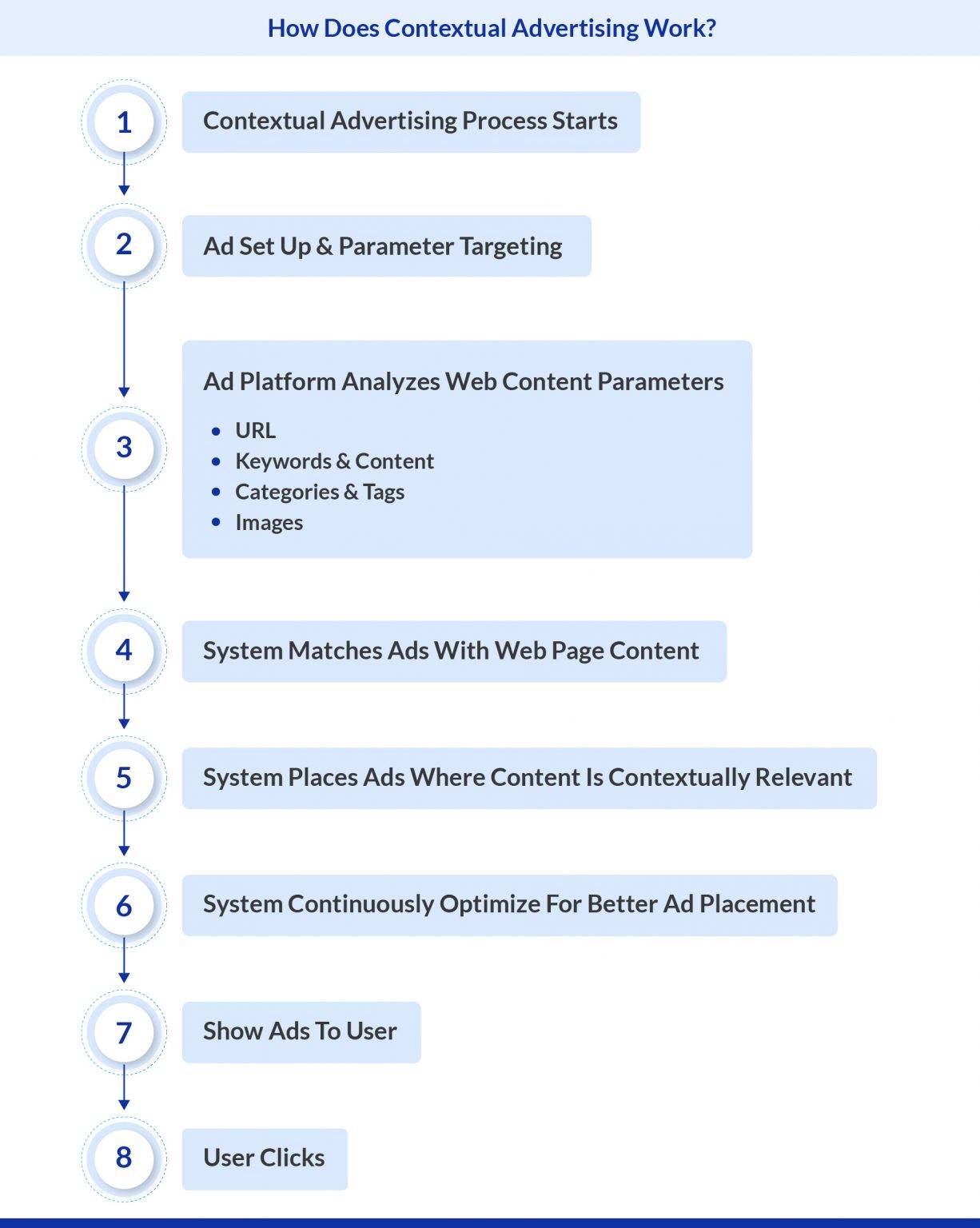
The contextual advertising process follows a sophisticated workflow designed to ensure your message hits the right note at the right time.
- Setting Targeting Parameters: Advertisers choose topics and keywords that resonate with their audience. For example, a sport bike company might target general categories like ‘autos’ before narrowing down to ‘supersport motorcycles,’ while using negative keywords to avoid irrelevant or sensitive contexts.
- Analyzing Web Content: The platform reviews the network beyond simple keyword matching. It assesses images, language, link structure, and page layout to guarantee the environment aligns with the brand's sentiment.
- Ad Placement Decisions: Platforms offer "broad reach" (topic-based) or "narrow audience" (specific keyword/image matching). The system locates the optimal slot where the ad fits naturally with its surroundings.
- Contextual Alignment: This is the heart of the strategy. A page about running displays fitness trackers; a cooking blog displays artisanal knives. This alignment makes the ad feel like a native resource rather than an intrusion.
- Advanced Techniques: Modern systems integrate non-private cues such as device usage, time of day, and general demographics to improve precision without compromising anonymity.
- Continuous Optimization: Platforms like Google Ads and Flipkart Commerce Cloud (FCC) consistently evaluate and modify placements to ensure long-term effectiveness.
Why Is Context Important For Advertising?
When an advertisement is tailored to align with a user’s current interests or needs, such as promoting sports equipment on a fitness-focused website, it goes beyond being just an ad and becomes the most relevant content. This relevance fosters increased engagement because ads that seamlessly fit into the user’s current digital environment are less intrusive and more captivating. Additionally, the significance of context improves conversion rates.
In advertising, context also plays a crucial role in safeguarding a brand’s reputation. When ads are strategically placed and aligned with relevant content, they protect the brand’s image and foster trust with its audience. Today, successful advertising isn’t just about what and who it targets but also about where and when it appears. It’s about ensuring that ads grab the customer’s attention by being relevant at the right time. Contextual targeting parameters: The initial phase of contextual advertising involves establishing the targeting criteria. Advertisers need to carefully choose topics and keywords that resonate with their desired target audience. For instance, a sport bike company may start with general categories such as ‘autos and vehicles’ before honing in on specific ones like ‘supersport bikes’ or ‘sports motorcycles.’ Moreover, incorporating negative keywords is crucial to prevent the ads from showing up in irrelevant contexts.
- Analyzing Relevant Web Page Content: Once the targeting parameters are in place, the advertising platform thoroughly reviews the content on its network of websites. The review goes beyond simple keyword matching and includes assessing web page content, images, language, link structure, and overall page layout. This rigorous analysis guarantees that ads appear on pages that align with the designated keywords and topics and are contextually relevant to the ad content.
- Ad Placement Decisions: In the next phase, the ad platform will decide where to place the ads. Most ad platforms offer advertisers options to choose either a wide audience (broad reach) or a narrow audience (specific reach). A wide audience means the ads will show up on pages related to specific topics, while a narrow audience will be more targeted as it takes into account the keywords, content, topic, and images into consideration while allotting the ad slot. After analyzing multiple parameters, the ad platform locates the best spot for the ad, making sure it fits in with its surroundings.
- Contextual Alignment and Relevance: The heart of contextual advertising is its capacity to match ads with the content of web pages. For instance, a webpage about running could show ads for fitness programs, while a cooking website might display ads for cooking products. This matching boosts the relevance and impact of the ads, making them more likely to be seen as engaging and useful rather than intrusive.
- Utilizing Advanced Techniques: Advanced contextual advertising systems can integrate personal information such as demographics, device usage, and other contextual cues to improve targeting precision. By using this multifaceted approach, ads can be matched more accurately to content, enhancing the effectiveness of advertising campaigns.
- Continuous Optimization: Contextual advertising requires constant attention and refinement rather than a one-time approach. For example, platforms such as Google Ads consistently evaluate and modify placements to ensure the ads remain contextually relevant and effective over time.
Differences Between Contextual Targeting and Audience Targeting
Understanding the differences between contextual targeting and audience targeting is crucial for effective digital advertising campaigns. Let’s have a look at the key differences:
|
Factor |
Contextual Targeting |
Audience Targeting |
|
Data Source |
Utilizes webpage content-related data, such as keywords and topics present in the website content. |
Relies on collected user data and behavior patterns, including their browsing history, demographic details, and personal interests. |
|
Privacy Compliance |
More privacy-friendly; aligns more closely with privacy compliance, as it does not require personal user data. |
Potentially intrusive; uses personal browsing history Audience targeting can raise privacy concerns due to its data collection methods and reliance on personal user information. |
|
Ad Relevance |
The relevance of an advertisement is determined by the content being viewed by the user at that moment. |
Ad relevance is based on the user’s past behavior or demographic information. |
|
Implementation Complexity |
Contextual targeting is generally simpler to implement, focusing on the content of those pages rather than on extensive user tracking. |
Audience targeting often requires a system for tracking and analyzing user data. |
|
User Experience |
Enhances user experience by aligning advertisements with the user’s current content interests. |
May disrupt user experience if the ads appear irrelevant or overly personalized. |
|
Response to Ad-Blocking |
Less affected by ad blockers, as it is based on content rather than user targeting. |
More prone to impact by ad blockers due to its reliance on user data. |
The shift to contextual advertising isn't just about compliance, it's about unlocking advantages that traditional targeting methods simply can't deliver. From privacy compliance to superior performance metrics, the benefits are transforming how leading brands approach digital advertising.
Want the full breakdown? Explore the Benefits of Contextual Targeting Here
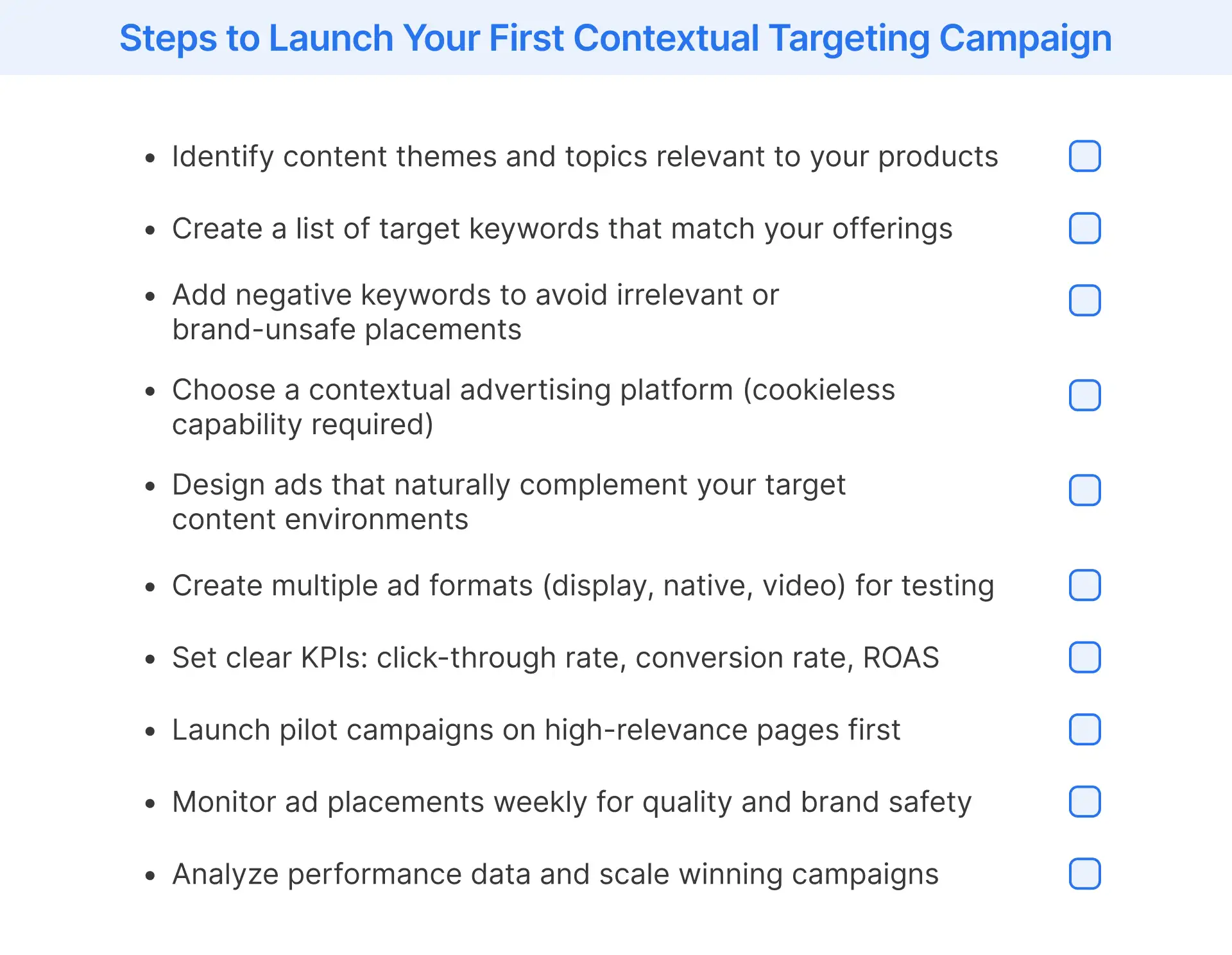
Contextual Advertising Strategy To Follow For Maximum Benefit
To get the maximum benefit from contextual advertising, brands need to follow a proven strategy. Here is the 5-step strategy you can follow while setting up a contextual advertising plan for your organization:
1. Set Your Goals And Priorities
Defining your goals is the initial crucial task when creating a contextual advertising strategy. These objectives may include boosting sales, re-engaging lost customers, and elevating brand recognition. Establishing measurable metrics for each goal and maintaining an adaptable budget is essential.
2. Find The Right Partner
When delving into the intricacies of contextual advertising, team up with industry experts. Collaborating with renowned retail solution providers and advertising experts, such as Flipkart Commerce Cloud, can provide valuable insights, prevent costly mistakes, and improve the effectiveness of your campaign. This partnership will enhance the overall efficiency of your advertising efforts.
3. Create Engaging Ad Creatives
Despite the accuracy of contextual targeting, the key to effective advertising lies in the quality of your content. Create ads that are expertly designed to captivate and connect with your audience. This requires drawing on your own expertise and insights and considering suggestions from your partners while experimenting with different formats, such as video and native advertising.
Also Read: 6 Strategies To Sell More Ads During Festive Season
4. Choose The Best Keyword Targeting Strategy
Choosing the best keyword targeting strategy ensures that you connect with your potential customers with utmost precision. You are well aware that employing contextual targeting yields excellent outcomes, so it’s crucial to consider this approach.
5. Monitor KPIs and adjust for maximum benefit
Once you’ve set your sights on a specific objective and teamed up with experienced partners to create compelling content and a precise targeting strategy, it’s time to implement your plan. Keep a close eye on key performance indicators for monitoring the campaign’s development. Since contextual advertising is constantly evolving, be ready to adapt your strategy as necessary, fine-tuning it based on performance insights and market shifts.
Run Contextual Advertising On FCC's Retail Media Platform
Contextual advertising has a powerful presence in digital advertising. Its importance and impact are only expected to increase in the future. By incorporating technologies such as artificial intelligence (AI) and machine learning (ML), contextual advertising is on track to reach new levels, enabling much more accurate and fitting ad placements without relying on personal user data
FCC’s Ads Manager opens up a world of possibilities for tapping into the power of contextual ads to forge deeper, more meaningful connections with consumers. By harnessing advanced cutting-edge technologies, the platform can deliver ads that are dynamic, contextually fitting, and adapt in real time to environmental cues and current events.
Want to know more about how FCC can help you with retail media platform advertising? Book a free consultation with our retail media platform experts!

FAQ
Contextual advertising is a targeted advertising method where ads are placed on a webpage based on the specific content of that page, rather than the browsing history or profile of the user. This approach ensures that the marketing message aligns naturally with what the reader is currently interested in, creating a more seamless and relevant experience. Brands like Flipkart Commerce Cloud often utilize this strategy to reach audiences at the exact moment their interests intersect with specific topics or services.
Contextual advertising in digital marketing means the practice of using automated systems to scan website text, keywords, and themes to display ads that are directly related to the surrounding environment. It represents a shift away from tracking individual users across the web, focusing instead on the environment where the ad appears. By choosing this method, FCC helps companies maintain a presence on high-quality sites where the subject matter dictates which advertisements are served to the visitor.
Contextual advertising is important because it allows for high relevancy and consumer engagement without relying on intrusive tracking pixels or third-party cookies. As the digital landscape moves away from traditional tracking methods, this technique provides a sustainable way for businesses to connect with potential customers. Utilizing the expertise of FCC in this area ensures that marketing efforts remain effective and adaptable to changing industry standards and consumer preferences.
Yes, contextual advertising is privacy-friendly because it does not collect or store personal data about the individual user to determine which ad to show. Since the targeting is based entirely on the content of the URL being viewed, it bypasses the need for personal identifiers or behavioral tracking. This inherent respect for user anonymity makes it a preferred choice for FCC when designing campaigns that prioritize data protection and compliance with global privacy regulations.
Contextual ads help with brand safety, allowing advertisers to specify the types of content and environments where their messages should or should not appear. By analyzing the sentiment and vocabulary of a page before an ad is served, the system prevents placements next to inappropriate or controversial topics. FCC leverages these sophisticated filtering tools to ensure that a brand's reputation is protected and that its advertisements only appear in positive and relevant contexts.
The main benefits of contextual advertising include increased click-through rates due to relevance, lower costs compared to complex behavioral targeting, and immediate alignment with the user's current mindset. It also eliminates the "creepiness factor" often associated with ads that follow users around the internet based on past searches. Organizations working with FCC find that these benefits lead to stronger trust with their audience while maintaining high performance across diverse digital platforms.
Contextual advertising delivers value across industries, but certain types see exceptional results. E-commerce retailers, B2B companies, travel brands, financial services, health and wellness providers, and SaaS businesses excel with contextual targeting. Their offerings naturally align with high-intent content consumption moments where users actively seek solutions, driving superior engagement and conversions.
More Blogs
See how retailers and brands are winning with FCC
Everything About Price Skimming Strategy Explained
Read More
What is a High-Low Pricing Strategy?
Read More
Ultimate Guide To Dynamic Pricing Strategy In 2026
Read More
Retail Pricing Strategies: Winning with Promotion Pricing in Competitive Markets
Read More
Ad Tags: Enhancing Ad Serving Efficiency in Large-Scale Campaigns
Read More