Pros of Buying a Pre-made Marketplace Solution
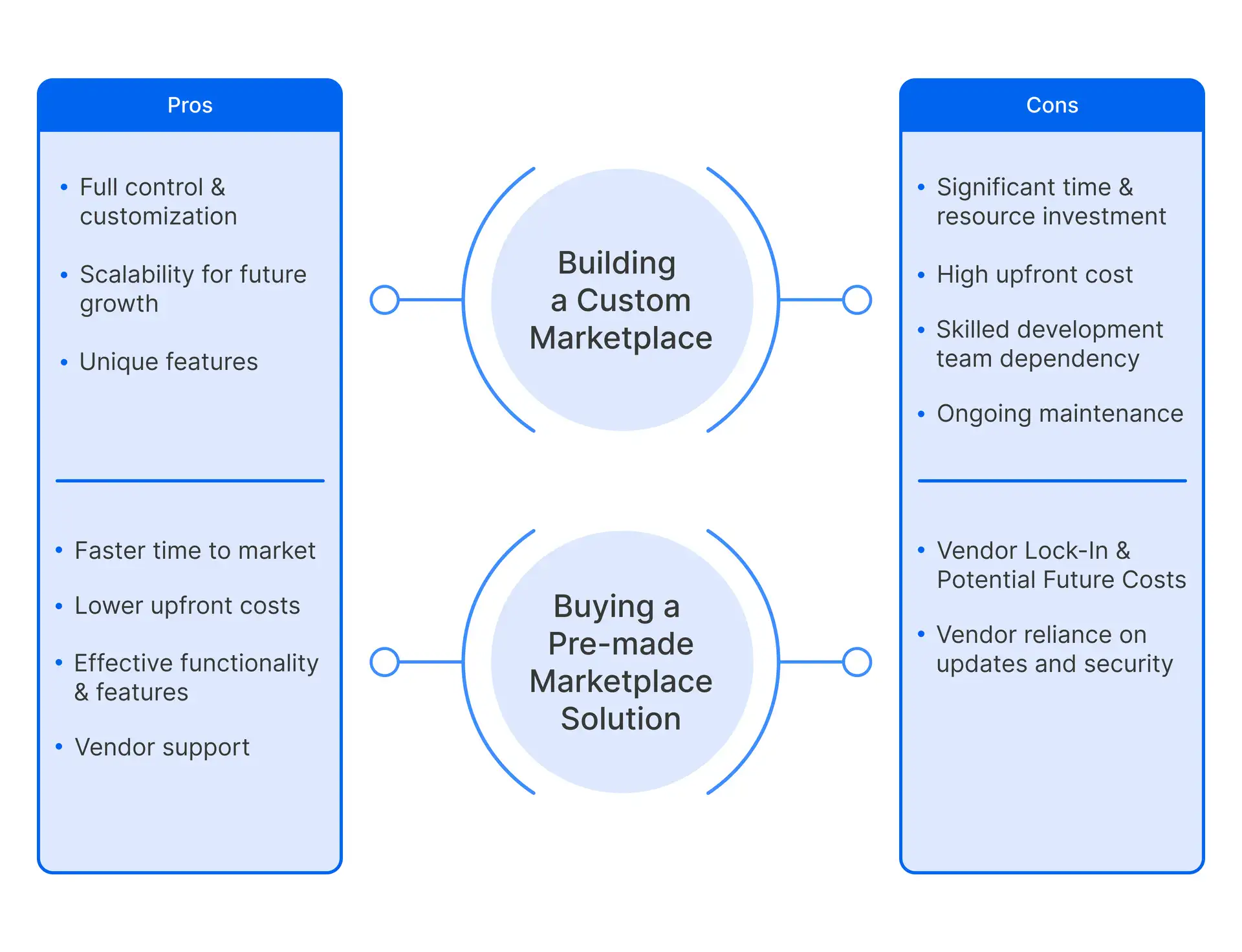
- Faster Time to Market: Pre-made solutions offer a significant advantage in launching your marketplace quickly. Unlike building from scratch, which involves extensive development and testing phases, pre-made solutions are ready-to-use platforms that can be set up and launched in a relatively short time.
- Lower Upfront Costs: Buying a pre-made solution typically requires a lower initial investment compared to building a custom platform. The cost of a pre-made solution includes the platform license or subscription fee, which is often less than the cost of hiring a development team and building a marketplace from scratch.
- Proven Functionality and Features: Pre-made solutions come with a set of features that have been tested and proven to work effectively. This means you can leverage these features to provide a seamless user experience right from the start. There is no need to invest time and resources in developing and testing these features yourself.
- Ongoing Support from the Vendor: When you buy a pre-made solution, you get access to continuous maintenance and customer support services from the vendor. This can include technical support, regular updates, and security patches, which can be invaluable in ensuring the smooth operation of your marketplace.
Cons of Buying a Pre-made Marketplace Solution
- Vendor Lock-In and Potential Future Costs: When you buy a pre-made solution, there’s a risk of vendor lock-in. You might face additional costs associated with upgrades or scaling within the vendor’s ecosystem. Moreover, switching to a different platform in the future could be costly and time-consuming.
- Reliance on the Vendor for Updates and Security: With a pre-made solution, you are dependent on the vendor for timely updates, bug fixes, and ensuring robust security measures. Any delay or inadequacy on their part could impact your marketplace’s performance and security. With FCC, all these issues are taken care of as the team understands the importance of protecting your customers’ Personally Identifiable Information (PII) data. We employ industry best practices and adhere to strict data privacy regulations to safeguard this sensitive information.
FAQ
In 2025, it continues to be generally better to buy a commercial or off-the-shelf solution for non-core capabilities due to the high cost of developer time and the maturity of third-party software. However, it is often still strategic to build a custom solution for features that create a unique competitive advantage or a differentiated customer experience that pre-built solutions cannot match.
The cost considerations when purchasing data from cloud-based marketplaces extend beyond the raw purchase price and include factors like the subscription fees or usage-based pricing models for the data itself. They also include the charges for the cloud resources necessary to store, process, and analyze that data, and any potential egress fees if the data needs to be moved out of the cloud environment.
Enterprises should look for several key features in a customizable marketplace solution, including its scalability to handle future growth, a robust and secure payment gateway system, and intuitive user interfaces for both buyers and sellers. Also, seamless integration capabilities with existing enterprise systems. They should also look for a high degree of customization or flexibility for custom branding and unique business logic, which are all characteristics found in solutions like FCC's platform.
When deciding between building or buying a solution, the main factors to consider are the feature's strategic importance to the business's core mission, the total cost of ownership over time, including maintenance and upgrades, the speed required for time-to-market, and the availability of in-house technical expertise and resources needed for the initial development and ongoing support.
A build-and-buy strategy, also known as a hybrid approach, is a pragmatic method where an organization chooses to acquire a commercial off-the-shelf solution to cover baseline or standard functionality quickly (the 'buy' part) and then dedicates internal development resources to build custom features or extensions on top of it (the 'build' part) to create a unique competitive advantage.
More Blogs
See how retailers and brands are winning with FCC
Everything About Price Skimming Strategy Explained
Read More
What is a High-Low Pricing Strategy?
Read More
Ultimate Guide To Dynamic Pricing Strategy In 2026
Read More
Retail Pricing Strategies: Winning with Promotion Pricing in Competitive Markets
Read More
Ad Tags: Enhancing Ad Serving Efficiency in Large-Scale Campaigns
Read More