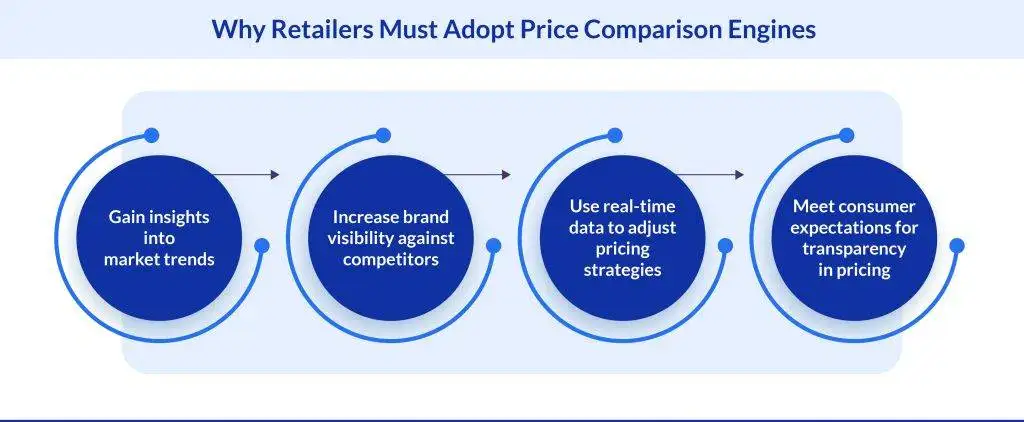
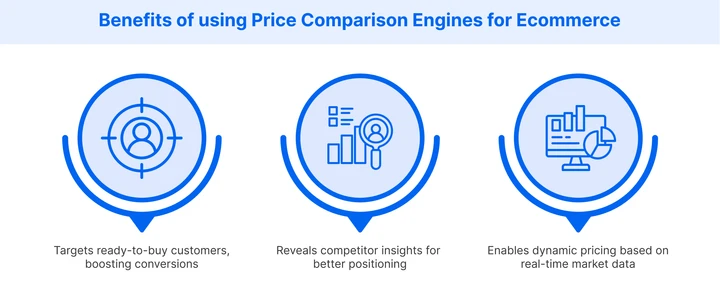
Benefits of Using Price Comparison Engines For Ecommerce
FAQ
An example of a pricing engine is Flipkart Commerce Cloud’s (FCC) Pricing Manager, a cloud-based SaaS tool that tracks, compares, and analyzes competitive price changes in real time while using machine learning to understand price elasticity from historical sales data, enabling retailers to dynamically adjust pricing, improve margins, and stay competitive in fast-changing markets.
The pricing comparison method is a process of evaluating the cost of the same or similar products across different sellers or platforms to identify the most competitive offer, often factoring in variables like shipping fees, discounts, and product specifications.
The best price comparison tool depends on the market and product category, but popular options include Google Shopping for a broad range of goods, PriceGrabber for detailed comparisons, and niche tools like CamelCamelCamel for Amazon price tracking.
Price comparison sites work by aggregating product listings from multiple retailers through direct data feeds, web scraping, or APIs, then displaying them in a standardized format so users can compare prices, features, and seller ratings in one place.
There are cons with price comparison sites, such as incomplete listings that exclude certain retailers, potential bias toward paid listings, outdated pricing data, and the possibility of overlooking additional costs like shipping or taxes.
Some things to consider when comparing prices include the total cost after shipping and taxes, product authenticity, warranty or return policies, seller reputation, and whether the product specifications match exactly across different listings.
More Blogs
See how retailers and brands are winning with FCC
Everything About Price Skimming Strategy Explained
Read More
What is a High-Low Pricing Strategy?
Read More
Ultimate Guide To Dynamic Pricing Strategy In 2026
Read More
Retail Pricing Strategies: Winning with Promotion Pricing in Competitive Markets
Read More
Ad Tags: Enhancing Ad Serving Efficiency in Large-Scale Campaigns
Read More