
December 20, 2024
Dynamic Pricing
Dynamic pricing refers to setting flexible prices for products as per existing demand. Prices are adjusted in real-time using algorithms that consider factors like supply and demand along with external market conditions.
Drishti, Manager - Digital Marketing

Table of Contents
- What is dynamic pricing?
- How the dynamic pricing strategy work?
- What are the benefits of dynamic pricing in ecommerce?
- What are the downsides of dynamic pricing?
- How can pricing solutions help with dynamic pricing model implementation?
- Conclusion
What is Dynamic Pricing?
Dynamic pricing, also known as surge pricing or demand pricing, is a strategy that allows businesses to adjust prices for products or services in real time based on current market conditions. This approach provides businesses with the flexibility to respond promptly to changes in individual consumer preferences and market dynamics.
Retailers employ this pricing method to achieve a range of objectives, including improving profitability, stimulating sales, and managing inventory levels.
How does the dynamic pricing strategy work?
Dynamic pricing leverages data-driven algorithms powered by Machine Learning (ML) and AI technologies. These systems analyze vast amounts of historical sales and market data to identify significant patterns and set the best prices for products in real-time. Common factors considered for a successful dynamic pricing strategy implementation include:
- Supply and demand dynamics
- Competitor pricing
- Market trends
- Timing and seasonality
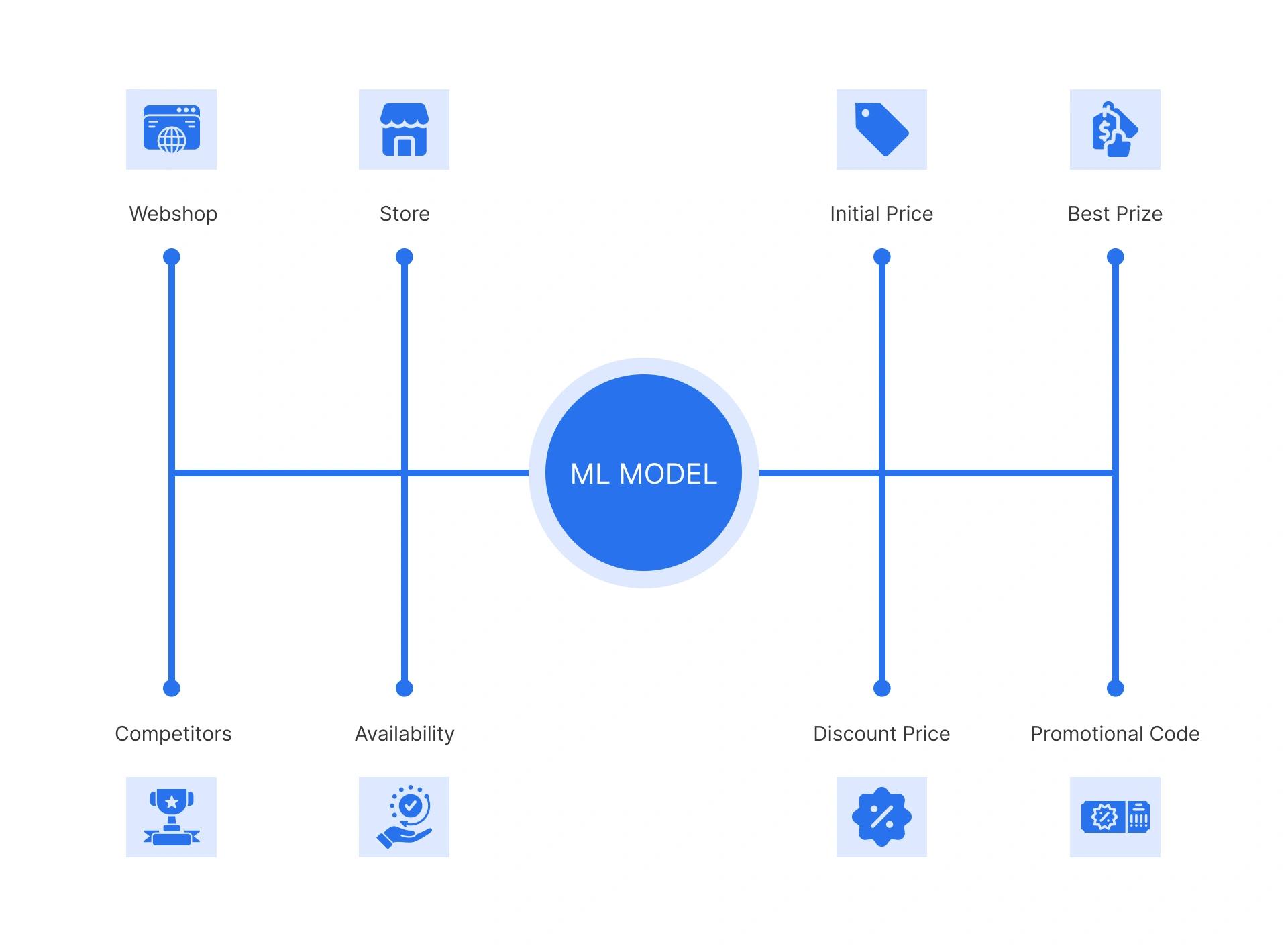
The basic science of dynamic pricing strategies can vary significantly. Some are driven by black-box systems like neural networks, while others utilize different ML systems or statistical techniques. Regardless of the method, dynamic pricing aims to enable rapid price adjustments in response to a wide range of consumer, market, and competitive factors.
What are the benefits of dynamic pricing in ecommerce?
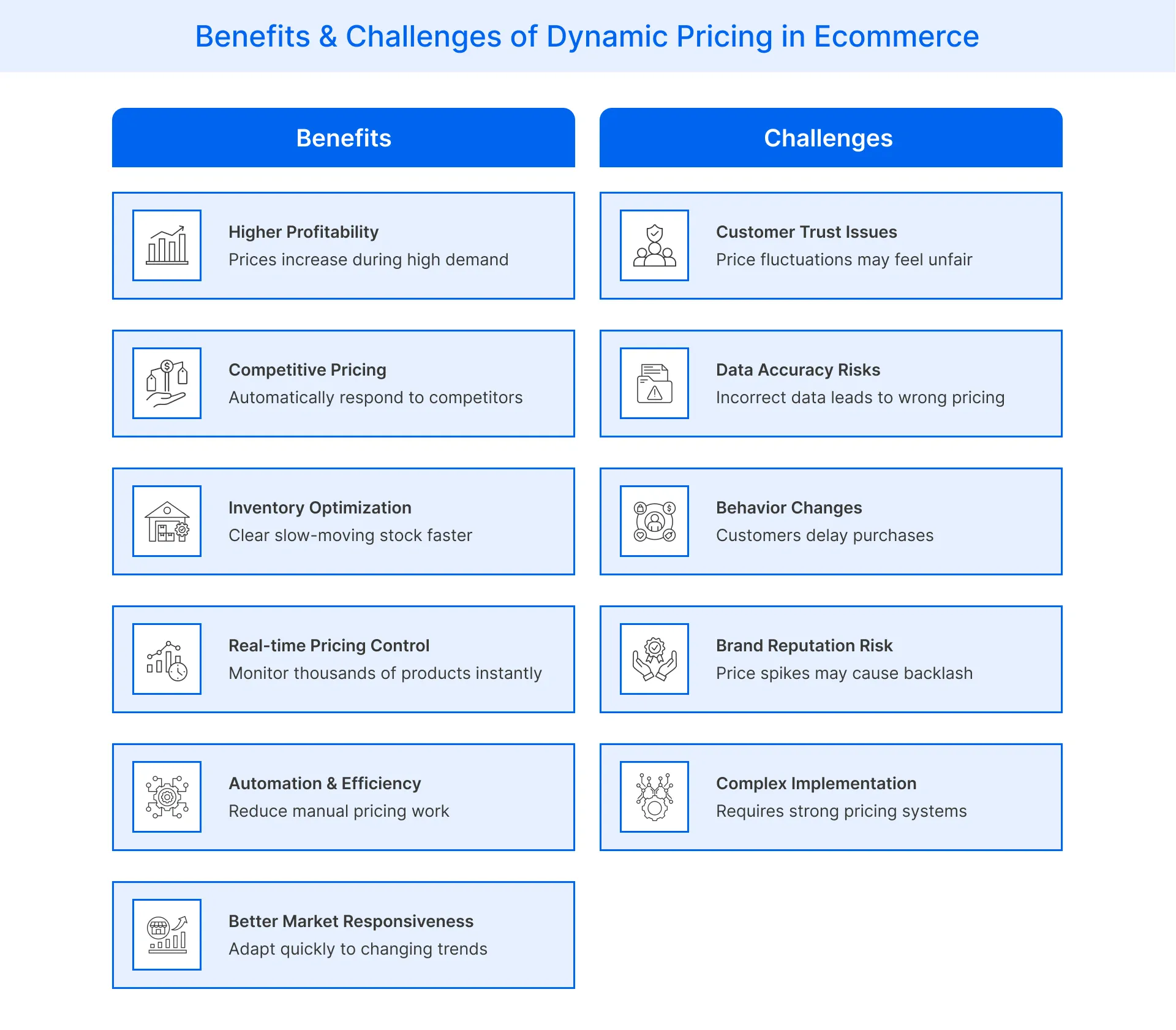
Dynamic pricing can help boost overall profitability for online retailers facing increasing competition. Let’s understand the standout benefits of dynamic pricing:
- Enhanced Pricing Control: Dynamic pricing provides real-time price trends across thousands of products. It enables retailers to set competitive prices, respond to market changes quickly, and maximize revenue effectively.
- Brand Value Protection: This method allows flexibility in pricing without compromising brand value. Retailers can set a price floor that reflects their brand value while remaining profitable and competitive.
- Long-term Cost Efficiency: Dynamic pricing, driven by real-time supply and demand changes, reduces overhead costs by automating price adjustments. This helps enhance profitability and save time and labor on manual calculations.
- Effective Management with Software: E-commerce platforms and dynamic pricing solutions automate the complex process of monitoring product trends, analyzing competitor pricing, and setting optimal product prices.
- Control Despite Potential Errors: While dynamic pricing algorithms may have potential errors, retailers retain control over final pricing decisions, allowing them to review and adjust variable prices to ensure accuracy.
What are the downsides of dynamic pricing?
Let’s analyze some of the challenges posed by dynamic pricing for retailers:
- Customer Backlash and Distrust: Dynamic pricing can lead to customer backlash if not managed properly. For instance, during the COVID-19 pandemic, retailers that raised prices on cleaning products were seen as taking advantage of the situation, leading to a loss of customer trust and loyalty.
- Impact of Poor Data Sources: Dynamic pricing relies on accurate real-time data. Inaccurate data can lead to a ‘garbage in, garbage out’ situation, negatively affecting profitability and sales volume. Ensure data is clean, current, and accurate.
- Altered Customer Behavior: Customers may change their purchasing behavior once they realize fluctuations in peak pricing. They might delay purchases during peak seasons, impacting profitability.
- Reduced Customer Loyalty: Fluctuating prices can confuse the customer base and make them feel taken advantage of, leading them to opt for similar products with fixed pricing. Ensure an excellent customer experience to minimize this risks to brand loyalty.
How can pricing solutions help with dynamic pricing model implementation?
Pricing solutions, such as Flipkart Commerce Cloud (FCC), offer several advantages for implementing dynamic pricing strategies effectively:
- Real-time Data Analysis: The software leverages ML models to analyze vast amounts of historical sales data and real-time market data. This helps online stores understand the price elasticity of demand and predict customer responses to pricing changes.
- Competitor Price Monitoring: The software tracks and compares competitor price changes in real-time. This enables retailers to stay competitive by adjusting their prices based on current market conditions.
- Customizable Pricing Rules: Pricing solutions provides a highly customizable rule engine that allows businesses to set specific pricing rules, goals, and guidelines. This ensures that the pricing strategy aligns with the business objectives.
- Automated Price Adjustments: pricing solutions like FCC automates the process of monitoring product trends and setting optimal prices. This reduces the need for manual calculations and administrative tasks, saving time and labor.
- Advanced Outcome Simulation: Several pricing solutions include an outcome simulator that helps businesses plan for various scenarios and application use cases. This ensures that the pricing strategy is robust and adaptable to different market conditions.
Conclusion
Dynamic pricing is a powerful strategy that allows businesses to adjust prices in real-time based on market conditions, enhancing profitability and competitiveness.
It is often regarded as the best pricing strategy as it offers benefits such as enhanced pricing control, brand value protection, cost efficiency, and effective management, but it also has downsides like potential customer backlash and altered behavior. However, dynamic pricing can significantly boost revenue and profitability when implemented effectively.
With a price optimization platform like FCC Dynamic Pricing Engine, you can track competitors in real-time, evaluate trends, and make informed pricing decisions.

FAQ
The first step in dynamic pricing is defining your business goals, whether that means maximizing profit margins, increasing sales volume, or improving inventory turnover. These goals determine the pricing rules your system follows. FCC Pricing Manager allows retailers to configure these rules as the foundation before automating real-time price adjustments across their full product catalog.
Dynamic pricing is a pricing approach where businesses adjust prices in real time based on various factors, including demand, competition, and seasonality. A common example is airline ticket pricing, where fares rise as seats fill. Retailers use FCC's Dynamic Pricing Engine to apply this form of dynamic pricing across thousands of products instantly.
Dynamic pricing is legal in most countries, including the United States, provided it does not discriminate based on protected characteristics like race or gender, and does not violate antitrust laws. Industries including airlines, hospitality, and e-commerce routinely use dynamic pricing to set different prices based on real-time supply and demand conditions.
Dynamic pricing is not the same as price gouging. Price gouging exploits emergencies with excessive price hikes, which is illegal in many places. Dynamic pricing adjusts prices based on external factors like normal market forces and competition. However, sharp price increases during sensitive situations, as seen during COVID-19, can still attract public criticism and damage customer satisfaction.
Another name for dynamic pricing is surge pricing, widely associated with ride-hailing platforms that raise fares during peak hours and peak times. It is also called demand pricing or time-based pricing. Public transportation systems and hospitality businesses adjusting room rates based on occupancy levels represent other common forms of dynamic pricing across industries.
To avoid dynamic pricing, consumers can track prices over time using price comparison tools and shop during off-peak times rather than peak hours. Visiting physical stores rather than online platforms can sometimes surface more stable price points. Setting price alerts and purchasing early during low-demand windows typically secures the most consistent prices available.
A dynamic pricing model requires historical sales data, real-time competitor pricing, inventory levels, demand forecasts, and market research insights. It also incorporates external factors like seasonality, market forces, and customer behavior patterns. FCC's Dynamic Pricing Engine aggregates these inputs automatically, helping retailers set optimal price points without time-consuming manual analysis.