
January 17, 2026
Advertised Price
Advertised price refers to the specific dollar amount a retailer promotes to the public for a product. It is a crucial aspect of a retail strategy and serves as the initial price point customers see across various marketing channels.
Drishti, Manager - Digital Marketing

Table of Contents
- What Is Advertised Price?
- Advertised Price vs. The ‘Other’ Prices
- The Psychology Behind Advertised Price
- Why Managing Advertised Price is Hard?
- How to Master Your Advertised Price?
- Conclusion
Advertised Price
For a retail businesses, the advertised price of a product represents the specific offer made to its target market. This publicly displayed price plays a significant role in driving the click-through rates and dictates the initial perception of consumers.
Effectively managing advertised prices requires a balance between aggressive volume targets and strict profit-margin floors. Retailers must align these prices with manufacturer compliance standards to ensure market stability.
Here are the key aspects that retailers must consider when determining the final price:
- It helps a retailer define the perceived value of its product before a customer enters the store or website.
- This pricing metric directly influences the competitive positioning of a brand image within a crowded marketplace.
- Establishing the right price point requires analyzing competitor data alongside internal inventory levels for optimal results.
- Retailers use this tool to signal discounts or premium quality depending on their broader strategy.
What Is Advertised Price?
The advertised price is the value of a product promoted to potential buyers through different channels. Whether via mass media, the internet, or digital ads, this figure serves as an invitation to browse.
The advertised price serves as an invitation to browse rather than the final cost a consumer pays at checkout.
- In-store: YYou display these prices on physical shelf tags or signage throughout the aisles. It captures the attention of shoppers already browsing the physical environment of your brick and mortar store, driving impulse purchases.
- Online: E-commerce stores present this cost clearly on product listing pages or digital banners. It allows shoppers to compare your offer with competitors' instantly, without visiting a physical location.
- Social Media: Platforms allow you to showcase specific deals through sponsored posts or influencer collaborations. This method targets specific demographics with tailored pricing visuals to encourage immediate click-through actions.
- Marketplaces: Sites like Flipkart require you to list a competitive price to win the buy box. High visibility here demands aggressive pricing strategies to stand out among numerous sellers.
Advertised Price vs. The ‘Other’ Prices
Understanding pricing terminology helps you navigate the retail ecosystem effectively. You must distinguish this specific cost from other common pricing structures to maintain profitability and compliance.
- Advertised Price vs. List Price (MSRP): The MSRP is the manufacturer's suggested retail price for a specific product. Your advertised price often sits lower than this figure to create a strong perception of value or savings. For example, if a sneaker has a $120 MSRP, you might advertise it at $99 to highlight a deal.
- Advertised Price vs. Selling Price: The advertised price serves as the marketing hook that attracts initial interest. The selling price is the final amount paid after coupons are applied, plus taxes or shipping fees at checkout. For instance, you advertise a lamp for $40, but the customer effectively pays $50 after shipping and taxes.
- Advertised Price vs. MAP (Minimum Advertised Price): MAP policies restrict the lowest price you can publicly display for an item. While your promotional price cannot go below this limit, the final selling price may differ privately in the cart. If a brand sets a $200 MAP you display $200 but allow a coupon code to lower it at checkout.
The Psychology Behind Advertised Price
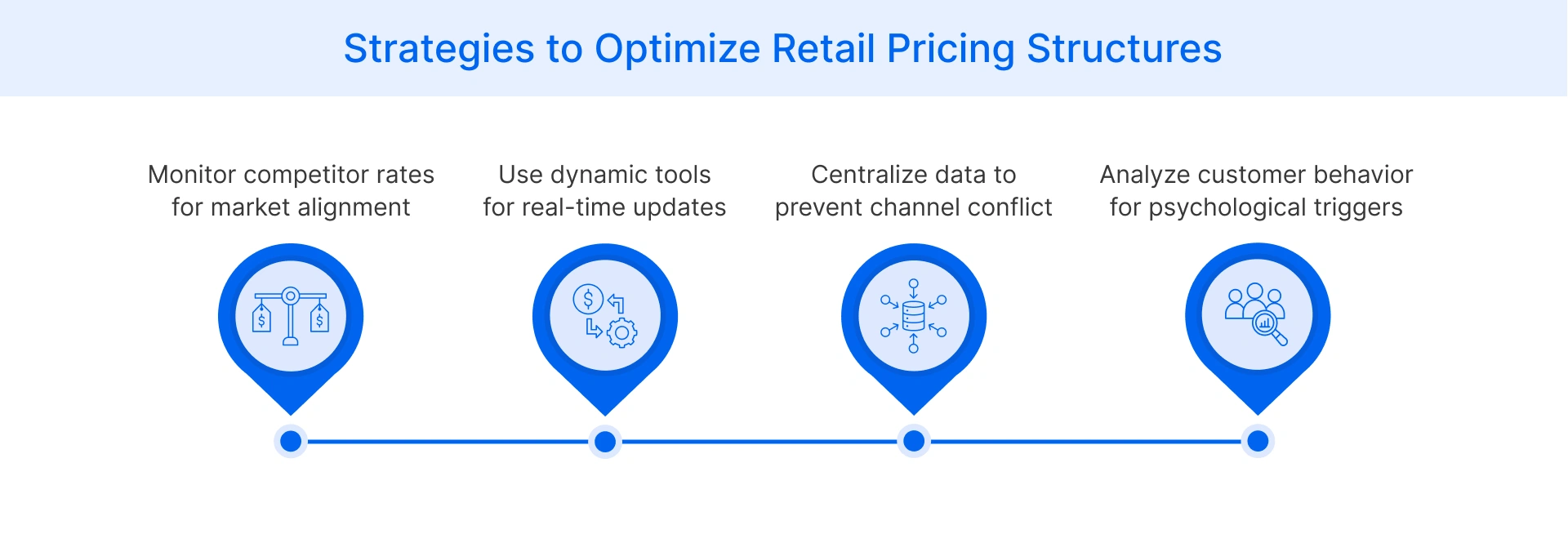
Strategic pricing significantly influences consumer behavior and decision-making processes. You can leverage specific psychological triggers to boost conversion rates.
- Anchoring Effect: Displaying a lower advertised price next to a crossed-out high MSRP creates a reference point. This comparison makes the current offer seem like a significant bargain and triggers immediate purchase intent.
- Loss Leaders: You advertise a staple item at a low price to draw customers into the ecosystem. The goal of loss leader pricing is to entice shoppers to purchase high-margin add-ons early in their shopping journey.
- Charm Pricing: Ending prices with the number nine creates a perception that the cost is significantly lower. Consumers perceive a price like 19.99 as closer to 19 than to 20 due to left-digit bias.
Why Managing Advertised Price is Hard?
Maintaining consistent pricing across multiple touchpoints presents significant operational hurdles. You face internal data silos and external market pressures simultaneously.
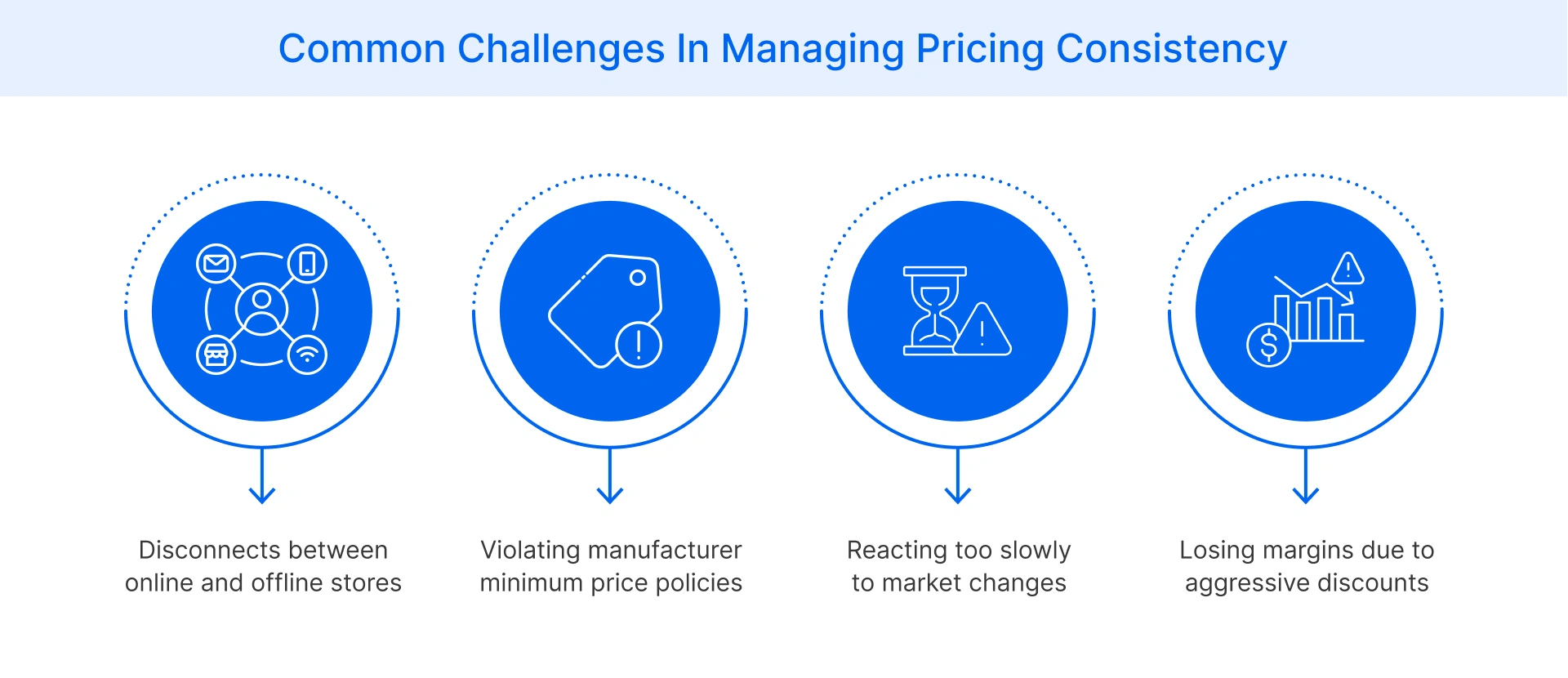
- Omnichannel Chaos: Keeping prices synchronized between physical stores and digital platforms is difficult without unified systems. Discrepancies confuse customers and erode trust in your brand's consistency across different shopping channels available to them.
- The Competitor Price Squeeze: Competitors change their prices dynamically using automated software to undercut your offers instantly. Sticking to a static advertised price causes you to lose market share to more agile and aggressive rivals.
- MAP Violations: Monitoring adherence to manufacturer policies across thousands of SKUs consumes valuable resources. Accidental violations result in penalties or suspended vendor relationships, significantly damaging your long-term supply chain stability.
How to Master Your Advertised Price?
Implementing robust technology simplifies the complexity of modern pricing strategies. You need tools that offer real-time data and automation capabilities.
- Dynamic Pricing Engines: These tools adjust your prices automatically based on real-time demand and competitor moves. Dynamic pricing software ensures you remain competitive around the clock without requiring manual intervention for every single product update.
- Unified Pricing Command Centers: Centralizing pricing data allows you to control offers across all channels from one dashboard. This integration eliminates errors and ensures a consistent brand experience for every single customer interaction.
- Compliance Monitoring: Automated alerts notify you immediately when a price violates MAP agreements or standards. This proactive approach helps you maintain healthy relationships with suppliers while maximizing your promotional flexibility legally.
Optimizing Advertised Price With Flipkart Commerce Cloud
Mastering the art of the advertised price differentiates successful retailers from the rest. You must leverage data to ensure your pricing strategy attracts traffic without sacrificing essential margins. It is about finding the sweet spot between volume and profitability.
At Flipkart Commerce Cloud (FCC), we understand that the retail ecosystem evolves rapidly with new competitors entering daily. Sticking to manual pricing methods leaves you vulnerable to errors and missed opportunities in a fast-paced market. Automation is no longer optional but a necessity for growth.
FCC Pricing Manager empowers you with intelligence to optimize every pricing decision effectively. We provide the tools needed to synchronize your strategy across channels and stay ahead of market trends. Let us help you transform your pricing operations today.
Schedule a personalized demo to see how Flipkart Commerce Cloud can safeguard your bottom line.
FAQ
Yes, you can advertise a price higher than the list price in specific scenarios. This usually happens with limited edition items or when demand vastly exceeds supply. You must remain careful, as this practice can alienate price-sensitive customers who are fully aware of the standard market value.
In the United States, the advertised price typically excludes sales tax. You add tax only during the final checkout process, based on the buyer's location. Conversely, some countries require retailers to include the Value Added Tax within the displayed price to ensure full transparency for shoppers.
Advertising the wrong price can lead to significant financial loss or customer dissatisfaction. You should have a terms-of-service policy that allows you to cancel orders due to pricing errors. It is crucial to correct the mistake immediately and communicate transparently with affected customers to maintain trust.
The frequency of price changes depends heavily on your product category and the level of competition. High-volume items often require daily updates to stay competitive on digital marketplaces. However, luxury goods benefit from stable pricing to maintain brand prestige. Use data to determine the optimal cadence for your inventory.