
January 20, 2026
Differential Pricing
Differential Pricing involves charging distinct prices for the same product based on customer segments or purchase timing. This strategy allows retailers to capture maximum consumer surplus across various markets.
Drishti, Manager - Digital Marketing

Table of Contents
- Differential Pricing
- What is Differential Pricing?
- What are the Three Degrees of Differential Pricing?
- Differential Pricing vs. Dynamic Pricing: What’s the Difference?
- What are the Benefits of Differential Pricing?
- 5 Differential Pricing Strategies To Implement
- Final Remarks
Differential Pricing
Retail markets often display varying price tags for identical items depending on the specific purchaser or channel. This strategic approach maximizes potential revenue by effectively capturing consumer surplus across distinct buyer groups.
Companies utilize data to identify customer segments willing to pay premium rates versus those seeking value. This segmentation ensures inventory moves efficiently while boosting overall profit margins through targeted offers.
- Retailers analyze deep purchasing history to determine the optimal price point for specific customer demographics or geographic locations.
- Businesses implement specific rules to adjust costs based on channel selection or customer loyalty program status levels.
- Market segmentation allows sellers to target budget-conscious shoppers without sacrificing margins on high-value transactions within the ecosystem.
- Effective execution requires robust data analytics to prevent customer alienation while maximizing the value of every single sale.
What is Differential Pricing?
Differential Pricing is a strategy where a company sells the exact same product or service to different customers at different prices. You aim to capture the maximum amount a consumer is willing to pay based on their perceived value.
This concept relies on the idea that not all buyers possess the same willingness to pay. You segment the audience to offer lower prices to price-sensitive groups while maintaining standard rates for those with higher purchasing power.
What are the Three Degrees of Differential Pricing
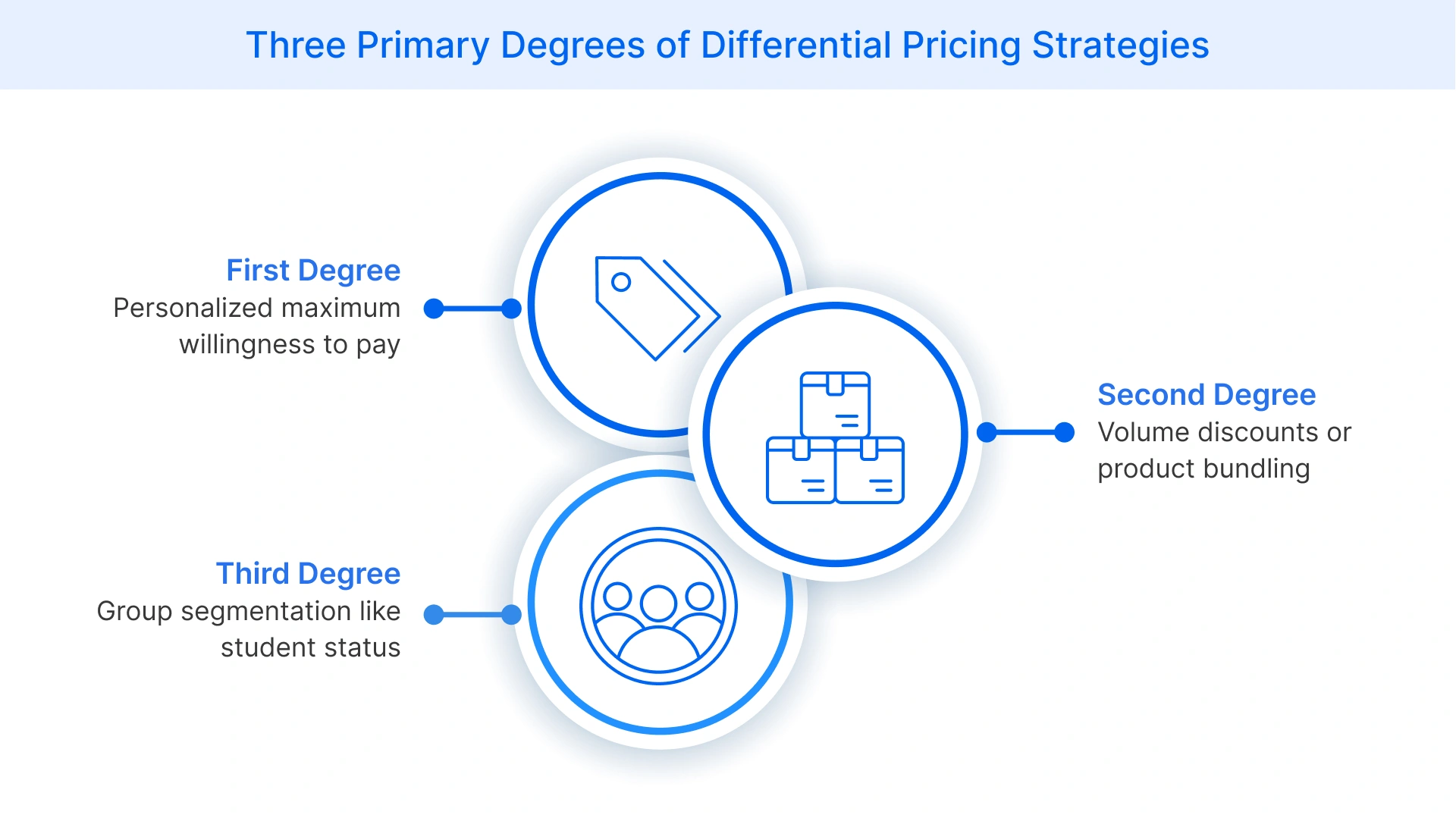
Experts generally classify this pricing strategy into three distinct categories based on how you target the consumer base.
1. First-Degree (Personalized Pricing)
This refers to charging the customers the maximum amount that they would be willing to pay for a certain product. You utilize individual data points to determine this exact figure. It is common in car sales or auctions where the final cost depends entirely on negotiation skills.
2. Second-Degree (Product/Volume Versioning)
This refers to charging the customers different amounts based on the volume. For example: Buy 2 get 1 free. You encourage bulk purchases by lowering the per-unit cost for larger orders. Retailers use this to clear inventory quickly while rewarding customers who commit to higher spending levels.
3. Third-Degree (Group-Based)
You segment the market based on attributes you can verify like age or location. Common examples include student discounts and senior citizen rates. You identify these specific demographics and apply a standardized discount to the entire group rather than determining individual willingness to pay.
Differential Pricing vs. Dynamic Pricing: What’s the Difference?
Many retailers confuse differential pricing with dynamic pricing strategies. The main distinction lies in the trigger for the price change. Differential strategies focus on who the customer is or what segment they belong to. Dynamic pricing reacts to market conditions or time regardless of the specific buyer identity.
|
Feature |
Differential Pricing |
Dynamic Pricing |
|
Primary Driver |
Who the customer is (Segment-based). |
When the transaction happens (Market-based). |
|
Stability |
Generally stable; rules are set in advance. |
Highly volatile; prices can change minute-by-minute. |
|
Examples |
Senior discounts and B2B tier pricing. |
Uber surge pricing, Airline tickets, Hotel rooms. |
|
Goal |
Capture different customer segments. |
React to supply and demand fluctuations. |
What are the Benefits of Differential Pricing?
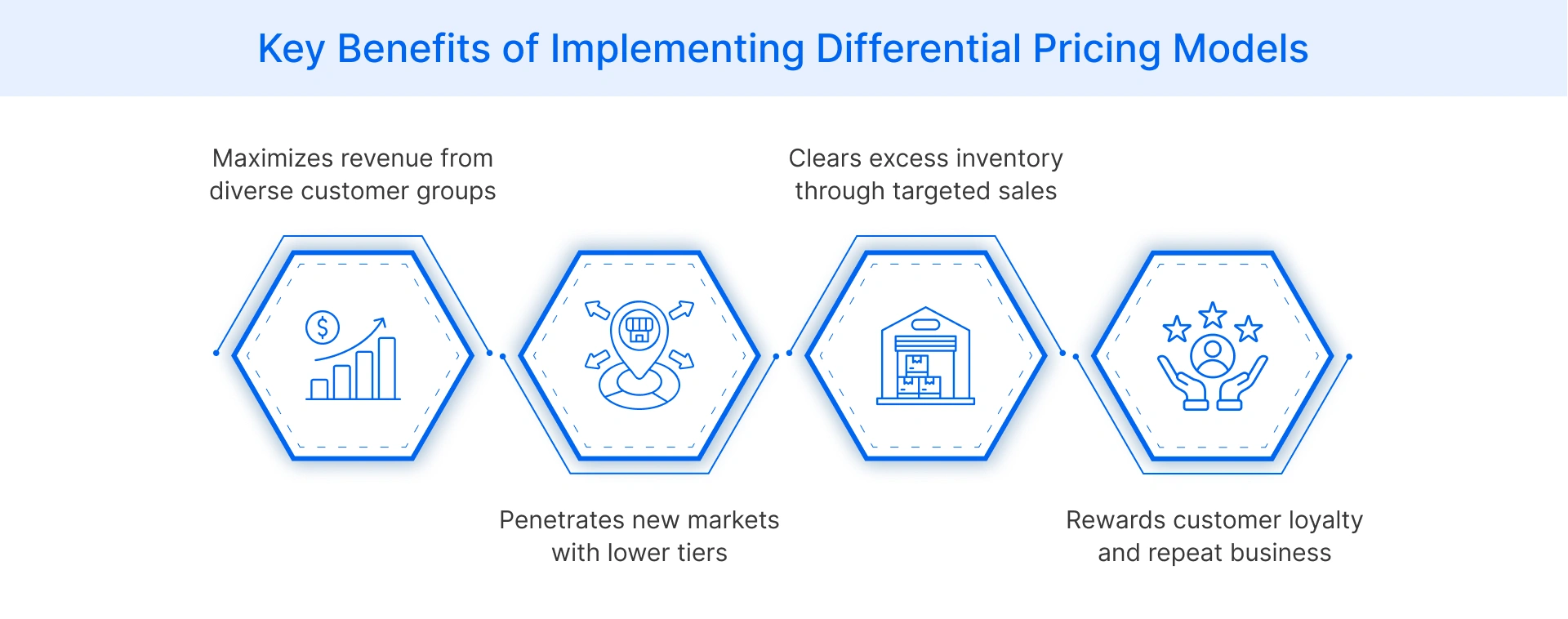
Here are the key benefits of differential pricing:
- Revenue Maximization: You capture surplus from customers willing to pay more while securing sales from price-sensitive buyers. Differential pricing ensures you do not leave money on the table by applying a single price point to everyone.
- Market Penetration: Lower price tiers allow you to enter new markets or demographics that would otherwise find your products too expensive. This approach builds a broader customer base without devaluing your brand for premium buyers.
- Inventory Management: You can move excess stock by targeting specific segments with volume-based discounts. This helps clear older products efficiently. It also reduces storage costs while generating revenue from items that might otherwise remain unsold.
5 Differential Pricing Strategies To Implement
Retailers can use the following strategies to execute differential pricing effectively across different channels and customer touchpoints.
1. Channel-Based Pricing
Are you selling on a marketplace, your own brand site and a mobile app? You might set lower prices on your app to drive downloads. This separates customers based on their preferred shopping medium and allows you to optimize margins based on channel-specific costs.
2. Time-Based Variants
This is standard practice in fashion and travel. For example: Early Bird or End-of-Season Sale. You charge different rates based on purchase timing. Customers who want the latest item pay full price while patient shoppers wait for discounts to access the same inventory later.
3. Location-Based (Geo-Pricing)
Adjusting for local purchasing power or shipping costs allows you to remain competitive globally. You might charge more in regions with higher living costs. This ensures your pricing remains attractive to local markets while covering the logistical expenses associated with serving distant areas.
4. Customer Loyalty Tiers
Rewarding behavior via VIP pricing encourages repeat business. You offer exclusive rates to members who frequent your store. This form of differential pricing strengthens the relationship with your best customers and incentivizes occasional shoppers to increase their engagement to unlock better deals.
5. B2B Negotiated Pricing
The standard for enterprise sales involves custom contracts. You negotiate specific rates based on the expected volume and relationship duration. This ensures high-value partners receive competitive pricing that reflects their commitment while maintaining higher margins for smaller or one-time business purchases.
Final Remarks
Your customers are unique and your pricing should be too. We understand that applying a one-size-fits-all approach limits your potential revenue. See how our AI-driven pricing engine at Flipkart Commerce Cloud helps you segment customers effectively. We enable you to set the perfect price for every transaction automatically.
Schedule a personalized demo to see how we maximize your profitability.

FAQ
Yes, differential pricing is generally legal in most retail sectors. It becomes illegal only if based on protected classes like race or religion. The Robinson-Patman Act in the US regulates price discrimination between businesses to prevent unfair competition. You must ensure your strategy relies on strictly business metrics rather than discriminatory practices to remain compliant with federal regulations.
Absolutely. In fact, it is the standard model for most B2B transactions. Sellers negotiate unique contracts based on order volume and payment terms. This allows you to reward long-term partners with better rates while maintaining standard pricing for ad-hoc clients. It is essential for maximizing value in complex business relationships and ensuring fair value exchange.
It can damage your brand if customers feel manipulated or treated unfairly. Transparency is key to preventing resentment among your audience. If two customers discover they paid vastly different amounts without a clear reason, trust erodes. You must communicate the logic behind price differences clearly to avoid potential public relations issues and customer churn.
These terms are often used interchangeably in economics. However, differential pricing usually refers to the strategic and acceptable practice of segmentation. Price discrimination often carries a negative connotation regarding unfairness. You use the former to describe valid business strategies like student discounts while the latter often implies an unethical separation of markets or bias.