
February 21, 2026
Multiple Unit Pricing
Multiple unit pricing is a sales strategy where retailers offer a discount to customers who purchase a specific quantity of identical items. It incentivizes bulk buying and helps clear inventory rapidly.
Drishti, Manager - Digital Marketing

Table of Contents
- What is Multiple Unit Pricing?
- What Are Common Examples of Multiple Unit Pricing?
- How to Calculate an Effective Multiple Unit Price?
- What is the Difference Between Multiple Unit Pricing and Bundle Pricing?
- When Should Businesses Use Multiple Unit Pricing?
- Benefits of Multiple Unit Pricing?
- Maximize Your Pricing Strategy with Flipkart Commerce Cloud
Multiple Unit Pricing
Retailers use this specific pricing strategy to influence shopper behavior and optimize daily inventory flow. This strategy structures product costs to reward larger-volume purchases without sacrificing overall store profitability.
The pricing framework requires a careful analysis of baseline margins and expected consumer demand. Companies deploy these structured discounts across selected product categories to maintain a strong competitive market position.
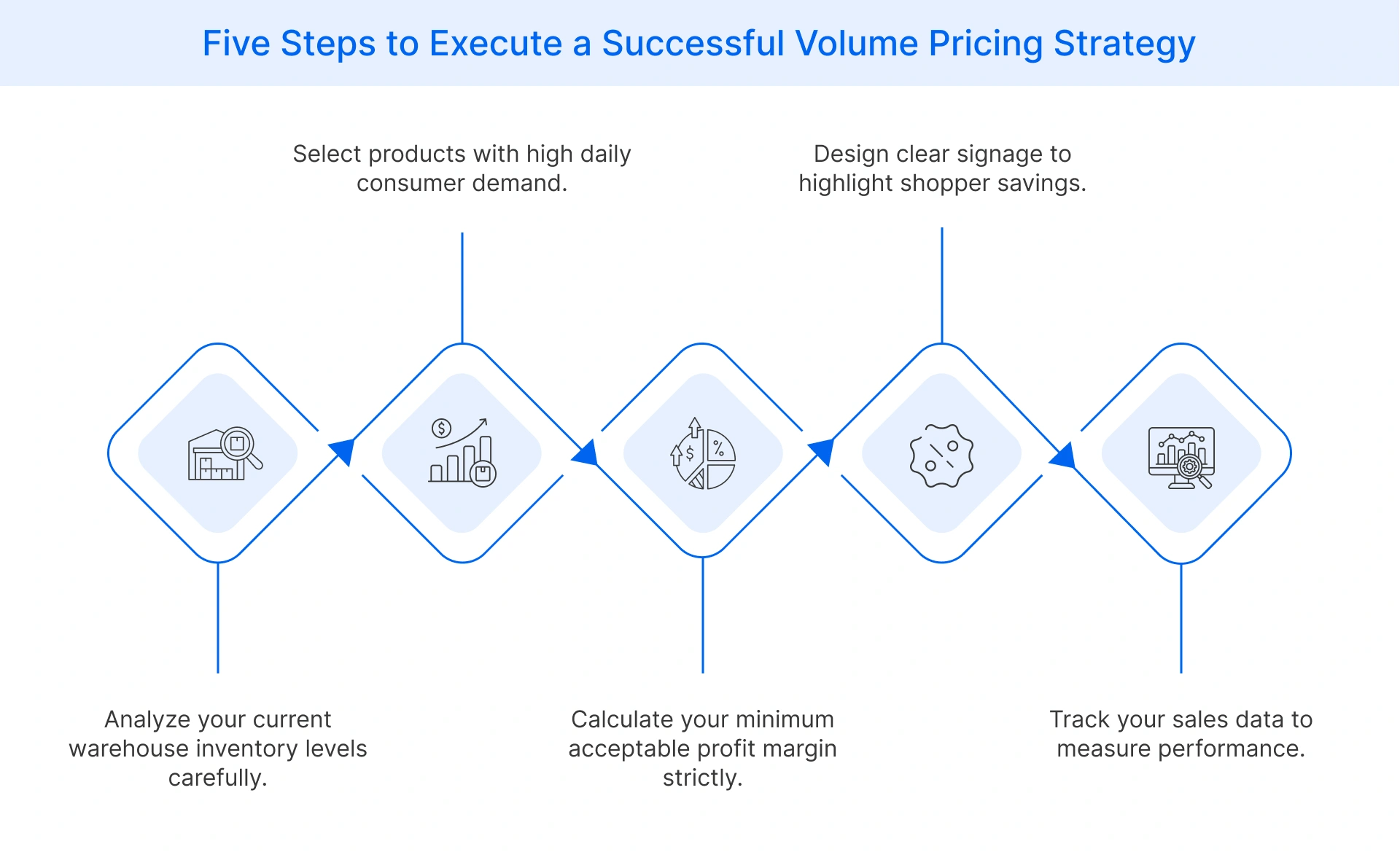
- Merchandising teams monitor current inventory levels to determine the most effective volume discounts for highly stocked products.
- Financial analysts consistently evaluate historical sales data to ensure bulk promotions maintain your acceptable baseline profit margins.
- Supply chain professionals coordinate upcoming stock deliveries to support the anticipated volume spikes generated by promotional campaigns.
- Marketing departments design highly visible promotional signage to clearly highlight the financial savings associated with bulk purchases.
What is Multiple Unit Pricing?
Multiple-unit pricing is a strategy in which you offer a lower price per item when a customer buys a predetermined quantity. You group identical goods together to create a compelling deal that moves your excess stock very rapidly.
It encourages your loyal customers to purchase multiple items at once by offering a clear financial incentive. You secure a significantly larger transaction value while the buyer enjoys tangible savings on the everyday products they consume frequently.
What Are Common Examples of Multiple Unit Pricing?
You can observe the multiple-unit pricing model across various retail sectors where businesses aim to increase their average order value.
- Grocery Stores: Supermarkets frequently sell 10 yogurts for $10 instead of $1 each. This specific promotional tactic encourages your shoppers to stock up on daily essentials before expiration dates approach.
- Apparel Retail: Offering three basic t-shirts for $20 when a single shirt costs $10 creates strong retail appeal. Shoppers perceive high value and eagerly upgrade their wardrobe staples in a single store visit.
- Beverages: Packaging a six-pack of soda for less than the cost of individual cans works exceptionally well. Customers readily accept this specific volume offer for social gatherings or routine home consumption.
- Personal Care: Promotions featuring buy two shampoo bottles to get one free drive significant retail sales. This strategic approach encourages brand loyalty while ensuring the buyer relies on your specific product longer.
How to Calculate an Effective Multiple Unit Price?
You must establish a mathematical approach to ensure that the promotional offers remain profitable while attracting highly budget-conscious retail shoppers.
- Begin the process by accurately determining your base cost per unit alongside your strictly required minimum baseline profit margin.
- Then calculate the standard retail selling price for a single isolated item to establish a primary financial reference point.
- Carefully analyze the elasticity of demand to fully understand how sensitive your target shoppers remain toward various price changes.
- Finally, set a bundle price lower than the individual item sums that effectively covers operating costs and generates a reliable profit.
What is the Difference Between Multiple Unit Pricing and Bundle Pricing?
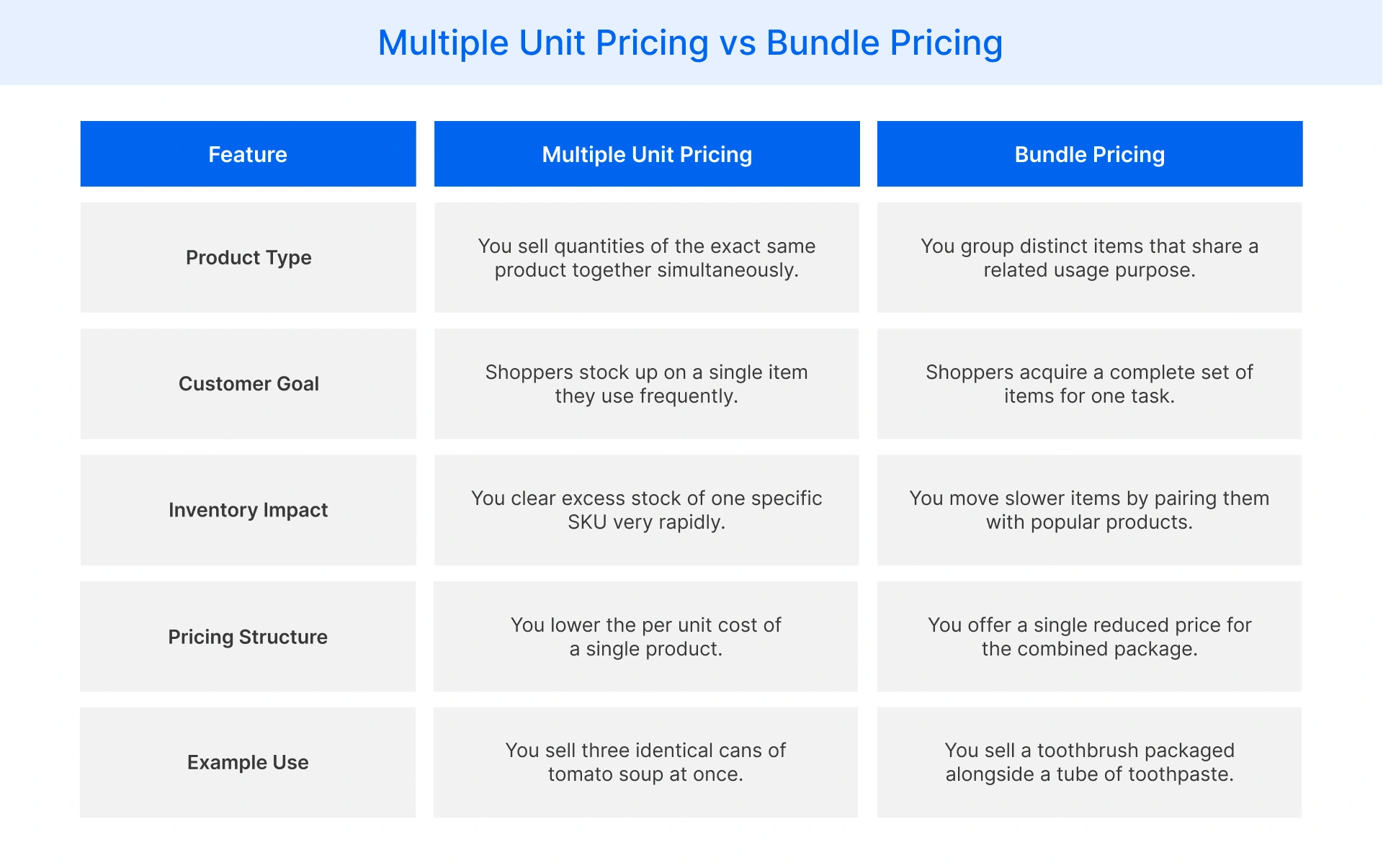
Retailers must carefully distinguish between these two distinct retail strategies to execute their promotional campaigns effectively.
The multiple unit pricing approach involves selling several identical items together at a discount. Conversely, bundle pricing requires you to package different complementary goods together to create a complete everyday solution for your buyer.
When Should Businesses Use Multiple Unit Pricing?
You should strategically deploy multiple unit pricing in certain retail scenarios to maximize your overall operational efficiency and revenue.
- High Inventory Levels: Employ this approach when you hold excessive warehouse stock. It helps you quickly clear valuable shelf space to make room for incoming fresh merchandise and new seasonal product lines.
- Low Moving Items: Apply this discount to products that fail to sell well individually. The bulk incentive sparks immediate shopper interest and successfully helps recover capital tied up in stagnant store inventory.
- Seasonal Transitions: Implement these strategic offers at the end of a season. Shoppers eagerly purchase your remaining winter coats or summer swimsuits when you offer a highly compelling bulk discount.
- Introductory Offers: Leverage this exact pricing model to encourage loyal customers to stock up on a newly launched product. The volume discount lowers their perceived risk of trying an unfamiliar brand.
Benefits of Multiple Unit Pricing?
You unlock several highly measurable advantages when you integrate this volume-based pricing method into your broader retail sales strategy.
- Higher Revenue Per Transaction: Customers enthusiastically buy more units during a single purchase event. This behavior significantly increases your average order value even though you accept a slightly lower profit margin per item.
- Faster Inventory Turnover: Targeted products move off the retail shelves much quicker. This increased velocity reduces your warehouse storage costs and prevents unnecessary financial waste from product spoilage or upcoming expiration dates.
- Customer Perceived Value: Shoppers genuinely feel they receive a highly advantageous deal. This positive psychological perception improves overall brand satisfaction and strongly encourages future repeat visits to your physical or digital store.
- Market Penetration: Compete effectively against massive established retail players. Smaller brands aggressively capture market share by offering highly attractive bulk pricing bundles to highly cost-conscious target consumer groups.
Maximize Your Pricing Strategy with Flipkart Commerce Cloud
Understanding when and how to implement this strategy remains essential for your retail success in competitive markets. You need the perfect balance between attractive customer offers and maintaining healthy profit margins across your entire active digital product catalog.
Flipkart Commerce Cloud provides advanced technical tools to optimize multi-unit pricing strategies. Our robust platform carefully analyzes complex sales patterns and competitor pricing to recommend the absolute most profitable bundle offers for your unique, specific retail business needs.
FCC Pricing Solutions use machine learning to identify the exact products that benefit most from multiple unit pricing. You can seamlessly test different discount structures and measure their direct impact on sales volume and overall total profitability in real-time.
Schedule your personalized demo today to discover how we drive profitable growth for your business.

FAQ
You will not always see an immediate profit increase. The strategy requires you to sacrifice per unit margin to achieve higher overall sales volume. You must calculate your numbers meticulously to ensure that the increased quantity sold compensates for the reduced margin and covers your standard daily operating costs.
You should typically aim for a discount of 10% to 20%. A smaller discount fails to motivate your target shoppers effectively. A significantly larger discount severely threatens your baseline profitability. You must constantly test different percentages to find the absolute optimal balance for your specific core retail products.
You will find this pricing strategy perfectly legal in most standard retail sectors. Certain regulated industries, such as alcohol and pharmaceuticals, face strict government restrictions on volume discounts. You must consult local commerce laws to ensure your promotional offers comply fully with your regional retail pricing regulations and standards.
You actually improve shopper satisfaction when you implement this strategy correctly. Customers appreciate the opportunity to save money on items they buy regularly. You only risk negative feedback if you force buyers to purchase massive quantities that exceed their reasonable storage capacity or immediate personal daily consumption needs.
You must monitor key performance indicators like average order value and inventory turnover rates. You compare sales data from the promotional period against your baseline metrics. You use advanced retail analytics software to measure the exact impact on your gross margins and overall daily business customer acquisition costs.