
Types of online video advertising?
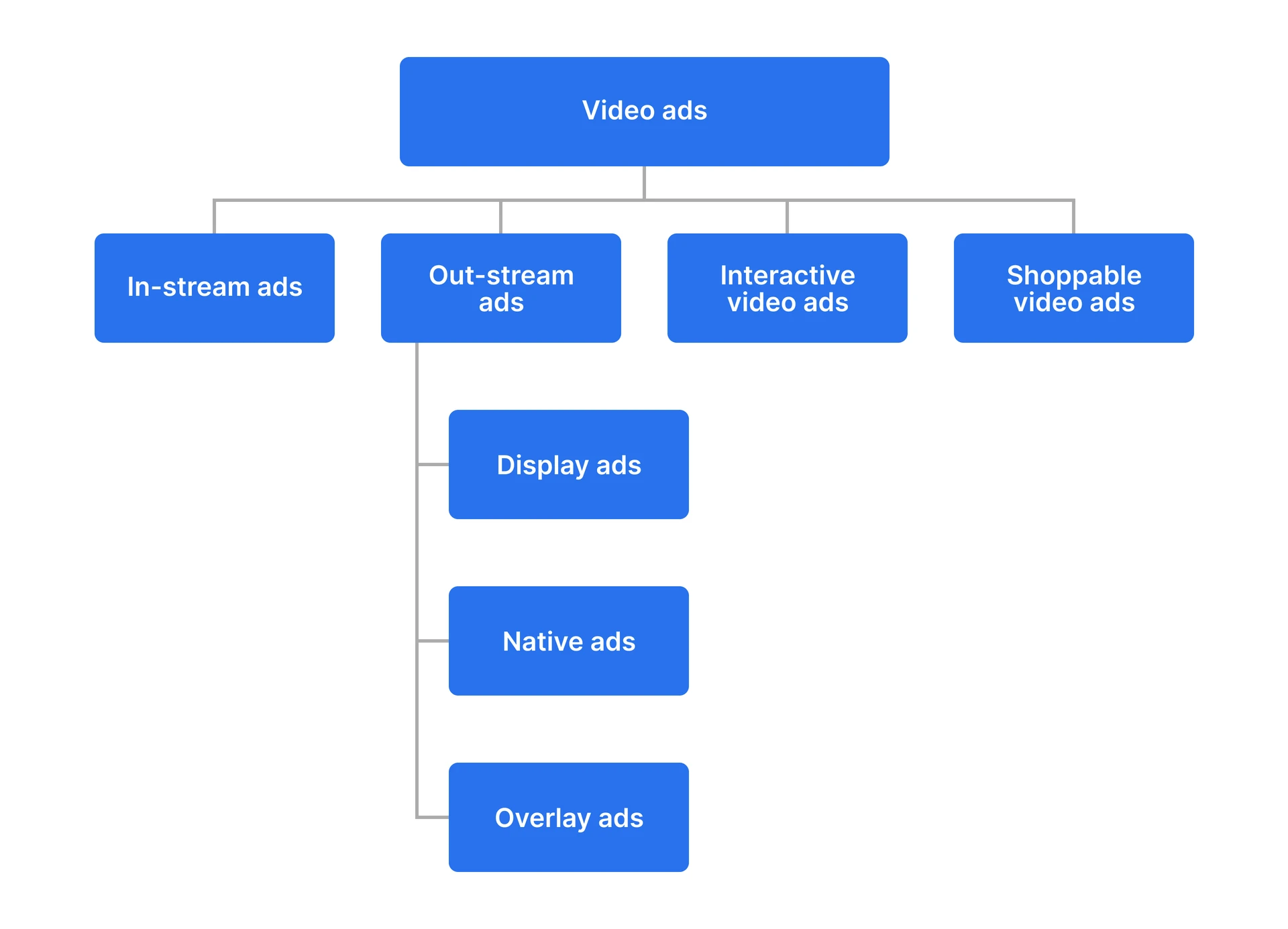
These ads enable viewers to purchase directly from the video, resulting in a more seamless buying experience.

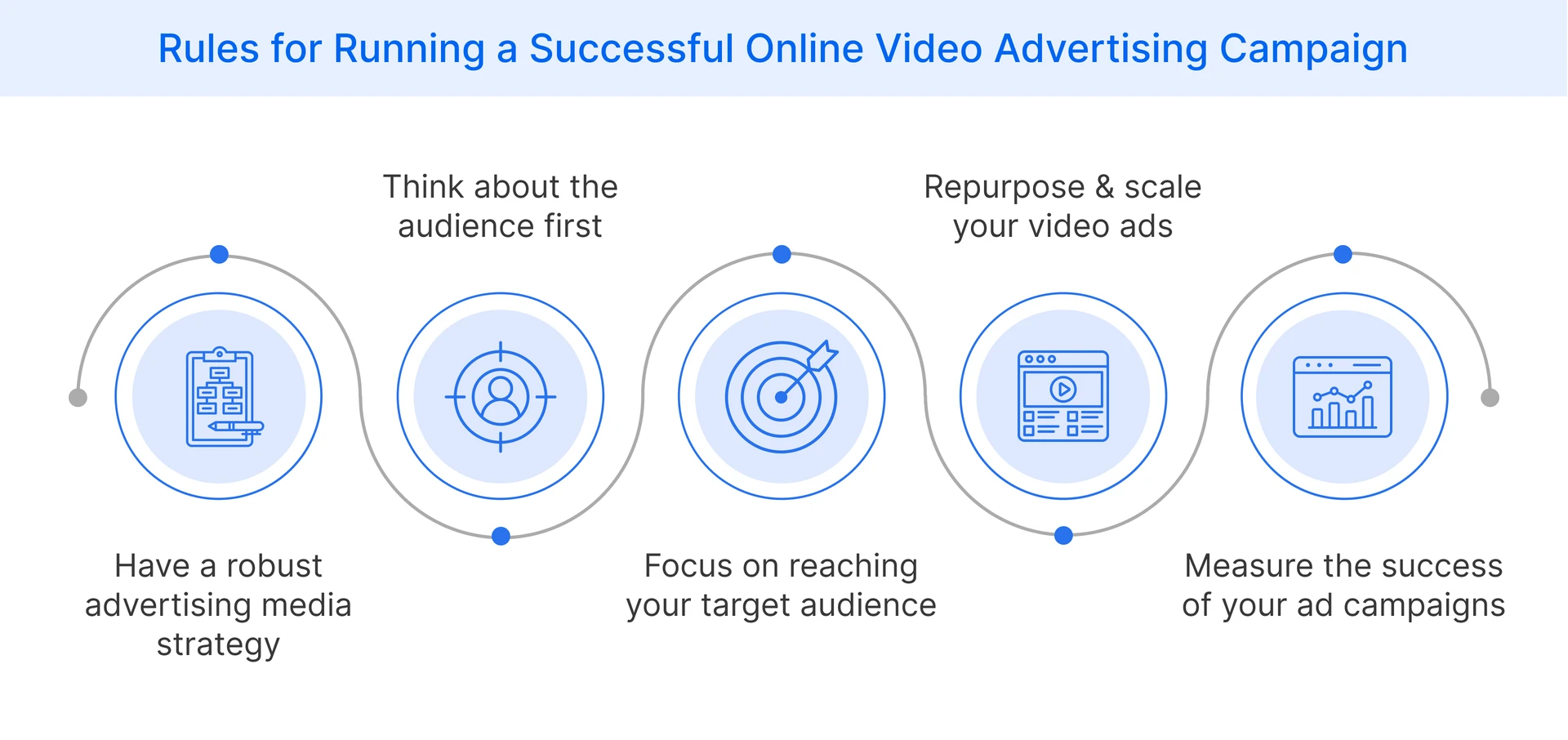
5 Rules for running a successful online video advertising campaign

FAQ
Online video advertising differs from traditional TV advertising primarily in targeting, measurability, and cost structure. Online video uses precise digital targeting (demographics, interests, behavior, search history) powered by first-party data, offers real-time performance metrics like clicks and conversion rates, and is generally more flexible and cost-effective with lower barriers to entry. Traditional TV offers massive, broad reach and often builds higher inherent trust, but is expensive, has limited targeting, and relies on delayed, aggregated audience measurement.
The main online video ad formats include in-stream ads, which play directly inside a video player either before (pre-roll), during (mid-roll), or after (post-roll) the main video content; out-stream ads, which appear outside of video players, typically embedded within articles or social feeds and often start muted; CTV/OTT ads, which are in-stream ads delivered through streaming services like Hulu, Roku, or smart TVs; and social video ads, which are optimized for social feeds like Facebook, Instagram, or TikTok, often using short, vertical formats.
Online video ads are bought and priced using several models that correspond to campaign goals. CPM (Cost Per Mille) is common for awareness campaigns, where you pay for every 1,000 impressions. CPV (Cost Per View) is used to optimize for video views, often charging only if a user watches a certain duration or interacts. CPC (Cost Per Click) focuses on driving traffic to a website, charging per click. Finally, CPA (Cost Per Action) is used for direct response, paying only when a specific conversion event occurs.
You can make online video ads mobile-friendly by optimizing the creative for vertical or square aspect ratios to fill the mobile screen, ensuring all text and visuals are clear on smaller displays, and keeping the length concise to respect mobile attention spans. To make them sound-off ready, you must include clear, readable text overlays, headlines, and calls-to-action (CTAs), and use subtitles or closed captions to convey the full message effectively even when the audio is muted.
Best practices to improve online video ad performance include ensuring the brand and core message are shown in the first 3-5 seconds to prevent skips or drop-offs. The video should also use captions or text overlays to ensure the message is clear, as most videos are watched sound-off on mobile devices. Videos should maintain a clear, singular call-to-action (CTA) and be formatted to suit mobile viewing, such as using vertical or square aspect ratios.
Video ad lengths that work best vary significantly depending on the campaign goal and the placement channel. For maximizing reach and frequency in brand awareness campaigns, 6-second bumper ads are the most effective as they are non-skippable and concise. 15-to-30-second ads are the industry standard for consideration and storytelling across in-stream and Connected TV (CTV) placements, offering enough time to convey a narrative. For high-intent placements on social media feeds and mobile, shorter videos, often 5 to 15 seconds, are recommended to capture attention before the user scrolls past.
Creative best practices to improve online video ad performance include ensuring the brand and core message are visually shown in the first 3-5 seconds to immediately hook the viewer and overcome ad skips or drop-offs. The video must be designed to work sound-off by utilizing clear captions, text overlays, and graphic elements. Furthermore, videos should maintain a single, clear call-to-action (CTA) and be formatted with appropriate aspect ratios (like vertical or square) to suit mobile and social viewing environments.
You make online video ads mobile-friendly by optimizing the creative for vertical or square aspect ratios to fill the mobile screen, ensuring all text and visuals are clear and legible on smaller displays, and keeping the length concise to respect mobile attention spans. To make them sound-off ready, you must include clear, readable text overlays, headlines, and calls-to-action (CTAs), and use subtitles or closed captions to convey the full message and narrative effectively even when the audio is muted, as most mobile users watch video without sound by default.
More Blogs
See how retailers and brands are winning with FCC

Everything About Price Skimming Strategy Explained
Read More
What is a High-Low Pricing Strategy?
Read More
Ultimate Guide To Dynamic Pricing Strategy In 2026
Read More
Retail Pricing Strategies: Winning with Promotion Pricing in Competitive Markets
Read More
Ad Tags: Enhancing Ad Serving Efficiency in Large-Scale Campaigns
Read More