
FAQ
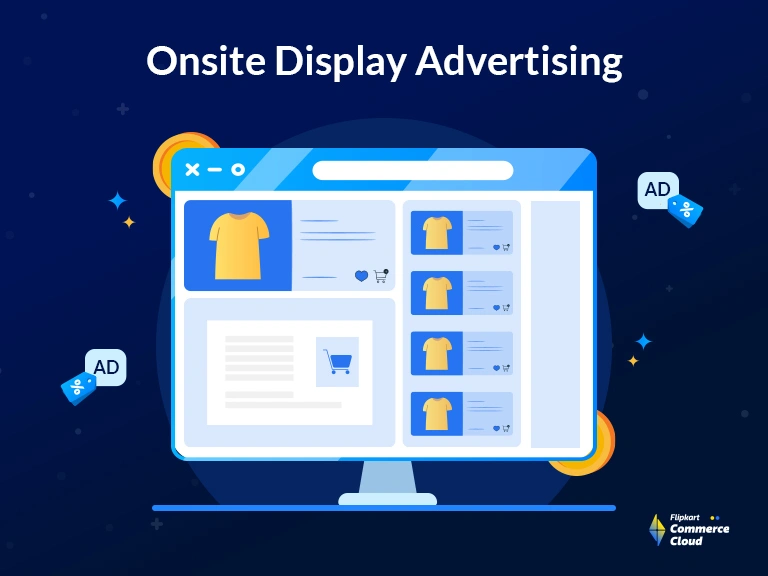
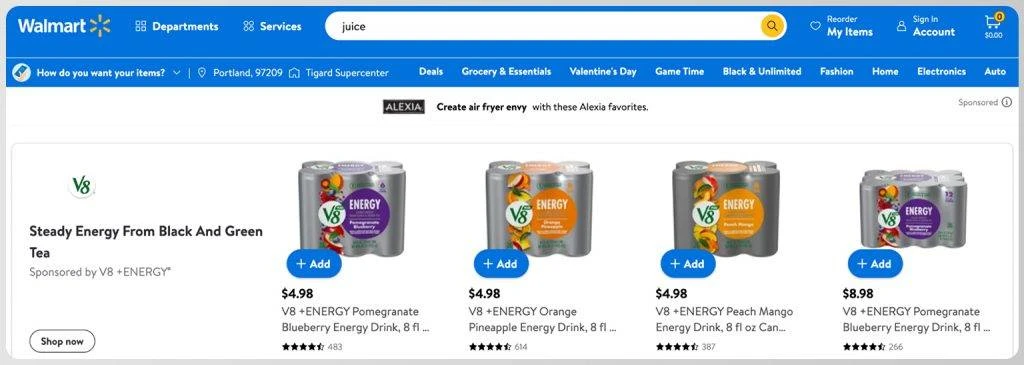
Onsite ads are advertisements placed by brands directly within a retailer's owned digital platform, specifically their website and mobile application, leveraging the retailer's first-party data to reach high-intent shoppers already in a buying mindset. These ads are typically visual banner or rich media placements, distinct from standard product listings, and serve to increase brand visibility and influence purchasing decisions near the point of sale.
Onsite display advertising is effective for retail brands because it places highly relevant brand messaging directly in front of shoppers at the critical point of purchase and is powered by the retailer's proprietary first-party data. This environment guarantees high purchase intent, allowing brands to target consumers based on explicit shopping behaviors, like past category views or loyalty status, leading to exceptional conversion rates and measurable sales lift.
The formats supported for onsite display range from simple visual units to highly engaging creative assets, often designed to blend natively with the retailer's site layout. Common formats include standard display banners (e.g., IAB standard sizes), rich media and animated creatives, and native display units that dynamically pull product information like image, price, and ratings from the retailer’s catalog. This is a hallmark feature of the robust retail media technology offered by FCC.
You should track a combination of performance and full-funnel metrics for onsite display, starting with top-of-funnel indicators like Impressions, Click-Through Rate (CTR), and Cost-Per-Mile (CPM). Crucially, mid-to-lower-funnel metrics include Conversion Rate, the total Sales Lift or Incremental Revenue generated, and Return on Ad Spend (ROAS), which is essential for proving the campaign's financial impact.
Attribution for onsite display typically uses a last-touch or view-through model within a defined look-back window, usually 7 to 30 days. Last-touch attribution credits the sale to the click on the display ad that immediately preceded the purchase, while view-through attribution credits the sale to a shopper who saw the ad (an impression) but did not click, yet still converted within the window, a measurement often enhanced by first-party data for accurate incremental reporting.
Onsite display integrates with retail search and sponsored products by providing a full-funnel strategy that captures consumers at different stages of their journey. Onsite display drives brand awareness and product consideration on pages like the homepage and category pages, effectively warming up the audience. This audience is then more likely to convert when they encounter sponsored products or retail search ads on the search results pages, which are lower-funnel, intent-driven placements.
Onsite display complements retail search and sponsored products by enabling a full-funnel strategy. It builds brand awareness and product interest on upper-funnel surfaces like the homepage, category pages, and email—priming users for conversion. These warmed-up audiences are more likely to act when they see lower-funnel ads on search results and category bottoms. This integrated approach keeps the brand visible from first browse to final purchase.
To get started with onsite display on a retail media network, you must first secure a partnership with the retailer or the platform provider, such as FCC, and be onboarded to their ad management console. The subsequent steps involve defining your target audience using the retailer’s first-party data, setting a budget typically on a CPM basis, uploading your display creatives, and defining the page placements and products you wish to promote.
More Blogs
See how retailers and brands are winning with FCC
Everything About Price Skimming Strategy Explained
Read More
What is a High-Low Pricing Strategy?
Read More
Ultimate Guide To Dynamic Pricing Strategy In 2026
Read More
Retail Pricing Strategies: Winning with Promotion Pricing in Competitive Markets
Read More
Ad Tags: Enhancing Ad Serving Efficiency in Large-Scale Campaigns
Read More