
December 20, 2024
Ad Tech
Ad tech is an overarching term for software and tools used by advertisers to manage, target, and analyze their digital advertising campaigns.
Drishti, Manager - Digital Marketing

Table of Contents
- What is Ad tech?
- Understanding publisher needs
- Understanding advertiser needs
- How does Ad tech meet publisher demands?
- How does Ad tech meet advertiser demands?
- Why do retailers use Ad tech?
- Ad tech vs Martech: What is the difference?
- Ad tech basic terminology to know
- Conclusion
What is Ad Tech?
Advertising Technology, commonly known as AdTech, is an umbrella term that comprises various software, systems, platforms, and tools used by publishers, advertisers, and other parties to buy, sell, and manage digital advertising.
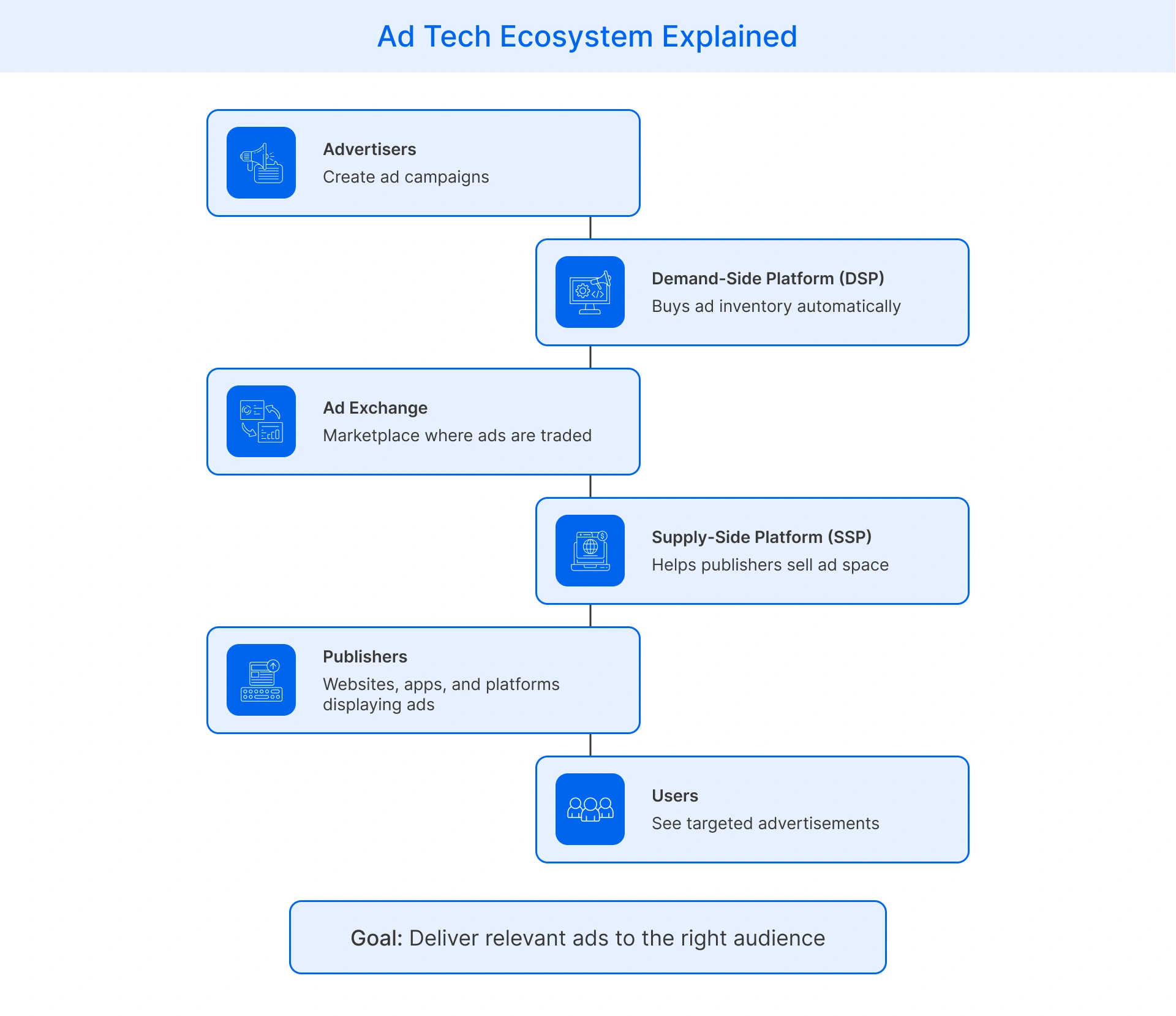
AdTech tools leverage data and technology to optimize the digital advertising process. It operates through a complex ecosystem of players, including advertisers, publishers, ad networks, Demand-Side Platforms (DSPs), Supply-Side Platforms (SSPs), and Data Management Platforms (DMPs).
Let’s understand how the AdTech ecosystem works:
- Bidding: Many advertising technology platforms help streamline the bidding process. For instance, you can set your maximum budget and desired bid amount.
- Purchasing Ad Space: Ad Tech can secure ad space on your behalf from various sources, such as websites, apps, and over-the-top (OTT) platforms.
- Audience Targeting and Retargeting: Ad Tech allows you to utilize audience targeting features to guarantee that your advertisements are seen by users who are most likely to purchase your products.
- Measuring Results: It empowers you to monitor the effectiveness of your campaigns, thereby enabling you to make data-driven decisions.
Understanding publisher needs
AdTech is a comprehensive solution for publishers to monetize their ad space in the digital landscape. Here’s how it works:
- Real-Time Ad Serving: AdTech platforms enable efficient, real-time ad serving each time a user interacts with a digital platform.
- Campaign Management: It allows swift ad implementation, report generation, and provision of valuable campaign insights.
- Maximizing Sold Impressions: Amidst increased competition, AdTech helps maximize sold impressions, which is crucial for non-premium publishers and ad slots.
- Ad Inventory Yield Optimization: It ensures publishers get the best price for each ad slot despite a diverse range of advertisers and intense competition.
- Audience Insight Collection: AdTech facilitates understanding of user behavior, frequency of site or app usage, and key demographics, attracting advertisers willing to pay higher rates.
- Audience Data Monetization: This enables publishers to sell their audience data to advertisers and target potential customers on other platforms.
- Ad Performance Data Collection: AdTech supports the collection of concrete ad performance data demanded by advertisers and is useful for publishers to identify high-yielding ad networks or Supply-Side Platforms (SSPs), successful ad types, and best partners for data monetization.
Understanding advertiser needs
Advertisers and their associated ad agencies have specific needs in the digital advertising landscape. They require data on impressions served, visibility, and conversions, which publishers must provide for payment. Here’s what else they need to succeed in the AdTech space:
- Targeted Ad Campaigns: Advertisers prioritize serving ads to potential customers. The target audience may vary based on the campaign’s purpose, but the goal is to reach the most valuable customers.
- Campaign Success Measurement: Brands need effective tracking methods to attribute conversions, measure engagement, and determine if they’re reaching the right people.
- Customer Journey Tracking: Brands aim to understand customer interactions at different decision-making stages. They need accurate data from AdTech solutions to identify successful touchpoints and improve the customer experience.
- Cost and Time Efficiency: Advertising involves significant time and money. Brands seek to reduce costs and avoid wasting time on sales processes, campaign trafficking, and reporting.
- Brand Image Protection: In the vast digital world, brands risk negative associations with undesirable content. Advertisers need control over where their ads are served to protect their image.
- Data-Based Ad Spend Optimization: Advertisers and marketers use campaign success data, conversions, and revenue information to measure ROI or ROAS. They aim to expand successful campaigns and adjust or eliminate less effective ones to optimize ad spend.
How does Ad tech meet publisher demands?
Ad tech platforms are integral to helping publishers efficiently manage and monetize their ad inventory.
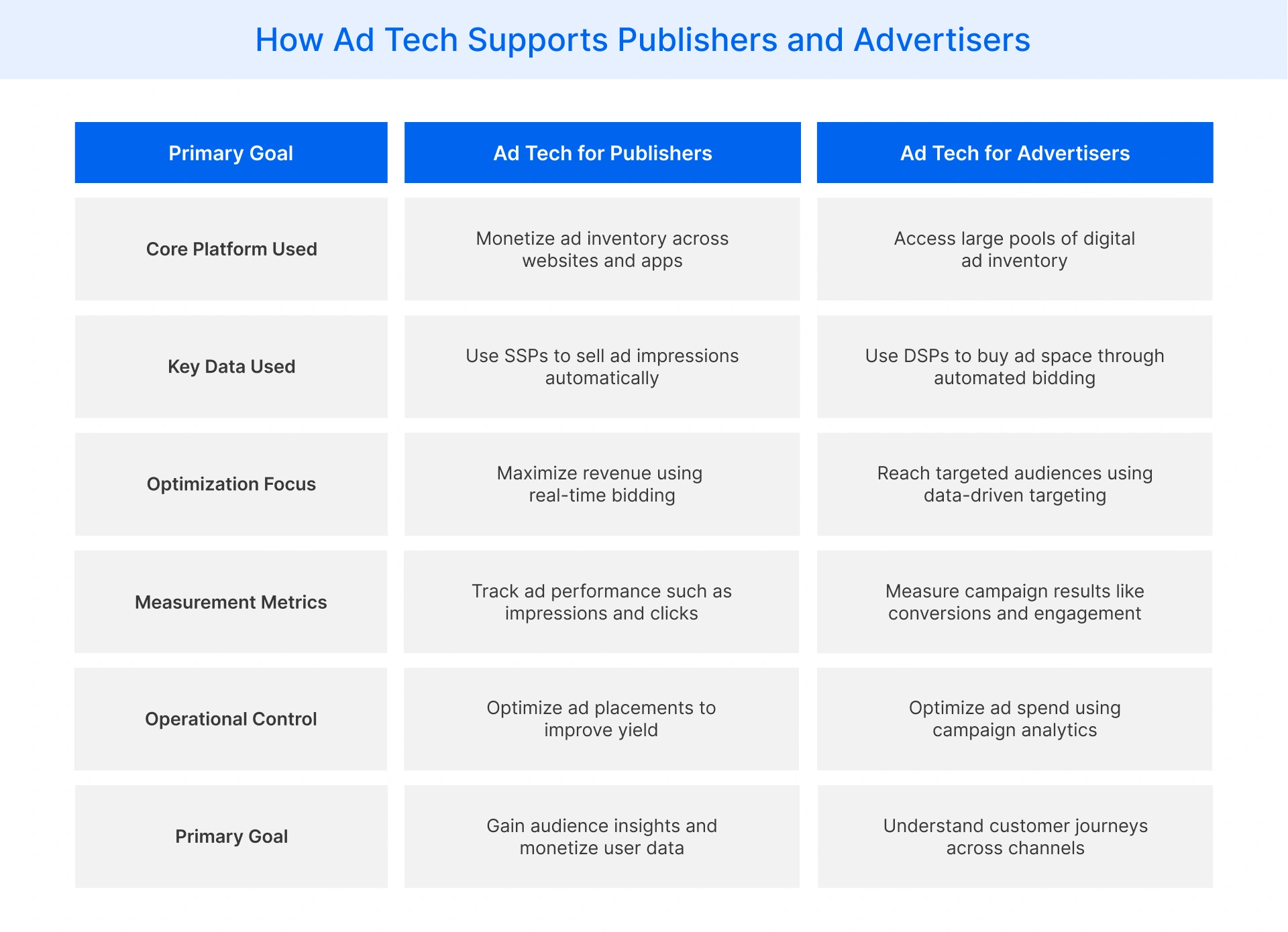
One of the primary tools is the Supply-Side Platform (SSP), which enables publishers to offer their ad space to multiple advertisers through automated bidding processes. This allows publishers to maximize revenue by setting minimum price floors and leveraging real-time bidding to secure the best possible price for their inventory.
Ad servers automate the placement of ads, ensuring they load correctly and track essential metrics like impressions and clicks.
Content Delivery Networks (CDNs) further support publishers by ensuring that ad creatives load quickly, enhancing the user experience on their websites or apps.
Data Management Platforms (DMPs) empower publishers by providing insights into audience behavior, allowing for more targeted and profitable ad placements. Collectively, these tools allow publishers to efficiently manage, sell, and optimize their ad inventory while enhancing the user experience.
How does Ad tech meet advertiser demands?
Ad tech platforms are crucial for advertisers looking to optimize their digital campaigns and reach targeted audiences effectively.
Demand-Side Platforms (DSPs) play a central role by enabling advertisers to place bids on ad inventory in real-time, ensuring that their ads reach the most relevant audiences at the best possible price. These platforms integrate data from various sources, including
Data Management Platforms (DMPs) help advertisers analyze audience segments and track campaign performance.
Ad tech also facilitates access to a vast array of ad inventory through Ad Exchanges, enabling advertisers to extend their reach globally while maintaining control over their budgets and targeting strategies. Ad networks offer a broader selection of inventory, allowing advertisers to increase their campaign reach and effectiveness.
By leveraging these tools, advertisers can efficiently manage their ad spend, achieve better targeting, and drive more impactful results across multiple channels and platforms.
Why do retailers use Ad tech?
AdTech provides a strategic advantage in competitive markets, allowing for personalized advertising that aligns with diverse consumer preferences. Here are some benefits of using ad tech:
- It allows retailers to serve ads to the most likely interested audience, maximizing the impact of every ad dollar spent.
- It provides tools to track campaigns, attribute conversions, and measure engagement effectively.
- AdTech provides accurate data to pinpoint attribution across all channels used, helping understand which touchpoints led to a sale.
- It trims costs and prevents wasting time on sales processes, campaign trafficking, and reporting.
- AdTech gives control over where ads are served, preventing association with undesirable content.
- It allows optimization of ad spending based on data about campaign success, conversions, and revenue.
AdTech vs MarTech: What is the difference?
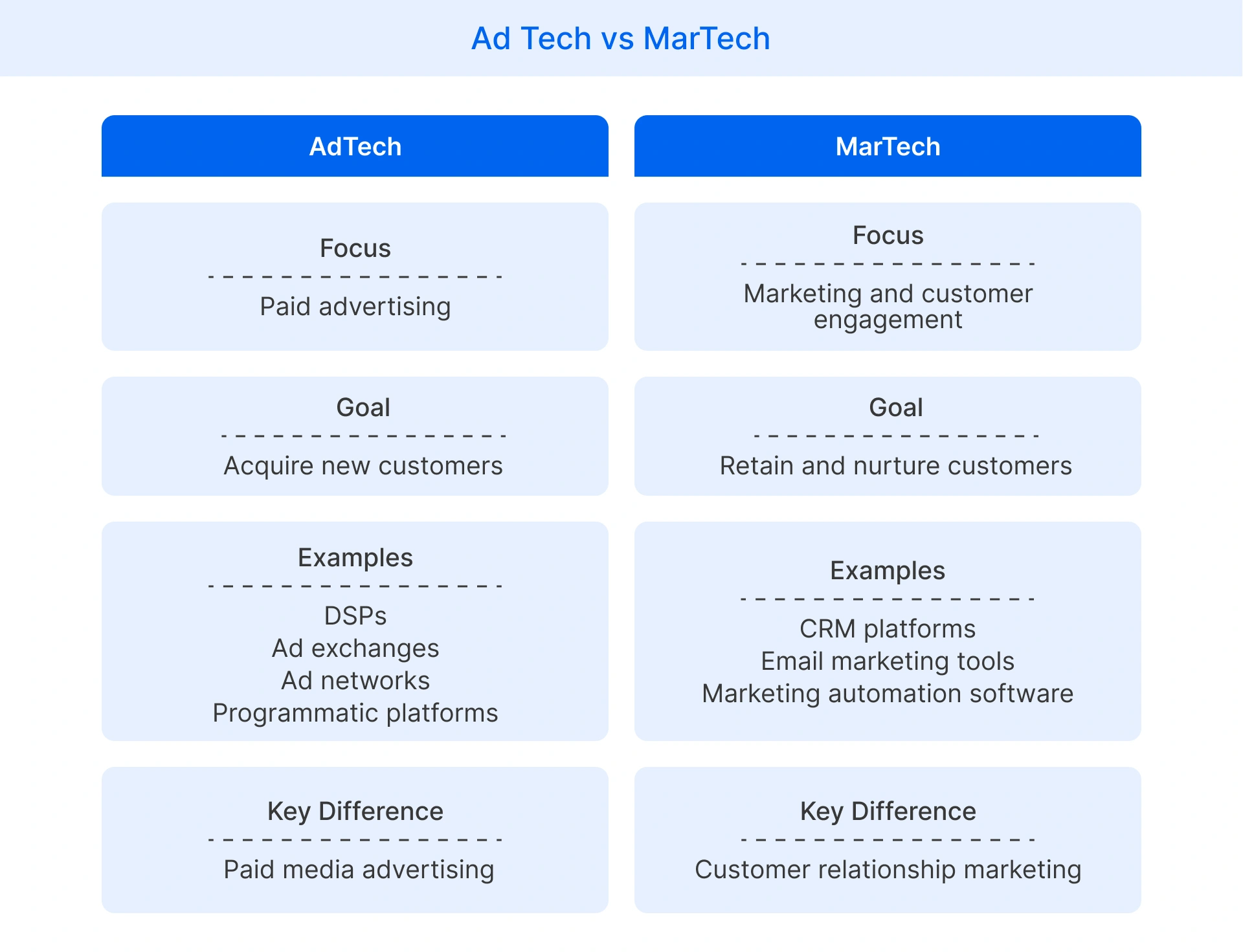
AdTech and MarTech, often confused, are distinct disciplines within the digital marketing landscape. AdTech leverages paid media to reach potential customers who have yet to interact with a brand. Conversely, MarTech, or marketing technology, relies on unpaid media, such as social media posts, to engage audiences already acquainted with the brand.
Each discipline employs unique technologies to achieve its objectives. AdTech incorporates Supply-Side Platforms (SSPs) and Demand-Side Platforms (DSPs) to streamline the buying and selling of ad slots. On the other hand, MarTech may utilize a Customer Relationship Management (CRM) platform to help marketing teams manage their existing customers.
Ad tech basic terminology to know
Here are some of the important terms that you must know to better understand key concepts under Ad Tech:
Programmatic advertising
It refers to automated ad buying and selling across digital platforms. It utilizes technology to purchase digital ad inventory across various platforms such as the web, mobile, apps, video, and social media.
By leveraging workflow automation and machine learning algorithms, programmatic advertising delivers highly effective ads to audiences based on signals like demographics and shopping patterns.
Demand side platform (DSP)
It is a type of software used by advertisers to purchase video, display, and mobile ads. DSP serves as a unified marketplace where advertisers can access publisher inventory through direct integrations, Supply-Side Platforms (SSPs), and ad exchanges.
A DSP is driven by the demand side of advertising, where advertisers seek inventory that enables them to reach the right audiences at the right time within a specified budget.
Supply-side platform (SSP)
A Supply-Side Platform (SSP) is a digital tool that automates the sale of ad impressions for publishers, including video, display, and mobile ads. It’s driven by the supply side of advertising, enabling publishers to sell their inventory. SSPs allow publishers, ad networks, and ad exchanges to sell impressions to a wider pool of potential buyers and set the bidding range to optimize revenue.
Ad server
An Ad Server delivers ads to websites or apps and reports their performance metrics. It’s used by advertisers, agencies, ad networks, and publishers to serve ads.
Ad Servers store creative assets and automate the selection of ads and their placement. They serve as a central hub for managing advertising campaigns and reporting results.
Ad exchange
An ad exchange is a digital marketplace where publishers and advertisers can buy and sell advertising space in real-time through automated bidding systems.
It uses sophisticated programmatic systems and algorithms to match advertisers’ targeting criteria with available ad slots, ensuring more relevant and practical ad placements.
Conclusion
AdTech provides a suite of tools and technologies that streamline the advertising process, enabling real-time, targeted ad serving, efficient campaign management, and insightful data analysis.
By automating complex processes and providing valuable insights, it enhances the effectiveness of digital advertising strategies for both publishers and advertisers.
As the digital advertising ecosystem continues to evolve, AdTech will undoubtedly remain at its forefront, shaping its future.

FAQ
Ad tech manages, targets, and optimizes digital advertising campaigns through a connected ecosystem of software advertisers use to buy, sell, and measure ad performance. It handles programmatic buying, audience targeting, real-time bidding, and analytics, giving both advertisers and publishers transparent control over digital ad campaigns across search engines, social media ads, and beyond.
A Demand-Side Platform (DSP) is a clear example of ad tech, allowing advertisers to manage digital ad campaigns across channels, including YouTube, Facebook, and LinkedIn, from a single platform. Google's Display and Video 360 is one of the most recognized AdTech tools used globally for programmatic buying and audience targeting.
The 5 main advertising techniques are programmatic buying, content marketing, social media ads, search engine keyword targeting, and email marketing. Each technique serves a distinct role in reaching audiences across platforms like Facebook, YouTube, and LinkedIn. Together, they form a comprehensive media planning approach that drives engagement and maximizes digital ad campaign performance.
Working in AdTech requires proficiency in analytics, data interpretation, and an understanding of programmatic buying and digital advertising campaigns. Knowledge of platforms, including Google, Facebook, and LinkedIn ad ecosystems, is essential. Strong skills in media planning, audience segmentation, and transparency reporting also give AdTech professionals a significant advantage in this fast-evolving field.
The different types of AdTech include AI and ML-powered platforms that automate and personalize ad content, automated bidding systems, mobile ad tech for device-specific campaigns, and video ad tech used across YouTube and Vimeo. Digital ad tech oversees full campaign management from implementation to detailed user insights and performance tracking across all channels.
Yes, Google is one of the largest AdTech companies in the world. Through products like Google Ads, Display and Video 360, and Google Ad Manager, it provides advertisers and publishers with tools spanning programmatic buying, search engines keyword targeting, social media ads, and analytics. Google holds significant market share across the global digital advertising ecosystem.
The future of AdTech centers on AI-driven personalization, first-party data infrastructure, and growing transparency in digital ad campaigns. As privacy regulations tighten, advertisers are moving away from third-party cookies toward detailed user insights drawn from owned data. Video advertising across platforms like YouTube and Vimeo, alongside mobile-first digital ad campaigns, will continue driving this evolution forward.