
December 18, 2025
Understanding Behavioral Marketing
Behavioral marketing is a targeted strategy that customizes messaging based on user actions and interactions. It utilizes granular data to deliver personalized experiences that resonate with specific audience segments.
Drishti, Manager - Digital Marketing

Table of Contents
- What Is Behavioral Marketing?
- How Does Behavioral Marketing Work?
- What Are the Key Benefits of Behavioral Marketing for E-commerce Leaders?
- What Are Common Behavioral Marketing Tactics and Examples?
- What Is the Difference Between Behavioral and Contextual Targeting?
- What Are the Best Practices for Behavioral Marketing in 2026?
- Enhance Your Ecommerce Marketing Strategy with Flipkart Commerce Cloud
Behavioral Marketing in Ecommerce: How It Works, Examples, and Strategies
You visit an online store to browse hiking boots and later see ads for matching wool socks. This scenario is not magic or coincidence but a precise application of behavioral marketing strategies. Retailers use this powerful tool to connect with potential customers effectively.
Instead of guessing what a shopper wants, you analyze their search history and engagement patterns to understand intent. It transforms generic marketing messages into a personalized experience that resonates with specific needs. This approach ensures your marketing efforts reach the right people instantly.
- It moves beyond basic demographic data to focus on how users interact with your digital marketing channels.
- This method allows you to deliver relevant content based on past actions rather than simple assumptions.
- Retailers utilize consumer behavior data to create highly targeted campaigns that boost conversion rates significantly.
- You can observe user behavior across platforms to refine your approach and improve customer satisfaction.
What Is Behavioral Marketing?
Behavioral marketing is a method where you target audiences based on their past actions rather than just demographics. It involves collecting behavioral data like clicks and downloads to understand what a customer actually wants. This strategy ensures marketing campaigns align with real user intent.
It leverages consumer behavior data to build detailed profiles for effective audience segmentation. You track specific interactions such as page views and purchase history to tailor your marketing tactics. This precision helps in delivering the right message at the right time.
How Does Behavioral Marketing Work?
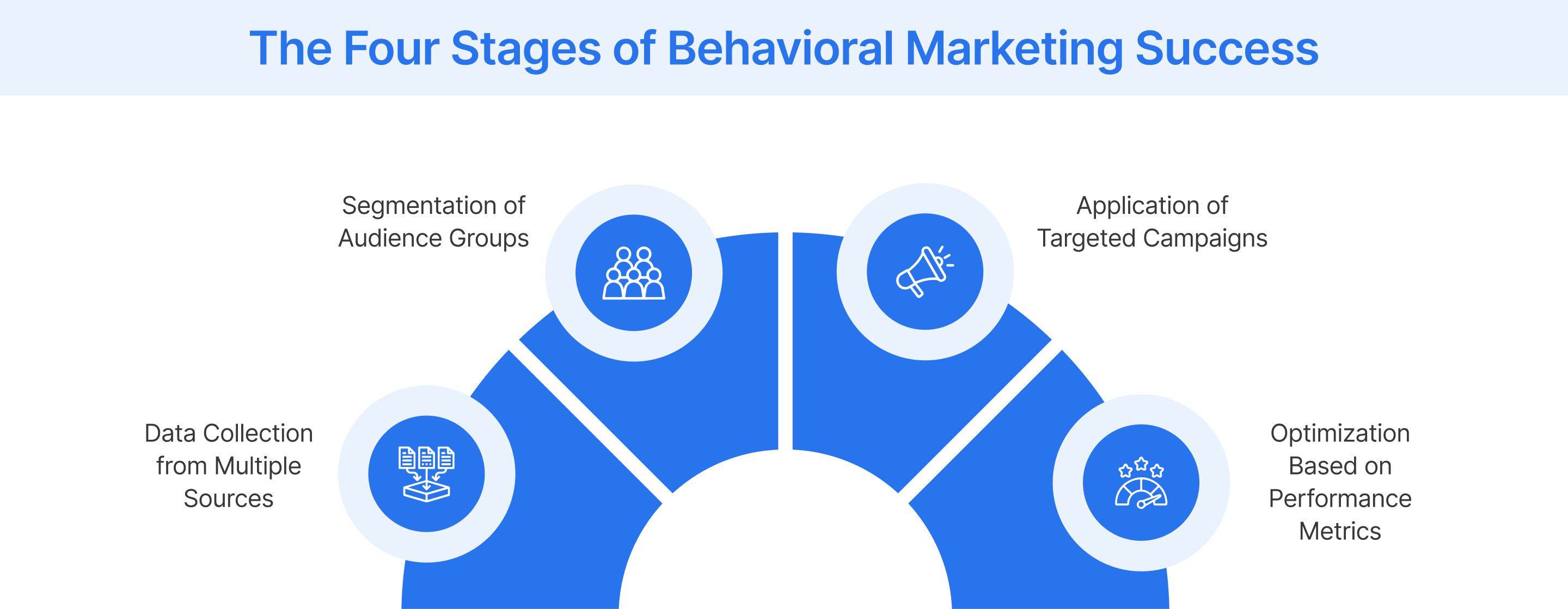
You must make data work for your business to see results. The process of how behavioral marketing works generally happens in four distinct stages:
- Data Collection: You gather information from various sources like web analytics and social media interactions. This stage involves tracking site visitors and their search engine queries to accumulate raw customer data. It forms the foundation for understanding your customer base.
- Segmentation: You divide your audience segments based on shared behaviors and engagement patterns. Retailers group users who perform a desired action or show similar interests in types of products. This behavioral segmentation allows for more focused marketing strategies.
- Application: You apply insights to create relevant ads and personalized content for each group. This step involves launching email marketing or retargeting ads that speak directly to customer preferences. It ensures your marketing messages resonate with the target audience.
- Optimization: You continuously monitor performance to refine your behavioral marketing efforts over time. By analyzing open rates and conversion metrics, you adjust your campaigns to maximize ROI. This ongoing process ensures your marketing automation remains effective and efficient.
What Are the Key Benefits of Behavioral Marketing for E-commerce Leaders?
Here are the key benefits of integrating behavioral targeting into your operations:
- Higher Engagement Rates: When an ad is relevant, people interact with it more frequently. You see improved click-through rates because the content aligns with the customer’s online behavior. This approach ensures your marketing efforts capture attention immediately.
- Improved Conversion: You do not waste budget on uninterested users but focus on high-intent shoppers. Behavioral marketing leverages purchase behavior to present offers that trigger a sale. This targeted approach helps you boost conversion rates and revenue.
- Better Customer Retention: When customers feel understood, they remain loyal to your brand for longer periods. Delivering a personalized experience based on past interactions builds trust and satisfaction. It encourages repeat business and increases the lifetime value of customer groups.
- ROI Efficiency: You stop burning cash on broad tactics and invest in specific needs. By using behavioral data to refine your spend, you achieve a higher average order value. This efficiency ensures your marketing budget delivers maximum impact.
What Are Common Behavioral Marketing Tactics and Examples?
Retailers employ various strategies to leverage user data effectively. Here are three common behavioral marketing tactics you can implement to drive growth:
- Retargeting Campaigns: This tactic targets users who visited your site but left without buying. You display specific ads on other websites or social media to remind them of viewed items. For example, a user looks at running shoes and you show them a discount ad for those exact sneakers later.
- Product Recommendations: You use algorithms to suggest items based on a user's purchase history or browsing habits. This method increases the average order value by showing complementary goods. For instance, if a customer buys a camera, you immediately suggest a compatible lens or memory card to enhance their shopping cart.
- Upselling and Cross-selling: This strategy involves offering a premium version or related accessory during the checkout process. You analyze customer behavior data to identify the best moment for these special offers. For example, suggesting a leather care kit when a customer is about to purchase a high-end leather jacket.
What Is the Difference Between Behavioral and Contextual Targeting?
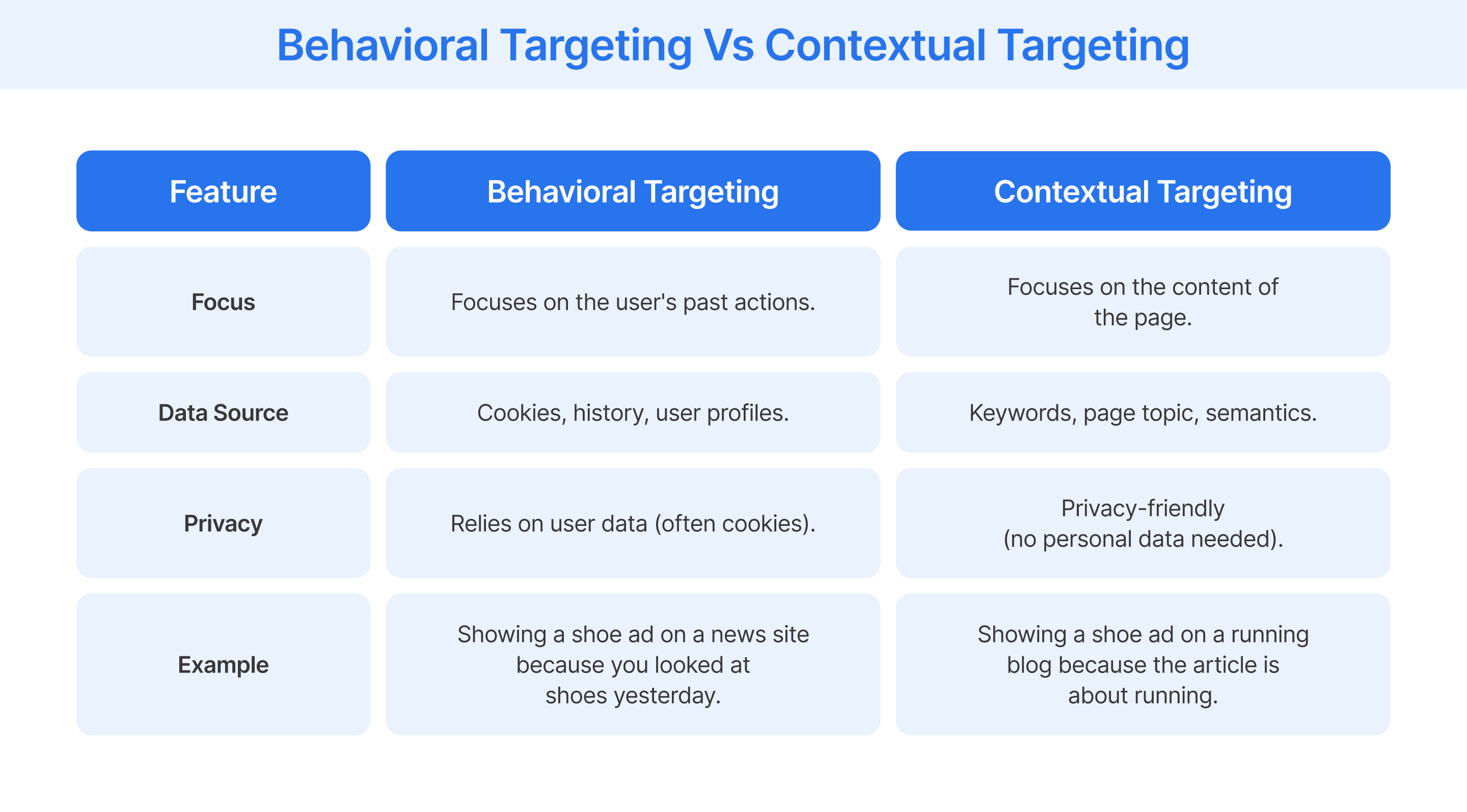
Behavioral targeting focuses on the user’s past actions and history to determine intent. Contextual targeting aligns ads with the content of the page the user is currently viewing. While behavioral relies on user data, contextual relies on keywords and page topics to deliver relevant ads.
What Are the Best Practices for Behavioral Marketing in 2026?
Follow these behavioral marketing best practices for 2026 to help retailers maintain trust and effectiveness:
- Respect Privacy: Be transparent about how you handle customer data and cookies. Building trust requires clear policies on data collection and usage rights. Customers appreciate knowing their information is safe while receiving a personalized experience.
- Do Not Be Creepy: Avoid overusing personal details that might make customers feel uncomfortable. The goal is to be helpful with product suggestions rather than intrusive. Keep your personalization strategies subtle to enhance the user experience positively.
- A/B Test Everything: Run A/B tests on your subject lines and ad creatives constantly. Analyzing results helps you understand what resonates best with new site visitors. This data-driven approach refines your behavioral marketing strategies for better outcomes.
- Combine Behavioral Data With First-Party Data: Blend behavioral insights with first-party data for a complete view. Integrating demographic targeting with behavioral signals creates robust audience profiles. This combination enables more precise use of marketing automation software and better campaign results.
Enhance Your Ecommerce Marketing Strategy with Flipkart Commerce Cloud
You do not need to build complex tracking systems from scratch to succeed. We understand that effective marketing requires the right tools to interpret vast amounts of consumer data. Flipkart Commerce Cloud (FCC) empowers you to leverage behavioral insights without the technical headache.
We provide enterprise-grade Retail Media and intelligence solutions that integrate seamlessly with your platform. Our engine utilizes scale-tested machine learning to analyze customer behavior data in real time. We help you move beyond basic segmentation to predict exactly what your site visitors seek.
Our AI-driven Ads Manager learns from user intent to deliver highly relevant product suggestions and native advertisements. We enable you to create a personalized experience that drives customer engagement while opening new revenue streams. You can automate campaigns to target the right audience segments precisely.
The result is a dynamic strategy that adapts to changing customer behavior instantly. We assist you in maximizing your average order value and ad yields while minimizing manual effort. With our data-driven tools, you gain distinct control over your growth and profitability.

FAQ
Yes, behavioral marketing is legal when you comply with data privacy regulations like GDPR or CCPA. You must inform users about data collection methods and offer them options to opt out. Transparency regarding how you use search history and cookies is essential for compliance.
Psychographics focuses on attitudes, values, and lifestyle choices of your target audience. Behavioral marketing relies on actual actions such as clicks, purchase history, and navigation paths. While psychographics explains why a customer buys, behavioral data tracks what and when they actually interact with your brand.
Absolutely, small businesses can use behavioral marketing effectively to compete with larger retailers. Many marketing automation software options offer affordable tools for tracking user behavior and sending relevant content. You can start with basic strategies like cart emails or personalized offers to boost engagement without a huge budget.
The primary sources include web analytics, social media insights, and purchase history records. Marketers also use data from customer support interactions and email marketing open rates. Combining these diverse data points helps create a comprehensive view of customer preferences and engagement patterns.
The main types of behavioral marketing include email remarketing, retargeting ads, website personalization, and transactional trigger messaging. By delivering a targeted behavioral marketing strategy built around specific user actions like browsing history or abandoned carts, brands can deliver relevant content that resonates with individual customer interests.
Behavioral marketing is crucial for customer engagement because it allows brands to deliver timely, highly relevant messaging based on real-time consumer interactions. By replacing generic mass campaigns with personalized product recommendations and tailored offers, businesses boost click-through rates, cultivate deeper brand loyalty, and significantly improve overall conversion rates.
Behavioral marketing software is a digital platform that tracks and analyzes user interactions across online channels to support more relevant marketing. It can help businesses segment audiences, automate targeted messaging, and personalize customer experiences based on behaviors such as browsing activity, clicks, purchases, and engagement patterns.