
March 20, 2026
Inventory Control System
An Inventory Control System is a critical technology solution that manages physical stock levels within your warehouse daily. It tracks product movements from receiving to shipping to maintain optimal availability and prevent expensive stockouts
Drishti, Manager - Digital Marketing

Table of Contents
- What Is an Inventory Control System?
- How does an Inventory Control System work?
- What are the two main types of Inventory Control Systems?
- How does an Inventory Control System differ from Inventory Management?
- What are the key inventory control techniques retailers use?
- How does an Inventory Control System prevent stockouts and overstocking?
- How does an Inventory Control System handle multi-channel sales?
- What are the benefits of using an Inventory Control System?
- What challenges do businesses face without an Inventory Control System?
- Optimize Your Inventory Control with Flipkart Commerce Cloud
Inventory Control System
Retailers operating across physical stores and digital sales channels must maintain accurate stock records to fulfill customer orders on time and avoid costly inventory errors at every level.
As ecommerce operations grow more complex and customer expectations continue to rise, businesses need automated tools that provide full visibility into product stock movements across warehouses and retail locations.
- An inventory control system connects purchasing, receiving and sales into one centralized stock management platform for complete operational clarity.
- Retailers use these systems to significantly reduce the time and cost associated with manual stock counting and inventory reconciliation.
- The system automates reorder triggers to ensure that the right inventory levels are maintained continuously across all locations.
- Enterprise retailers depend on real-time inventory data to fulfill orders accurately and protect customer satisfaction at every touchpoint.
What Is an Inventory Control System?
An Inventory Control System is a technology solution to track inventory levels and manage them in real time across all your retail locations. It monitors the complete lifecycle of your products from initial purchase to final sale. This constant tracking helps prevent stockouts and excess inventory accumulation.
The software provides complete visibility into every inventory movement within a retailer’s facilities. Businesses gain complete visibility into what stock is available, where physical goods are located and when replenishment is required without manual processes.
By connecting inventory data to purchasing and sales activity, an inventory control system helps businesses maintain optimal stock levels at the right time. This reduces the financial impact of inaccurate records across all active sales channels and supports more profitable retail operations.
How Does an Inventory Control System Work?
An inventory control system processes every stock movement and transaction using hardware inputs and integrated software to keep all inventory records accurate and current.
- Barcode scanners or RFID tags record each product receipt automatically. Every item scanned at arrival is logged with its location and quantity in the central inventory database without requiring manual data entry.
- Products arriving at a warehouse are scanned and added to the inventory database immediately. Each entry captures the product code, storage location and quantity details so that stock records remain accurate from the point of receipt.
- Every completed sale or return updates available stock counts across all connected channels in real time. Inventory records remain synchronized at every location without requiring any manual adjustment after each transaction is processed.
- The software sends an automated alert when any product reaches its defined reorder point. This trigger ensures timely restocking and eliminates the need for managers to manually monitor the stock level of every individual product.
What Are the Two Main Types of Inventory Control Systems?
Here are the two main types of inventory management systems retailers can opt for better control over their stock levels:
Perpetual Inventory System
A perpetual inventory control system automatically updates stock records in real time after every transaction through integrated barcode or RFID scanning technology. Retailers always have an accurate and current count of available products without the need for manual physical inventory counts or scheduled stocktakes.
Example: A fashion retailer with multiple store locations uses a perpetual system so that each sale instantly updates stock counts across all branches and the online platform simultaneously.
Periodic Inventory System
A periodic inventory control system updates stock records at fixed intervals by conducting scheduled physical counts of all products on hand rather than tracking individual transactions. Retailers review and reconcile their inventory levels at set periods, such as weekly or monthly cycles, to update records manually.
Example: A small gift shop with a limited product range conducts a monthly stocktake to count each item and update its system to reflect current stock levels across the store.
How Does an Inventory Control System Differ from Inventory Management?
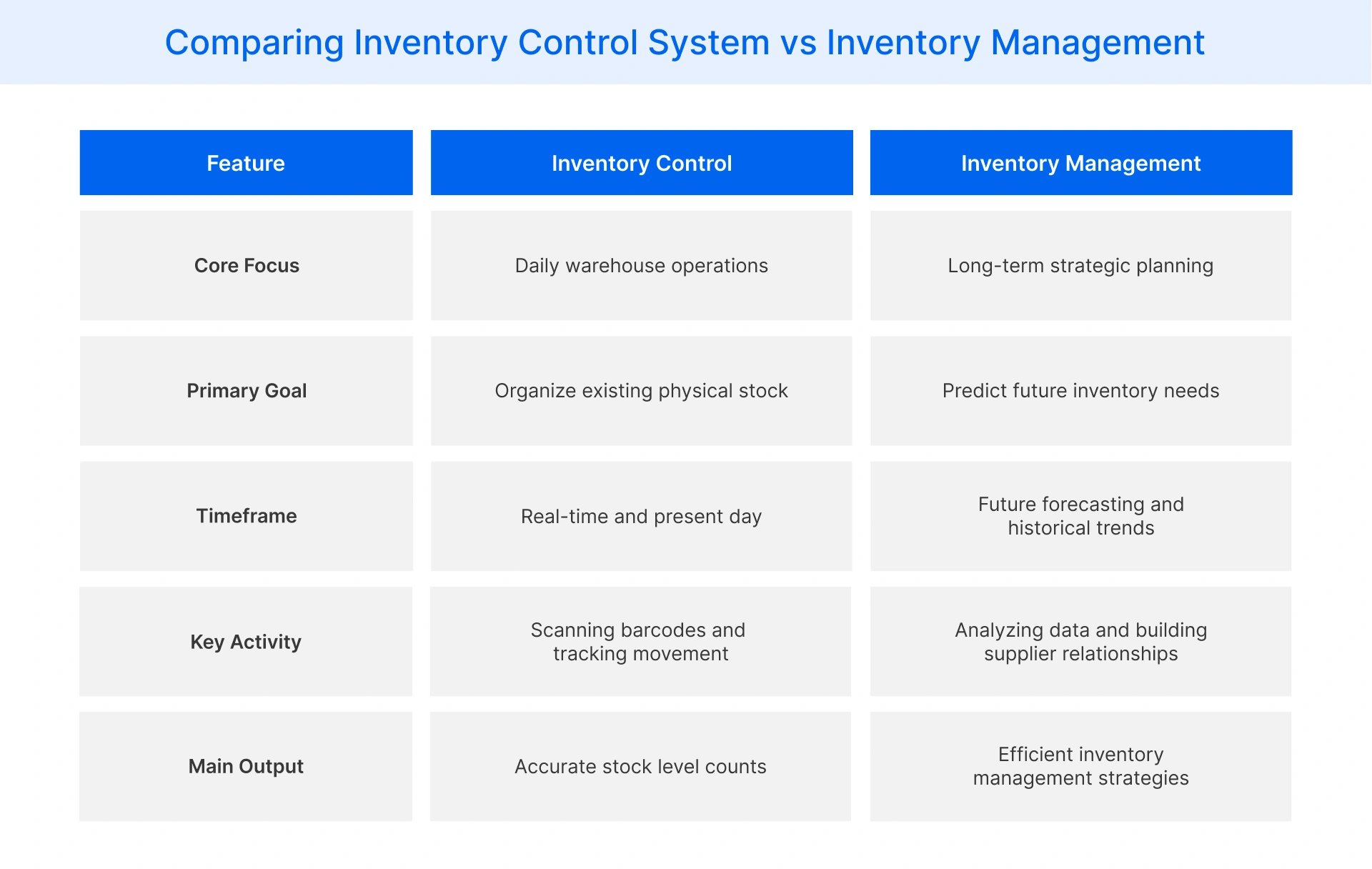
An effective inventory control system focuses on tracking and organizing stock already present in a warehouse or retail store through daily operational processes. Inventory management is a broader strategic discipline that covers demand forecasting, supplier selection, and planning future orders across the entire supply chain from procurement to final sale.
Here is a comparative analysis for better understanding:
What Are the Key Inventory Control Techniques Retailers Use?
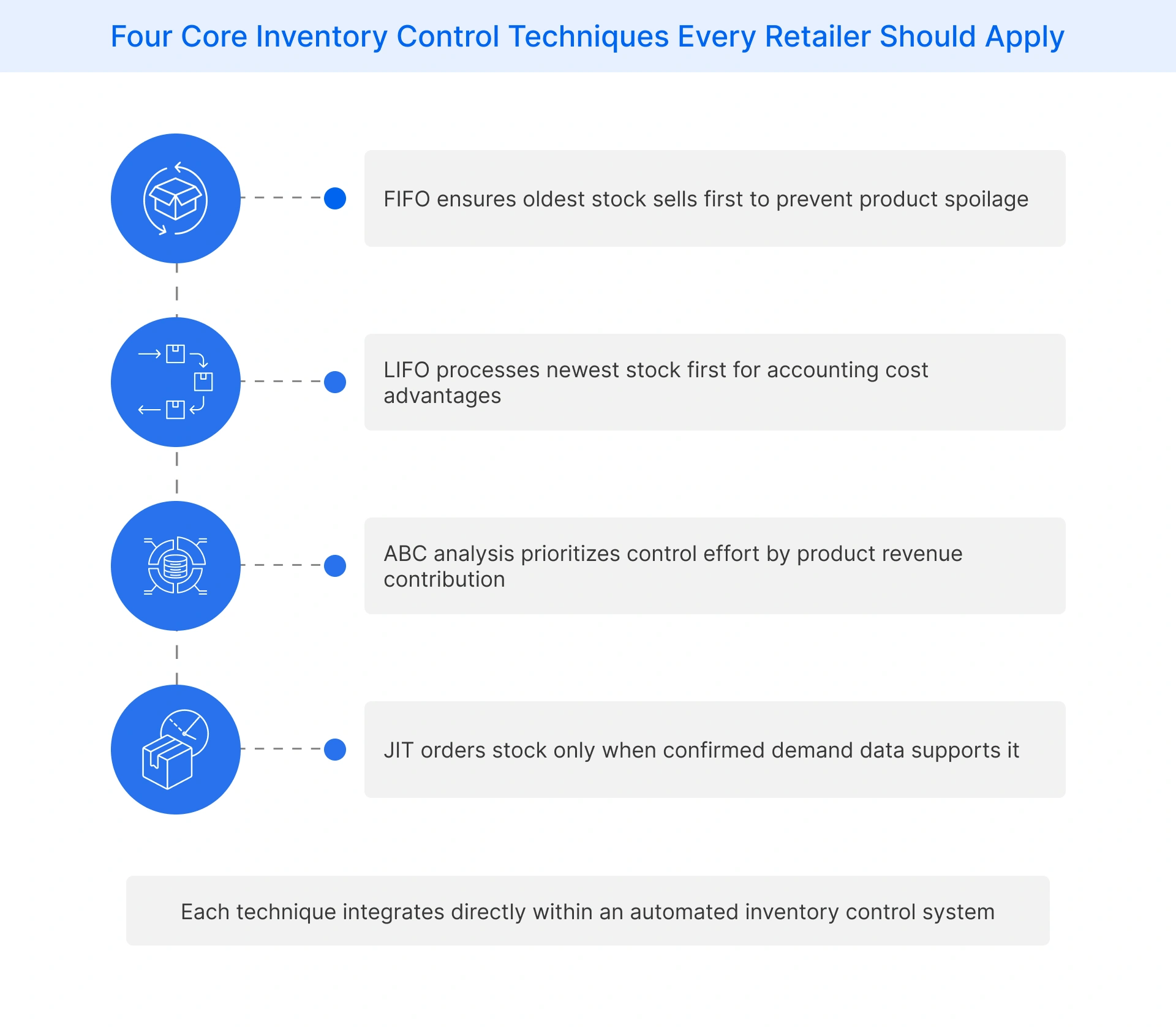
Retailers apply proven inventory control techniques within their systems to manage stock movements, reduce waste and protect profit margins across all product categories. Here are the most popular options:
- FIFO (First In, First Out): FIFO ensures that the oldest stock in any storage location is sold or dispatched before more recently received units, preventing product deterioration. This technique reduces waste and is particularly essential for retailers handling perishable goods or any products with a limited shelf life, which affects customer satisfaction.
- LIFO (Last In First Out): LIFO processes the most recently received stock first rather than working through older inventory that has been held in storage longer. This approach can reduce the reported cost of goods sold during periods of rising supplier prices, offering a tax and accounting advantage for certain retail businesses.
- ABC Analysis: ABC analysis organizes inventory into value-based priority groups to help retailers focus their control efforts on the products that drive the most revenue. A items require frequent monitoring as high-value stock, while B and C items receive progressively lighter oversight based on their relative contribution to business performance.
- JIT (Just In Time): JIT scheduling aligns inventory arrivals with actual confirmed demand rather than always maintaining large safety stock reserves in storage. This approach minimizes holding costs and prevents dead stock from building up across slow-moving product lines, supporting lean manufacturing principles and improving capital efficiency for retail businesses.
How Does an Inventory Control System Prevent Stockouts and Overstocking?
Here is how an inventory control system helps present stockouts and overstocking:
- Automatic reorder points are calculated based on average sales velocity and supplier lead times to trigger accurate and timely stock replenishment without manual intervention.
- Real-time low-stock alerts notify managers when safety stock thresholds are reached so teams can act before any product runs out on shelves or in the warehouse.
- Historical demand data analysis identifies recurring seasonal patterns to guide more precise inventory purchasing decisions and prevent over-ordering during slower periods.
- Automated purchase orders remove the need for manual product-level stock monitoring and ensure consistent restocking across all minimum inventory levels without staff oversight.
How Does an Inventory Control System Handle Multi-Channel Sales?
Retailers selling across multiple platforms require their inventory control system to maintain accurate stock counts across all active channels.
- Centralized stock synchronization ensures that inventory counts update simultaneously across online stores, physical locations and marketplace channels as each transaction is recorded in real time.
- Instant stock deduction occurs when any product sells on any channel so that the central inventory database always reflects an accurate and current availability count across all platforms.
- Overselling prevention is built into the system by maintaining one shared inventory count across all active sales channels, eliminating the risk of fulfilling orders that cannot be completed due to duplicate sales.
- Channel-specific stock allocation allows retailers to assign defined quantities to individual platforms or draw from a unified stock pool depending on the promotional and operational priorities of the business.
What Are the Benefits of Using an Inventory Control System?
Here are the key benefits of using an inventory control system for retail businesses:
-
Lower Storage Costs: Reduced excess stock through automated tracking frees up working capital previously tied up in slow-moving products. Retailers can redirect those resources into higher-priority areas of the business without compromising stock availability.
-
Fewer Stock Discrepancies: Accurate tracking removes manual counting errors and discrepancies between recorded and actual inventory levels. Reliable physical inventory data supports precise financial reporting and helps prevent revenue loss caused by unrecorded stock.
-
Faster Order Fulfillment: Real-time location data helps warehouse staff locate products quickly and serve customer orders with greater speed. Retailers reduce the time spent searching for items and improve overall operational efficiency across all locations.
-
Smarter Purchasing Decisions: Real-time inventory data enables managers to make confident decisions about purchasing and resource allocation. Retailers avoid costly over-ordering by using current and accurate stock information rather than relying on delayed manual records.
What Challenges Do Businesses Face Without an Inventory Control System?
Businesses that manage stock without a dedicated inventory control system face daily operational risks that reduce profitability and weaken customer service reliability across their sales channels.
-
Frequent Stockouts: Without real-time visibility into falling inventory levels, retailers cannot act before products run out across key product lines. Customers who find items unavailable will purchase from a competing retailer instead, resulting in direct and measurable revenue loss.
-
Excess Overstocking: Purchasing decisions made without accurate demand data regularly lead to over-ordering and unsold inventory accumulating in storage. These products tie up working capital, increase storage costs and eventually require markdown promotions to clear the warehouse.
-
Manual Tracking Errors: Miscounts and unrecorded transactions cause inventory records to diverge significantly from actual stock levels over time. These discrepancies distort financial reporting and make reliable inventory visibility nearly impossible to maintain across a growing retail operation.
-
Delayed Stock Visibility: Without automated updates, teams cannot respond quickly to shifts in customer demand or unexpected supply chain disruptions. Purchasing decisions made on outdated data lead to lost sales and excess inventory accumulation that strains overall cash flow management.
Optimize Your Inventory Control with Flipkart Commerce Cloud
Maintaining optimal stock levels is a critical factor for profitability in retail and ecommerce. You must balance having enough inventory to meet customer demand while avoiding the financial drain of holding excess products that move slowly across your locations.
Flipkart Commerce Cloud empowers retailers with automated tracking and intelligent demand forecasting to maintain optimal stock levels consistently. Our Inventory Management Software gives you the tools you need to respond to market shifts and protect your margins before competitors have the chance to adjust their own strategies.
FCC uses real-time data integration to support effective inventory control across demand forecasting and automated reordering workflows. You can monitor stock performance across all store and warehouse locations while analyzing sales patterns to achieve the right balance between product availability and storage costs.
Explore how Flipkart Commerce Cloud helps retailers build efficient inventory control processes that reduce operational costs and keep customers satisfied at every order touchpoint. Visit our retail technology solutions page to discover how FCC's commerce platform can support your business needs.

FAQ
Implementation timelines depend on the scale and complexity of existing systems. A basic system can be operational within a few weeks, while enterprise-level integrations with existing ERP or POS platforms may require several months to complete across all locations.
Most modern inventory control systems are built with API-first architecture, enabling seamless integration with POS systems, ecommerce platforms and accounting tools. Every sale recorded at the POS automatically updates the central inventory database to keep stock counts accurate in real time.
Barcode scanning requires direct line-of-sight contact with each individual item label to record a transaction. RFID uses radio signals to read multiple tagged items simultaneously without direct contact, making it faster and more accurate for high-volume retail and warehouse environments.
Yes. Even single-location retailers benefit through improved order accuracy, faster fulfillment and automated reordering. As sales volumes grow or additional channels are added, the right inventory control system scales to support expanded business needs without requiring a full platform change.
By recording every stock movement in real time, the system provides full visibility from supplier delivery through to final sale. This supports faster reordering decisions and reduces the risk of supply chain disruptions affecting product availability and customer experience across all channels.