
December 18, 2025
Understanding Manufacturer Suggested Retail Price
Manufacturer Suggested Retail Price acts as a benchmark figure that producers recommend retailers charge for a specific item. It aims to standardize pricing structures across diverse locations to ensure consistent brand value and simplify inventory valuation for sellers.
Drishti, Manager - Digital Marketing

Table of Contents
- Understanding Manufacturer Suggested Retail Price
- What Is Manufacturer Suggested Retail Price?
- Why Manufacturers Use MSRP?
- How to Calculate MSRP?
- Difference Between MSRP vs MAP vs Invoice Price vs Street Price
- Advantages and Disadvantages of Manufacturer Suggested Retail Price (MSRP)
- Is MSRP Legally Binding?
- Limitations of MSRP in Dynamic Pricing
- Optimize price with FCC's Pricing Solution
Understanding Manufacturer Suggested Retail Price
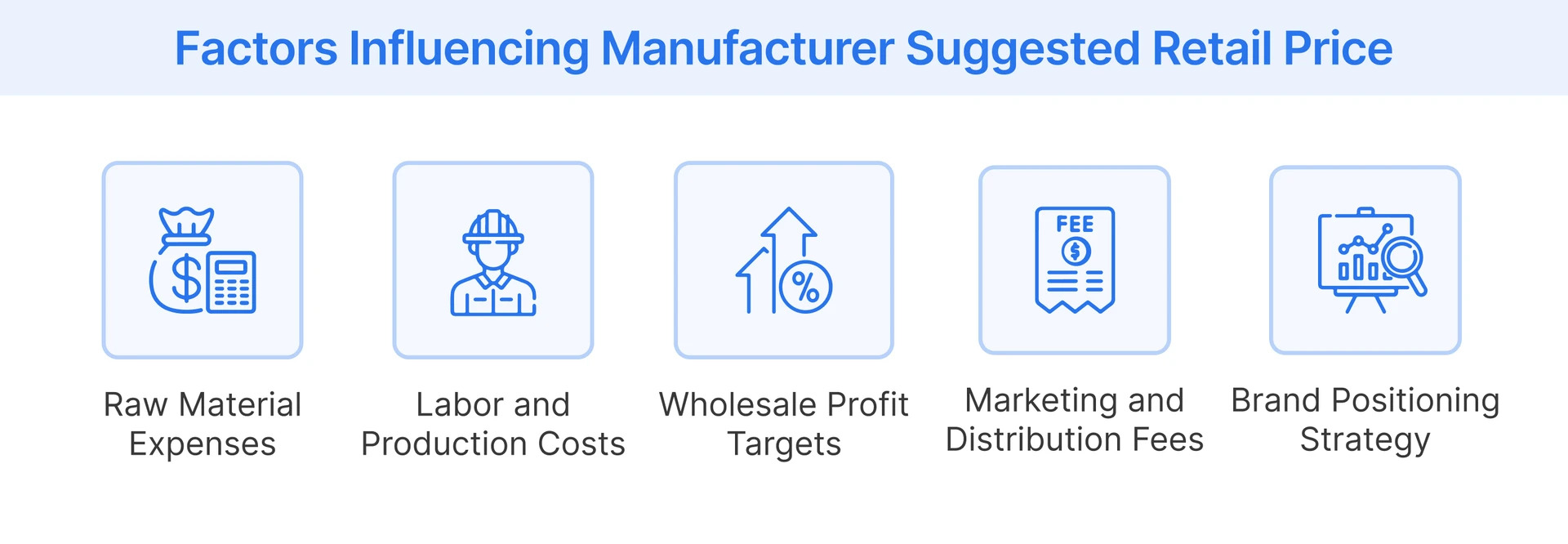
Manufacturer Suggested Retail Price (MSRP) is a price recommendation from producers to resellers within the retail industry. It aims to establish a consistent value proposition for consumers across different regions or stores. Manufacturers calculate this figure to account for production costs and distribution expenses while securing profits.
Retailers utilize this baseline to determine their final sticker price based on strategy. It serves as a tool for inventory valuation and helps businesses forecast revenue. While helpful, this number remains a suggestion rather than a rigid rule for most general retail products.
- It functions as a starting point to help sellers align their inventory valuation with market expectations.
- This pricing method helps businesses estimate potential profit margins before they commit to purchasing specific stock.
- Retailers often adjust the final retail price above or below this figure to reflect local competition.
- The value serves as a reference point rather than a mandatory requirement for most independent sellers.
What Is Manufacturer Suggested Retail Price?
The Manufacturer Suggested Retail Price is the amount a producer recommends retailers charge for a specific item. This figure appears frequently in the automotive industry on the window sticker or Monroney sticker. It represents the base price before any additional taxes or optional features.
Its primary utility involves establishing a standardized list price to prevent significant price variance between regions. This consistency protects the brand image and provides a clear price anchor for negotiation or discounts.
Why Manufacturers Use MSRP?
Producers implement a recommended retail price to maintain control over their brand perception and market positioning.
- Brand Consistency: Standardizing the cost ensures that customers perceive the brand value equally regardless of the location. This prevents price erosion that could damage the premium status of goods across various sales channels.
- Retailer Guidance: New store owners use this figure to set a competitive sale price without extensive analysis. It ensures the suggested price covers the wholesale price and operational overheads for sustainable business.
- Consumer Confidence: Shoppers feel more secure when they see a consistent price of a product across stores. It serves as a benchmark so buyers know they are not paying more than the standard.
How to Calculate MSRP?
Companies determine the recommended price by analyzing the total cost of production and adding a markup.
MSRP = (Cost of Production + Expenses) x (1 + Markup Percentage)
Let’s consider an example here.
A furniture maker spends $50 on materials and $20 on labor for a chair. They desire a 50% profit margin. The calculation would be $70 multiplied by 1.5. The final retail pricing for the chair becomes $105 to cover all overheads.
Difference Between MSRP vs MAP vs Invoice Price vs Street Price
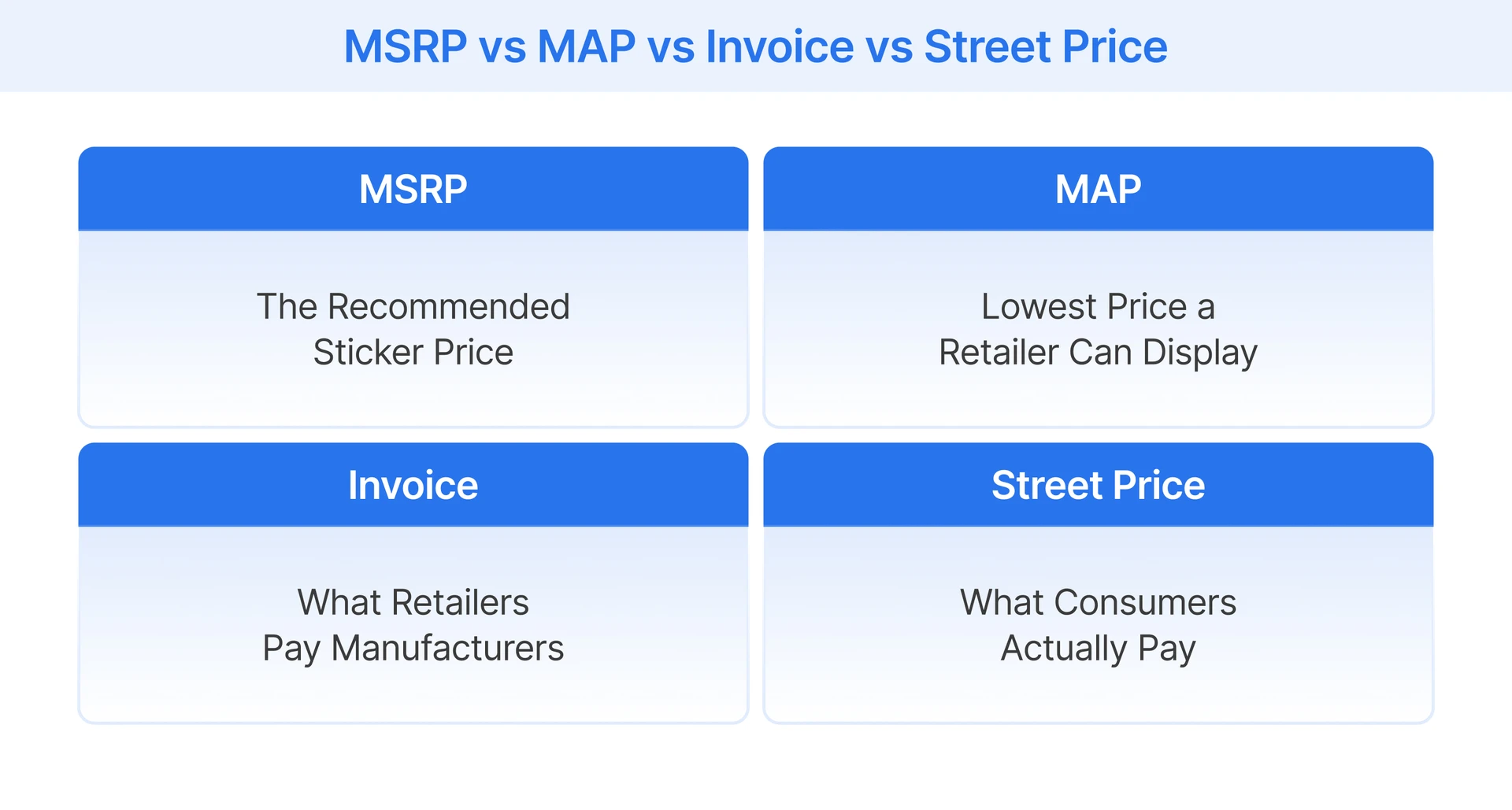
Understanding distinct pricing terminologies helps retailers manage their margins effectively. While the sticker price offers a suggestion, other metrics dictate the actual floor for advertising or the final transaction value. These figures guide negotiations and marketing strategies within the United States market.
MSRP vs. MAP (Minimum Advertised Price)
The Manufacturer Suggested Retail Price acts as a target selling amount for the store. In contrast, the minimum price, or MAP, restricts the lowest price a retailer is allowed to publicly display. Dealers can sell lower in private, but cannot advertise below the MAP limit.
MSRP vs. Invoice Price
The invoice price represents the amount the retailer pays to the manufacturer to acquire the goods. This figure is lower than the suggested retail price to ensure the seller earns revenue. The difference between these two figures represents the potential gross profit for dealers.
MSRP vs. Street Price
The street price reflects what customers actually pay after discounts and negotiations take place. It typically sits below the list price due to high demand or competitive pricing tactics. This value fluctuates frequently based on real-time market conditions and inventory levels.
Advantages and Disadvantages of Manufacturer Suggested Retail Price (MSRP)
Utilizing a suggested price strategy offers distinct benefits for simplification but carries risks regarding market responsiveness.
Advantages
-
Simplifies Planning: It streamlines the decision process for retailers by providing a ready-made pricing structure. Store owners save time on research and calculation by adopting the manufacturer's guidance as their primary pricing strategy.
-
Ensures Margins: Adhering to the suggested rate guarantees that the price covers the cost of goods sold. This approach protects revenue streams and ensures the business remains viable without complex financial modeling efforts.
Disadvantages
- Local Competition: A fixed national price does not account for aggressive discounting by nearby rivals or car dealers. Sticking rigidly to the suggestion causes retailers to lose customers to other stores offering a lower price.
- Demand Shifts: Static pricing fails to react when market demand drops suddenly or surges unexpectedly for specific items. Retailers miss opportunities to clear excess stock or capitalize on scarcity by ignoring dynamic shifts.
- Price Perception: Consumers may view a store as too expensive if the list price exceeds the street price. This perception hurts customer loyalty when competitors offer the same item for a significantly reduced rate.
Is MSRP Legally Binding?
Retailers often question whether they must follow the price guidelines provided by their suppliers or manufacturers.
- General Rule: The Automobile Information Disclosure Act requires displaying the sticker, but the final price is negotiable. Generally, retailers retain the right to set their own prices based on their business needs.
- Antitrust Laws: Federal competition theory and laws prohibit manufacturers from enforcing a fixed price upon independent retailers. Any attempt to coerce a set price constitutes illegal resale price maintenance and hinders fair trade.
- Refusal to Deal: Manufacturers can legally stop supplying inventory to retailers who advertise below a set minimum threshold. This unilateral policy allows brands to select partners who maintain their desired premium image and standards.
Limitations of MSRP in Dynamic Pricing
Relying solely on the manufacturer's suggestion often limits revenue potential in a modern digital economy.
- The Problem: The suggested rate remains fixed regardless of how inventory levels or competitor actions change daily. It fails to account for additional costs or shipping variances that affect profitability in real time.
- The Modern Approach: Savvy businesses utilize data to adjust values rather than keeping the destination fee or base rate static. They look at competitor activity to find a price that maximizes conversion and profit.
Optimize price with FCC's Pricing Solution
Relying strictly on the suggested retail price feels secure but often limits your true revenue potential. In highly competitive retail markets, sticking to static numbers means missing opportunities to capture value. You require intelligent tools to move beyond manual updates.
This is where Flipkart Commerce Cloud transforms your strategy. Our Pricing Manager is built on native e-commerce intelligence and scale-tested machine learning models. We go beyond basic rules to understand demand elasticity and competition theory in real time.
Our system continuously tracks millions of competitor products using advanced fuzzy matching. It simulates pricing scenarios to predict outcomes before you act. Whether it is adjusting for a destination charge or capitalizing on scarcity, the engine recommends the precise optimal price.
The result is a dynamic ecosystem where you automate up to 70% of pricing decisions. Retailers using our solution typically see a 4-7% margin lift. You gain distinct control over your profitability with data-driven precision rather than manual guesswork.

FAQ
Manufacturers cannot legally enforce a fixed retail price due to antitrust laws in many jurisdictions. They provide a recommended price or list price, but independent retailers generally possess the freedom to set the final cost for consumers.
Yes, retailers frequently sell below the manufacturer suggested retail price to compete effectively or clear inventory. This practice is common during sales events or when car dealerships aim to move older models to make room for new stock.
The MSRP is the price recommended by the manufacturer, while the retail price is the actual amount the retailer charges. The retail price may be higher or lower than the suggestion depending on market conditions and store strategy.
This variance occurs when the actual price paid for materials or inventory is lower than the standard or expected cost. It indicates cost savings in procurement, which can improve overall profit margins for the retailer or manufacturer.