
July 2, 2025
What is a Rating and Reviews Software?
Rating and reviews software helps retailers collect, manage, and display customer feedback such as star ratings, written reviews, images, and videos. It gives shoppers access to real customer experiences while helping retailers build trust, understand product feedback, and support purchasing decisions.
Drishti, Manager - Digital Marketing

Table of Contents
- What Is Rating and Reviews Software?
- How Does Rating and Reviews Software Work?
- What Are the Key Features of Rating and Reviews Software?
- Why Is Rating and Reviews Software Essential for Retailers?
- How Can Businesses Effectively Manage Customer Reviews?
- How Do You Select the Right Rating and Reviews Platform?
- Conclusion
Rating and Reviews Software: Features, Benefits, and How It Works
Customer reviews shape how shoppers evaluate products and decide what to buy. For retailers, managing that feedback at scale means collecting reviews, keeping them trustworthy, displaying them across the shopping journey, and using customer opinions to understand product performance. This article explains how rating and reviews software works, its key features and benefits, and what retailers should consider when choosing a solution.
What Is Rating and Reviews Software?
Rating and reviews software is a customer feedback platform that helps retailers collect, organize, and present ratings and reviews about products or shopping experiences. It gives shoppers access to feedback from other customers while giving retailers a structured way to manage user-generated content and understand how customers perceive their products.
How Does Rating and Reviews Software Work?
Rating and reviews software works by collecting customer feedback, verifying and moderating submissions, and publishing approved reviews across relevant ecommerce touchpoints. It can also connect review data with other business systems so retailers can manage feedback more consistently.
- Data collection: Customers can submit star ratings, written reviews, and media through product pages, post-purchase requests, email, SMS, or other supported channels.
- Review verification: Verification methods can connect feedback to purchase records or other signals to distinguish genuine customer reviews and reduce fraudulent reviews or spam submissions.
- Moderation: Moderation rules help identify inappropriate, irrelevant, duplicate, or suspicious content before reviews are published.
- System integration: Rating and reviews software can connect with ecommerce platforms and other business systems to support review requests and keep feedback data connected to existing workflows.
- Review display: Approved ratings and reviews can then appear on product pages and other relevant parts of the shopping experience, helping shoppers evaluate products before purchasing.
What Are the Key Features of Rating and Reviews Software?
Rating and reviews software typically combines tools for collecting customer feedback, maintaining review quality, displaying ratings and reviews, and analyzing how customers respond to products. The exact capabilities vary by platform, but common features include:
- Review collection: Retailers can request and collect customer reviews after a purchase through email, SMS, websites, apps, or other supported customer channels.
- Rich media reviews: Some platforms allow customers to submit photos and videos alongside star ratings and written feedback, giving shoppers more context about real product experiences.
- Review verification and moderation: Verification and moderation tools help identify fraudulent, irrelevant, or inappropriate submissions while maintaining the quality of published reviews.
- Ratings and review display: Retailers can display ratings and customer reviews on product pages and other storefront areas to help shoppers evaluate products. Structured review data can also help search engines understand rating information, supporting SEO when implemented correctly.
- Sentiment and feedback analysis: Review analysis tools can identify recurring themes and customer sentiment, helping retailers understand how shoppers perceive particular products or experiences.
- Reporting and performance tracking: Dashboards and reports can help retailers monitor metrics such as review volume, ratings, moderation performance, customer engagement, and the influence of reviews on shopping behavior.
- Integrations: Rating and reviews software can connect with ecommerce platforms, CRM systems, and other retail tools to support review collection and feedback workflows.
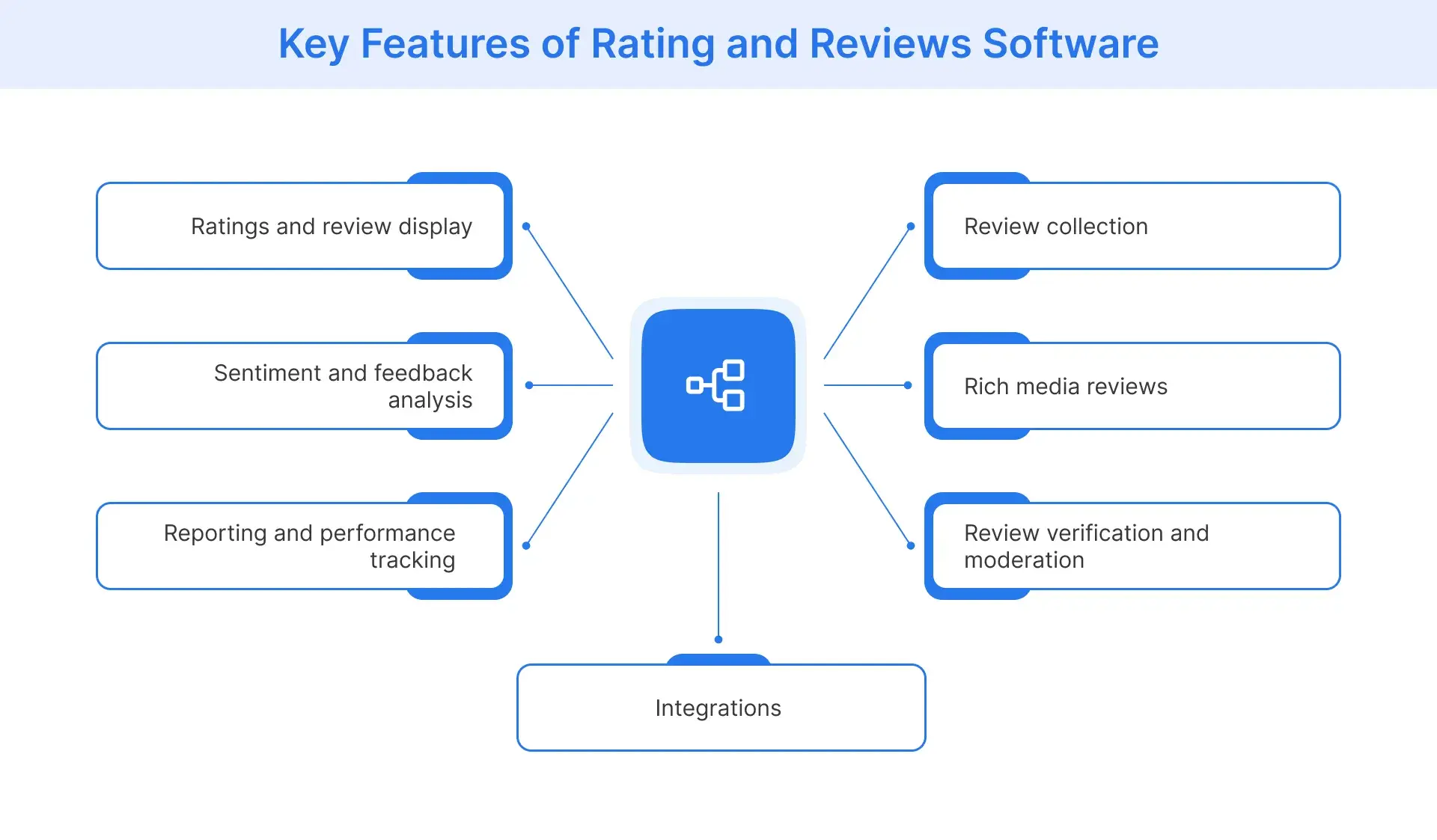
To keep the layout balanced, Integrations can be placed at the bottom center, while the other six features remain split evenly across both sides.
Why Is Rating and Reviews Software Essential for Retailers?
Rating and reviews software helps retailers turn customer feedback into information that both shoppers and internal teams can use. Reviews can reduce uncertainty during purchase decisions while giving retailers direct insight into customer experiences and product performance.
- Builds consumer trust: Ratings and reviews give shoppers access to experiences from other customers, providing social proof when they are evaluating a product.
- Supports purchase decisions: Detailed reviews can answer questions that product descriptions may not cover, helping shoppers compare options and make more informed buying decisions.
- Provides product insights: Review data can reveal recurring complaints, product strengths, and customer expectations that retailers can use to improve products and customer experiences.
- Encourages customer engagement: Responding to customer feedback gives retailers an opportunity to address concerns, acknowledge positive experiences, and maintain communication with customers.
- Reduces purchase uncertainty: Customer photos, ratings, and detailed feedback can give shoppers additional context about a product before they buy.
How Can Businesses Effectively Manage Customer Reviews?
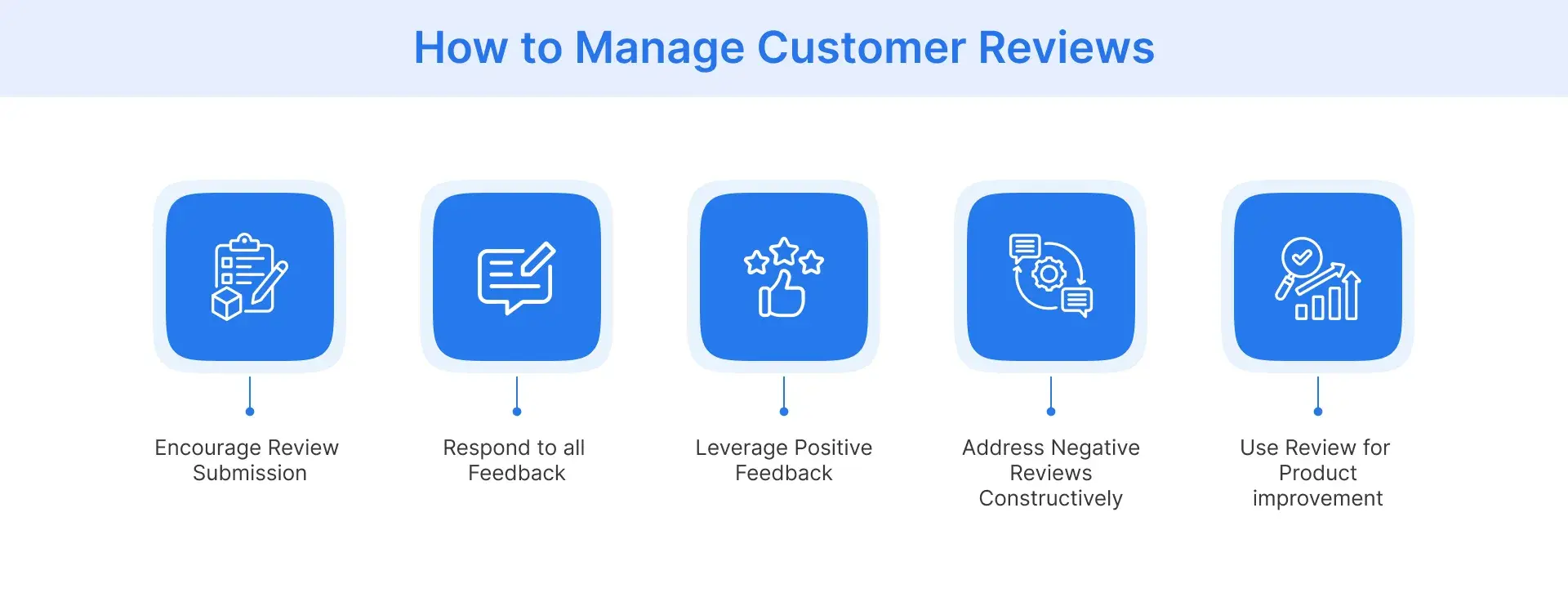
Businesses can effectively manage customer reviews by encouraging customers to share feedback, responding consistently, and using recurring review themes to improve products and customer experience.
- Encourage review submissions: Prompt customers to leave ratings and reviews after a purchase through email, in-app prompts, or other relevant post-purchase touchpoints.
- Respond to customer feedback: Acknowledge positive reviews and address negative feedback professionally. Where customers raise valid concerns, provide a clear response and explain how the issue can be resolved.
- Use positive reviews strategically: Feature useful customer reviews and ratings on product pages and other relevant marketing touchpoints where they can help shoppers evaluate products.
- Analyze recurring review trends: Look for repeated complaints, questions, and positive themes across recent reviews and broader customer feedback. These insights can help retailers identify product issues, understand customer expectations, and improve the overall experience.
How Do You Select the Right Rating and Reviews Platform?
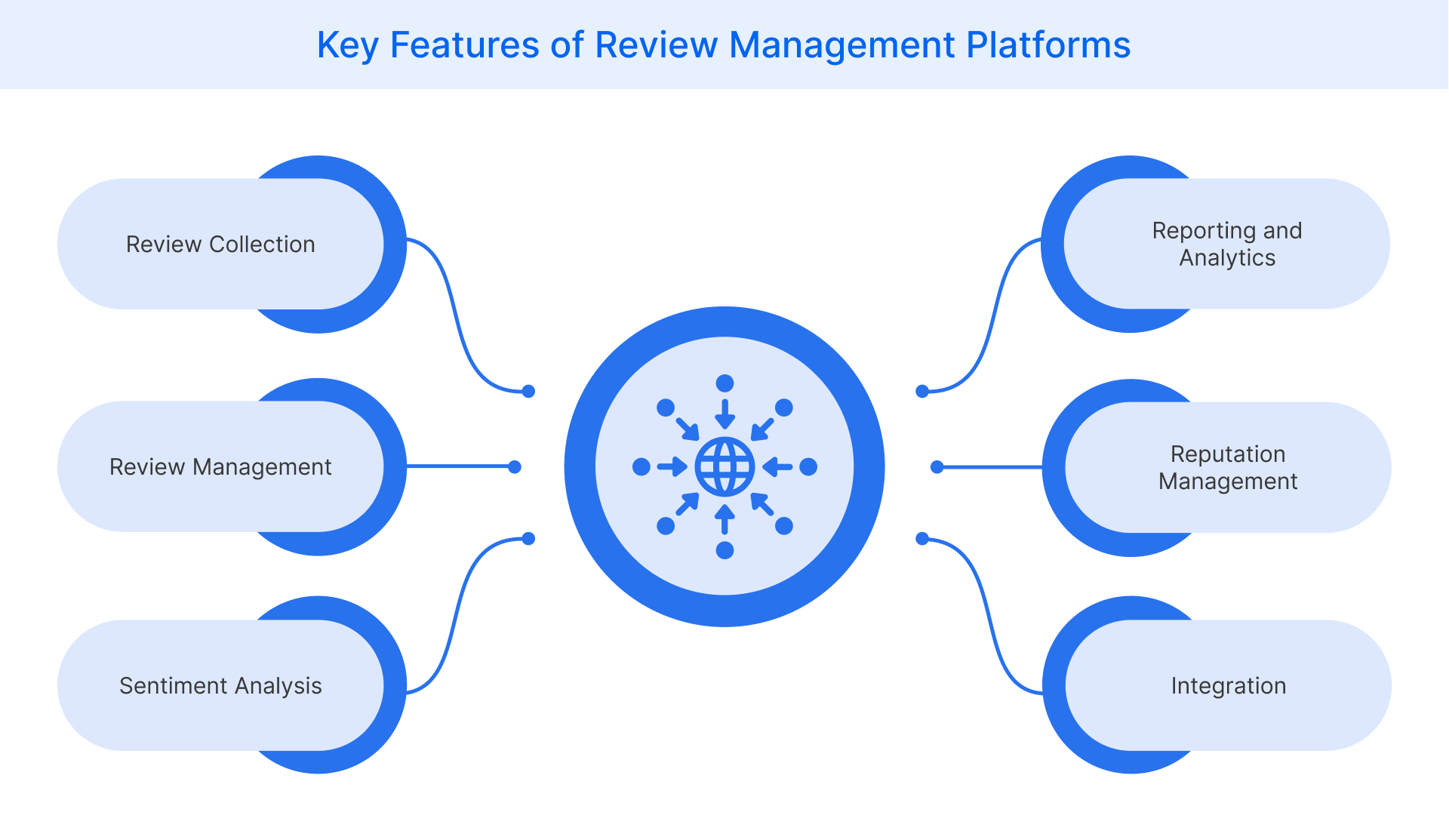
Before choosing a platform, determine whether you need ecommerce product review software or a broader reputation management tool. Some platforms focus on public review sites such as Google, Yelp, Trustpilot, and Tripadvisor, or social media channels such as Facebook, while ecommerce rating and reviews software is typically centered on product feedback collected and displayed within a retailer’s own shopping experience.
- Cost and Value: Evaluate the pricing models offered by different software providers. Compare these costs against the features your business actually needs and the value each platform provides.
- Ease of Use: Assess the learning curve involved for your team when adopting new software. Ensure the chosen platform is user-friendly, allowing for quick adoption and efficient review management.
- Customization: Consider whether the rating and reviews software offers customization options for review displays and other customer-facing elements. Check whether the platform can adapt to your product category, brand experience, and niche.
- Support: Check the level and quality of customer support offered by the software provider. Reliable support ensures you receive timely assistance with technical issues or operational questions.
- Integration Capabilities: Verify that the software can integrate with the systems your business already uses, including ecommerce platforms, CRM software, and marketing tools.
Conclusion
Rating and reviews software helps retailers collect structured customer feedback, make reviews useful to shoppers, and turn recurring feedback into insights about products and customer experience.
- Customer ratings and reviews give shoppers additional information when evaluating products.
- Verification and moderation help retailers maintain the quality and authenticity of published feedback.
- Review analytics can reveal customer sentiment, recurring product issues, and how shoppers engage with reviews.
For retailers looking to manage these processes at scale, FCC’s Ratings and Reviews solution supports personalized review collection, text, image, and video submissions, review moderation, storefront display, and performance tracking.
Book a demo to see how FCC can help you use customer feedback to strengthen shopper trust and understand the impact of reviews across the shopping journey.

FAQ
Your chosen rating and reviews software should include robust data encryption for customer information and review content. Look for secure hosting, regular security audits, and measures to prevent spam or fraudulent submissions. This protects both your business and customer data integrity.
Yes, most rating and reviews software solutions are designed for seamless integration with popular e-commerce platforms like Shopify, Magento, and WooCommerce. This allows for automated review requests, easy display of content, and unified data management within your existing infrastructure.
You should track key metrics like review volume, average star rating, and conversion rate uplift attributed to reviews. Monitor customer sentiment trends, response rates to feedback, and the overall impact of reviews on sales. This helps assess the software's effectiveness
Determining what is the best review management software depends on business scale and operational needs. Top platforms offer automated review requests, social proof displays, and negative reviews mitigation tools. Comprehensive systems like Flipkart Commerce Cloud provide enterprise tools that help merchants gather authentic feedback, streamline moderation automation, and improve online store visibility
The difference between rating and reviews software and review management software lies in feature scope and functionality. Basic collection software focuses solely on star ratings and text feedback, while management platforms handle end-to-end sentiment tracking across external review sites, automated outreach, customer insights reporting, and multi-channel customer service integrations.
Yes, modern rating and reviews software can easily collect photo and video content through visual submission prompts. Online merchants leverage these rich media capabilities to capture authentic UGC directly from verified reviewers, providing visual evidence that builds customer trust and drives higher conversion rates across digital channels.