
January 22, 2026
Subscription Commerce
Subscription commerce is a business model where customers pay a recurring fee for scheduled products or services. It shifts the retail focus from one-time transactions to long-term relationships and recurring revenue.
Drishti, Manager - Digital Marketing

Table of Contents
- Subscription Commerce
- What is Subscription Commerce
- Types of Subscription Commerce Models
- Benefits of Subscription Commerce
- Challenges in Subscription Business Models
- Important Subscription Commerce Metrics To Track
- Subscription Management with Flipkart Commerce Cloud
Subscription Commerce
Retailers engage customers through recurring deliveries of goods or services in this dynamic subscription ecommerce business model. It fundamentally shifts the interaction from a one-time purchase to a continuous relationship over time, deepening customer relationships.
This strategy leverages data and AI to personalize the customer experience and predict future needs accurately. Brands can ensure consistent revenue streams while building deeper customer loyalty with their consumer base efficiently.
- It transforms sporadic buyers into loyal subscribers who provide steady cash flow for the business on a recurring basis.
- The model relies heavily on strong customer retention strategies rather than just acquisition efforts.
- Retailers utilize advanced analytics to curate products that align with specific consumer preferences.
- Success depends on the ability to deliver tangible value and convenience on a schedule.

What Is Subscription Commerce?
Subscription commerce is a distinct ecommerce business model where customers pay a recurring fee to access products or services. This approach allows brands to sell goods on a scheduled subscription basis rather than relying on individual one-off transactions.
With subscription commerce, retailers can move away from transaction-based sales to relationship-based revenue. This structure fosters long-term engagement as the strategic focus shifts toward maximizing customer lifetime value through consistent retention efforts.
Types of Subscription Commerce Models
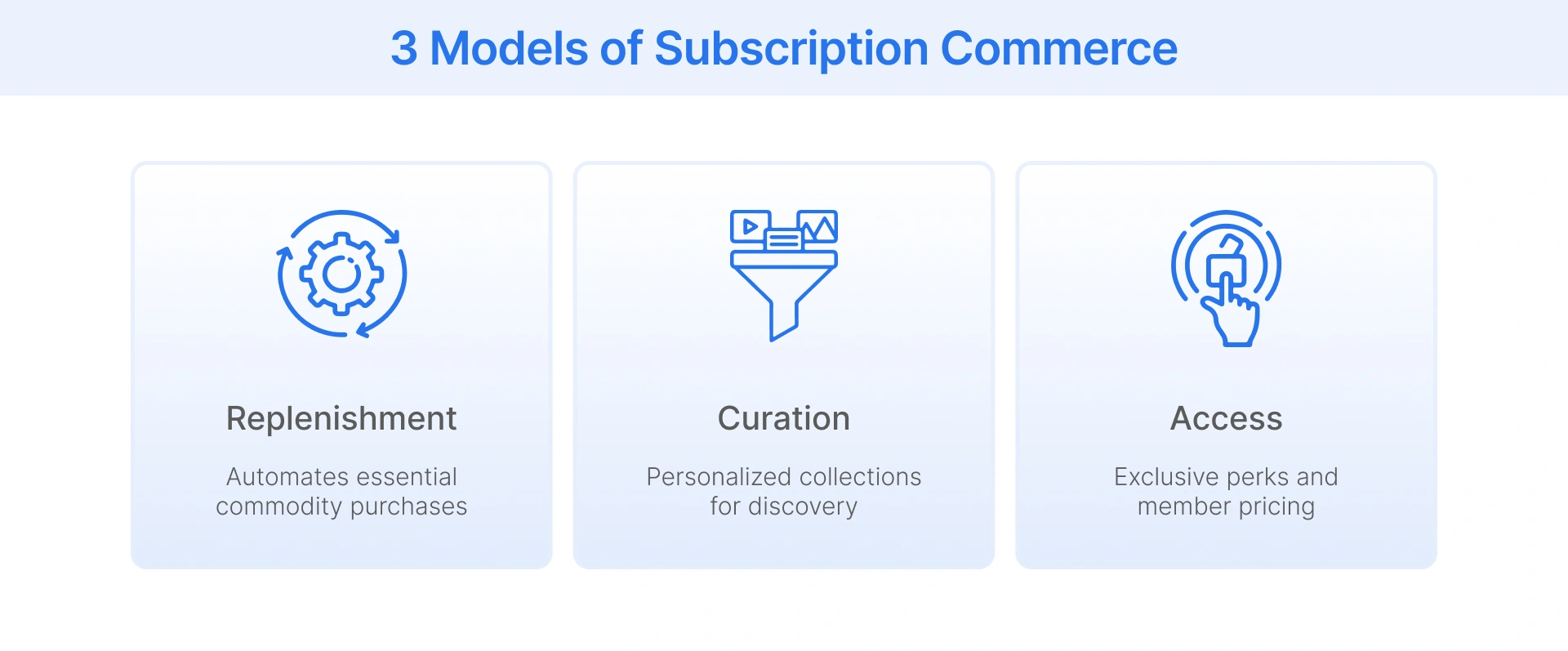
Retailers typically implement one of three primary frameworks to structure their recurring revenue offerings effectively.
- Replenishment Models: This model automates the delivery of essential commodity items like personal care products (e.g., Dollar Shave Club), food items, or diapers. It focuses on convenience by saving customers time and effort on routine purchases of physical products they consume on a regular basis.
- Curation Models: Brands select and send a collection of items based on customer preferences in this model, often in the form of a subscription box. It emphasizes discovery and surprise by offering new products, niche goods, personalized beauty boxes, or apparel selections that elevate shopping experiences.
- Access Models: Customers pay a fee to obtain exclusive member perks, early access to sales, unlimited access to content, or lower prices on products via mobile apps or websites. This creates a VIP experience similar to Netflix, The New York Times, Amazon Prime, and specialized club memberships for shoppers.
Benefits of Subscription Commerce
Adopting this strategy offers distinct advantages that stabilize financial health and strengthen brand operations significantly.
- Predictable Recurring Revenue: Businesses can forecast cash flow with greater accuracy due to the fixed nature of payments. This stability aids in better financial planning and efficient resource allocation for growth.
- Higher Customer Lifetime Value (CLV): Subscribers tend to purchase more frequently and stay with a brand for longer periods. This ongoing relationship naturally increases the total revenue generated from each individual shopper over time.
- Richer Customer Data & Insights: Constant interaction provides a steady stream of behavioral data regarding preferences and usage patterns. Retailers use this information to refine product offerings and tailor marketing messages precisely.
- Reduced Marketing Waste: Retention becomes cheaper than acquisition as the focus shifts to serving existing customers. Brands spend less on acquiring new traffic and more on nurturing the current subscriber base.
- Higher Valuation Multiples: Investors often value subscription businesses higher due to the predictability of their future earnings. The reliable revenue stream makes the company more attractive for potential funding or acquisition.
- Better Inventory Forecasting: Known order schedules allow operations teams to manage stock levels with high precision. This reduces the risk of overstocking or stockouts by matching supply directly with anticipated demand.
Challenges in Subscription Business Models
Despite the upside, retailers must navigate several obstacles to maintain a profitable and sustainable operation.
- High Customer Acquisition Costs (CAC): Attracting subscribers often requires significant upfront investment in marketing and incentives. The business must ensure the customer stays long enough to recover these initial expenses and generate profit.
- Involuntary Churn: Payment failures due to expired cards or banking errors cause unintended subscription cancellations. This technical issue leads to revenue loss even when the customer intends to continue the service.
- Subscription Fatigue and Value Perception: Consumers may feel overwhelmed by too many recurring payments and cancel services they deem non-essential. Brands must continuously demonstrate worth to prevent customers from questioning the monthly expense.
- The Logistics of Small Parcels: Shipping frequent small packages can drive up fulfillment costs significantly compared to bulk orders. Retailers need efficient logistics strategies to protect margins against the expense of last-mile delivery.
- Technical "Frankenstein" Architectures: Combining disparate systems for billing and inventory often creates complex integration issues. This tech debt leads to operational inefficiencies as the business attempts to scale its subscriber base.
- Pricing Complexity: Finding the right price point that balances value for the customer with profitability is difficult. Incorrect pricing strategies can deter sign-ups or erode margins on recurring shipments.
Important Subscription Commerce Metrics To Track
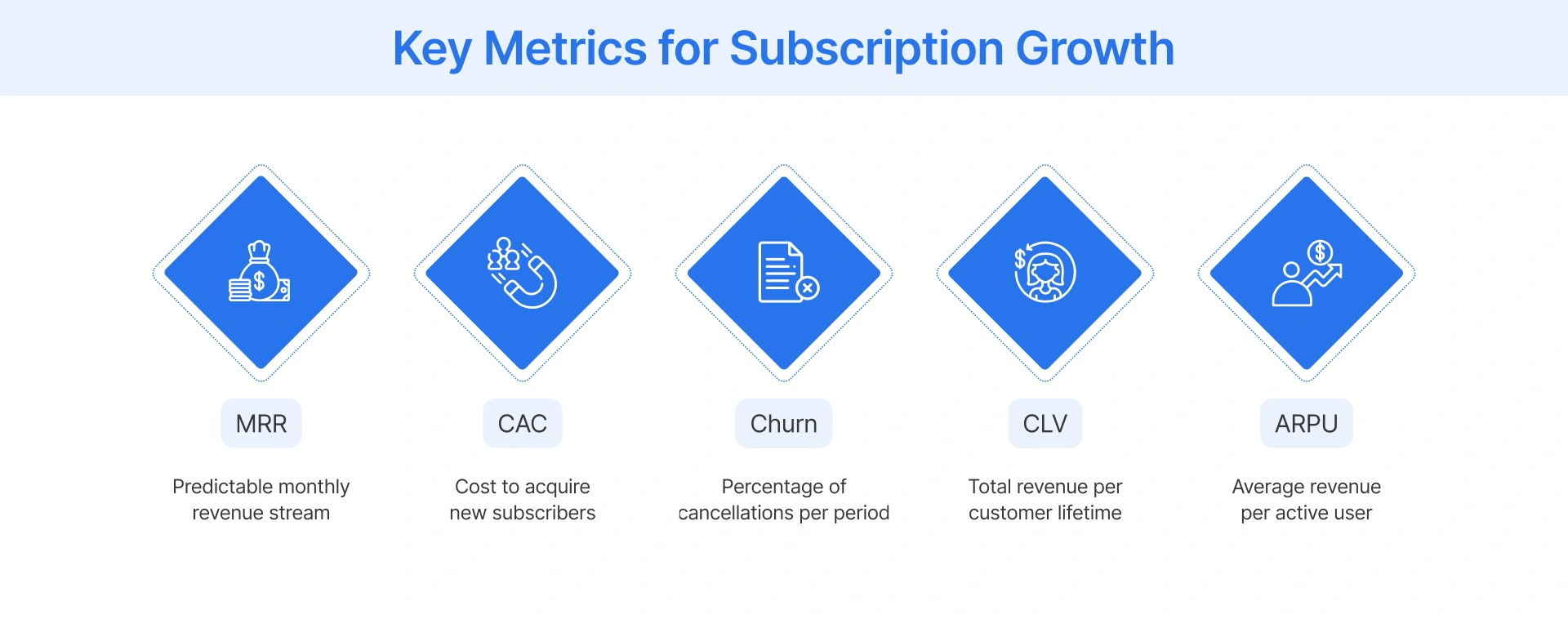
Monitoring specific key performance indicators helps retailers assess the health and growth of their recurring revenue.
- Monthly Recurring Revenue (MRR): This metric measures the total predictable revenue expected from all active subscriptions every month. It serves as the primary baseline for understanding financial momentum and growth trends.
- Customer Acquisition Cost (CAC): This figure calculates the total average expense required to convince a new customer to subscribe. It includes marketing spend and sales costs divided by the number of new acquisitions.
- Churn Rate: This percentage represents the portion of subscribers who cancel their service within a given period. High churn indicates underlying issues with product satisfaction or value delivery to the customer.
Subscription Management with Flipkart Commerce Cloud
Managing a successful subscription model requires robust technology to handle complex billing and inventory needs simultaneously. Retailers often struggle to scale operations effectively without a unified platform that seamlessly integrates these critical functions, preventing churn and customer dissatisfaction.
At Flipkart Commerce Cloud, we provide the enterprise-grade infrastructure needed to streamline these recurring revenue streams efficiently. Through our Pricing Manager, we enable businesses to set optimal recurring price points that balance customer value with profitability. Simultaneously, our Order Management Solution automates replenishment workflows, ensuring that inventory levels align perfectly with subscriber demand to prevent stockouts.
We help you optimize these critical operations to maximize the long-term profitability of subscription commerce. Schedule a personalized demo to see how we can safeguard your bottom line and drive sustainable business growth effectively.

FAQ
Subscription commerce focuses on recurring payments for product delivery or service access. Membership commerce often implies joining a community for perks without necessarily receiving goods. While subscription implies a transaction for value, membership emphasizes belonging and exclusive privileges that may include discounts or content access.
Most subscription businesses fail because they cannot maintain a high enough value proposition over time. High churn rates occur when customers feel the recurring cost outweighs the convenience or curation provided. Poor inventory management and high acquisition costs also deplete resources before profitability is achieved.
A subscription trap refers to deceptive practices where cancellation is intentionally made difficult for the user. Companies might obscure the unsubscribe process or require lengthy phone calls to stop payments. This unethical tactic damages brand reputation and leads to high chargeback rates from frustrated consumers.
The dark side involves consumer exploitation through hidden fees or difficult cancellation policies known as dark patterns. It also includes the environmental impact of shipping frequent small parcels. Consumers may accumulate unused products which leads to waste and financial strain from forgotten recurring monthly charges.