
May 15, 2026
What Is Variable Pricing?
Variable pricing is where the price of a product or service changes based on market conditions, demand, or customer behavior. It helps businesses adjust prices more efficiently across different sales situations.
Drishti, Manager - Digital Marketing

Table of Contents
- What is Variable Pricing?
- How Does a Variable Pricing Model Work?
- Common Types of Variable Pricing (With Industry Examples)
- Pros and Cons of Variable Pricing
- Best Practices for Implementing Variable Pricing
- Tools and Technologies for Variable Pricing
- Addressing Customer Concerns in Variable Pricing
- Conclusion
What Is Variable Pricing?
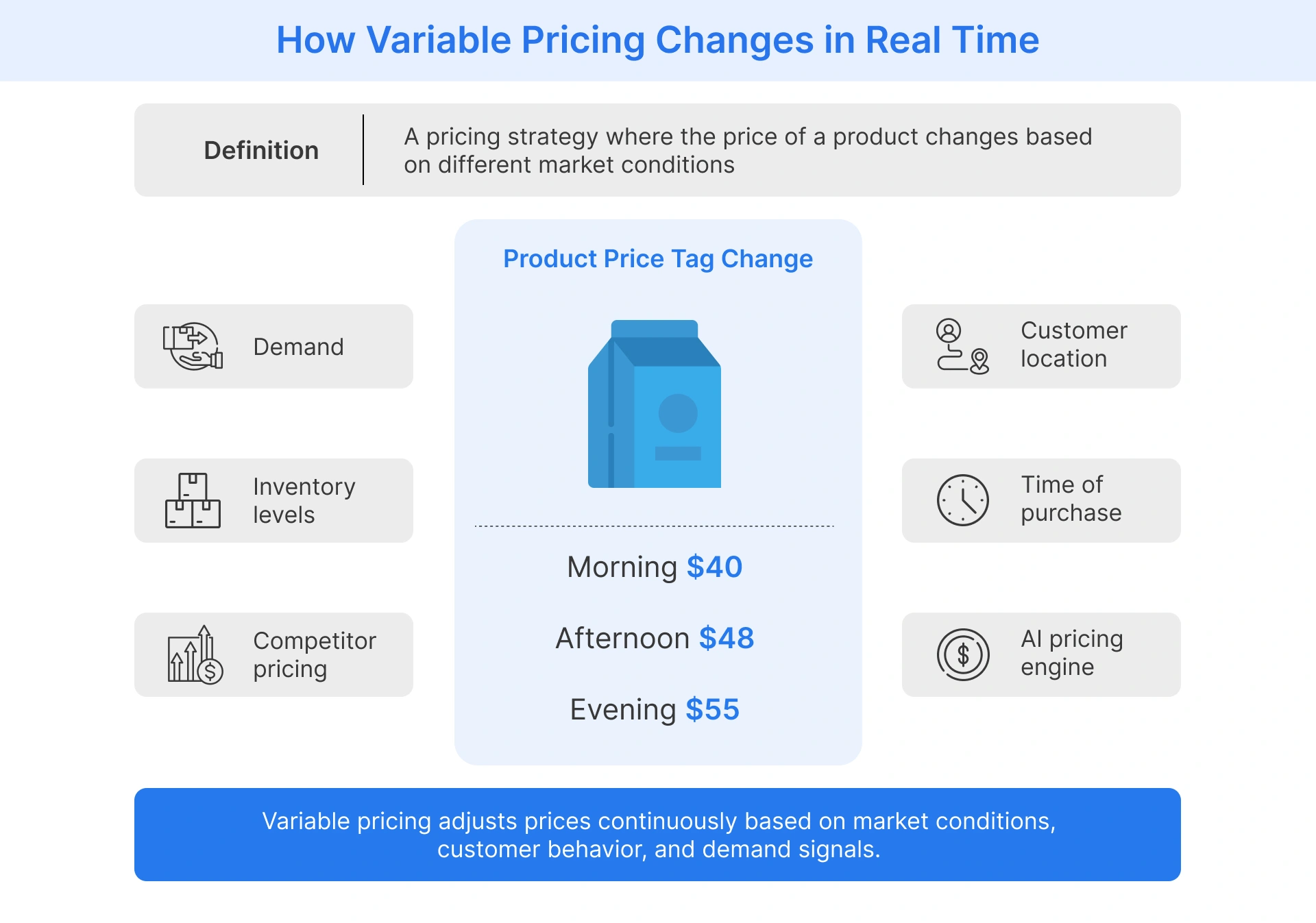
Variable pricing is a pricing strategy where product or service prices are not fixed, but change based on factors such as demand, customer segment, timing, competition, or supply levels.
Unlike fixed pricing, where the price remains constant, this pricing model changes based on real-time or predicted market behavior. This helps businesses align pricing with customer demand and market conditions.
Variable pricing is widely used in e-commerce, travel, hospitality, and digital platforms where demand patterns shift frequently.
How Does Variable Pricing Work?
Variable pricing works by continuously adjusting prices based on data signals from the market. These signals help businesses decide when to increase, decrease, or optimize prices.
- Demand and Supply Influence: When demand is high and supply is limited, prices increase. When demand is low, prices are reduced to encourage purchases.
- Market and Competitor Conditions: Pricing is influenced by competitor pricing, customer behavior, seasonality, and market trends.
- Technology and Automation: Modern variable pricing relies heavily on AI models, predictive analytics, real-time pricing engines and machine learning systems
These systems analyze large volumes of data to automate pricing decisions at scale.
Common Types of Variable Pricing With Industry Examples
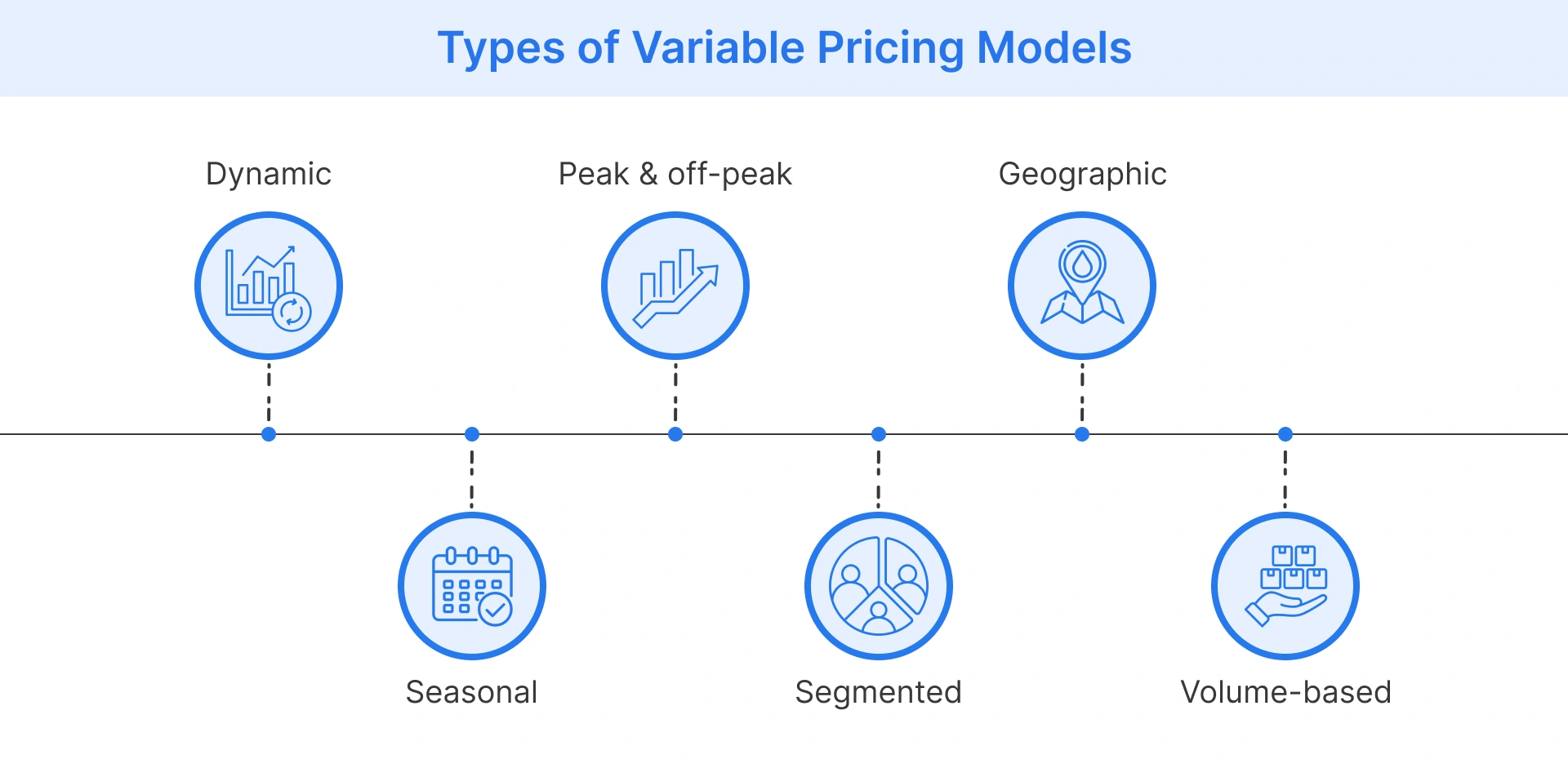
Variable pricing models are applied differently depending on business goals and industry structure. Below are the most common types, along with real-world usage examples:
- Dynamic Pricing: Prices change in real time based on demand, availability, and competitor activity. Common in ecommerce platforms, ride-sharing apps, and airline ticketing systems.
- Seasonal Pricing: Prices vary depending on seasons or peak periods. Frequently used in hospitality, travel, and retail (e.g., higher hotel rates during holiday seasons).
- Peak and Off-Peak Pricing: Higher prices during high-demand periods and lower prices during off-peak hours. Common in utilities, telecom, and entertainment services.
- Segmented Pricing: Different customer groups are charged different prices based on behavior, demographics, or purchase history. Used in SaaS platforms, education, and subscription services.
- Geographic Pricing: Pricing varies by location due to differences in demand, logistics costs, or purchasing power. Common in global ecommerce and retail chains.
- Volume-Based Pricing: Discounts are offered based on quantity purchased. Widely used in wholesale, B2B commerce, and enterprise SaaS models.
These models are often combined depending on business strategy and market conditions.
Pros and Cons of Variable Pricing
Pros of Variable Pricing
- Helps maximize revenue by aligning price with demand
- Improves inventory management by clearing excess stock
- Enables better customer segmentation and targeting
- Allows faster response to market fluctuations
- Increases sales during low-demand periods through discounts
Cons of Variable Pricing
- Can affect customer trust if pricing feels inconsistent
- Requires a strong data infrastructure and analytics
- Complex to implement across large product catalogs
- Risk of pricing errors without proper automation
- May create competitive pricing pressure
Variable Pricing vs Dynamic Pricing
Although often used interchangeably, variable and dynamic pricing models differ slightly.
Variable pricing is a broader strategy where prices change based on predefined factors such as seasonality or customer segments.
Dynamic pricing is more automated and real-time, with prices adjusting instantly based on live demand fluctuations and market signals.
Conclusion
Variable pricing helps businesses adapt prices based on demand, customer behavior, market trends, and operational conditions.
As pricing strategies become more data-driven, retailers often use automation, analytics, and pricing management tools like Flipkart Commerce Cloud’s ML-powered pricing to improve pricing accuracy and respond faster to market changes.
Book a demo to explore how FCC can adopt intelligent pricing strategies suitable for your modern retail businesses.

FAQ
Variable pricing affects customer demand by using price elasticity to balance market interest with available supply. By lowering prices during off-peak periods, businesses can stimulate demand from budget-conscious shoppers. Conversely, increasing prices during high-demand phases helps manage capacity while capturing the maximum value from customers willing to pay a premium for timing or convenience.
Industries that commonly use variable pricing include hospitality, airlines, and professional services like logistics and energy. In 2026, even SaaS providers and e-commerce retailers are adopting this model to manage cost-to-serve fluctuations. By setting predefined price tiers based on seasonality or customer complexity, these sectors can maintain profitability across shifting market landscapes.
Small businesses can absolutely use variable pricing to compete with larger entities and improve their financial resilience. By using affordable, cloud-based tools to track local demand, a small retailer or service provider can adjust prices to prevent inventory stagnation. This agile approach allows smaller firms to respond quickly to competitor shifts without needing a massive data science team.
Variable pricing is legal, but it is facing increased regulatory scrutiny in 2026 regarding transparency and data usage. New laws, such as New York’s Algorithmic Pricing Disclosure Act, require businesses to inform consumers when prices are set by automated tools. As long as the strategy avoids discriminatory practices and follows disclosure mandates, it remains a standard and lawful business practice.
The difference between variable pricing and promotional pricing lies in their primary objective and duration. Variable pricing is a long-term structural strategy used to balance supply and demand through predefined rules. In contrast, promotional pricing is typically a short-term marketing tactic, like a flash sale or "buy-one-get-one" offer, designed specifically to boost immediate sales volume.