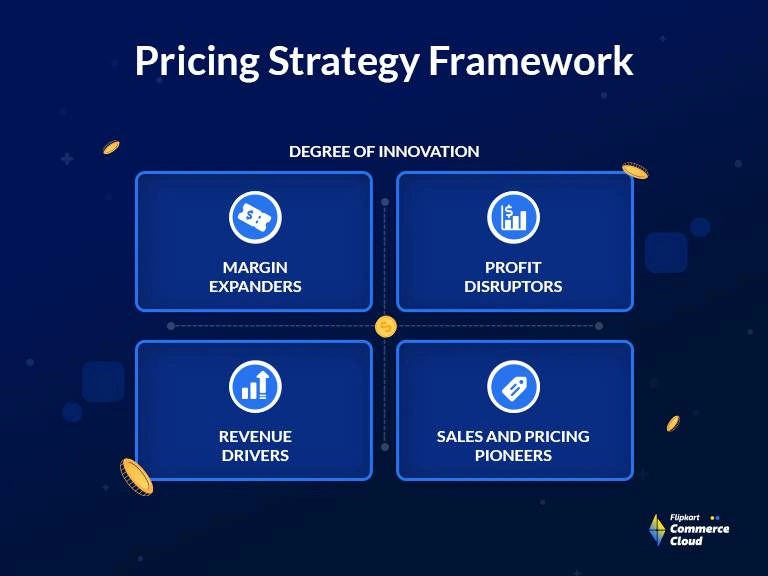
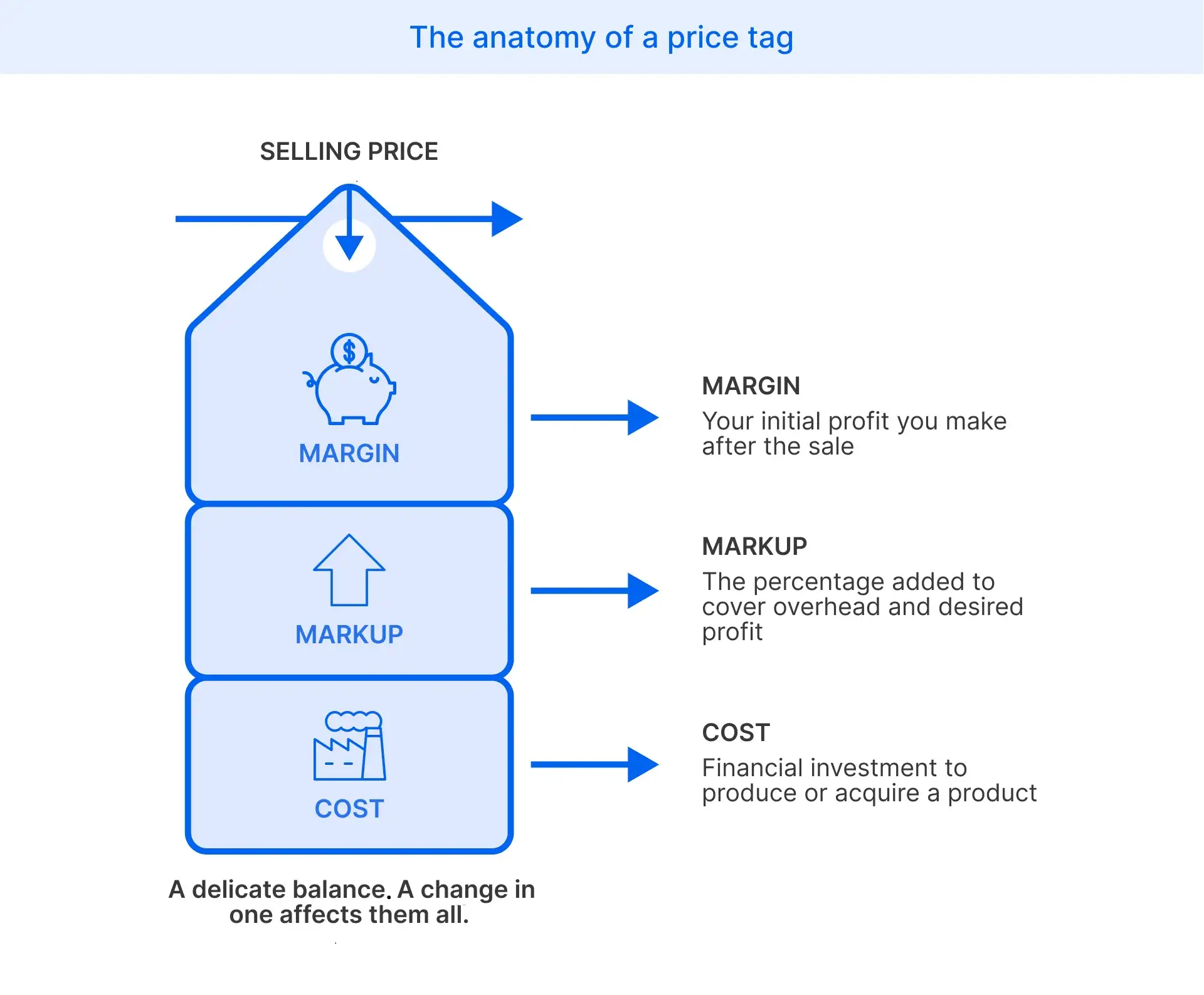
Cost, Margin And Markup - The Basics Of Pricing Framework


FAQ
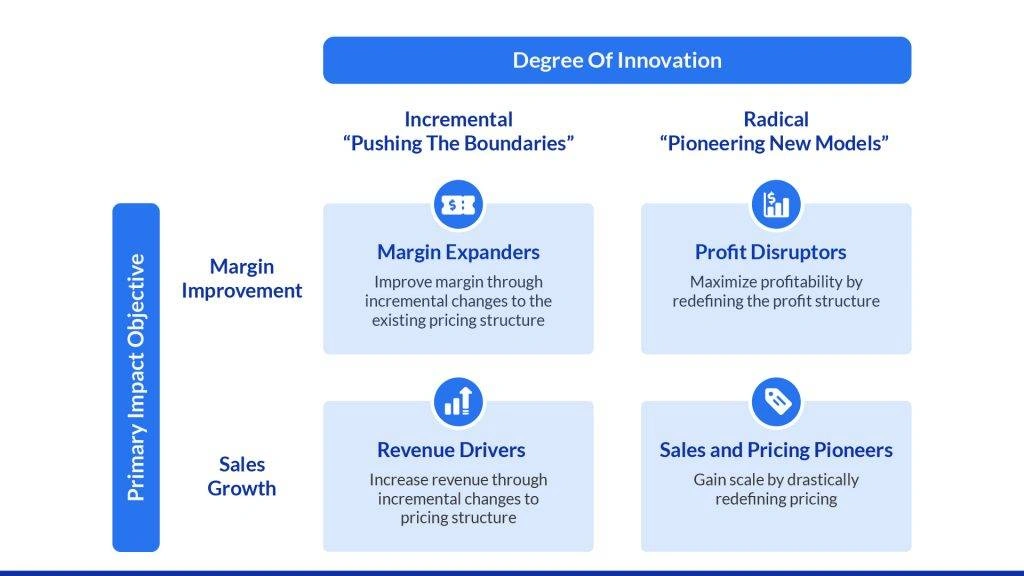
Having a pricing framework is important because it provides a structured, consistent, and data-driven approach to setting prices, removing guesswork and emotional decisions. It ensures that pricing strategies are not made in isolation but are deliberately aligned with broader business objectives, such as profitability, market share growth, or brand positioning. This systematic process allows a business to make more informed, defensible, and ultimately more effective pricing decisions that can be monitored and optimized over time.
The 7 steps of the pricing framework process generally involve:
- Defining the pricing objectives and goals,
- Conducting a thorough cost analysis,
- Understanding customer value and willingness to pay,
- Analyzing the competitive landscape and market position,
- Selecting the most appropriate pricing strategy,
- Setting the final price and implementing pricing tactics,
- Continuously monitoring, analyzing, and optimizing price performance.
Common types of pricing strategies used within a framework include cost-plus pricing, which adds a markup to the cost of goods; competition-based pricing, which sets prices in relation to what competitors charge; and value-based pricing, which bases the price on the customer's perceived value. Other prominent strategies are dynamic pricing, price skimming, penetration pricing, and premium pricing, each chosen to meet specific business objectives.
The value pricing framework is a customer-centric approach where prices are set primarily based on the perceived value a product or service offers to the customer rather than on its production cost or competitor prices. This requires a deep understanding of customer needs, preferences, and what they believe the product is worth. The goal is to capture a fair share of the value the business creates for its customers, often leading to higher profitability for unique or highly differentiated products.
The first step in the pricing framework is to define the business and pricing objectives. This foundational step is crucial because it aligns the entire pricing process with specific strategic goals, such as maximizing short-term profit, increasing market share, deterring new competitors, or establishing a premium brand perception. Without clear objectives, it is impossible to select the right strategy or measure the success of pricing decisions.
Flipkart Commerce Cloud can support a pricing strategy framework by providing the essential data and automation tools needed to execute it effectively. Its platform offers capabilities like competitive intelligence to monitor rival pricing in real-time, dynamic pricing engines to automatically adjust prices based on market signals and business rules, and advanced analytics to track key performance indicators (KPIs). This empowers businesses to implement, manage, and optimize their chosen pricing strategies at scale.
More Blogs
See how retailers and brands are winning with FCC
Everything About Price Skimming Strategy Explained
Read More
What is a High-Low Pricing Strategy?
Read More
Ultimate Guide To Dynamic Pricing Strategy In 2026
Read More
Retail Pricing Strategies: Winning with Promotion Pricing in Competitive Markets
Read More
Ad Tags: Enhancing Ad Serving Efficiency in Large-Scale Campaigns
Read More