
December 20, 2024
Penetration Pricing
Penetration pricing is a strategy where a product is launched at a low price to attract customers and quickly gain market share.
Drishti, Manager - Digital Marketing

Table of Contents
- What is penetration pricing?
- How does penetration pricing work?
- When do companies use penetration pricing?
- Example of penetration pricing
- What types of products are preferred for penetration pricing?
- How do you decide if penetration pricing is right for you?
- What are the advantages and disadvantages of penetration pricing?
- Tips for successful penetration pricing
- Conclusion
What is Penetration Pricing?
Penetration pricing is a marketing strategy employed by many companies to influence customer purchasing behaviors toward specific products and services. This strategy is primarily used when a product or service is newly introduced to the market. By lowering the price threshold, companies create the perception of a good deal, helping the product penetrate the market and stand out from the competition.
The main objective of penetration pricing is to attract customers and increase market share. Additionally, this strategy ensures that customers who purchase the product at a lower price remain loyal even when the price increases after the initial offering stage. Penetration pricing is similar to loss leader pricing and, when applied correctly, can be a beneficial marketing approach that boosts both market share and sales volumes.
How does penetration pricing work?
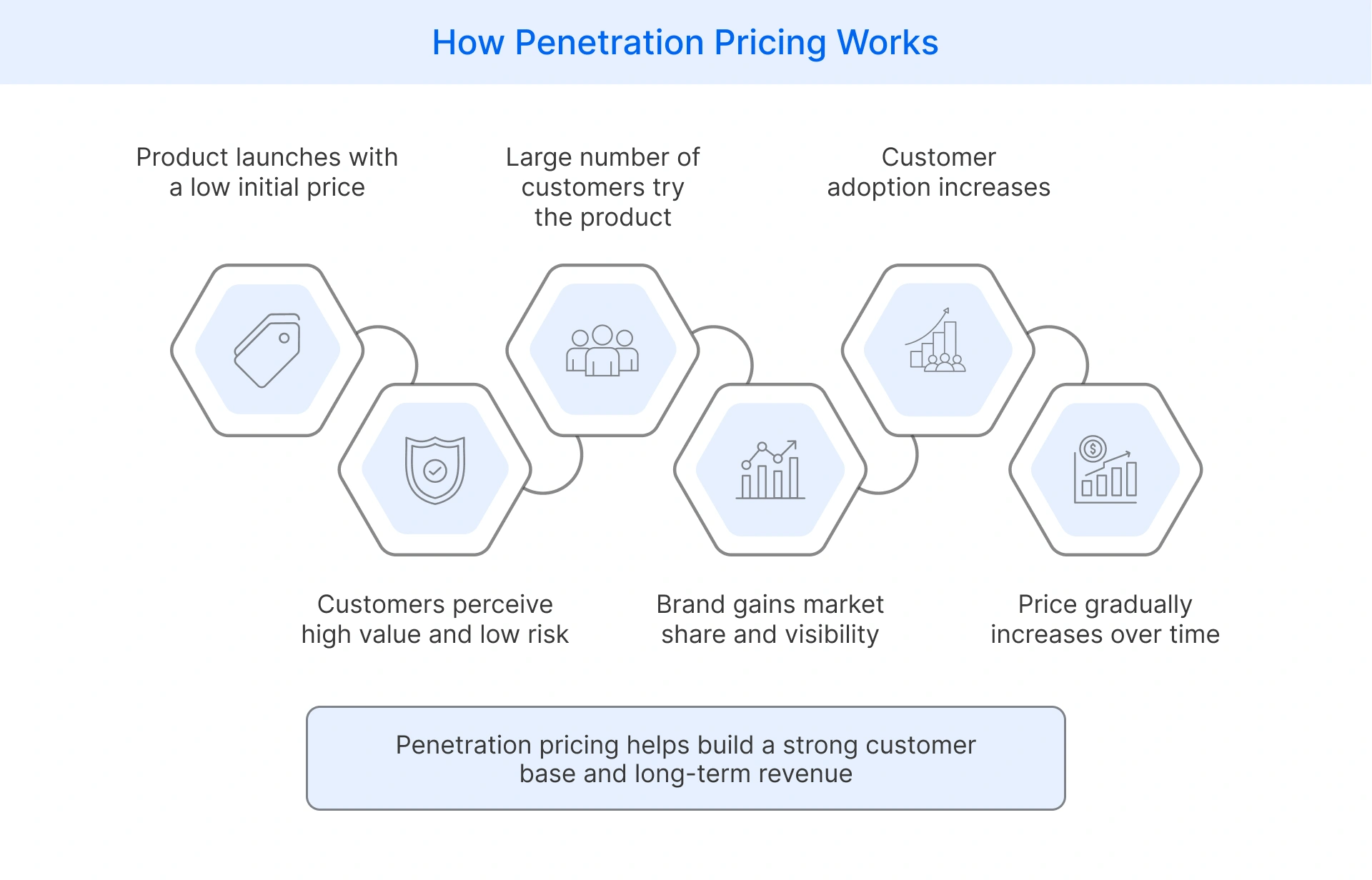
Penetration pricing is a method where retailers introduce a product or service at a low initial price to quickly attract a substantial customer base and secure a significant market share. The objective is to foster broad acceptance and establish brand awareness.
As the product gains traction and solidifies its market position, the price can be gradually raised. This tactic is especially beneficial for new offerings entering a competitive landscape. However, it necessitates meticulous planning and evaluation of elements like manufacturing costs, price sensitivity, and competitor pricing strategies.
When do companies use penetration pricing?
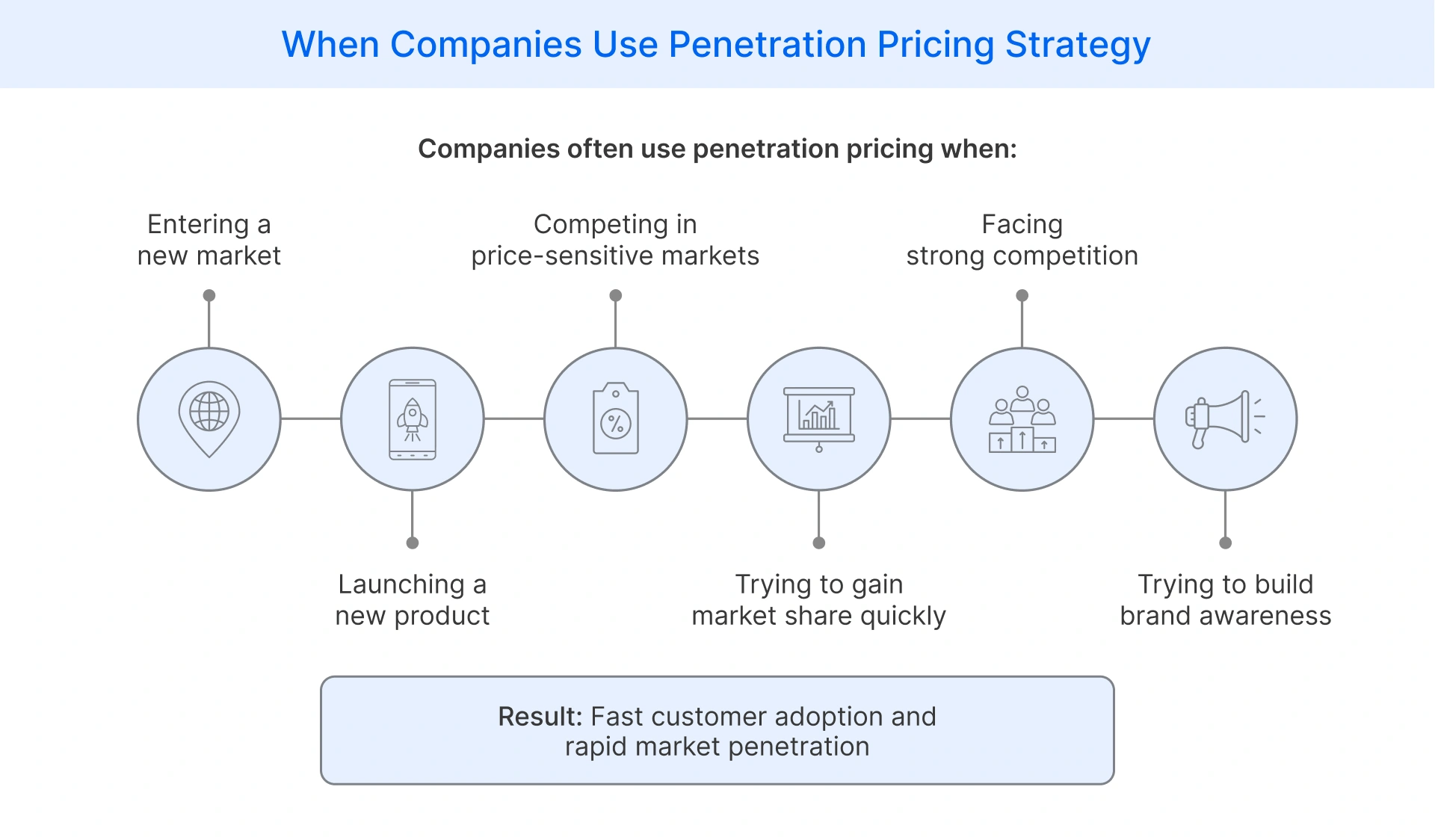
Companies use penetration pricing when they want to enter a new market or introduce a new product. This approach is very effective in markets where demand is price-sensitive and economies of scale can be achieved.
By setting a low initial price, companies aim to attract customers quickly, gain market share, and build brand loyalty. The goal is to induce customers to try the product and retain them even after prices increase.
Example of penetration pricing strategy
Here are some examples to illustrate how penetration pricing can effectively attract customers and build market share.
- Comcast/Xfinity: Internet service provider Comcast/Xfinity often provides low introductory prices, such as free or discounted premium channels and low incremental costs for upgrades. This strategy has helped them increase their market share significantly.
- Spotify: Spotify offers a free trial period for its premium service to attract users. After the trial, many users continued with the paid subscription due to the value they perceived in the service.
What types of products are preferred for penetration pricing?
Penetration pricing is particularly effective in the retail industry for products that are highly price-sensitive and have a broad appeal. Retailers often use this strategy for new product launches, seasonal items, or everyday essentials to quickly attract customers and build market share. For example, supermarkets may introduce a new line of organic foods at a lower price to encourage trial and repeat purchases.
Similarly, electronics retailers might offer significant discounts on new gadgets to entice early adopters and generate buzz. By setting low initial prices, retailers can differentiate their products from competitors, drive foot traffic, and establish a loyal customer base.
How do you decide if penetration pricing is right for you?
To assess if the penetration pricing model aligns with your business objectives, consider the following factors:
- Financial Feasibility: Ensure your company has the resources to sustain potential short-term losses associated with the strategy.
- Product Suitability: Penetration pricing is most effective for price-sensitive products with elastic demand, such as consumer electronics, subscription services, and utilities.
- Brand Image: Avoid compromising brand image, especially for luxury products that rely on a premium pricing positioning
- Price Increase Strategy: Develop a plan to gradually increase prices once the initial market penetration goals are achieved.
What are the advantages and disadvantages of penetration pricing?
Let’s have a look at the benefits and drawbacks of using this popular retail pricing method:
Benefits of using penetration pricing?
- High diffusion and adoption: Penetration pricing enables companies to quickly get their products and services accepted by consumers, increasing the adoption rate and boosting marketing effectiveness.
- Market dominance: Firms using penetration pricing can catch competitors off guard, gain a head start and compete effectively in the market.
- Scale-based economics: This strategy generates high sales volumes, allowing companies to realize economies of scale and lower marginal costs.
- Goodwill boost: Offering good bargains at lower prices encourages consumers to return, boosting brand loyalty and increasing goodwill, which is beneficial for word-of-mouth advertising.
- Increased inventory turnover: Penetration pricing often leads to a higher inventory turnover rate, bringing positive benefits to vertical supply chain partners.
Drawbacks of using penetration pricing?
- Price expectation: Consumers may expect permanently low prices, leading to disappointment when prices rise after the initial offering stage.
- Low customer loyalty: This strategy often attracts bargain hunters with low brand loyalty, who may switch to competitors for better deals.
- Bad brand image: Low prices can harm a brand’s image, as consumers may perceive the brand as offering poor or low-quality products.
- Price war: Penetration pricing can trigger a price war, with competitors lowering prices to outperform each other, potentially leading to unsustainable low prices and market monopolies.
- Only short-term: Penetration pricing is not sustainable in the long run, as maintaining low prices can be detrimental to profitability and cause irreparable damage.
Tips for successful penetration pricing
Implementing penetration pricing successfully requires careful planning and execution. Here are some useful tips:
- Conduct thorough market research: Understand your target market, competitors, and customer preferences to set an attractive initial price.
- Set clear pricing objectives: Define your goals, such as market share growth or customer acquisition, to guide a competitive pricing strategy.
- Create anticipation through strategic marketing: Use promotions and advertising to create a buzz and draw customers to your low-priced offering.
- Monitor customer response: Track sales and customer feedback to adjust your pricing strategy as needed.
- Plan for long-term sustainability: Ensure your pricing strategy can be maintained without harming profitability once the initial low prices are raised.
Conclusion
Penetration pricing is a strategic approach where companies set low initial prices to attract customers and gain market share quickly. While it offers advantages like high adoption rates, market dominance, and increased inventory turnover, it also has drawbacks such as low customer loyalty and potential price wars.
Successful implementation requires thorough market research, clear objectives, strategic marketing, and long-term sustainability planning to ensure profitability and brand growth.
FAQ
The difference between skimming and penetration pricing lies in the initial price direction and target audience. Penetration pricing sets a low entry price to attract a broad customer base and capture market share quickly. Price skimming starts high to maximize profit from early adopters, then gradually reduces the price to reach a wider audience over time.
A common example of a penetration pricing product is a streaming subscription service. Spotify and Netflix both launched at low introductory prices to attract users quickly and build large subscriber bases. Consumer electronics, internet service plans, and everyday grocery staples also widely use penetration pricing to drive early adoption and establish strong market presence.
Another name for penetration pricing is market penetration pricing, and it is also referred to as loss leader pricing when the initial price falls below cost. Flipkart Commerce Cloud helps retailers apply this penetration pricing strategy by identifying optimal entry price points using competitor data and demand analysis to maximize early market traction.
Penetration pricing is not the same as predatory pricing, though the two are often confused. A penetration pricing strategy sets low initial prices to attract customers and build market share, with a clear intent to raise prices later. Predatory pricing deliberately sustains losses to drive competitors out of business, which violates antitrust laws in many countries.
Yes, penetration pricing can backfire when businesses fail to plan their price increase strategy carefully. It often attracts price-sensitive bargain hunters who switch to competitors once prices rise, and it can trigger aggressive price wars. Retailers using Flipkart Commerce Cloud can monitor these risks through real-time pricing analytics and competitor tracking tools.
The main disadvantage of penetration pricing is its threat to long-term profitability. Sustaining low prices strains margins, while raising them later risks significant customer churn. When weighing the advantages and disadvantages of penetration pricing, businesses must also account for potential price wars with competitors and the challenge of resetting customer price expectations upward.