
December 20, 2024
Premium Pricing
Premium pricing is a strategy where businesses set higher prices than the market average to develop a perception of better quality in customers.
Drishti, Manager - Digital Marketing

Table of Contents
What is Premium Pricing?
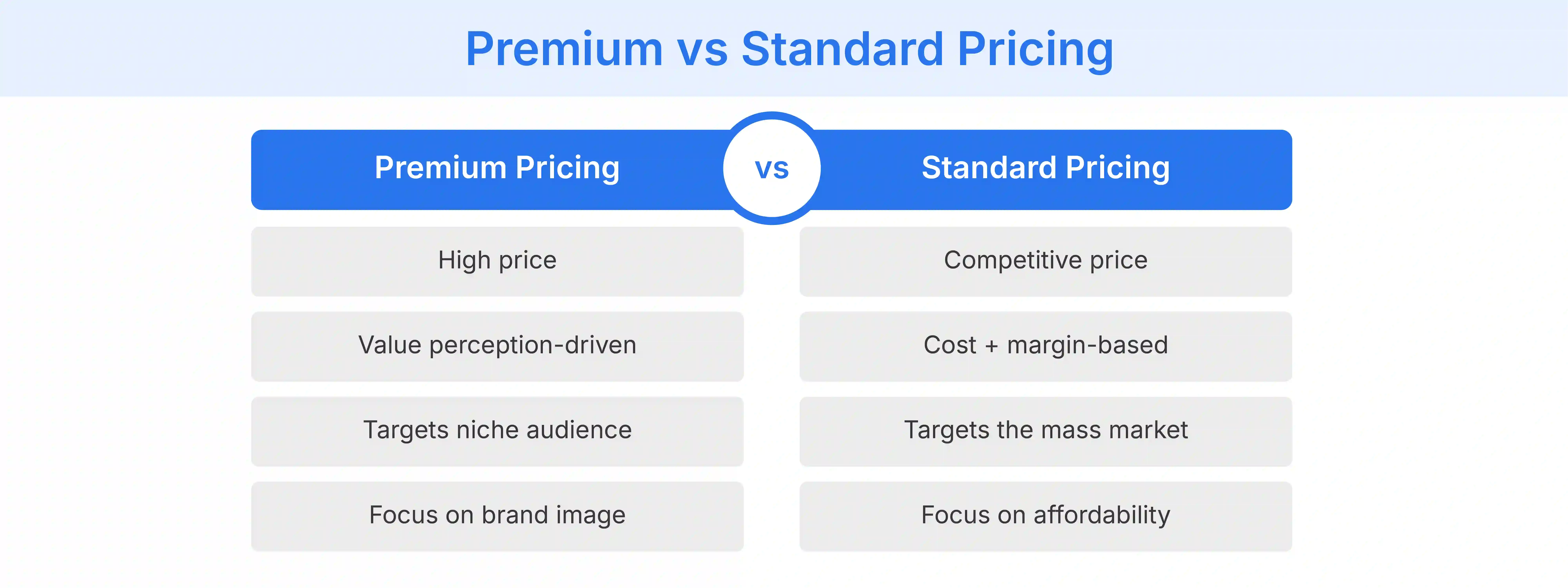
Premium pricing, also known as prestige pricing, is a strategy where retailers set prices higher than those of their competitors. The primary goal of this strategy is to create a specific image of a product, emphasising its potential superior value and unique attributes. Unlike penetration pricing, which seeks to capture market share through low costs, premium pricing relies on the psychological association between high cost and high quality.
Premium pricing is based on the perception of value rather than the actual cost or features of a product. Consumers often need to understand the specific reasons for the elevated price fully, but instead rely on their trust in the brand's reputation. This pricing strategy is frequently compared to value-based pricing, as both aim to reinforce the idea that the brand's prestige and perceived quality are worth the extra cost.
Premium pricing is about cultivating an image that justifies the higher price point, making consumers believe that the brand's value and quality are superior to competitors.
What are premium pricing examples?
Premium pricing is often employed by premium brands such as Apple, Rolex, Louis Vuitton, and Ferrari. These brands charge significantly higher prices for their products compared to competitors, leveraging factors like exclusivity, craftsmanship, heritage, and brand reputation to justify the premium.
This retail pricing method allows premium brands to target a specific segment of the market that values these intangible benefits and is willing to pay a premium price.
How to execute a premium pricing strategy
To successfully move beyond basic pricing, brands should follow a structured approach to justify their elevated costs.
-
Identify Your Unique Value Proposition (UVP): You must determine what makes your product irreplaceable. Is it superior materials, patented technology, or a legendary heritage?
-
Define Your Niche Audience: Premium pricing fails if you target the mass market, as it usually requires everyday low pricing. You must identify and stay focused on the affluent segment that values quality and status over "best price."
-
Elevate the Brand Experience: From the website interface to the unboxing experience, every touchpoint must feel "expensive."
Leverage Market Intelligence: Use retail media tools to monitor competitor movements and ensure your price gap remains "aspirational" but not mathematically impossible for your target demographic.
Pros and cons of premium pricing
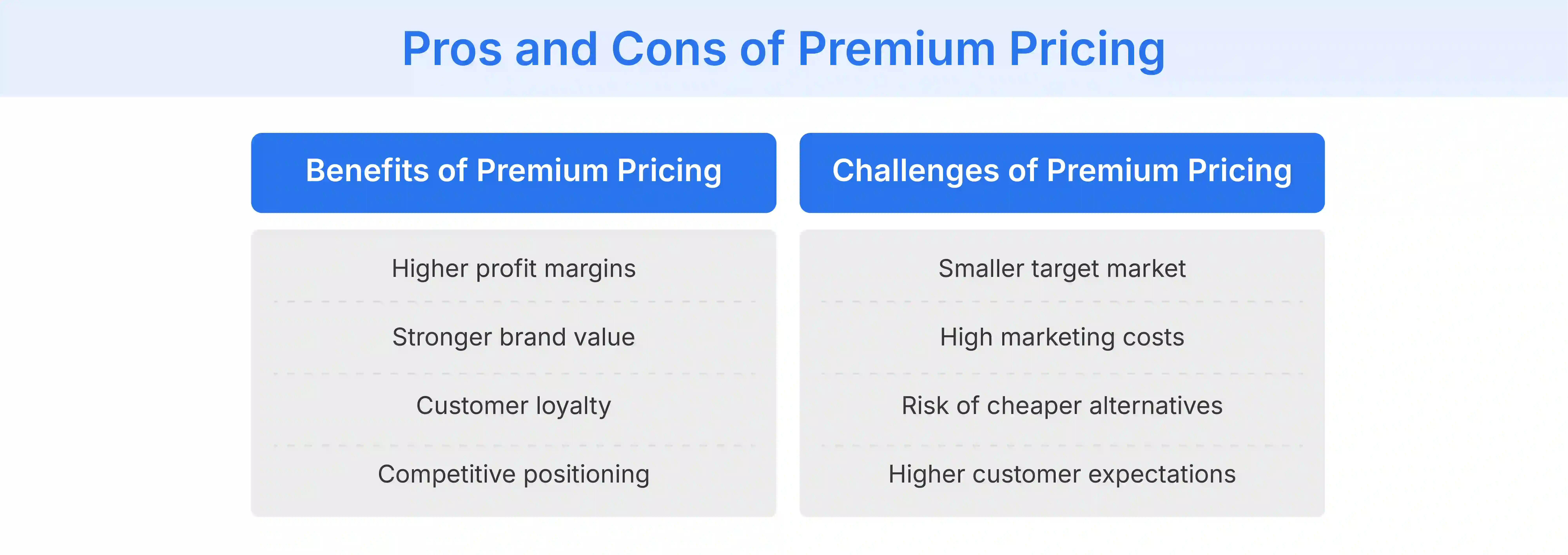
Like all other retail pricing strategies, premium pricing has its benefits and challenges. Let's have a look at them:
Premium pricing pros
- Increased Profits: Properly implemented premium pricing can lead to enhanced profit margins. If a company can justify its higher prices with reasonable factors, it stands to see a rise in profits.
- Competitive Advantage: A company that can leverage higher prices gains a competitive edge. Essentially, a business using premium pricing benefits from customer loyalty, brand awareness, and increased profits, all of which contribute to a competitive advantage.
- Enhanced Brand Value: Premium pricing can elevate a company's perception. By effectively communicating the high quality and value of its products, a company can significantly increase the chances of consumers viewing it as worthy and maintaining loyalty to the brand.
- Barrier to Market Entry: A business that has developed strong customer loyalty and brand recognition can create significant market entry barriers for new entrants. Premium pricing can quickly secure a market advantage and establish dominance based on quality and value.
Premium pricing cons
- High Cost of Development: Premium pricing is intrinsically linked to demand function and price elasticity. If a company lacks a unique selling proposition but still opts for premium pricing, it may incur higher distribution costs that the strategy's profits may not cover.
- Limited Market Access: By setting higher prices, a company essentially targets a specific customer segment willing to pay a premium. This approach restricts the customer base and prevents the business from tapping into the mass market, leading to reduced demand.
- Risk of Backfire: In a competitive market, premium pricing can sometimes backfire. For instance, if a company sets a high price for a top-quality product, competitors might offer similar quality products at lower prices. This scenario could undermine the effectiveness of premium pricing."
Conclusion
Premium pricing is a strategy that involves assigning a higher price to a product. The fundamental assumption behind this approach is that a product with a higher price is perceived to offer corresponding quality and value.
The most favorable condition for premium pricing to be beneficial is when a company has a thorough understanding of the market, its customers, and its competitors.
While high-end brands have traditionally led this space, modern technology allows all retailers to refine their approach. Retail media tools developed by Flipkart Commerce Media empower businesses to analyse complex market signals, helping them transition from simple cost-plus models to sophisticated, value-driven strategies. By focusing on personalization in retail, brands can ensure their premium prices are matched by a premium, individualised customer experience.

FAQ
Premium pricing is commonly employed by luxury brands and high-end product or service providers.
These companies typically have a strong brand reputation, a unique value proposition, and a dedicated customer base who is comfortable paying a premium price for their products.
Examples of industries that frequently use premium pricing include luxury goods, automotive, hospitality, personal care, electronics and others.
Companies use premium pricing to establish a high-quality brand image for their products, targeting customers willing to pay more for perceived superior value. This strategy can lead to increased profit margins, enhanced brand value, and a competitive advantage.
However, to be effective, one must have a complete understanding of the market, customers, and competition. This delicate balance can yield significant benefits when managed correctly.
Brands known for premium pricing include Apple (technology), Tiffany & Co. (luxury jewellery), Virgin Airlines (airline industry), and Gucci and Louis Vuitton (high-end fashion). These brands leverage their strong market positions, perceived exclusivity, and high-quality offerings to justify their premium prices. They set themselves apart by aligning their pricing with their brand image and the value they promise to deliver.
Premium pricing is used for luxury or high-end products and services. It's based on the belief that a product with a higher price tag offers corresponding quality and value worth the price.
Price skimming involves initially charging the highest price your market will accept for your product, then lowering it over time. It's typically used for new, innovative products. As the product becomes less novel and more accessible, the price steadily declines.