

FAQ
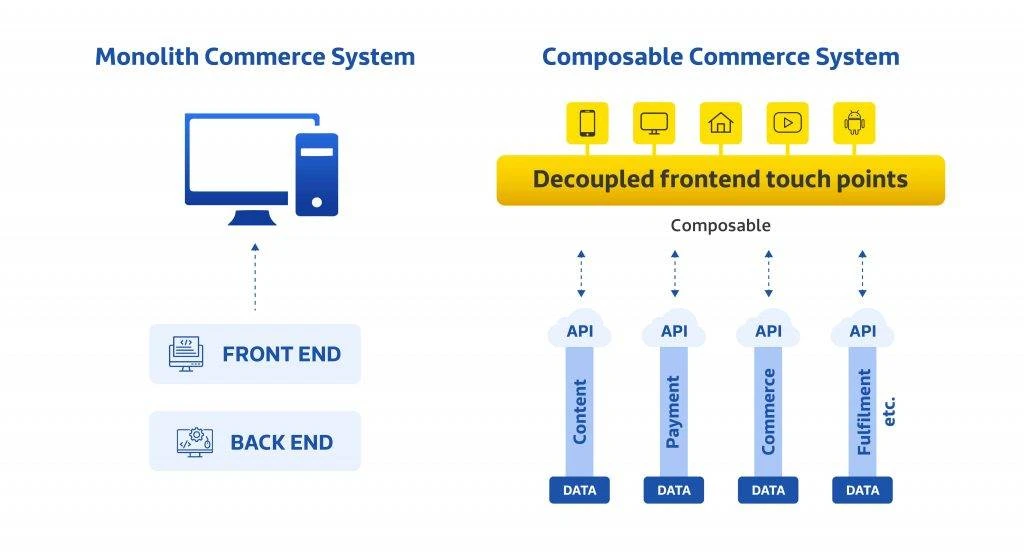
Composable commerce is a modular e-commerce architecture that enables businesses to select and integrate best-of-breed components, such as search, checkout, CRM, and personalization tools, via APIs. This approach allows for greater flexibility, scalability, and customization compared to traditional monolithic platforms, empowering retailers to rapidly adapt to market changes and deliver personalized customer experiences.
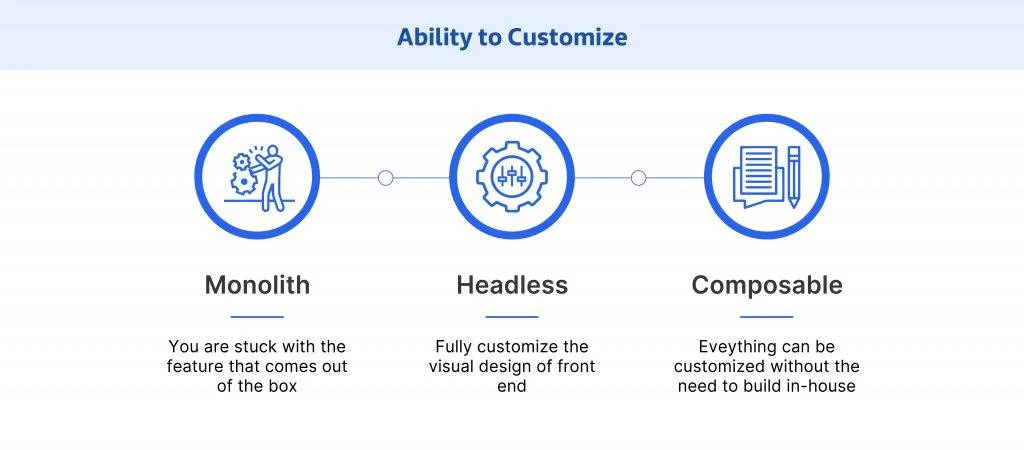
The difference between headless and composable commerce is that headless commerce separates the frontend (user interface) from the backend (commerce logic), allowing for flexibility in delivering content across various channels; whereas, composable commerce extends this concept by decoupling the entire tech stack into modular, interchangeable services. While headless focuses on the presentation layer, composable commerce offers a comprehensive, customizable solution across all commerce functions.
A traditional Customer Data Platform (CDP) typically offers a unified customer profile by integrating data from various sources, providing a centralized view of customer interactions. In contrast, composable commerce allows businesses to select and integrate best-of-breed components, including CDPs, enabling greater flexibility and customization in managing customer data and experiences.
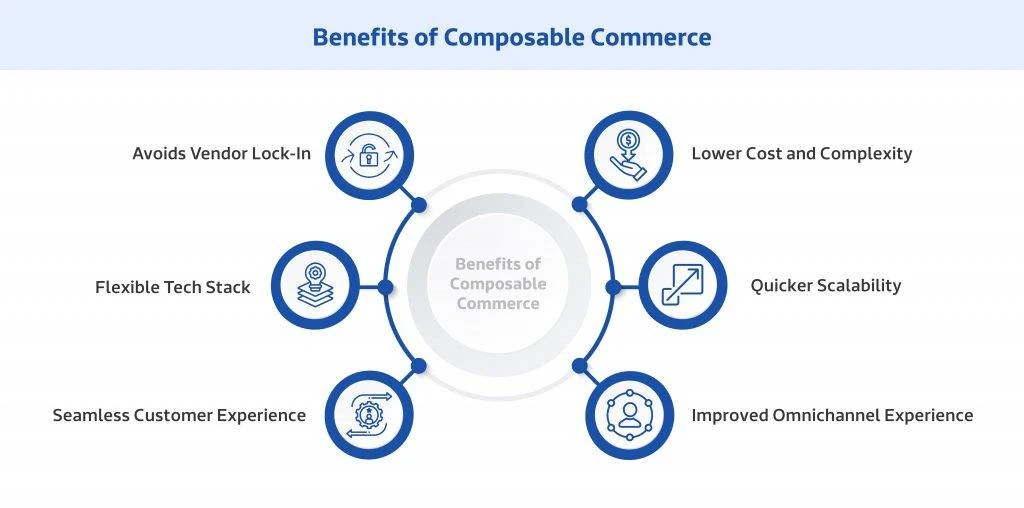
Composable commerce is a better solution than traditional platforms because composable commerce offers the ability to select and integrate best-of-breed components, greater flexibility and scalability, and faster time-to-market. This approach allows businesses to adapt rapidly to market changes, deliver personalized customer experiences, and reduce dependency on a single vendor.
The key principles of composable commerce include modularity, flexibility, scalability, and interoperability. Businesses should aim to build a tech stack using interchangeable, best-of-breed components that can be easily integrated and replaced as needed. This approach promotes innovation, reduces vendor lock-in, and allows for rapid adaptation to changing market demands.
Composable commerce can leverage the Internet of Things (IoT) by integrating IoT devices and sensors into the e-commerce ecosystem. This integration allows businesses to gather real-time data on customer behavior, inventory levels, and product usage, enabling more personalized and responsive shopping experiences. The modular nature of composable commerce facilitates the seamless incorporation of IoT technologies into the commerce stack.
More Blogs
See how retailers and brands are winning with FCC
Everything About Price Skimming Strategy Explained
Read More
What is a High-Low Pricing Strategy?
Read More
Ultimate Guide To Dynamic Pricing Strategy In 2026
Read More
Retail Pricing Strategies: Winning with Promotion Pricing in Competitive Markets
Read More
Ad Tags: Enhancing Ad Serving Efficiency in Large-Scale Campaigns
Read More