
January 22, 2026
E-Commerce Localization
Ecommerce localization is the strategic process of adapting an online store to meet the cultural and functional expectations of specific international markets. It ensures seamless user experiences by addressing language nuances and local payment preferences.
Drishti, Manager - Digital Marketing

Table of Contents
- Ecommerce Localization
- What is Ecommerce Localization?
- What are the Core Components of Ecommerce Localization
- What are the Benefits of Ecommerce Localization
- Localization vs. Translation: What’s the Difference?
- How to Localize Your Ecommerce Store
- Scaling Localization with Flipkart Commerce Cloud
E-Commerce Localization
Expanding into global markets requires more than simply translating website text into a different language for foreign visitors. Retailers must adapt their digital presence to align with the cultural expectations and functional requirements of international customers.
Ecommerce localization creates a localized shopping experience that fosters trust and removes friction from the buying journey. This strategic approach ensures that global customers feel as comfortable navigating the site as domestic shoppers do.
- Successful brands modify their user interface to accommodate different text lengths and reading directions.
- Localized platforms display prices in native currencies to provide transparency and reduce calculation efforts.
- Merchants adapt shipping options to align with local logistics infrastructure and delivery preference.
- Marketing campaigns resonate better when they reflect local holidays and cultural sensitivities.
What is Ecommerce Localization?
The localization process involves adapting your online store’s content and functionality to match the habits of a local market. It aligns the digital experience with the cultural nuances and purchasing behaviors of your target audience.
It goes beyond simple text translation to include critical operational elements like product information, local currencies, and preferred payment methods. The strategy also encompasses sizing charts and culturally relevant imagery.
Let’s consider an example to understand the concept better. You have built an online store. However, does your checkout page make sense to a shopper in Jakarta? If the payment gateways or address fields confuse them, then you need ecommerce localization to fix it.
What are the Core Components of Ecommerce Localization
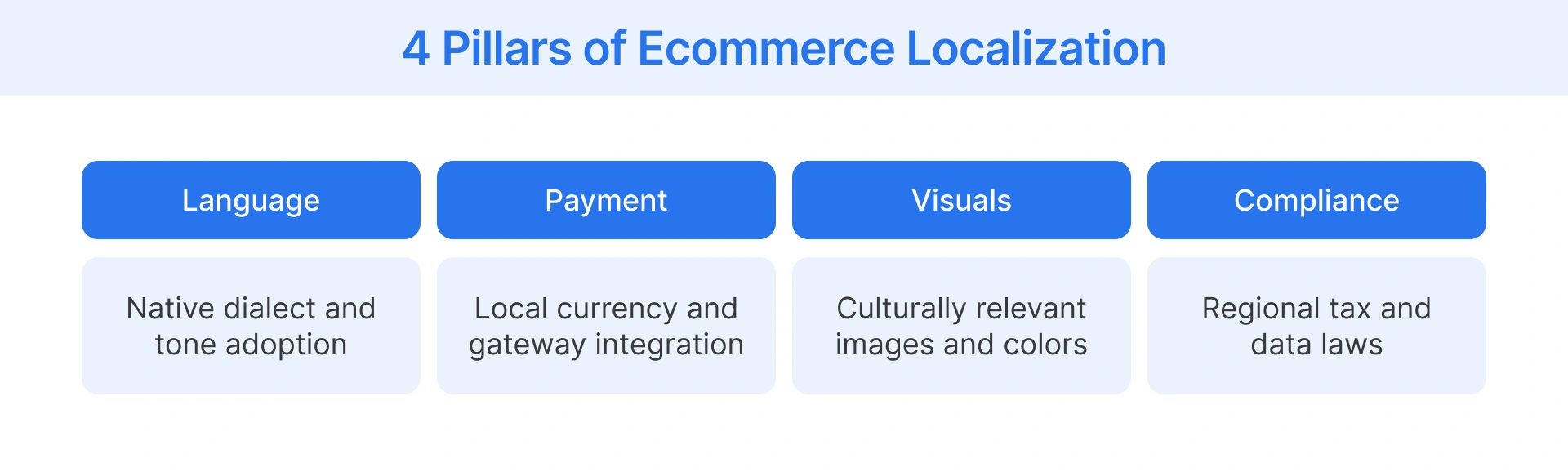
A robust localization strategy addresses four pillars to ensure the online store functions seamlessly for international users.
- Language & Tone: Direct translation often misses the mark. To read product descriptions in their own language, retailers must adapt website copy to ensure messages sound natural. Relying solely on Google Translate can lead to errors that alienate users.
- Currency, Payments & Checkout: Shoppers hesitate when they see foreign currencies. Displaying costs in local units and offering preferred gateways reduces friction for local customers.
- Visuals & Cultural Nuance: Images must reflect the environment of different regions while maintaining brand consistency. Promoting winter coats on the homepage for Australian users in July demonstrates a lack of local awareness.
- Logistics & Compliance: Every region has specific legal requirements. Adhering to local regulations regarding taxes is mandatory. Clear communication via customer service about shipping times builds credibility.
What are the Benefits of Ecommerce Localization?
Investing in ecommerce localization offers the following benefits by aligning the shopping experience with customer expectations:
- Skyrocketing Conversion Rates: People buy what they understand. Encouraging online shoppers to browse in their native language reduces hesitation and helps them complete transactions.
- Brand Trust: A fully localized site fosters brand loyalty and helps you expand your customer base. This perception of proximity encourages shoppers to trust customer support with sensitive inquiries.
- SEO Dominance: Ranking high in search results requires optimizing for local search terms on local search engines. Implementing multilingual SEO drives high-quality organic traffic from potential customers.
- Reduced Cart Abandonment: Unexpected costs are primary reasons ecommerce businesses lose sales. Localization ensures total clarity regarding final costs to keep the checkout flow smooth.
Localization vs. Translation: What’s the Difference?
Translation simply converts text from one language to another, focusing on linguistic accuracy and grammar. In contrast, ecommerce localization comprehensively adapts the entire user experience, including design, payment methods, and cultural nuances. This helps ensure the online store feels native, trustworthy, and functionally relevant to the specific target market's expectations.
|
Aspect |
Translation |
Localization |
|
Goal |
Focuses strictly on converting text to ensure basic linguistic readability. |
Aims to create a seamless experience that feels culturally relatable. |
|
Scope |
Limited strictly to linguistic elements like grammar and vocabulary changes. |
Encompasses the entire user interface including design, layout, and functionality. |
|
Currency |
Keeps the original price format which often confuses international shoppers. |
Converts all prices into local currency units for total transparency. |
|
Visuals |
Retains original source imagery that may not resonate with culture. |
Updates images to reflect local diversity and cultural preferences accurately. |
|
Vibe |
Often results in a stiff tone disconnected from local nuances. |
Creates an authentic atmosphere that resonates emotionally with local shoppers. |
How to Localize Your Ecommerce Store (Without Losing Your Mind)?
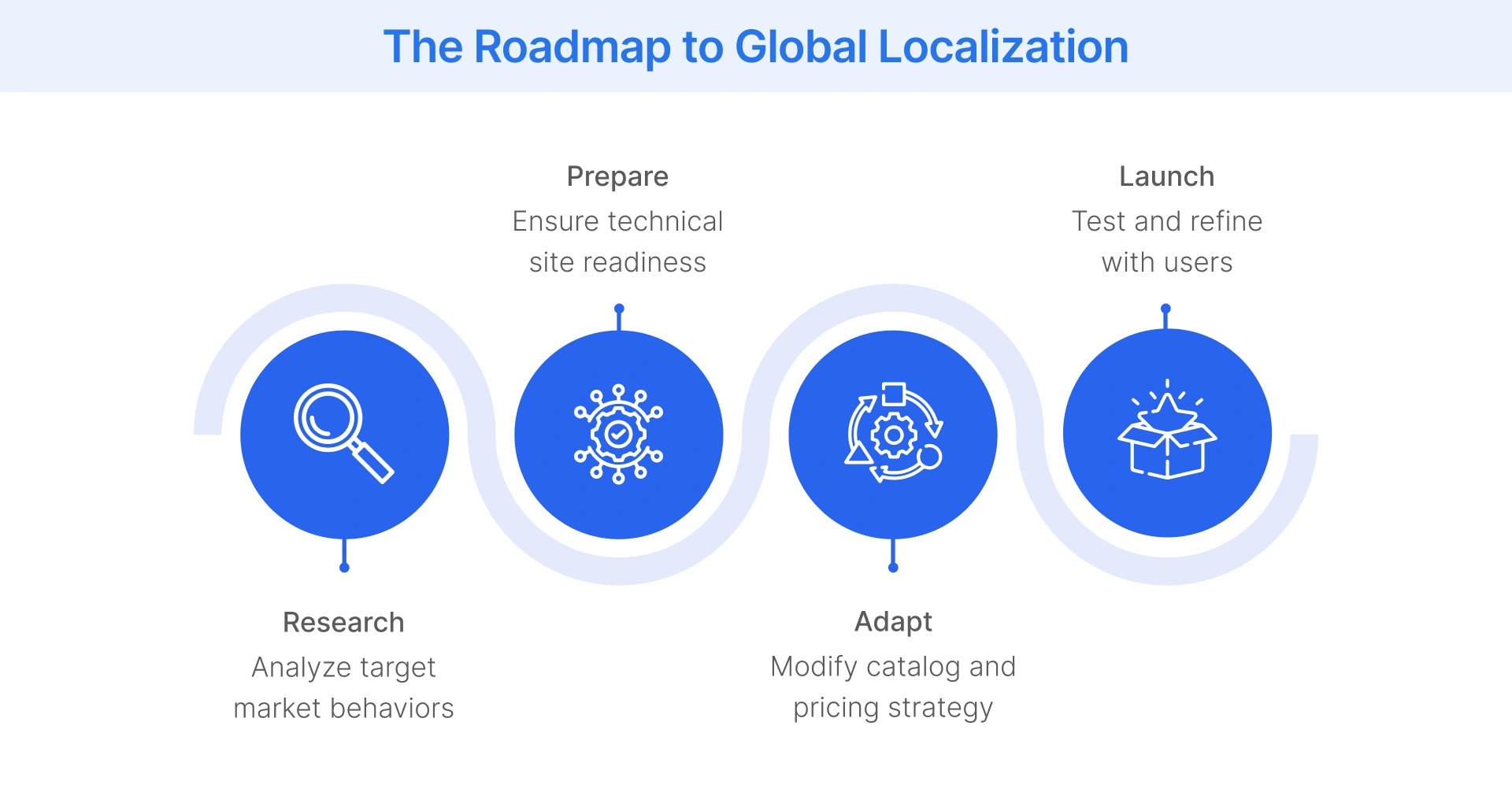
Retailers can implement a successful global strategy by following four systematic steps to minimize operational complexity.
Step 1: Market Research (Know Your Audience)
Before writing code, businesses must conduct deep research to understand the target demographic and their specific preferences. This includes analyzing local competitors and identifying the most popular payment methods and shopping behaviors.
Step 2: Technical Readiness (Internationalization)
The website architecture must be flexible enough to handle different languages and character sets without breaking the layout. This technical foundation supports right-to-left scripts and allows for date or address format variations.
Step 3: Localize the Catalog (SKUs, Pricing, & Media)
Retailers need to adjust their product offerings to ensure they are relevant to the local climate and culture. This involves updating pricing strategies to match local purchasing power and swapping out irrelevant media.
Step 4: Test, Launch, and Iterate
A soft launch allows the team to gather feedback from actual local users to identify any remaining friction points. Continuous testing and data analysis help refine the strategy to improve performance over time.
Scaling Localization with Flipkart Commerce Cloud
Manual updates for thousands of products across multiple regions create operational bottlenecks that stifle growth. You cannot manually update 10,000 SKUs for 5 different countries without risking data errors and slowing down your speed to market. That is where we come in.
At Flipkart Commerce Cloud, we provide the enterprise infrastructure needed to manage complex ecommerce localization efforts from a centralized hub. Our marketplace technology stack enables you to manage multi-region catalogs from a single backend to ensure consistency and efficiency across all your international storefronts.
Our platform leverages artificial intelligence to provide smart recommendations that adapt to local trends automatically. Ready to go global? Schedule a personalized demo to see how Flipkart Commerce Cloud makes localization automatic and drives international revenue.

FAQ
Localization in supply chain involves sourcing materials and positioning inventory closer to the end consumer. It reduces reliance on long-distance shipping and helps businesses respond faster to local demand. This strategy minimizes transportation costs and lowers the carbon footprint associated with global logistics.
Internationalization is the technical process of designing software to support multiple languages and regions without engineering changes. Ecommerce localization is the subsequent process of actually adapting that content for a specific locale. Internationalization enables localization to happen efficiently.
Hyperlocal ecommerce refers to delivering goods to customers within a very small geographical area or neighborhood. It focuses on extreme speed and convenience by utilizing local inventory sources. This model often caters to grocery and immediate household needs rather than international shipping.
Retailers often rely on machine translation that lacks nuance or fails to convert sizes and measurements accurately. Ignoring local payment preferences and neglecting regional holidays are also frequent errors. These oversights alienate customers and signal that the brand is out of touch.