
August 17, 2025
What is an Omnichannel CRM?
An omnichannel CRM system provides a unified view of customer interactions across all available touchpoints. It integrates data from various channels to ensure a seamless and consistent customer experience, significantly differing from traditional CRM systems.
Drishti, Manager - Digital Marketing

Table of Contents
- Omnichannel CRM: A Complete Guide to Connected Customer Experiences
- What is Omnichannel CRM?
- What Are the Key Features of Omnichannel CRM?
- How Does Omnichannel CRM Differ from Multichannel CRM?
- How Do You Implement an Omnichannel CRM Strategy Effectively?
- How Do You Select the Best Omnichannel CRM for Retail Businesses?
- What Are the Benefits of Using an Omnichannel CRM?
- What Are the Challenges in the Implementation of Omnichannel CRM?
- Conclusion
Omnichannel CRM: A Complete Guide to Connected Customer Experiences
An omnichannel CRM connects customer data, interactions, and engagement across the different channels a business uses to communicate with its customers. Instead of managing conversations and customer information separately, it brings these touchpoints together to create a more connected view of the customer journey. This allows sales, marketing, and customer service teams to work with consistent information and respond to customers with greater context. For businesses managing multiple customer touchpoints, an omnichannel CRM can help create more consistent experiences while making customer data easier to access and use.
What Is an Omnichannel CRM?
An omnichannel CRM is a customer relationship management system that brings customer interactions from multiple channels into a single, connected platform. Instead of managing conversations separately across websites, email, phone, social media, live chat, WhatsApp, and physical stores, businesses can access customer information and interactions in one place.
This creates a unified view of the customer journey, allowing sales, marketing, and support teams to see relevant customer information across touchpoints and continue conversations without losing context. An omnichannel CRM also helps businesses keep customer data synchronized across channels, making it easier to deliver consistent and personalized experiences.
Unlike a traditional CRM that may primarily focus on storing customer information, an omnichannel CRM connects that information with interactions across different channels. This allows businesses to understand how customers move between touchpoints and respond to them more effectively throughout their journey.
What Are the Key Features of Omnichannel CRM?
Omnichannel CRM systems combine several capabilities to help businesses manage customer data and interactions across different touchpoints. These features work together to create a more connected customer experience, from maintaining a unified view of each customer to synchronizing data, analyzing customer behavior, automating workflows, and personalizing engagement.
Unified Customer Profiles
Consolidates customer data, including past purchases, interactions, and preferences, into a single accessible record. This gives teams a complete view of each customer, regardless of the channel they use to engage.
Cross-Channel Data Integration
Collects and synchronizes customer data from different touchpoints, including websites, mobile apps, physical stores, social media, and call centers. This helps maintain consistent and accurate information across channels.
Real-Time Analytics
Provides insights into customer behavior and campaign performance through real-time data. Businesses can identify trends, measure effectiveness, and make informed decisions to improve their strategies.
Automated Workflows
Streamlines repetitive tasks and customer journey stages through automated processes. This can include lead nurturing, service request routing, and personalized follow-ups, helping teams improve efficiency and response times.
Personalization Capabilities
Uses unified customer data to deliver more relevant content, offers, and communications across channels. This can improve customer engagement, increase conversion rates, and strengthen customer loyalty.
How Does Omnichannel CRM Differ from Multichannel CRM?
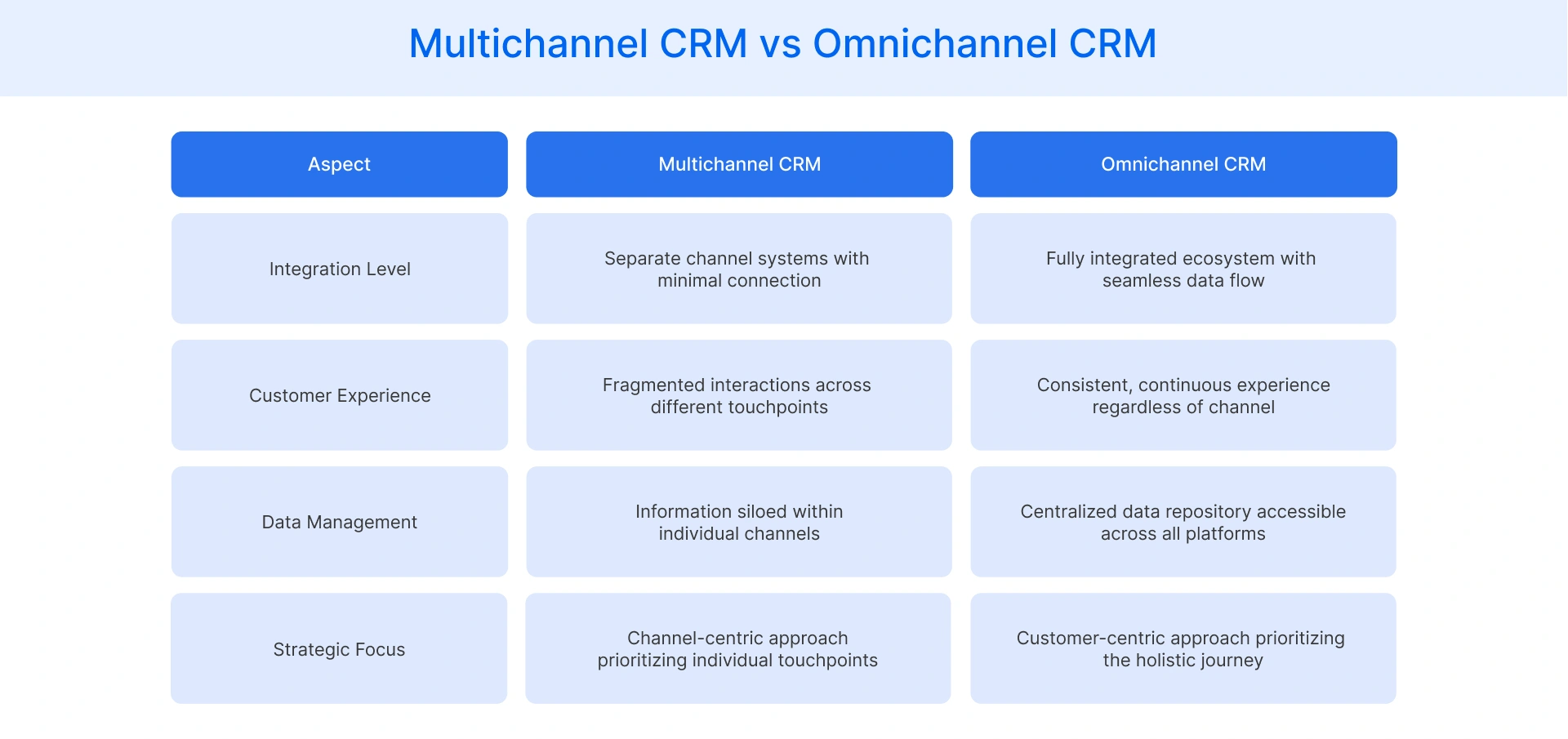
While both approaches allow businesses to engage customers across multiple channels, omnichannel CRM connects these channels to create a unified customer experience. Multichannel CRM typically manages each channel separately, with limited integration between them. With omnichannel CRM, customer data and interactions are synchronized across touchpoints, allowing customers to move between channels without losing context.
The table below compares multichannel and omnichannel approaches across key parameters.
How Do You Implement an Omnichannel CRM Strategy Effectively?
Implementing an effective omnichannel CRM strategy requires careful planning, the right technology, and coordination across teams. The following steps can help businesses build a connected approach that supports seamless customer experiences and long-term performance.
- Assess Current State: Evaluate your existing customer touchpoints, data systems, and operational processes. Identify gaps in integration and areas that need improvement.
- Strategic Planning: Define clear objectives for your omnichannel CRM implementation, including desired customer journeys and key performance indicators. Develop a roadmap to guide the implementation.
- Technology Selection: Choose omnichannel CRM tools that align with your business needs and integrate with existing systems. Prioritize scalability and strong data capabilities.
- Team Training: Train employees across relevant departments on the new CRM system and omnichannel principles. This helps teams work with consistent customer information and deliver a more connected experience.
- Continuous Improvement: Monitor performance metrics, gather customer feedback, and refine your strategy over time. Regularly evaluate your processes and technology to keep improving the customer experience.
How Do You Select the Best Omnichannel CRM for Retail Businesses?
When selecting an omnichannel CRM, retailers should consider how well the platform connects customer data, integrates with existing systems, supports real-time insights, and adapts to changing business needs. The following factors can help retailers choose a solution that supports a connected customer experience and efficient operations.
Unified Customer View
Prioritize systems that consolidate customer data from all touchpoints into a single profile. This comprehensive view gives retailers a deeper understanding of customer preferences, purchase history, and service interactions, enabling more relevant engagement throughout the customer journey.
Seamless Integration Capabilities
Ensure the CRM integrates with existing point of sale, e-commerce, inventory management, and marketing automation systems. Effective integration helps prevent data silos and enables real-time information exchange across retail operations, improving operational efficiency and customer service.
Real-Time Analytics and Reporting
Look for robust analytics features that provide insights into customer behavior, sales trends, and marketing campaign effectiveness. Real-time data helps retailers identify emerging opportunities or issues quickly and make timely adjustments to their strategies and operations.
Scalability and Flexibility
Choose a solution that can grow with the business and accommodate increasing customer volumes and data. A flexible omnichannel CRM should also adapt to evolving retail needs, allowing businesses to integrate new technologies or adjust their operations without requiring a major system overhaul.
Personalization and Automation
Look for personalization and workflow automation capabilities that can support more relevant customer journeys. These features can help retailers deliver tailored recommendations, offers, and follow-ups based on customer behavior, improving engagement and encouraging repeat purchases.
What Are the Benefits of Using an Omnichannel CRM?
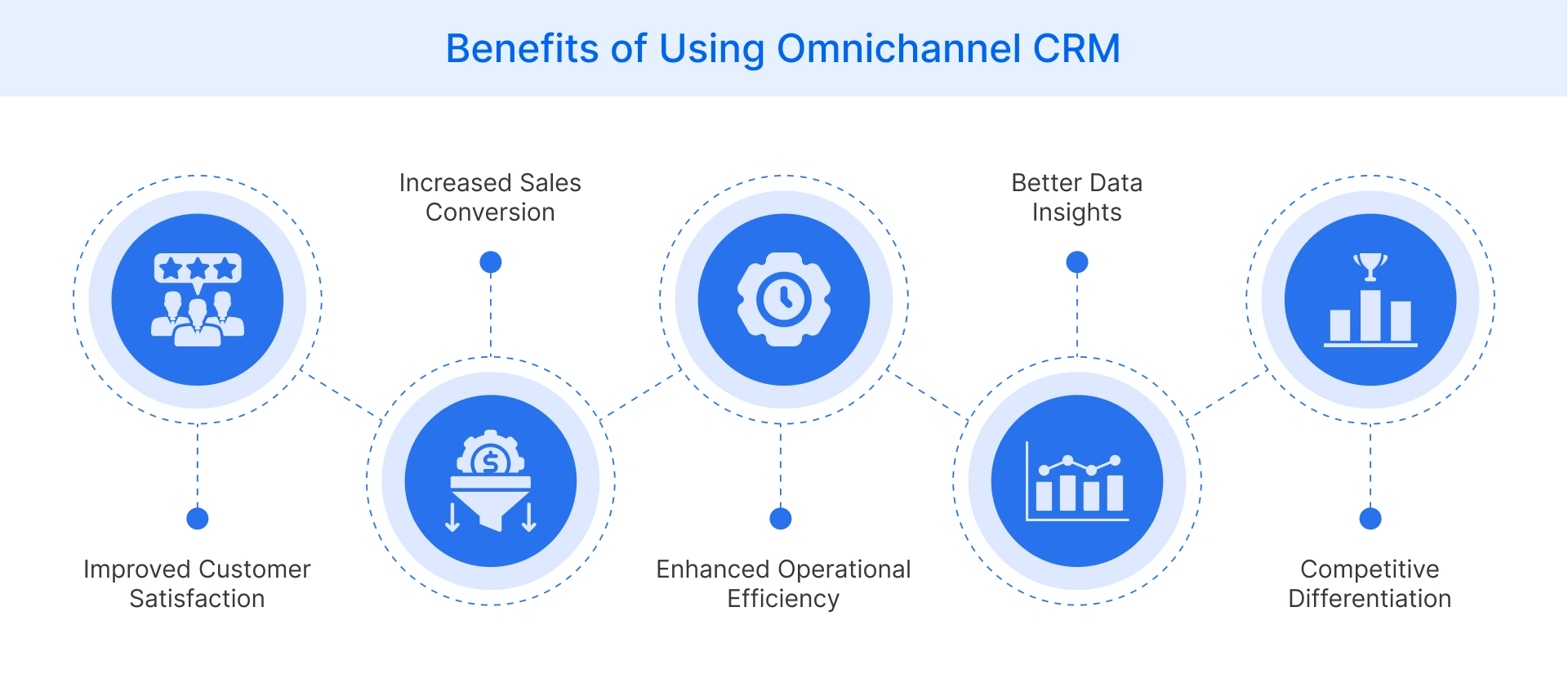
Implementing an omnichannel CRM can improve customer engagement while helping businesses streamline operations and make better use of customer data. Key benefits include:
- Improved Customer Satisfaction: Delivers consistent and personalized experiences across channels, reducing friction and creating a more cohesive customer journey.
- Increased Sales Conversion: Uses unified customer data to help businesses understand customer preferences and behaviors, enabling more timely and relevant offers.
- Enhanced Operational Efficiency: Centralizes customer information and automates workflows, reducing manual effort and improving response times across departments.
- Better Data Insights: Provides a comprehensive view of customer interactions and trends, giving businesses actionable information for refining strategies and making informed decisions.
- Competitive Differentiation: A connected and consistent customer experience can help businesses stand out from competitors and build stronger customer loyalty.
What Are the Challenges in the Implementation of Omnichannel CRM?
Despite its benefits, implementing an omnichannel CRM can present several challenges that businesses need to address carefully.
- Data Silos: Existing systems may store customer data separately, making it difficult to create a unified customer view. Overcoming these silos requires effective data migration and consolidation.
- Technology Integration Issues: Connecting the CRM with legacy systems, e-commerce platforms, and other business tools can be technically challenging. Careful planning is needed to maintain consistent data flow across systems.
- Organizational Resistance: Employees may be hesitant to adopt new processes and tools, which can affect CRM usage. Effective change management and training can help teams adapt to the new system.
- Measurement Challenges: Measuring performance and attributing sales across integrated channels can be difficult. Clear metrics and tracking mechanisms are needed to evaluate results accurately.
Conclusion
An omnichannel CRM helps retailers bring customer interactions, data, and conversations together across channels, creating a more consistent and connected customer experience. But delivering that experience at scale requires more than simply connecting channels. Retailers also need the right technology to unify customer data, support personalized interactions, and manage customer journeys efficiently.
FCC’s omnichannel CRM gives retailers the infrastructure to connect customer interactions across touchpoints while maintaining a unified view of the customer. This helps businesses deliver more relevant experiences, streamline customer engagement, and build stronger relationships across every channel.
Book a demo to see how FCC can help your business deliver a more connected customer experience at scale.

FAQ
Implementation timelines vary significantly based on business size, complexity, and existing infrastructure. Simple integrations might take a few months, while more comprehensive deployments for large enterprises could extend from six months to over a year, requiring careful phased planning.
Omnichannel CRM systems are designed with robust security features, including encryption, access controls, and compliance with data privacy regulations like GDPR and CCPA. They centralize data securely, ensuring sensitive customer information is protected and handled responsibly across all touchpoints.
Key metrics include customer lifetime value, customer retention rates, cross-channel engagement, conversion rates, and customer satisfaction scores (CSAT). Tracking these indicators helps businesses assess the impact of their omnichannel CRM efforts on loyalty and profitability, allowing for continuous optimization.
An omnichannel CRM fosters loyalty by providing consistently personalized and seamless experiences across all touchpoints. It anticipates customer needs, offers relevant solutions, and builds trust through unified service. This cohesive approach makes customers feel valued, encouraging repeat business and strengthening brand affinity.