
June 25, 2026
What Is Omnichannel Personalization?
Omnichannel personalization is the process of delivering personalized customer experiences across digital and physical touchpoints using unified customer data. It helps businesses improve customer engagement, increase loyalty, and create seamless experiences across the customer journey.
Drishti, Manager - Digital Marketing

Table of Contents
- What Is Omnichannel Personalization?
- How Does Omnichannel Personalization Work?
- Omnichannel vs Multichannel vs Cross-Channel Personalization
- Benefits of Omnichannel Personalization
- How to Implement an Omnichannel Personalization Strategy
- Examples of Omnichannel Personalization
- Challenges of Omnichannel Personalization
- Technologies Powering Omnichannel Personalization
- Conclusion
What Is Omnichannel Personalization?
Omnichannel personalization is the process of delivering tailored customer experiences across multiple touchpoints using unified customer data, behavioral insights, and real-time interactions. It helps businesses create seamless and consistent experiences across websites, mobile apps, email, social media, customer service, and physical stores.
Unlike traditional personalization, which often focuses on a single channel, omnichannel personalization connects customer interactions across digital and physical touchpoints. This allows businesses to tailor messaging, product recommendations, and offers based on customer behavior throughout the customer journey.
For example, a customer who browses products on a website, abandons a cart on a mobile app, and later visits a physical store can still receive a connected experience based on previous interactions. This helps businesses improve engagement, increase customer loyalty, and create more relevant shopping experiences.
How Does Omnichannel Personalization Work?
Omnichannel personalization works by combining customer data from multiple touchpoints to create a unified customer profile. Businesses use this information to deliver relevant interactions in real time, ensuring customer journeys remain connected across channels.
Customer Data Collection
Businesses collect customer data from websites, mobile apps, email interactions, purchase history, social media engagement, customer service interactions, and in-store activity. This data helps businesses understand customer preferences and behavior across channels.
Unified Customer Profiles
Businesses combine customer data from different touchpoints into a single customer profile. This unified view helps businesses understand how customers interact across channels instead of treating each interaction separately.
Behavioral Signals and Real-Time Personalization
Businesses analyze behavioral signals such as browsing activity, abandoned carts, product views, purchase history, and engagement patterns to deliver more relevant experiences in real time. For example, a customer who leaves products in a cart may later receive targeted recommendations or tailored promotions based on previous interactions.
AI and Machine Learning
Artificial intelligence and machine learning help businesses analyze behavioral signals such as browsing activity, abandoned carts, product views, purchase history, and engagement patterns to deliver more relevant experiences in real time. These technologies improve product recommendations, content delivery, and customer engagement.
Cross-Channel Experience Delivery
Businesses deliver consistent experiences across websites, mobile apps, email, paid advertising, customer support, and physical stores to create a seamless customer journey.
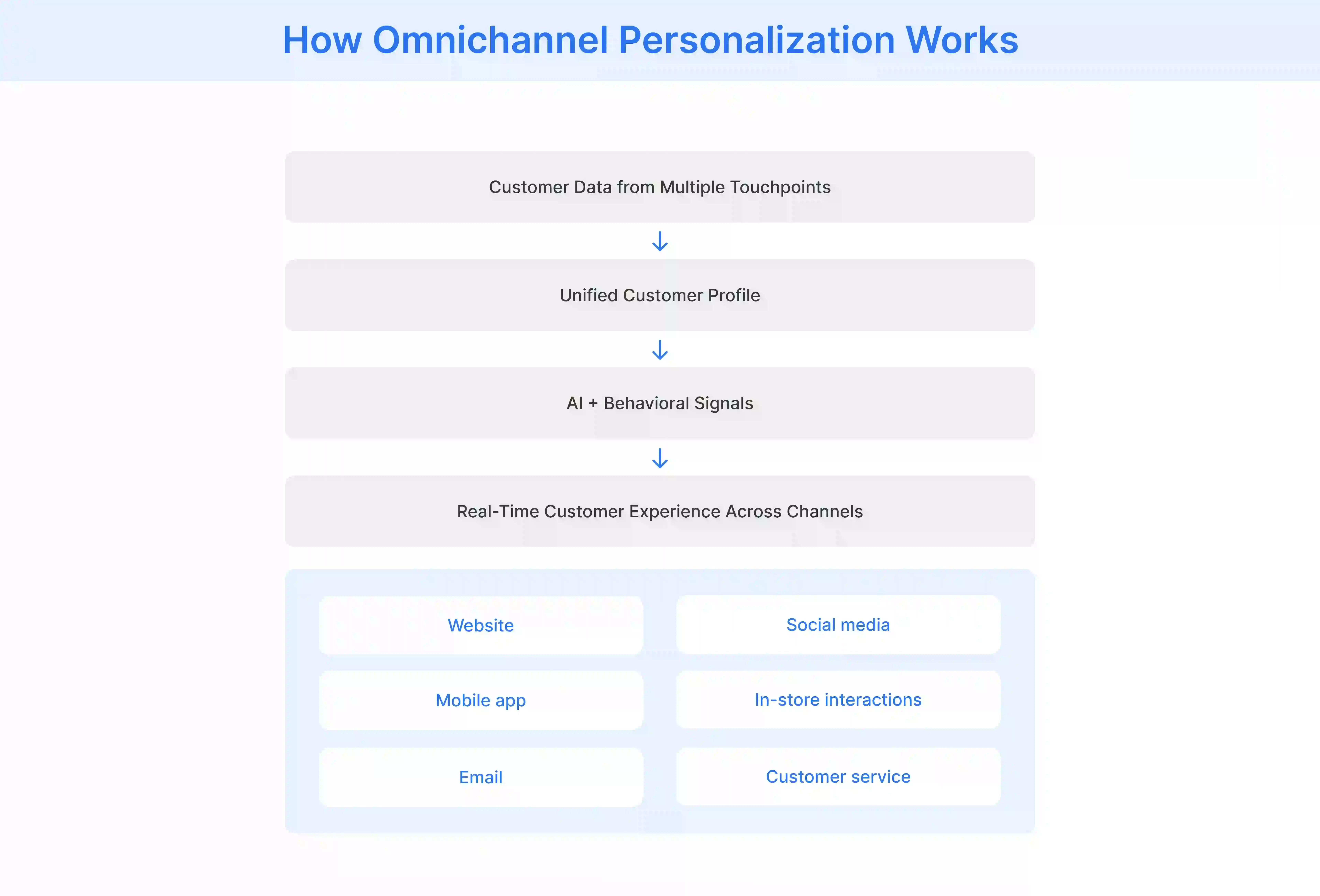
Alt text: How omnichannel personalization works using customer data, AI, and multiple touchpoints.
Omnichannel vs Multichannel vs Cross-Channel Personalization
Omnichannel, multichannel, and cross-channel personalization are often confused, but they differ in how customer interactions and data connect across channels.
Omnichannel Personalization
Omnichannel personalization creates a connected customer experience across all touchpoints. Customer data moves across channels in real time, allowing businesses to deliver consistent messaging, product recommendations, and offers based on previous interactions.
A shopper who browses products on a website may later receive relevant email recommendations, see tailored social media ads, or continue shopping through a mobile app without losing context.
Multichannel Personalization
Multichannel personalization involves engaging customers across multiple channels such as websites, email, social media, and physical stores. However, each channel often operates independently, meaning customer interactions may not connect across touchpoints.
A business may send promotional emails, run paid ads, and maintain a mobile app, but those interactions often remain separate instead of responding to customer activity across channels.
Cross-Channel Personalization
Cross-channel personalization sits between multichannel and omnichannel personalization. It connects selected channels to create more coordinated experiences, but not every interaction is unified.
Someone who abandons a cart on a website may later receive an email reminder or SMS offer, even though the experience may not continue consistently across every touchpoint.
In short, multichannel uses several channels independently, cross-channel connects selected channels, while omnichannel personalization creates a fully connected experience across the customer journey.
Simple comparison table:
|
Approach |
Customer Data |
Channel Connection |
Experience |
|
Omnichannel |
Unified |
Fully connected |
Seamless across touchpoints |
|
Multichannel |
Separate |
Independent |
Different experiences per channel |
|
Cross-channel |
Partially connected |
Selected channels linked |
Semi-connected experience |
Benefits of Omnichannel Personalization
Omnichannel personalization helps businesses create more connected customer experiences while improving engagement, loyalty, and marketing performance. By using customer data across channels, businesses can deliver more relevant interactions throughout the customer journey.
Improved Customer Experience
Omnichannel personalization helps businesses improve the customer experience by creating seamless interactions across websites, mobile apps, email, and physical stores. Customers receive more relevant recommendations and consistent interactions regardless of where they engage with a brand.
Higher Customer Loyalty and Retention
Connected experiences help businesses build stronger customer relationships. When customers receive relevant content, personalized offers, and consistent support across touchpoints, they are more likely to return, improving customer retention and long-term loyalty.
Increased Conversions and Revenue
Delivering relevant recommendations and timely messaging can improve purchase decisions and reduce friction during the buying process. Businesses often use omnichannel personalization to increase conversions, improve average order value, and encourage repeat purchases.
Seamless Customer Journey
Omnichannel personalization connects customer interactions across channels, reducing disconnected experiences. A customer may begin browsing on a website, continue through a mobile app, and complete a purchase in-store without restarting their journey.
Better Customer Insights
By collecting data from multiple touchpoints, businesses gain a clearer understanding of customer preferences, behaviors, and buying patterns. These insights help improve marketing strategies and customer engagement over time.
How to Implement an Omnichannel Personalization Strategy?
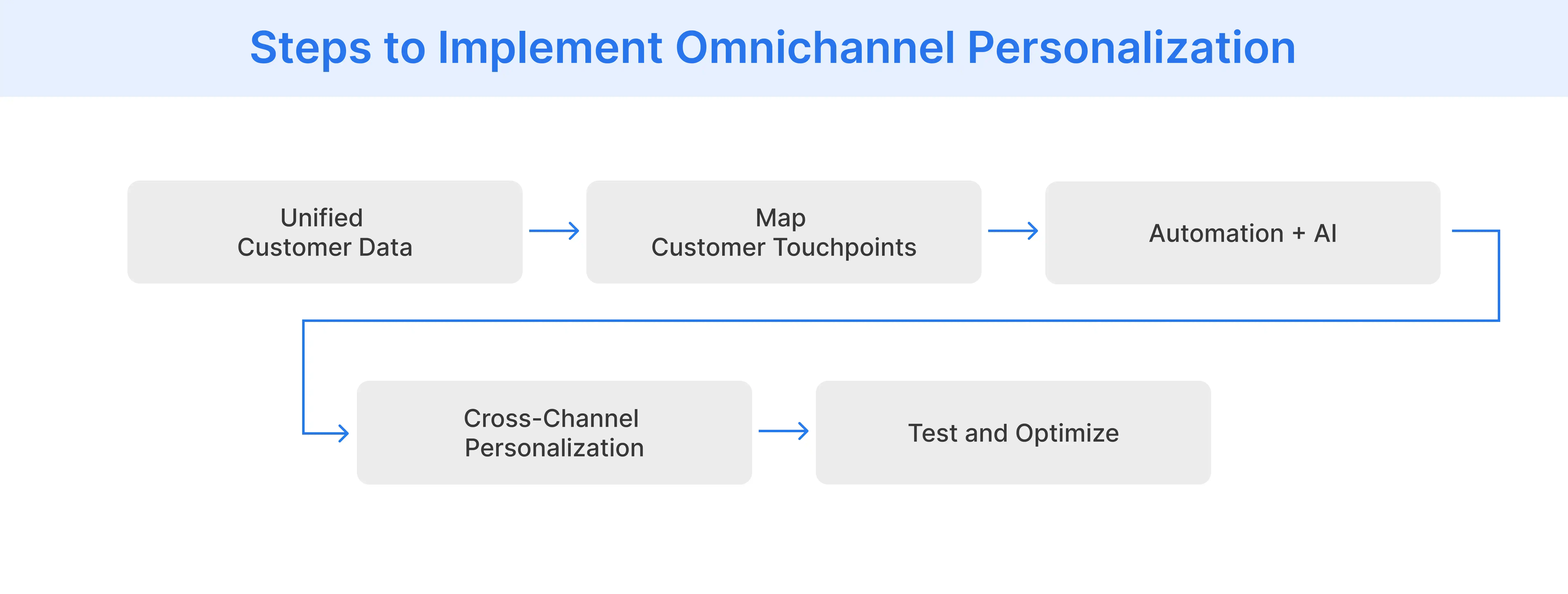
Businesses can implement omnichannel personalization by connecting customer data, understanding customer behavior, and delivering consistent experiences across channels. A structured approach helps businesses improve engagement while maintaining relevance across touchpoints.
Build a Unified Customer Data Strategy
Omnichannel personalization depends on unified customer data. Businesses need to combine information from websites, mobile apps, email interactions, purchase history, customer support, and in-store activity to create a complete view of the customer journey.
Map Customer Touchpoints
Understanding how customers interact across channels helps businesses identify where personalization can improve the experience. Businesses often map touchpoints across websites, email, social media, mobile apps, paid ads, and physical stores to understand customer behavior.
Use Automation and AI
Automation and artificial intelligence help businesses deliver relevant interactions at scale. These technologies analyze behavioral signals, predict customer intent, and trigger tailored recommendations, messages, or offers in real time.
Personalize Across Multiple Channels
Businesses should maintain consistency across customer touchpoints while adapting messaging to each platform. A customer browsing products on a website may later receive a relevant email, mobile notification, or in-app recommendation based on previous activity.
Test and Optimize Continuously
Customer preferences and behavior change over time. Businesses regularly test campaigns, analyze performance data, and refine personalization strategies to improve engagement, conversions, and customer satisfaction.
Examples of Omnichannel Personalization
Many businesses use omnichannel personalization to create connected experiences across digital and physical touchpoints. By combining customer data with real-time interactions, brands can deliver more relevant recommendations, offers, and support throughout the customer journey.
Sephora
Sephora combines online and in-store experiences to make shopping more tailored. Customers can browse products through the mobile app, access loyalty rewards, and virtually try on makeup. In stores, beauty advisors can reference customer preferences and purchase history to recommend suitable products.
Netflix
Netflix uses viewing behavior and engagement patterns to recommend movies and shows based on individual preferences. Recommendations remain consistent across devices, allowing users to continue watching seamlessly across mobile, desktop, and smart TV.
McDonald’s
McDonald’s personalizes customer interactions through its mobile app by offering location-based promotions, tailored deals, and customized recommendations based on purchase history. Customers can move between the app, drive-thru, and in-store ordering without disconnected experiences.
Apple
Apple creates connected experiences across its website, devices, physical stores, and customer support channels. Customers can browse products online, save preferences across devices, and continue purchases or support interactions across channels without losing context.
These examples show how businesses use omnichannel personalization to improve customer engagement, create smoother journeys, and strengthen long-term loyalty.
Challenges of Omnichannel Personalization
While omnichannel personalization helps businesses improve customer experiences, implementing it effectively comes with challenges. Managing customer data, maintaining consistency across channels, and balancing privacy concerns can make personalization more complex.
Data Silos
Customer data often exists across different systems, such as websites, mobile apps, CRM platforms, email tools, and in-store systems. When this information remains disconnected, businesses may struggle to create unified customer profiles and deliver consistent experiences.
Inconsistent Customer Experiences
Customers expect interactions to remain connected across channels. However, inconsistent messaging, disconnected promotions, or repeated requests for information can create friction and reduce engagement.
Integration Complexity
Connecting multiple platforms, tools, and customer touchpoints can be technically challenging. Businesses often need to integrate customer data platforms, analytics tools, automation systems, and e-commerce platforms to support personalization across channels.
Privacy and Data Security Concerns
Omnichannel personalization depends on customer data, which makes privacy and compliance important considerations. Businesses must collect, store, and use customer information responsibly while following data privacy regulations and maintaining customer trust.
Real-Time Personalization at Scale
Delivering relevant interactions in real time across multiple channels can become difficult as customer data grows. Businesses need accurate data, automation, and scalable technology to maintain consistency without delays.
Although these challenges can make implementation more complex, businesses that build strong data strategies and connected systems are often better positioned to deliver seamless customer experiences.
Technologies Powering Omnichannel Personalization
Businesses rely on several technologies to deliver omnichannel personalization at scale. These tools help collect customer data, analyze behavior, automate interactions, and maintain consistency across touchpoints.
Artificial Intelligence and Machine Learning
Artificial intelligence (AI) and machine learning help businesses analyze customer behavior, predict preferences, and deliver more relevant recommendations. These technologies improve targeting by identifying patterns in browsing activity, purchase behavior, and engagement history.
Customer Data Platforms (CDPs)
Customer data platforms help businesses combine information from multiple sources into unified customer profiles. By connecting data from websites, mobile apps, email, customer support, and in-store activity, businesses gain a clearer understanding of customer behavior across channels.
Analytics and Customer Insights Tools
Analytics platforms help businesses track customer interactions, engagement patterns, and campaign performance. These insights help businesses refine personalization strategies and improve decision-making over time.
Marketing Automation Platforms
Automation tools help businesses deliver relevant content and offers based on customer behavior. Businesses often use automation for abandoned cart reminders, product recommendations, email campaigns, and personalized notifications across channels.
Customer Relationship Management (CRM) Systems
CRM systems help businesses manage customer information, interaction history, and communication preferences. This helps create more connected engagement across sales, marketing, and customer support.
Conclusion
Omnichannel personalization helps businesses deliver connected experiences across digital and physical touchpoints using customer data and real-time interactions. When implemented effectively, it can improve engagement, strengthen customer loyalty, and support better business outcomes. Flipkart Commerce Cloud helps businesses create more connected customer journeys through unified customer data and personalized engagement across channels.

FAQ
Omnichannel personalization is a marketing strategy that delivers unified, context-aware customer experiences across all touchpoints, including mobile apps, websites, and physical stores. By connecting data streams in real time, it ensures that a shopper's interactions on one channel instantly update and tailor the messaging they encounter on another.
The way omnichannel personalization differs from regular personalization is its continuous, cross-channel fluidity. Standard personalization typically modifies experiences within a single channel, like a web page or an isolated email campaign. The omnichannel approach connects those separate channels, maintaining a singular, cohesive conversation across the entire customer journey.
The main difference between omnichannel and multichannel approaches lies in data integration. Multichannel personalization treats each platform as an isolated silo, delivering independent experiences per channel. Omnichannel strategies break down these data silos to harmonize user data, creating a seamless, interconnected customer experience across every single digital and physical touchpoint.
Building an omnichannel personalization strategy requires unifying your customer data into a single, accessible repository. Retailers must track user behavior across all touchpoints to deploy dynamic content based on real-time actions. Implementing flexible enterprise solutions, such as Flipkart Commerce Cloud FCC, helps orchestrate these consistent cross-channel experiences across your entire store.
Measuring the ROI of your omnichannel personalization efforts involves tracking specific cross-channel metrics like customer lifetime value, conversion rates, and retention. By comparing revenue from personalized segments against non-personalized control groups, tools within Flipkart Commerce Cloud FCC give brands clear, data-driven proof of how targeted experiences directly scale profitability.
The biggest challenges of executing omnichannel personalization effectively are fragmented legacy technologies and data tracking limitations. Gathering disjointed customer information from different departments often leads to inaccurate user profiles. Businesses must invest in modern, scalable architecture to process real-time data efficiently without causing privacy compliance issues or laggy storefront experiences.