
December 4, 2025
How Does Ecommerce Analytics Work?
Ecommerce analytics involves gathering and interpreting data from your online store to understand customer behavior. Ecommerce analytics tools help retailers make informed decisions to optimize performance and drive growth.
Drishti, Manager - Digital Marketing

Table of Contents
- How Does Ecommerce Analytics Work?
- What is Ecommerce Analytics?
- Why is eCommerce Analytics Important?
- What Are the Key Ecommerce Analytics Metrics to Focus On?
- How Can You Implement Ecommerce Analytics Effectively?
- Conclusion
How Does Ecommerce Analytics Work?
Ecommerce analytics helps retailers collect and analyze data from their online stores and marketing channels to understand how customers interact with their business. By examining data across the customer journey, retailers can identify patterns in shopper behavior, measure store performance, and understand which areas of their ecommerce operations are working effectively.
These insights can help businesses make more informed decisions about marketing, products, customer experience, and sales, while identifying opportunities to improve performance and support growth.
What Is Ecommerce Analytics?
Ecommerce analytics is the process of collecting and analyzing data from ecommerce stores and marketing channels to understand customer behavior and overall store performance. It gives retailers visibility into how shoppers interact with their online stores, from discovering products to completing purchases and returning for future transactions.
By analyzing this data, ecommerce businesses can identify patterns in customer behavior, evaluate the performance of their marketing and sales activities, and uncover opportunities to improve the shopping experience. Ecommerce analytics can also help retailers make more informed decisions about products, inventory, pricing, and customer engagement.
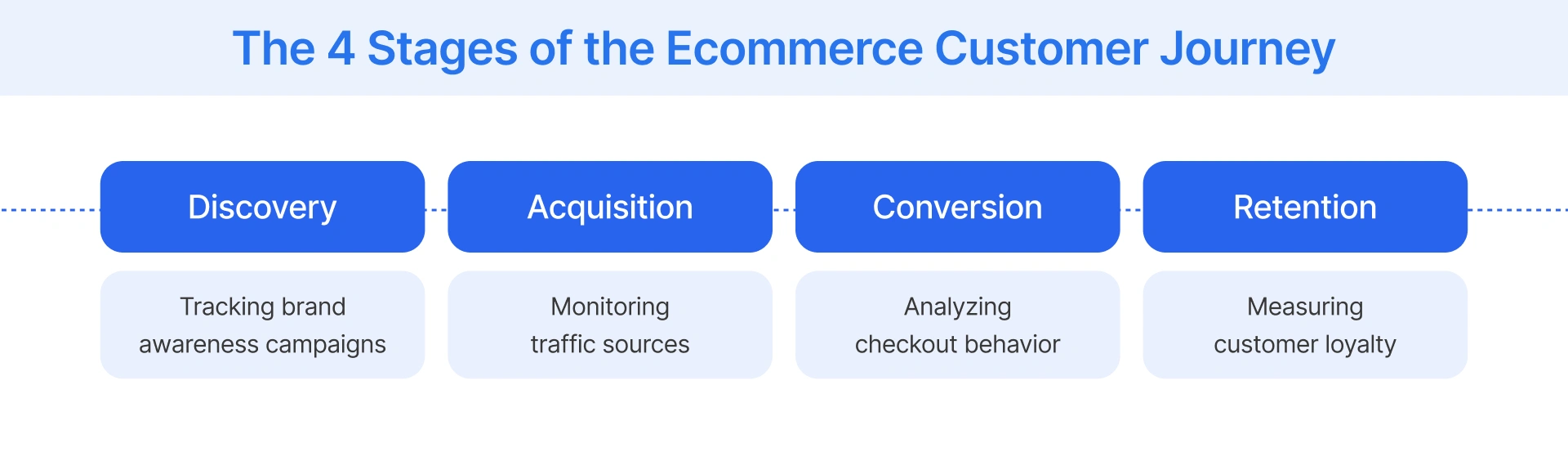
Ecommerce analytics provides insights across four key stages of the customer journey:
Discovery
Discovery focuses on how potential customers find a brand or product. Analytics can help retailers understand which marketing channels and campaigns generate awareness and bring new visitors to their online stores.
Acquisition
Acquisition looks at how effectively a business attracts visitors to its website. Retailers can analyze traffic sources such as search engines, paid advertising, and social media to understand which channels bring relevant shoppers to their stores.
Conversion
Conversion measures how effectively visitors become paying customers. It includes activities such as product views, cart activity, and checkout behavior, helping retailers identify what encourages shoppers to complete a purchase and where they may drop off.
Retention
Retention focuses on how effectively a business keeps customers coming back. Metrics such as repeat purchase rate can help retailers understand customer loyalty and identify opportunities to encourage additional purchases.
Why is eCommerce Analytics Important?
Ecommerce analytics provides retailers with valuable insights that can improve different areas of their online operations, from customer experience to inventory management and decision-making.
Personalization
Ecommerce analytics helps retailers understand customer preferences, browsing behavior, and purchase patterns. These insights can be used to create more relevant product recommendations, offers, and shopping experiences for individual customers.
Inventory Management
Analyzing sales and product data can help retailers understand demand patterns and make better inventory decisions. This can reduce the risk of overstocking or running out of popular products, while helping businesses maintain the right inventory levels.
Customer Retention
Ecommerce analytics helps businesses identify patterns in customer behavior and understand what encourages shoppers to return. By monitoring purchase frequency and engagement, retailers can identify opportunities to strengthen customer relationships and encourage repeat purchases.
Data-Driven Decisions
Ecommerce analytics gives retailers measurable insights into sales, customer behavior, marketing performance, and store operations. Instead of relying solely on assumptions, businesses can use this data to identify opportunities, evaluate performance, and make more informed decisions.
What Are the Key Ecommerce Analytics Metrics to Focus On?
Ecommerce analytics provides retailers with data that helps them understand customer acquisition, on-site behavior, conversions, sales, and customer retention. Tracking these metrics gives businesses a clearer view of how their online stores are performing and where they can improve the customer journey and overall ecommerce performance.
Audience and Acquisition Metrics
These metrics help retailers understand their audience and how effectively they attract potential customers.
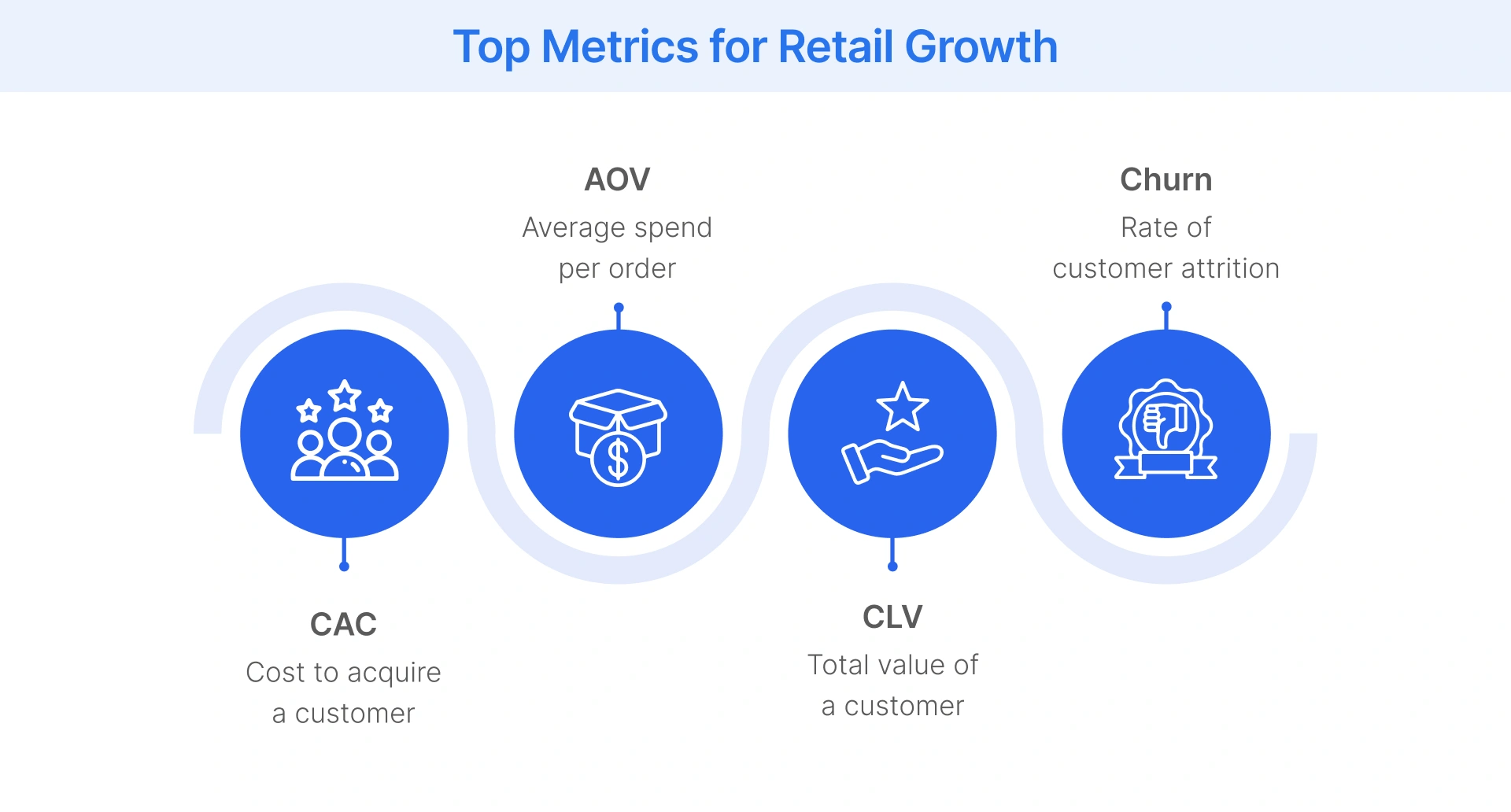
- Customer Acquisition Cost (CAC): Measures the average cost of acquiring a new customer.
- Traffic Sources: Shows where website visitors come from, such as search engines, paid advertising, social media, or direct traffic.
On Site Behavior
These metrics show how visitors interact with an ecommerce website before making a purchase.
- Average Session Duration: Measures the average amount of time visitors spend on the website.
- Bounce Rate: Shows the percentage of visitors who leave the website after viewing a single page.
- Product Views: Tracks how often products are viewed and can help retailers identify products attracting customer interest.
Conversion and Sales Metrics
These metrics help retailers measure how effectively their website turns shopper interest into purchases and sales.
- Conversion Rate: Measures the percentage of visitors who complete a desired action, such as making a purchase.
- Average Order Value (AOV): Measures the average amount customers spend in a single transaction.
- Cart Abandonment Rate: Shows the percentage of shoppers who add products to their carts but leave without completing a purchase.
Retention Metrics
These metrics help retailers understand customer value and whether shoppers continue engaging with the business after their initial purchase.
- Customer Lifetime Value (CLV): Estimates the total revenue a business can expect from a customer throughout their relationship.
- Repeat Purchase Rate: Measures the percentage of customers who return to make another purchase.
How Can You Implement Ecommerce Analytics Effectively?
Implementing ecommerce analytics effectively requires more than simply collecting large amounts of data. Retailers need to identify the business decisions they want to support, organize relevant data, and establish a consistent process for turning insights into action.
Don’t Drown in Data
Ecommerce platforms can generate large amounts of data, but tracking every available metric can make it difficult to identify what matters. Focus on the metrics that are most relevant to your business goals and use them to answer specific questions about customers, sales, and store performance.
Clean Your Data
Reliable data is essential for meaningful ecommerce analysis. Check data regularly for missing, duplicated, or inconsistent information, and ensure that important metrics are defined consistently across the systems and teams using them.
Act, Don’t Just Look
Use ecommerce analytics to identify problems and opportunities, then take action based on what the data shows. For example, a high cart abandonment rate may indicate friction in the checkout journey, while a drop in conversion rate could signal issues with pricing, product availability, or the customer experience. Regularly reviewing these changes helps retailers identify what needs attention and measure whether their actions improve performance.
Conclusion
Ecommerce analytics serves as a foundation for understanding customer behavior and evaluating the operational health of an online store. By tracking the right metrics and acting on meaningful insights, retailers can identify opportunities to improve the customer journey, optimize performance, and support sustainable growth.
For growing retail businesses, processing and making sense of large volumes of ecommerce data can be challenging. At Flipkart Commerce Cloud, we leverage data intelligence derived from billions of transactions to help businesses turn complex data into actionable insights and strategic advantages.
We provide a comprehensive suite of retail solutions designed to help businesses scale. Our advanced ML-led pricing solutions help retailers develop profitable pricing strategies while remaining competitive across their product catalog. Our Retail Media Platform also helps retailers monetize their digital assets effectively and create new opportunities for growth.
Our goal is to equip retailers with the technology they need to make informed decisions, continuously improve their operations, and compete effectively in a rapidly evolving market.

FAQ
General web analytics focuses on site traffic and page performance. It tracks hits and session times. Ecommerce analytics goes deeper by linking that behavior to commercial data. It specifically analyzes sales performance and product data. It also tracks the customer journey from discovery to purchase and retention.
One major challenge is data silos where information is trapped in different tools that do not talk to each other. Another issue is data accuracy and ensuring tracking is set up correctly. Many retailers also struggle with ‘analysis paralysis’ where they have too much data and cannot decide what to do.
Leveraging ecommerce analytics can boost revenue growth by identifying high-performing products, optimizing conversion funnels, and uncovering customer buying habits. Data-driven insights allow merchants to refine marketing campaigns, reduce cart abandonment rates, personalize recommendations, and maximize customer lifetime value, ultimately driving sustainable profitability across all digital sales channels.