
December 19, 2025
What is a Pop Up Shop? Understanding Temporary Retail
A pop-up shop is a temporary retail space that allows brands to engage customers in person, test new markets, launch products, and create limited-time shopping experiences.
Drishti, Manager - Digital Marketing

Table of Contents
- What Is a Pop-Up Store?
- What Is the Difference Between Pop-Up Shops and Traditional Retail?
- What Are the Benefits of a Pop-Up Shop?
- How Can Businesses Use Pop-Up Shops?
- What Are the Different Types of Pop-Up Shops?
- Where Should You Set Up a Pop-Up Shop?
- How Much Does a Pop-Up Shop Cost?
- What Technology Does a Pop-Up Store Need?
- Support Pop-Up Retail Operations with Flipkart Commerce Cloud
Pop-Up Shops and Their Role in Temporary Retail
Retailers do not always need a permanent storefront to create meaningful in-person shopping experiences. Temporary retail gives brands the flexibility to reach customers physically without committing to a long-term lease or maintaining a permanent location.
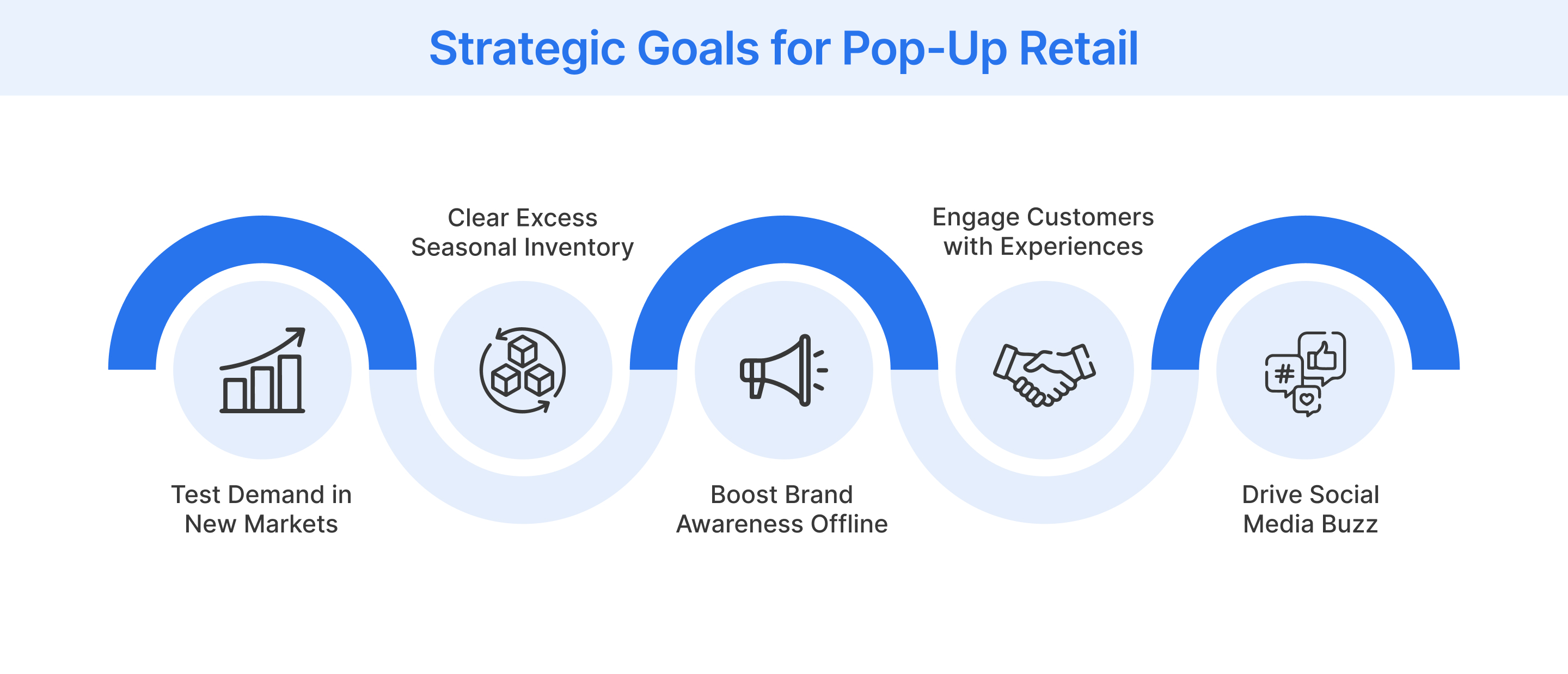
Pop-up shops make this possible by giving retailers a short-term space to launch a new product line, build brand awareness, test new markets, connect with local customers, clear selected inventory, or create limited-time brand experiences. Their temporary nature can also create urgency and attract attention around a specific campaign or retail moment.
In this article, we discuss what a pop-up shop is, how it differs from traditional retail, its benefits and common use cases, the different types of pop-up shops, where to set one up, how much it can cost, and the technology needed to run one effectively.
What is a Pop-Up Store?
A pop-up store, also known as a pop-up shop, is a temporary storefront that opens for a short period of time to sell goods. It effectively bridges the gap between digital engagement and physical shopping experiences. Brands use this agile space to build direct relationships with customers without the long-term commitment of a permanent retail location.
Here are the key characteristics of a pop-up shop:
- Temporary: These shops operate for a short duration to create a sense of urgency and excitement.
- Agile: Brands launch concepts quickly without the heavy financial commitment required for a permanent retail location.
- Experiential: The focus shifts from transactions to creating immersive moments that actively engage the target audience.
- Strategic: Retailers leverage these spaces to test new markets, conduct market research, clear inventory, and gather customer feedback and consumer data.
The 1997 Ritual Expo in Los Angeles is often cited as an early example of modern pop-up retail, showing how temporary spaces can create exclusive, experience-led shopping moments. Brands such as Kate Spade have also used pop-up stores for seasonal collections and limited-time customer experiences.
What Is the Difference Between Pop-Up Shops and Traditional Retail?
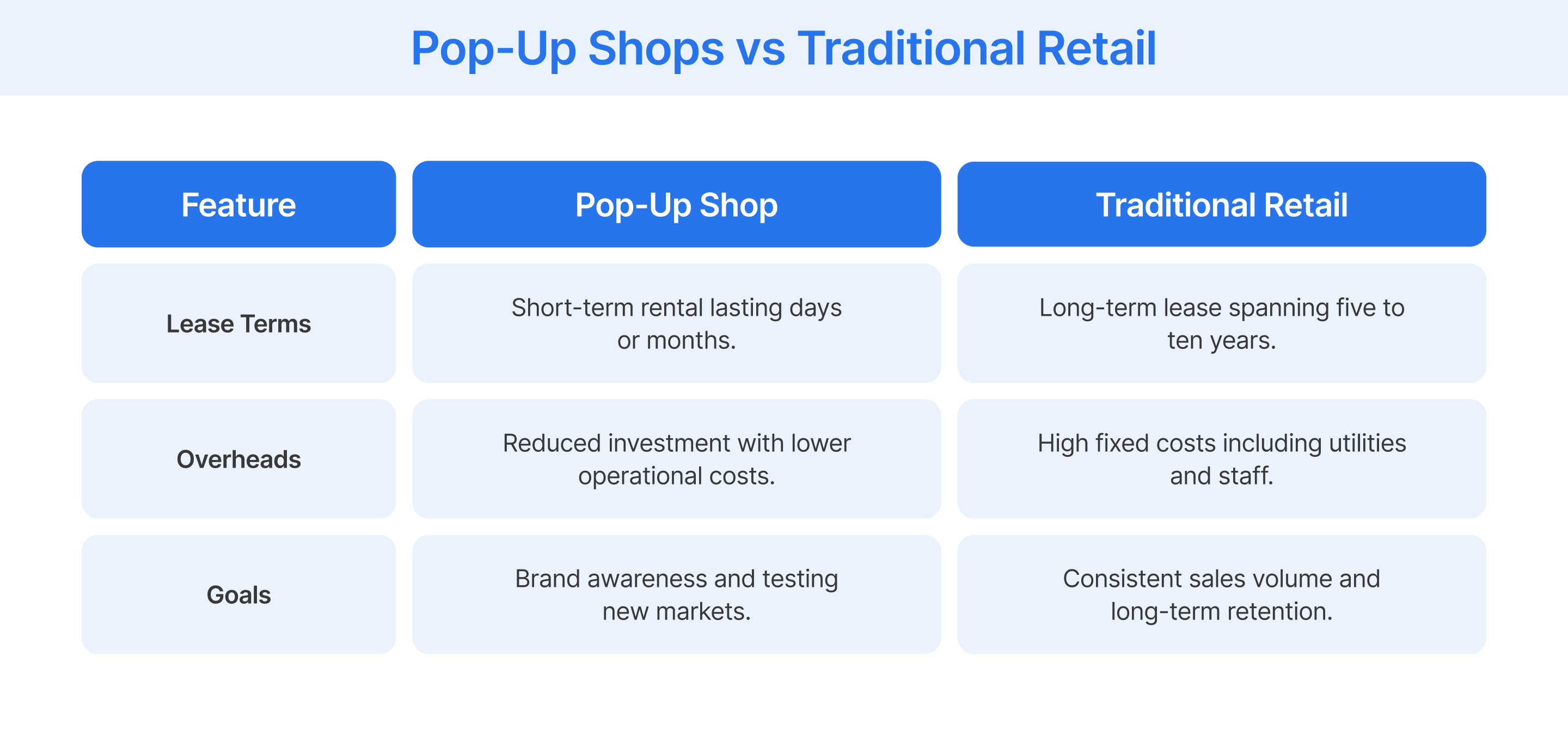
Traditional stores rely on long-term stability and consistent inventory flow to serve customers year-round. In contrast, pop-up shops are temporary and designed around flexibility, limited-time experiences, and shorter retail commitments. Understanding these differences can help retailers decide which format better suits their current goals and retail strategy.
What Are the Benefits of a Pop-up Shop
Opening a temporary store can offer growing businesses greater flexibility and reduced investment compared with maintaining a permanent retail location.
- The Scarcity Principle (FOMO): 'Limited Time Only' triggers a psychological response that drives sales. When customers know the shop will disappear soon, they feel a sense of urgency to visit immediately. This fear of missing out converts casual browsers into buyers who might otherwise delay their purchase decision.
- Experiential Value: Shoppers today crave memorable interactions over simple transactions. A physical space allows you to immerse visitors in your brand story through design or events. This experiential marketing creates a deeper emotional connection that turns new site visitors into lifelong advocates for your products.
- The ‘Discovery’ Element: Customers love the thrill of finding a hidden gem or unique item. A pop-up in a high foot-traffic area like Hudson River Park attracts people looking for novelty. This unexpected encounter introduces your brand to a new audience.
How Can Businesses Use Pop-Up Shops?
Businesses can use pop-up shops as part of a broader marketing strategy to test ideas, reach new customers, and respond to short-term retail opportunities without committing to a permanent location.
- Testing New Markets (Geographical): You can validate demand in a new city without a major commitment. If you are an online retailer eyeing New York City, setting a two-week shop in the city provides valuable data on local preferences. This approach minimizes the risk of failure associated with signing a permanent lease.
- Offloading Inventory (The Classy Liquidation): Brands often need to clear old stock to make room for a new collection. A sample sale pop-up allows you to sell these items at a discount without damaging your premium image. You frame it as an exclusive event rather than a desperate clearance effort.
- Bridging the ‘Clicks-to-Bricks’ Gap: Digital Native Vertical Brands use this format as a stepping stone to physical retail. It provides a perfect contact point for customers who know you only through social media.
- Customer Acquisition vs. Retention: Pop-ups lower your acquisition costs by attracting organic foot traffic in busy shopping centers. Unlike expensive digital ads, a physical store captures attention naturally. You engage potential customers in person and collect their emails to nurture valuable brand loyalty.
What Are the Different Types of Pop-Up Shops?
You can choose from various formats depending on your budget and specific marketing goals.
- The Seasonal Specialist: These shops appear during peak times like Black Friday or Christmas to capture holiday spending. A calendar company opening in a mall for December is a classic example.
- The ‘Store-Within-a-Store’: You rent a section inside an existing retailer to leverage their traffic. Local brands often partner with larger department stores to reach established customers and reduce overhead costs.
- The Mobile Pop-Up: A truck or bus travels to different locations to bring the product directly to consumers. This mobility allows you to hit multiple high-traffic areas or farmer’s markets in a single campaign.
- The Virtual/Metaverse Pop-Up: This digital variation creates a temporary immersive experience online for tech-savvy users. Brands use this to engage global audiences without the logistics of physical space.
Where Should You Set Up a Pop-Up Shop?
The right location can strongly influence the visibility, foot traffic, and overall success of a pop-up shop.
- High Street vs. Shopping Malls: High streets offer visibility and prestige but come with higher rents. Malls provide guaranteed foot traffic and protection from weather. Your choice depends on whether you want the hustle of streets or the convenience of a mall.
- Gallery Spaces and Event Venues: These locations offer a blank canvas for creative setups and experiential marketing. They work well for short events or product launches that require open space. You can transform them entirely to match your brand aesthetic for a few days.
- The ‘Ready-to-Rent’ Spaces: Platforms now offer turnkey solutions for finding a vacant storefront. These spaces often come with utilities and basic fixtures installed. It simplifies the process for small businesses looking to launch a shop with minimal setup time or construction.
How Much Does a Pop-Up Shop Cost?
Budgeting carefully can help retailers estimate the cost of a pop-up shop and avoid unexpected expenses.
- Fixed Costs: You must account for the primary expenses that do not change based on sales. This category includes the rent for the retail space and necessary insurance. You also need to budget for licenses or permits required to operate legally in your chosen venue.
- Variable Costs: These expenses fluctuate depending on the duration and scale of your shop. You need to pay for temporary staff and utilities for the rental period. Inventory costs also fall here as you must stock enough products to meet the anticipated demand.
- The Hidden Costs: Many retailers forget to budget for essential technical and logistical needs. You will incur charges for high-speed WiFi setup and renting POS hardware. Marketing materials and cleaning services or trash removal also add to the relevant estimated cost.
What Technology Does a Pop-Up Store Need?
Pop-up stores rely on technology to process transactions, manage inventory, and track customer activity efficiently during a limited retail period.
- Point of Sale (POS) Systems: A mobile POS allows you to process transactions anywhere in the store. It should integrate with your online inventory to keep stock levels accurate. This flexibility ensures a smooth checkout process.
- Inventory Management: Real-time tracking prevents overselling during busy periods. You need an inventory management system that syncs your physical and online stock instantly.
- Foot Traffic Analytics: Sensors or cameras track how many people enter and move through your space. This data helps you measure the effectiveness of your window displays.
Support Pop-Up Retail Operations with Flipkart Commerce Cloud
A successful pop-up shop depends on more than choosing the right location or creating an engaging customer experience. Retailers also need accurate inventory visibility and connected systems that can support temporary in-store activity alongside their existing sales channels.
At Flipkart Commerce Cloud, our Inventory Management System helps retailers synchronize inventory across channels, maintain real-time stock visibility, and reduce the risk of overselling or stockouts during periods of increased demand. Our Order Management System further supports omnichannel retail operations by helping businesses manage orders through a centralized system.
Together, these capabilities can help retailers connect temporary physical retail with their broader commerce operations, giving them better visibility and control while running pop-up stores.
FAQ
Yes, you typically need a business license and a certificate of occupancy. Specific requirements vary by city and the type of space you rent. Selling food or alcohol requires additional permits. You should check local regulations to ensure your temporary storefronts operate legally.
The duration varies significantly based on your specific goals and budget. Some brands run a shop for a day event while others stay for three months. A seasonal pop-up might last through the holidays.
You should look for areas with high foot traffic that match your target demographic. Analyze nearby competitors and complementary businesses to gauge potential. Consider the cost and condition of the retail location. Accessibility and visibility are crucial factors for driving spontaneous visits.
Yes, it generally requires a much lower level of investment than a permanent store. You avoid long-term leases and extensive renovation costs. While short-term rent can be higher per day, the total financial commitment is significantly less.
The disadvantages of operating a pop up store include unpredictable foot traffic, temporary lease constraints, and complex local permit requirements. Unlike a permanent retail space, short-term venues offer limited duration to foster recurring customer engagement, making it harder for merchants to build lasting brand loyalty compared to established storefronts.
To start a pop up shop, define your goals, set a budget, and select an ideal location for your temporary retail space. Secure necessary local permits, negotiate a short-term lease, and curate inventory while leveraging digital marketing and social media engagement to drive foot traffic and maximize your brand awareness.