
May 15, 2026
What Is Google Merchant Center?
Understand Google Merchant Center, how it manages product listings, and helps businesses appear on Google Shopping.
Drishti, Manager - Digital Marketing

Table of Contents
- What Is Google Merchant Center?
- How Does Google Merchant Center Work?
- How to Add Products to Google Merchant Center
- Best Practices for Using Google Merchant Center
- What Are the Benefits of Google Merchant Center?
- Common Challenges Businesses Face With Google Merchant Center
- Conclusion
What Is Google Merchant Center?
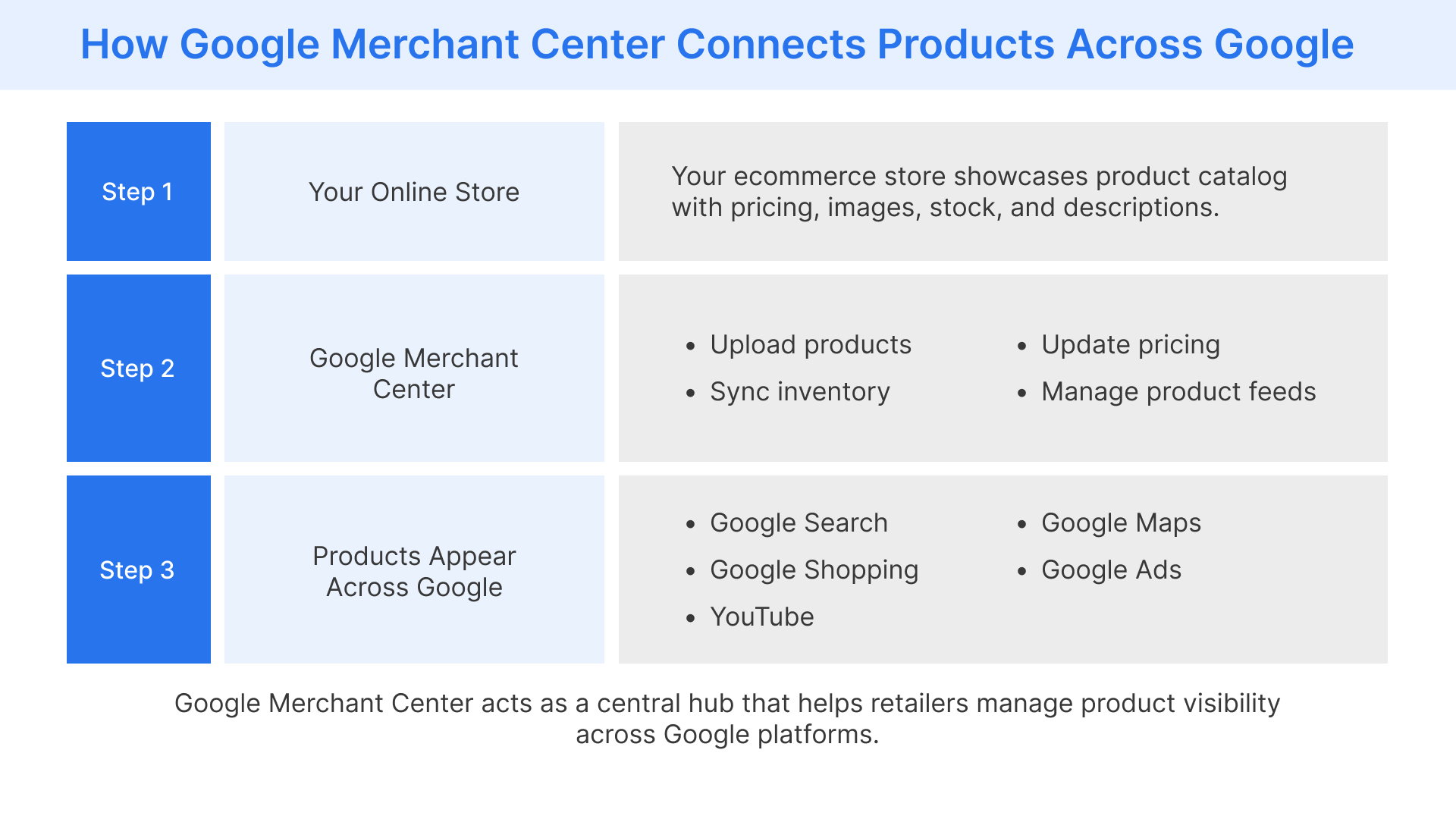
Google Merchant Center is a platform that helps businesses upload and manage product information across Google channels such as Google Search, Google Shopping, YouTube, Maps, and Google Ads.
Retailers use the platform to manage product listings, pricing, availability, images, and other product details that help shoppers discover products online. It acts as a centralized hub where merchants maintain product feeds that power Shopping Ads and free product listings across Google’s ecosystem.
For e-commerce businesses, Google Merchant Center helps improve product visibility, and attract high-intent shoppers across Google platforms. qualified traffic, and supporting digital commerce growth.
How Does Google Merchant Center Work?
Google Merchant Center works by collecting product information from a retailer’s e-commerce store and organizing it into product feeds that Google uses to display product listings and ads.
Once product data is uploaded and approved, Google can show products across its shopping and advertising platforms when users search for relevant items.
Product Data Upload and Management
Retailers upload product information such as:
- Product titles
- SKU numbers
- Pricing
- Product descriptions
- Product images
- Stock availability
- Shipping details
This information helps Google understand what products are being sold and when they should appear in search results or Shopping Ads.
How Product Feeds Sync With Google
Product feeds act as the connection between a retailer’s online store and Google Merchant Center. These feeds continuously sync updated product information from the store to Google.
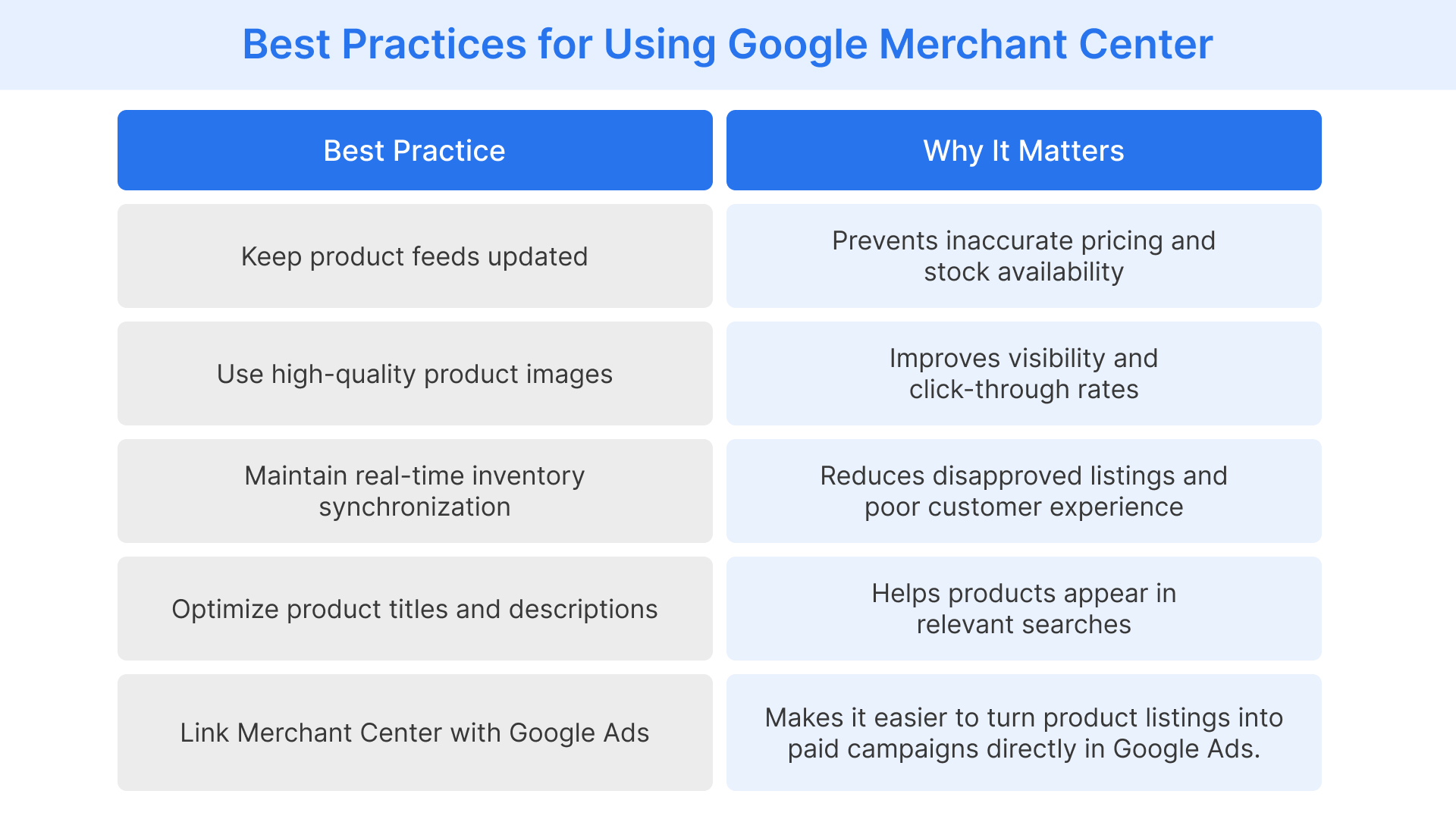
As inventory changes, pricing updates, or products go out of stock, the product feed reflects those changes automatically. This helps businesses maintain accurate listings and avoid issues caused by outdated information.
Real-time inventory visibility is especially important for retailers managing large product catalogs across multiple sales channels. Accurate synchronization helps reduce disapproved listings, improves customer experience, and prevents wasted advertising spend on unavailable products.
Retailers often use systems such as Product Information Management (PIM), Catalog Management, and Inventory Management Systems to maintain consistent product data across channels.
Integration With Google Ads
Google Merchant Center can be linked directly with Google Ads to run Shopping Ads and Performance Max campaigns.
Once connected, product feed data is used to create dynamic ads that display product images, prices, availability, and store information directly within Google search results and shopping placements.
This integration helps retailers increase visibility and drive qualified traffic to product pages.
How to Add Products to Google Merchant Center?
There are several ways businesses can add products to Google Merchant Center, depending on the size of their catalog and e-commerce setup.
- Connect Your E-commerce Store: Retailers can connect e-commerce platforms such as Shopify, WooCommerce, or Magento directly to Google Merchant Center to sync product information automatically.
- Upload Product Feeds: Businesses can upload product data manually using spreadsheets, XML files, or scheduled feed uploads. Product feeds contain structured product information required by Google.
- Use Google Sheets or Manual Uploads: Smaller businesses with limited inventories may choose to upload products individually or maintain product data through Google Sheets templates.
- Sync Products Through APIs: Larger retailers often use APIs to automate product feed management and maintain real-time updates across thousands of SKUs.
- Maintain Accurate Product Information: To keep products active and visible, retailers must regularly update pricing, availability, shipping details, and product descriptions.
Incomplete or inaccurate product data may lead to listing disapprovals or reduced visibility.
What Are the Benefits of Google Merchant Center?
Google Merchant Center helps retailers improve product discoverability and manage product visibility more effectively across Google platforms.
- Increase Product Visibility Across Google Platforms: Products can appear across Google Search, Google Shopping, YouTube, Maps, and other Google surfaces, helping businesses maintain a consistent presence across multiple channels.
- Supports Shopping Ads and Product Campaigns: Retailers can use Merchant Center data to power Shopping Ads, Performance Max campaigns, and free product listings.
- Drives Qualified Traffic: Product listings display pricing, images, and availability upfront, helping attract shoppers with stronger purchase intent.
- Provides Product Performance Insights: Businesses can monitor product visibility, clicks, impressions, and campaign performance to optimize their e-commerce strategy.
Common Challenges Businesses Face With Google Merchant Center
While Google Merchant Center offers significant benefits, businesses may face operational and technical challenges when managing product feeds at scale.
- Inaccurate Product Feeds: Outdated or inconsistent product information can lead to inaccurate listings and poor customer experience.
- Product Disapprovals: Google may disapprove products that do not meet feed requirements, policy guidelines, or image standards.
- Outdated Inventory Information: If inventory data is not updated in real time, customers may see products listed as available when they are actually out of stock.
- Feed Management Complexity: Managing large SKUs across multiple regions, channels, and campaigns can become difficult without automation tools.
- Maintaining Consistent Product Data Across Channels: Retailers must ensure that product details remain consistent across e-commerce platforms, advertising systems, and inventory databases.
Conclusion
Google Merchant Center helps retailers manage product visibility, maintain accurate product feeds, and support shopping campaigns across Google platforms.
As product catalogs grow larger and ecommerce operations become more complex, automation becomes increasingly important. Solutions like Flipkart Commerce Cloud help retailers streamline catalog management, maintain accurate inventory synchronization, reduce manual feed errors, and maximize digital commerce performance across channels.

FAQ
A Google merchant account is entirely free to use for listing your products across Google’s various surfaces, like Search, Maps, and YouTube. While the Google Merchant Center itself does not charge a subscription or listing fee, you would only incur costs if you choose to run paid advertising campaigns to boost your product visibility further.
The difference between Google Merchant Center and Google Ads lies in their core function: the Merchant Center is a digital warehouse for your product data, while Google Ads is the engine that promotes it. Essentially, you use the Merchant Center to manage your inventory and feed that information into Google Ads to create paid Shopping campaigns.
Google Merchant works exceptionally well for small businesses by leveling the playing field through free product listings. In 2026, the platform even includes a specific "small business" attribute to help local shoppers identify and support your brand. This allows smaller retailers to compete with larger chains without needing a massive advertising budget.
You generally need a website to use Google Merchant Center for online sales, as it serves as the destination for customers to complete their purchases. However, if you only sell in person, you can use the platform to list local inventory, which directs nearby shoppers to your physical shop via Google Maps and Search.
Product feeds should be updated at least once a day to ensure that your pricing and availability remain accurate for shoppers. While Google Merchant Center allows for monthly updates at a minimum, frequent syncing prevents customers from clicking on out-of-stock items, which protects your account health and improves the overall user experience.