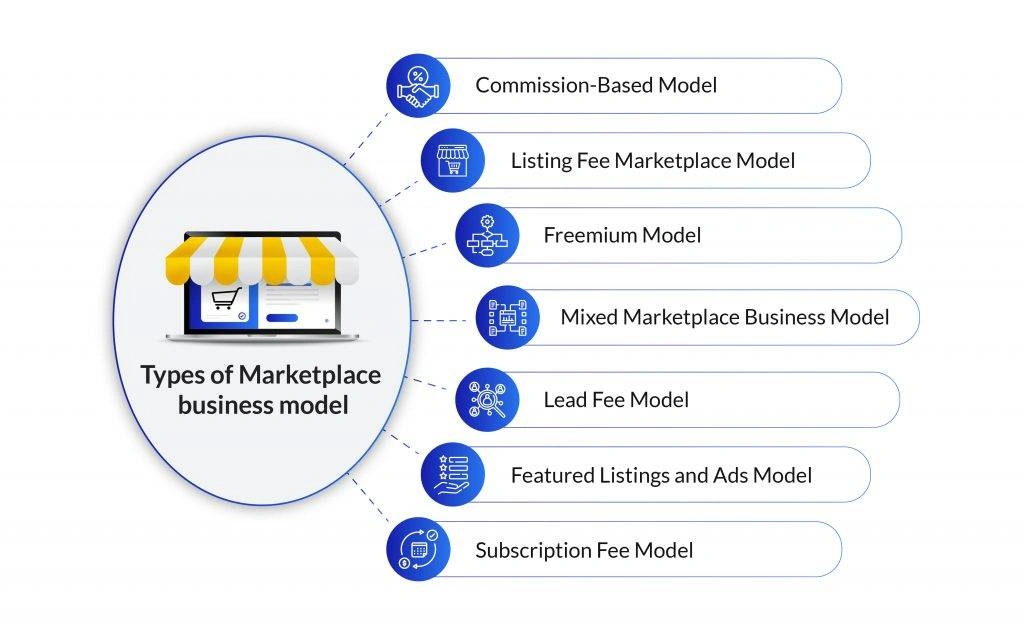
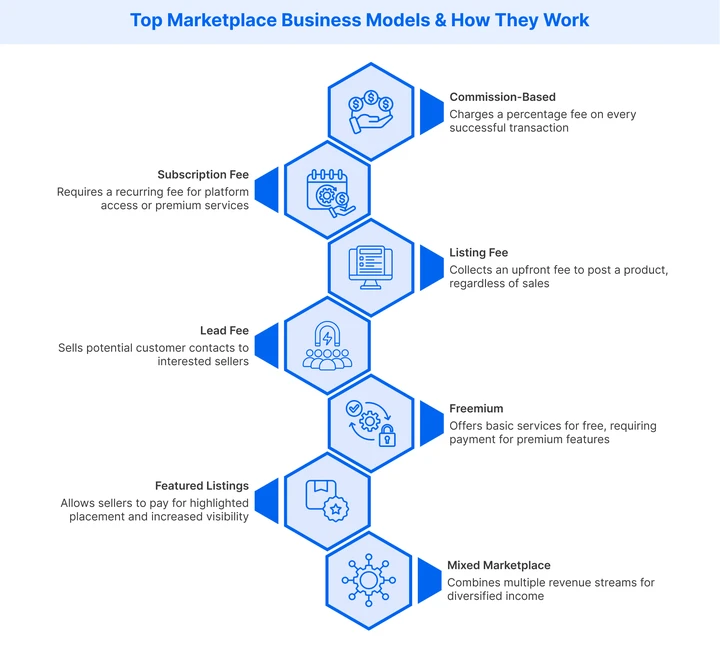
Here are some of the most popular marketplace business models for your consideration.

FAQ
The business model of a marketplace involves connecting buyers and sellers on a digital platform, where the marketplace operator facilitates transactions between the two parties. The operator typically earns revenue by charging a commission or fee on each transaction or through subscription fees from sellers. Marketplaces don't typically hold inventory but act as intermediaries that enable businesses or individuals to exchange goods or services.
The key difference between the wholesale and marketplace models lies in ownership and transaction flow. In a wholesale model, a business purchases products in bulk from manufacturers and resells them at a profit. In a marketplace model, the platform connects third-party sellers with buyers and takes a commission on each sale, without owning the inventory. Essentially, a marketplace acts as a facilitator, while a wholesaler takes ownership of products.
To choose the right marketplace for your business, consider factors such as your target audience, the marketplace’s user base, fees and commission structure, the ease of listing products, and the level of support provided. Additionally, assess the competition on the platform, its reputation, and any features that align with your business needs, such as marketing tools or integration capabilities.
The cost to start a marketplace business can vary widely depending on the complexity of the platform, its features, and whether you build it in-house or use existing marketplace software. Generally, the development of a basic online marketplace can range from $10,000 to $100,000 or more, including platform development, hosting, security, marketing, and operational costs. Additional costs include transaction processing fees, legal and regulatory compliance, and customer support.
An online marketplace business model connects buyers and sellers through a digital platform, where sellers list their products or services, and buyers can browse, compare, and purchase them. The platform owner typically earns revenue through commissions, subscription fees, or transaction fees, facilitating the exchange without holding inventory or handling fulfillment.
An online marketplace makes money primarily by charging commissions or transaction fees on each sale between buyers and sellers. Additionally, some marketplaces may charge listing fees, subscription fees for premium seller accounts, or offer advertising services to sellers wanting more visibility. Some platforms also make money through value-added services, such as payment processing or shipping options.
A marketplace business is typically a platform-based business that connects buyers and sellers, facilitating transactions without owning the goods or services being sold. It operates as an intermediary, providing the infrastructure, tools, and services needed for transactions, while earning revenue from commissions, fees, or other value-added services.
Yes, a marketplace can be profitable. The key to profitability lies in scaling the platform, driving high traffic, and attracting a large number of sellers and buyers. With a network effect, as the marketplace grows, its value increases for all participants, making it easier to generate revenue through commissions, fees, or premium services. However, profitability can take time, as marketplace businesses often require significant investment in marketing, technology, and customer acquisition before reaching sustainable revenue levels.
More Blogs
See how retailers and brands are winning with FCC
Everything About Price Skimming Strategy Explained
Read More
What is a High-Low Pricing Strategy?
Read More
Ultimate Guide To Dynamic Pricing Strategy In 2026
Read More
Retail Pricing Strategies: Winning with Promotion Pricing in Competitive Markets
Read More
Ad Tags: Enhancing Ad Serving Efficiency in Large-Scale Campaigns
Read More