In the fast-paced world of retail, pricing decisions can make or break your bottom line. Among the most challenging aspects of retail management is price control; even small price adjustments can significantly influence product demand and brand perception. This is why the most successful retailers prioritize strategic price optimization.
Modern consumers are more informed than ever, comparing prices across platforms in seconds. Meanwhile, competitors adjust their pricing in real-time, and inventory levels fluctuate constantly. In this dynamic environment, static pricing strategies leave money on the table.
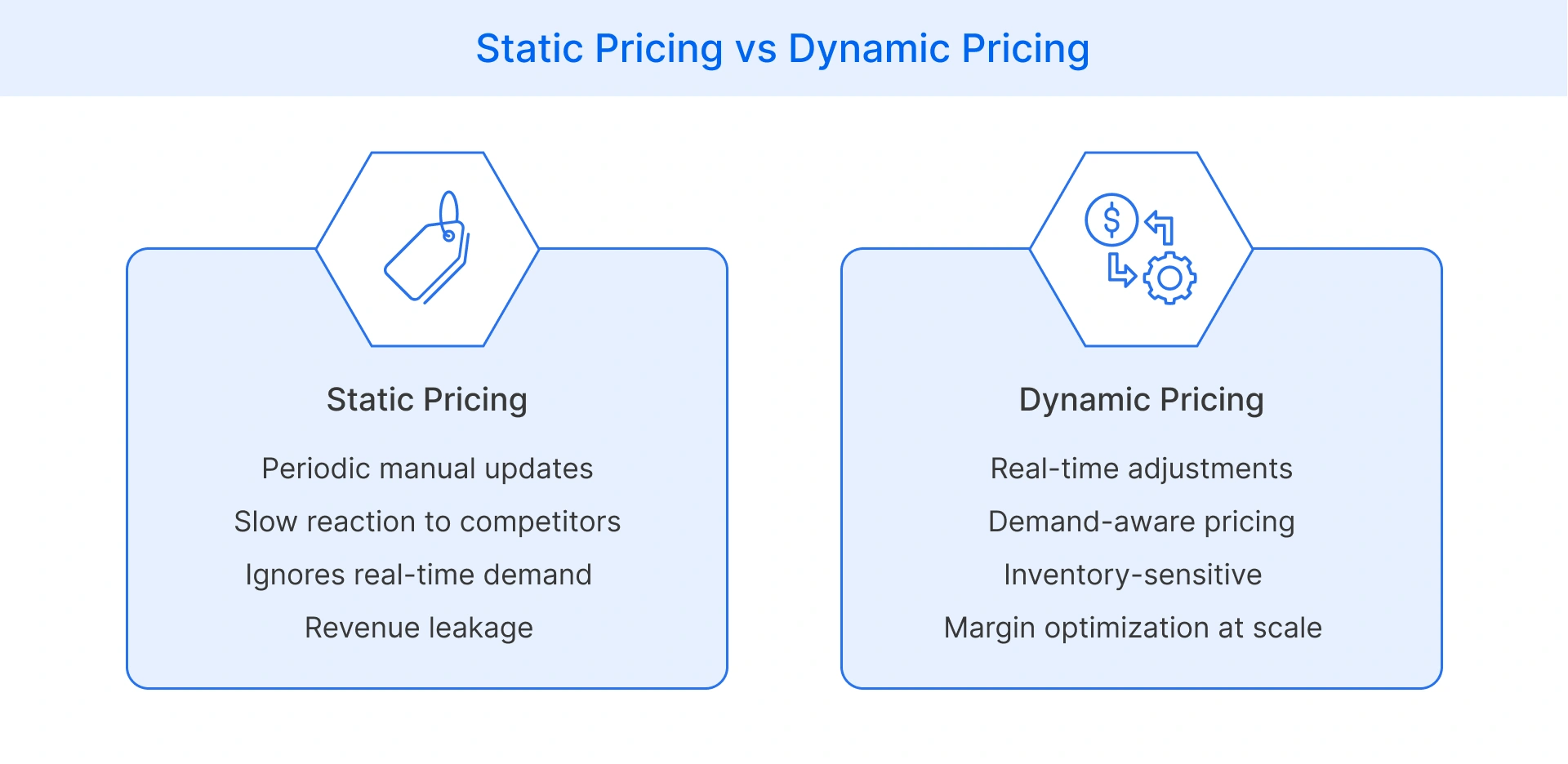
The key to effective pricing optimization is finding the perfect balance between accessibility and profitability, a balance that directly impacts revenue, customer satisfaction, net profits, and sustainable growth.
Price optimization requires deep analysis of both your customers and your brand positioning. While challenging, determining the ideal price becomes manageable with the right tools and a solid understanding of core pricing principles. This guide walks you through the essential strategies and methodologies that power successful pricing at scale.
Decoding Price Optimisation for Large Retail Platforms
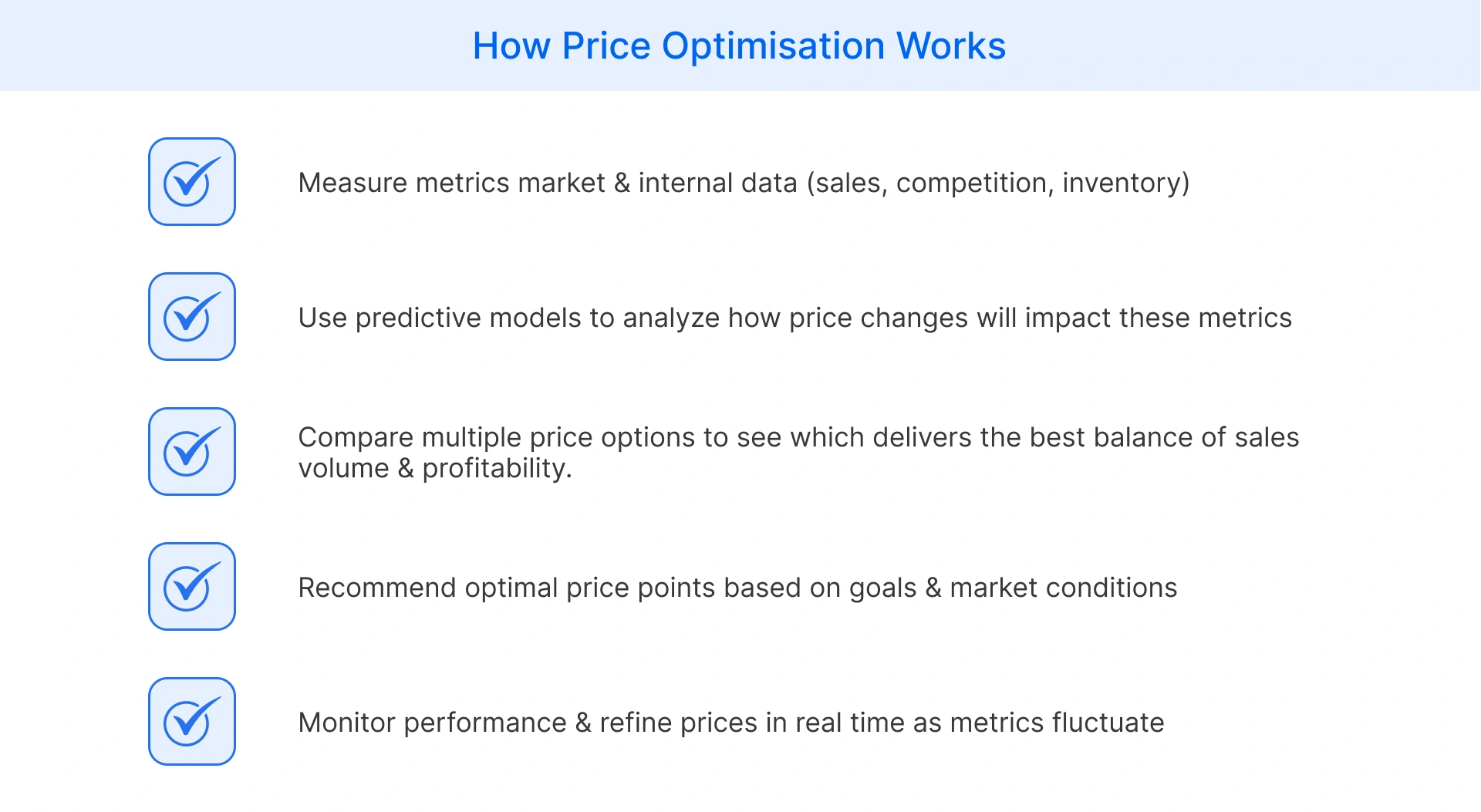
Price optimization is the technique of generating better revenue by understanding the competition’s strategy and analysing your own targets and organisational goals. The systems integrate powerful predictive modelling tools with optimizers to produce effective decision support systems. The systems integrate powerful predictive modelling tools with optimizers to produce effective decision support systems.
The system assists businesses in developing price plans and managing clearance cycles more effectively. The pricing software is intended to boost profit margins while controlling pricing fluctuations caused by rival price changes, price hikes, or deteriorating inventories. Retailers who use price optimization tools can set pricing based on previous, competitive, and consumer demand data, in addition to other quantitative considerations.
Businesses that fail to optimize their pricing risk losing out on significant topmost benefits. Price optimization can result in substantial returns on investment. The benefit comes from shifting from a standard two-tiered pricing system with regular and reduced clearance products to a multi-tiered scheme, with prices dropping solely due to sales.
The Formula For Price Elasticity Of Demand
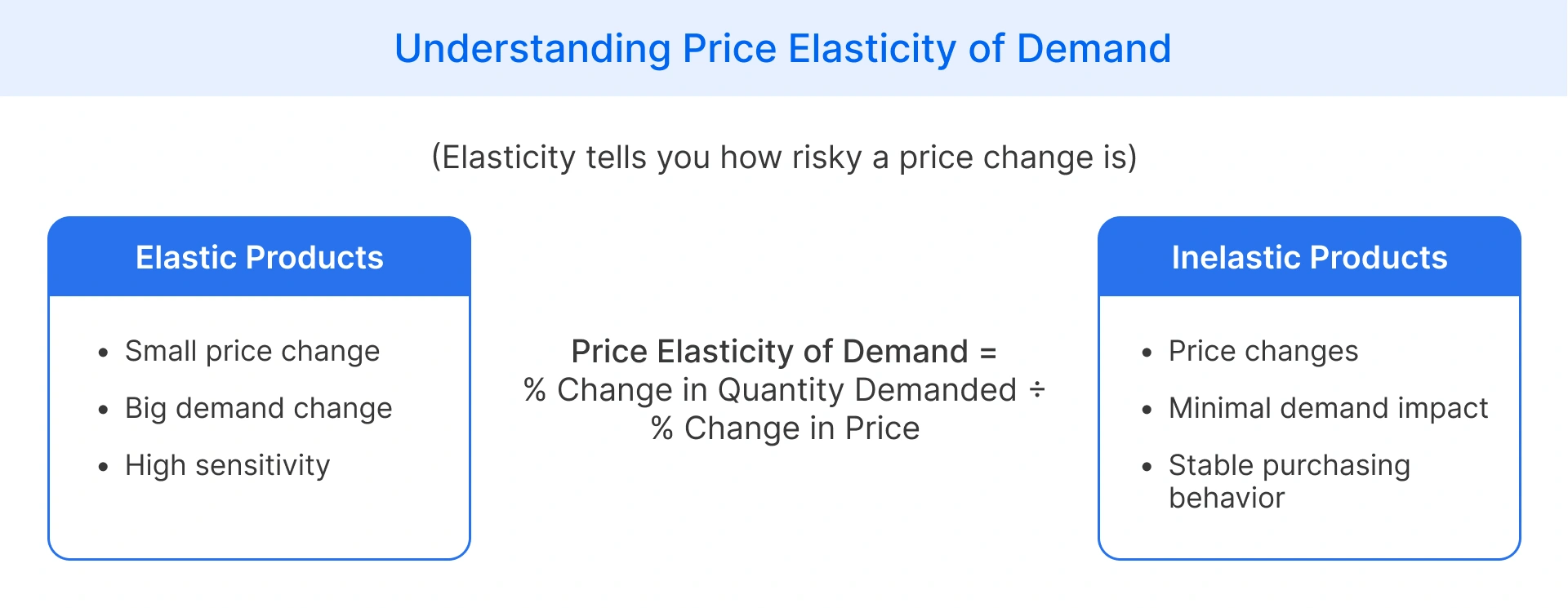
Price elasticity is a fundamental economic principle that any entrepreneur or sales expert should master. Knowing the price elasticity of your retail products is critical for successfully developing a solid pricing strategy and constructing a dynamic, successful business.
Price Elasticity of Demand = Percentage change in quantity demanded / Percentage change in price.
Price elasticity provides crucial data on how to price your products and services.
If your product’s pricing is elastic, you must be careful about boosting pricing since a price rise will seriously influence sales and supply. However, if your product is price inelastic, you can modify your pricing with less hesitation because the adjustment will have a lower influence on both demand and supply.
Since we’ve discussed how pricing elasticity affects your business, let’s dig a little further into price optimization.
How Can Retail Platforms Optimize Product Pricing?
Retailers must be aware of the critical barriers to effective deployment, which include data integrity difficulties, operational difficulties, a lack of internal synergy, a high ownership cost, and technology partner risk.
Knowing your customers is the first step in determining the proper pricing for a product or service. Let’s get a better understanding of price planning and optimization.
Start with a Phased Approach
For large retail platforms managing thousands of SKUs, begin with specific product categories or customer segments to demonstrate value before expanding across your entire catalog. Focus on high-revenue categories where you have robust historical sales data and clear competitive benchmarks. This reduces implementation risk while proving ROI before broader rollout.
Investigate The Data
Price optimization isn’t a guessing game; it requires hard facts to be done correctly. This comprises qualitative and quantitative data to determine how much people will spend on your products.
Quantitative data comprises demographics, psychographics, inventories, supply and demand, past market characteristics, sales statistics, bounce rates, product attributes, and price elasticity.
Qualitative data is also essential. Customer surveys are a fantastic place to start when gathering information, but it’s also crucial to interact with current and future customers.
Keep Track Of Your Objectives And Restrictions
Usually, organizations seeking to optimize pricing have profit-oriented aims, although profit is only one of many targets that could be met by identifying the optimal price. Customer loyalty, increasing sales, and acquiring new consumers are all feasible objectives.
Establish your objectives and restrictions to acquire a clear picture of your aim.
Align Teams and Set Guardrails
Effective collaboration between pricing teams and merchants is essential, with pricing teams leveraging AI tools for optimization while merchants maintain strategic oversight and final approval authority. Define clear business rules, including minimum margins, maximum discounts, and brand-specific pricing constraints. These guardrails are particularly critical for large platforms where automated pricing affects thousands of products simultaneously.
Understand Your Value Metric
Customers should be charged in accordance with the value they receive from your product or service. What and how you price your product becomes your value measure.
You may charge for certain functionalities, customer interactions, or server sessions if you offer software.
Choosing the appropriate value metric is critical for price optimization since it demonstrates how customers value your product and how much you can ask for the value you provide.
Set Up Price Levels
Once you’ve collected your customer data and value metric, it’s time to create price levels for your product or service. Each level should correlate to a customer group discovered via research and coincide with your value metric.
Price optimization is not something you learn once and then forget for a lifetime. It is constantly evolving and being optimized. As you add new services, expand into new areas, and gain new customers, it’s a good idea to examine your price every one to two years to determine if it’s still ideal.
Constant Price Monitoring
Build up a data collection system to ensure that your value is in line with your consumers’ demands and price expectations. If the data indicates it’s time to alter, don’t hesitate to rethink your pricing plan. Don’t alter rates too rapidly or frequently, as this might irritate existing consumers or turn off future customers.
Modern AI capabilities enable frequent performance monitoring, deviation detection, and rapid corrective adjustments to pricing strategy. Move from periodic pricing reviews to continuous monitoring with real-time alerts. For large retail platforms operating in competitive markets, this agility is crucial for responding quickly to competitor moves, inventory changes, and shifting demand patterns.
Retail Price Optimization Strategy & Model
Price Optimization Models are sophisticated algorithms that analyze the shift in demand at different price levels and correlate the outcomes with cost and stock data to construct optimal pricing and boost profits.
To facilitate successful price optimization, you must tailor your model to the business indicators you want to influence. Price optimization models that are effective also consider your clients’ psychology. Several nuanced aspects impact consumer purchasing decisions, and leveraging behaviour and psychology to drive price decisions is an excellent method to meet your customers where they are.
To implement a model effectively:
- Evaluate the functionalities, data processing, and results while choosing a modelling tool. Price trackers can reveal which value propositions customers favour and assist you in developing a customer profile for market categorization.
- Compile information such as previous pricing and promotions, competition prices, inventories, seasonal and regional factors, fixed and variable expenses, and consumer profiles.
- Set guidelines to govern the modelling process to ensure your price targets are met.
- Assemble the findings and discuss them with your pricing team. Ascertain that everyone agrees on the following measures for implementing the pricing plan.
- Analyze outcomes and accumulate new data to run the algorithm and improve price indefinitely.
Why Is Machine Learning Essential In Price Optimization?
Manual processes make price optimization at this stage challenging. Machine learning helps successful pricing optimization models by integrating massive amounts of data and many factors spanning from user-level specifics to the large picture worldwide. In addition, one of the critical advantages of machine learning-powered pricing optimization models is their capacity to adapt over time.
Since machine learning models can gain from their own accomplishments, they become increasingly adept at discovering the optimal pricing that entices participants to buy at any given time or in any particular market.
Flipkart Commerce Cloud brings together these first principles of pricing and the experience of 15+ years in retail in one tool: The Pricing Manager. Our secret sauce applies ML & Game Theory at the core of its optimisation strategy. Building a dynamic pricing engine that works with the analytics and category teams to build a bespoke and mature pricing strategy for large-scale retail platforms.
Flipkart Commerce Cloud Price Optimization at Enterprise Scale
True pricing optimization success requires integration across retail operations. Optimal pricing and promotion fulfillment depend on robust inventory management, restocking planning models, and operational tools that enable teams to execute effectively.
Today's retailers have multiple strategies to increase sales while maintaining healthy margins, all requiring sophisticated price optimization methods combining data management, computational decision-making, and expert oversight.
Large retail platforms face unique price optimization challenges that manual processes simply cannot address. Managing thousands of SKUs across multiple categories, regions, and customer segments requires technology capable of processing vast data sets while maintaining pricing consistency and strategic alignment.
Flipkart Commerce Cloud's Pricing Manager applies the exact principles outlined in this guide, combining machine learning with game theory to create dynamic price optimization models. The platform analyzes price elasticity across product categories, processes competitor pricing data in real-time, and evaluates inventory levels to recommend optimal price points that maximize profitability.
The system incorporates the complete price optimization workflow: data investigation through integrated analytics, objective-based modeling that accounts for business constraints, value metric identification across customer segments, and continuous monitoring through automated feedback loops. Built specifically for large-scale retail platforms, the technology handles the complexity of multi-tiered pricing strategies while adapting to market changes.
By automating the iterative process described in the retail price optimization model section, the platform enables pricing teams to move from quarterly reviews to dynamic, data-driven decisions that respond to market conditions as they evolve.
Book a demo to see how intelligent price optimization can transform your retail platform's profitability and competitive positioning.

FAQ
Price optimisation for large retail platforms is the data-driven process of using artificial intelligence to set the best price for thousands of products. This strategy involves advanced analytics to process vast amounts of data, including competitor pricing and inventory levels. Flipkart Commerce Cloud helps businesses find the right price to maximize revenue and margins.
Price optimisation is important for big retailers because it allows them to maintain a competitive edge in a fast-paced retail industry. By analyzing market conditions and consumer behavior, brands adapt to market changes in real time. This approach helps achieve business goals, balancing market share growth with healthy profit margins.
Machine learning improves price optimisation by using predictive analytics to identify demand patterns and forecast market dynamics. These algorithms process historical sales data to determine how different customer segments react to price points. Flipkart Commerce Cloud leverages these insights to automate pricing decisions, ensuring your product lines remain profitable in any competitive retail landscape.
The data retailers use for price optimisation includes a wide range of information like historical data, sales data, and market data. This includes tracking competitor pricing across different products and monitoring supply chain fluctuations. Effective retail pricing analytics combine these factors with customer demographics to ensure pricing strategies remain relevant to current market demand.
Price optimisation can increase customer satisfaction by providing consistent retail price points that align with customer value perception. When price optimization software targets different customer segments with fair promotional pricing, it builds long-term loyalty. Strategic retail price optimization ensures shoppers receive the best price while the brand maintains its overall brand integrity.
Some Challenges retailers face in price optimisation include managing different customer segments and reacting to sudden market changes without manual errors. Many businesses struggle with competitive pressures and siloed data analysis. Flipkart Commerce Cloud solves these issues by providing price management tools that automate complex business rules to deliver better outcomes at scale.
Yes, an example of large retail platforms successfully using price optimisation includes global e-commerce leaders who implement a retail price optimization strategy to handle millions of SKUs. By using price optimization leverages such as real-time demand tracking, these companies stay ahead. Flipkart Commerce Cloud provides the optimization software necessary to drive consistent results.
More Blogs
See how retailers and brands are winning with FCC
Everything About Price Skimming Strategy Explained
Read More
What is a High-Low Pricing Strategy?
Read More
Ultimate Guide To Dynamic Pricing Strategy In 2026
Read More
Retail Pricing Strategies: Winning with Promotion Pricing in Competitive Markets
Read More
Ad Tags: Enhancing Ad Serving Efficiency in Large-Scale Campaigns
Read More