Market alignment is not just a strategic choice in business today; it's an imperative. Your pricing should align with customer expectations and reflect current trends, or you risk being overshadowed in the highly competitive marketplace.
This is where the concept of competitive pricing comes into play, as it becomes an indispensable tool for companies seeking to get the attention of discerning consumers.
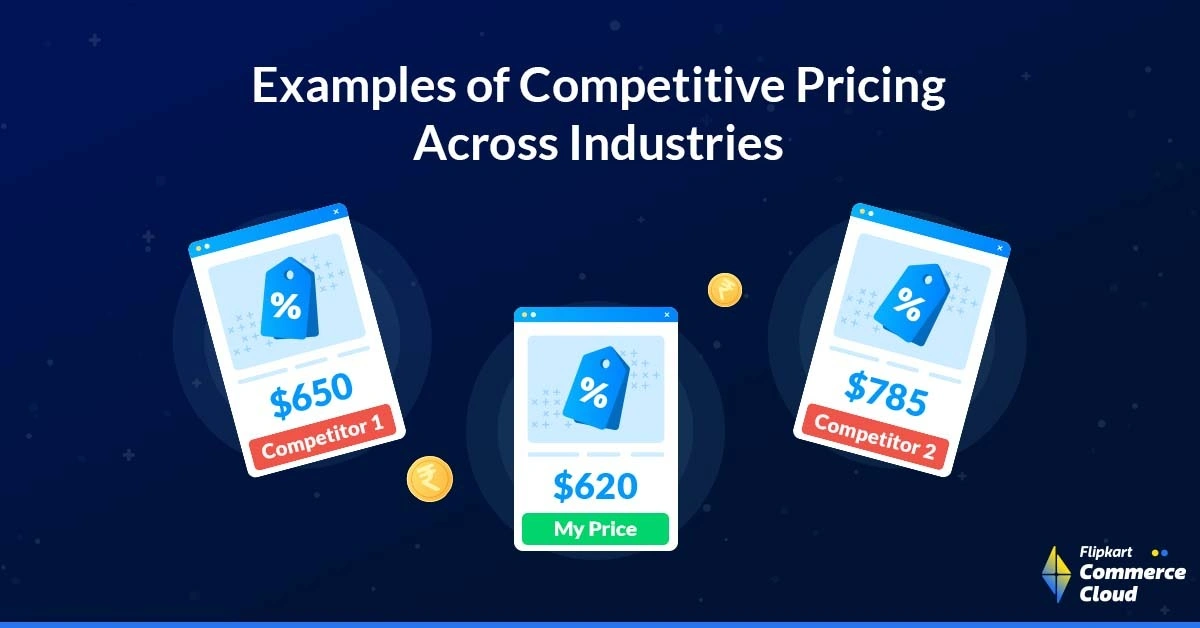
Competitive pricing examples show how the world's leading brands, from airlines and e-commerce giants to fast food chains and ride-sharing platforms, use market-aligned pricing to attract customers, protect margins, and capture market share. Unlike cost-plus pricing, competitive pricing looks outward at competitor behaviour and market conditions rather than inward at production costs alone.
In this blog, we break down real-world competitive pricing examples across six industries, show the specific tactics each brand uses, and explain what retailers and e-commerce businesses can learn from them to sharpen their own competitive pricing strategy.
What is Competitive Pricing?
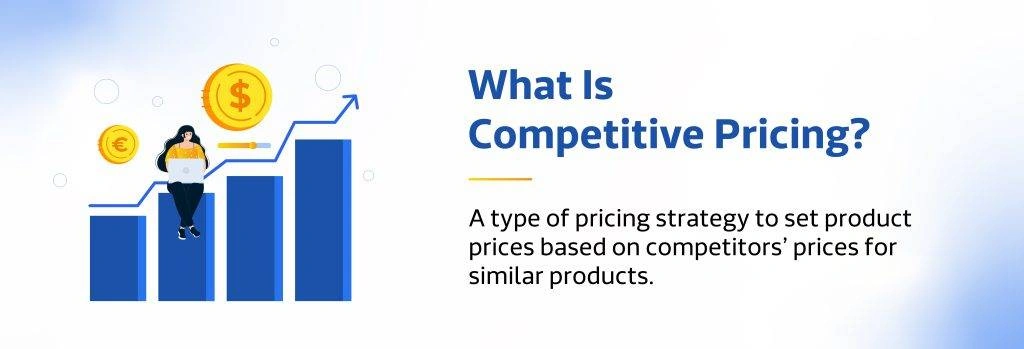
Competitive pricing is essentially a type of pricing strategy wherein a company sets the prices of its products or services in alignment with the pricing offered by its competitors for similar products. The goal is to remain competitive within the market by offering similar or superior products at the best price. Competitive pricing can take various forms, such as price matching, discounts, bundle deals, or even dynamic pricing strategies. It’s a dynamic approach that allows businesses to adapt to the ever-changing economic landscape.
Why is Competitive Pricing Important?
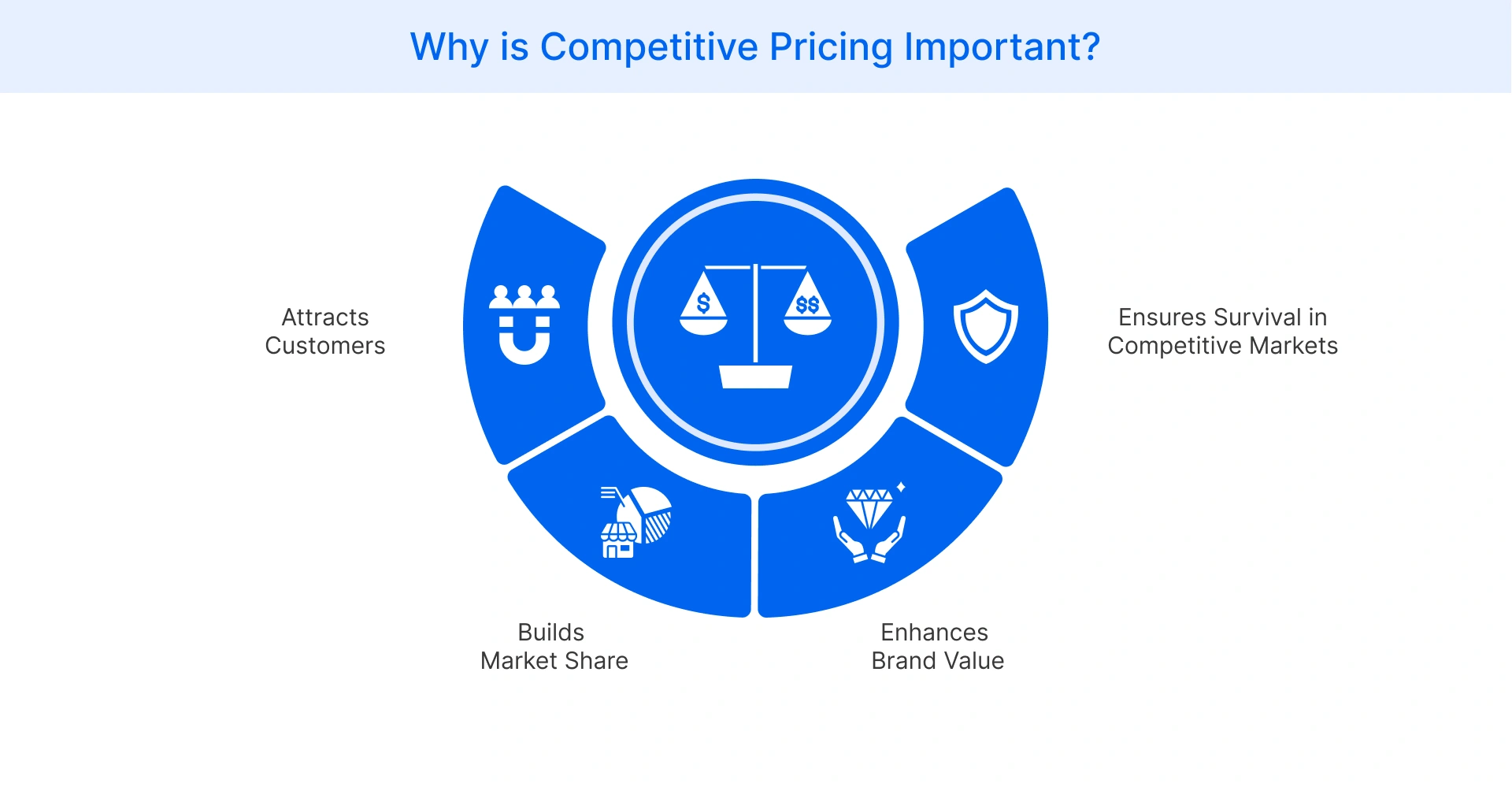
Competitive pricing holds paramount importance in the business world for several reasons:
Attracting Customers: In a market where consumers have numerous choices, competitive pricing is a powerful magnet that lures customers. Shoppers are more likely to explore and choose a brand that offers competitive prices.
Market Share: Businesses aiming to increase their market share and expand their customer base rely on competitive pricing. It can be a strategic tool to capture a larger piece of the pie.
Brand Reputation: Companies that consistently offer competitive prices build a reputation for value. This reputation can be a long-term asset that keeps customers coming back.
Surviving in Competitive Markets: In highly competitive industries, failure to adopt competitive pricing can lead to a loss of market relevance and, ultimately, business failure.
However, businesses often end up making the mistake of letting go of profits in a blind pursuit of lower prices. While competitive pricing is a powerful strategy, it must be executed thoughtfully to strike the right balance between attracting customers and maintaining healthy profit margins. Several popular brands have successfully mastered the art of competitive pricing. Let’s have a look at some of the prime examples where competitive pricing has not only attracted customers but also contributed significantly to their bottom lines. Spoiler alert— we’re not talking about Pepsi and Coca Cola!
Competitive Pricing Examples
Airline Industry
The airline industry is known for its relentless pricing wars in a highly competitive market. These wars are not just occasional skirmishes but ongoing, strategic battles that occur on various fronts. Airlines understand that pricing can make or break their competitiveness in this market, and as a result, they’ve become adept at making real-time pricing adjustments to attract travelers.
Airlines often employ several tactics to gain an edge:
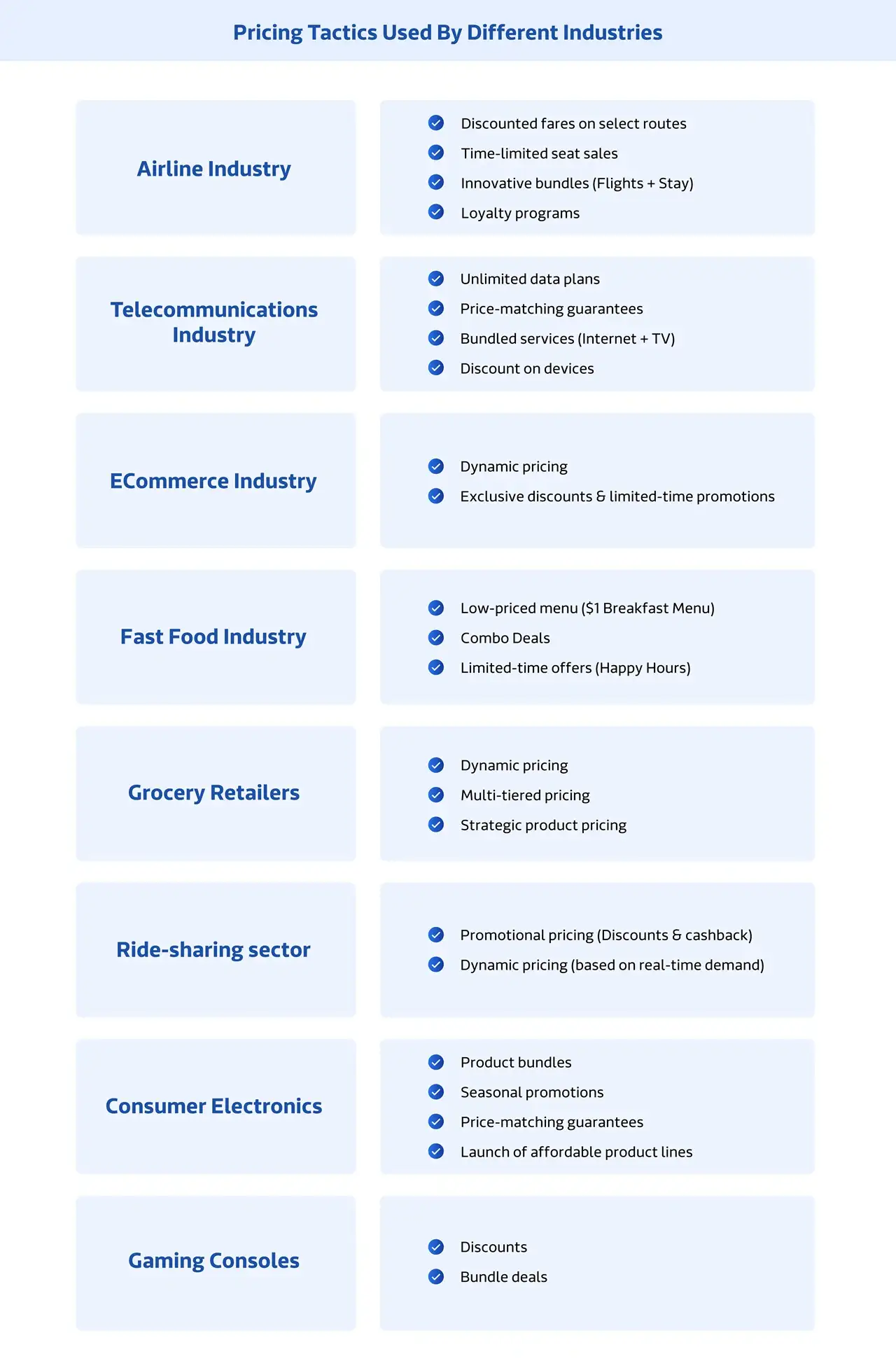
Discounted Fares: Offering discounted fares on select routes, airlines create the allure of affordable travel. For instance, a carrier might offer significantly lower fares on a specific route, compelling travelers to choose them over competitors.
Seat Sales: Frequent seat sales are a common sight in the airline industry. These time-limited promotions offer travelers the opportunity to secure seats at reduced prices, creating a sense of urgency.
Innovative Bundles: Airlines may bundle services, such as combining flights, accommodation, and car rentals, to offer travelers comprehensive packages at a higher price as a competitive advantage. This approach not only attracts cost-conscious consumers but also simplifies the travel booking process.
Loyalty Programs: To incentivize repeat business, airlines have developed loyalty programs that reward frequent travelers with points or miles, which can be redeemed for discounted or free flights.
Southwest Airlines Vs American Airlines
Southwest Airlines: Known for its customer-friendly approach, Southwest is generous in its pricing strategy. When you book a flight with Southwest, you can check your first and second bags for free, change your flight without incurring a fee, and even cancel your flight at no extra cost. They offer the option of EarlyBird Check-In for a reasonable fee, as well as upgrades to your boarding group for a modest charge. In-flight Wi-Fi is available for $8 per flight.
American Airlines: American Airlines, while a formidable competitor, often charges for these extras. Baggage fees, varying based on destination and ticket class, range from $30 to $75 for the first checked bag. The second bag carries an extra cost ranging from $40 to $100, again depending on your route and ticket class. Third bag fees are typically set at $150 or $200. Overweight and oversized bag fees vary widely based on factors like destination, ticket class, and bag weight. Same-day flight changes can cost anywhere from $75 to $150 in the main cabin. In-flight Wi-Fi, though available on some flights, generally starts at $10.
In this case, the differences in competitive pricing are crystal clear. Southwest Airlines’ approach of offering numerous free extras, including baggage, flight changes, and flight cancellations, proves to be a budget-friendly choice for travelers. American Airlines, with its additional fees for these services, can quickly become a pricier option.
These pricing strategies are not limited to domestic carriers. International airlines, such as Qatar Airways, regularly roll out enticing offers like the “Global Travel Boutique,” offering discounts on flights to popular destinations around the world. Such promotions help them compete with both local and international rivals.
Key competitive pricing takeaway: Southwest bundles value into the base fare; free bags, no change fees, making the total cost of travel lower without advertising a lower ticket price.
Must Read: 5 Reasons To Make Retail Pricing Optimization Your Focus In 2026
Telecommunications Sector
The telecommunications sector stands as a paragon of relentless competition. In the age of seamless connectivity, cellular service providers are at the forefront of this battle, constantly adapting their pricing strategies to gain an edge and capture a larger slice of the market. To secure and expand their market share, these companies engage in pricing battles that unfold in various ways:
Unlimited Data Plans: In recent years, unlimited data plans have been at the forefront of pricing battles. Major carriers like AT&T, Verizon, T-Mobile, and Sprint have competed vigorously by offering unlimited data packages with varying features and price points. This has not only led to lower prices but also greater flexibility for consumers.
Price-Matching Guarantees: Many telecommunications providers offer price-matching guarantees to attract customers. If a consumer finds a better deal with a competitor, these providers promise to match or beat the price, ensuring that consumers get the best value.
Bundled Services: Bundling services such as internet, TV, and phone packages has been another area of competition. Providers are constantly refining and expanding their bundled offerings, giving consumers more options at competitive prices.
Discounted Devices: Mobile carriers engage in pricing wars by offering substantial discounts on smartphones and other devices, especially when new models are released. This strategy aims to attract customers who are looking for cost-effective ways to upgrade their devices.
T-Mobile vs. Verizon & Sprint (Now part of T-Mobile)
In the United States, T-Mobile is known for its bold pricing strategies. Notably, T-Mobile pioneered the “Un-carrier” movement, which defied industry conventions. They bid farewell to contracts, introduced early upgrade options, and unveiled unlimited data plans to disrupt the market. This innovative approach stirred competitive responses from Verizon and Sprint (now operating as part of T-Mobile), inciting a pricing war that ultimately resulted in more affordable plans and improved offers for consumers. Sprint, for instance, introduced its “Unlimited Freedom” plan, delivering unlimited data, talk, and text at a price point lower than some of its competitors.
This innovative approach stirred a competitive response from Verizon, inciting a pricing war that ultimately resulted in more affordable plans and improved offers for consumers. T-Mobile's 2020 merger with Sprint consolidated the 'Un-carrier' strategy further, and its former rival's 'Unlimited Freedom' plan- unlimited data, talk, and text below competitor pricing is a clear historical example of competition-based pricing that influenced today's unlimited-plan norms.
Key competitive pricing takeaway: T-Mobile disrupted a fixed-pricing market by removing contracts and introducing unlimited plans, forcing the entire industry to follow, which benefited consumers.
AT&T's Bundle Deals
AT&T has shifted its competitive pricing example away from device and streaming bundles toward multi-line discounts and fiber/wireless bundling, as its DIRECTV and Max (formerly HBO Max) bundles were phased out by 2026. This shows how competitive pricing tactics evolve as media partnerships change; the underlying strategy (bundling connectivity with added value) persists even when the specific partner brand doesn't. These bundle deals represent more than just affordability; they are a gateway to a world of entertainment, offering consumers both connectivity and access to exclusive content.
ECommerce Sector
Competitive pricing is a time-tested approach for businesses in the e-commerce sector. This strategy revolves around setting prices that either match or undercut competitors while maintaining or even enhancing the perceived value of the product or service offered. It’s a delicate balance that e-commerce giants like Amazon, Walmart, and eBay have mastered. Here’s how they do it:
Real-Time Price Monitoring: E-commerce giants employ sophisticated algorithms and data analytics tools to continuously monitor their competitors’ prices. By doing so, they can promptly adjust their own prices to remain competitive.
Dynamic Pricing: The art of dynamic pricing involves adjusting prices based on various factors, such as demand, competitor prices, and even a shopper’s browsing history. E-commerce platforms can raise or lower prices on the fly to maximize revenue and market share.
Must Read: Advantages and disadvantages of dynamic pricing
Exclusive Discounts and Promotions: To set themselves apart during major sales events like Black Friday, Cyber Monday, or Prime Day, e-commerce giants offer exclusive discounts, bundle deals, and limited-time promotions. These offers create a sense of urgency among shoppers.
Amazon vs. Walmart
In the retail sector, Amazon and Walmart are synonymous with fierce competition during the holiday season. During major shopping events like Black Friday and Prime Day, Amazon and Walmart continue to engage in real-time price wars. In 2024, Amazon's Big Deal Days event prompted Walmart to launch simultaneous counter-promotions within hours, demonstrating how competitive pricing in e-commerce now operates on an almost instant response cycle. From electronics to household essentials, shoppers benefit from significant price reductions as both retailers compete to offer the best deal and capture first-mover advantage.
Key competitive pricing takeaway: Amazon and Walmart use seasonal price wars as acquisition events, accepting short-term margin pressure to drive customer acquisition and long-term loyalty.
Zalando vs. ASOS
The fashion e-commerce industry is highly competitive, with Zalando and ASOS as key players. These companies frequently engage in price wars, particularly during seasonal sales. For example, during summer and winter clearance sales, both Zalando and ASOS offer deep discounts on clothing and accessories. For example, a pair of Nike Air Force 1 sneakers might cost €100 on Zalando and £99 on ASOS. However, there are some differences in pricing between the two retailers. For example, Zalando often offers discounts on shipping, while ASOS has a wider range of products on sale.
Key competitive pricing takeaway: In fashion e-commerce, competitive pricing differentiates on shipping terms and sale depth, not just base price. Zalando wins on delivery, ASOS wins on range.
Fast Food Industry
Fast food restaurants have mastered the art of competitive pricing. By offering affordable, convenient, and quick dining options, they aim to attract a wide range of customers. Competitive pricing in this context involves setting menu prices that are not only appealing to budget-conscious diners but also provide a compelling value proposition.
The Dollar Menu Battle
McDonald’s, Burger King, and Wendy’s have engaged in a long-standing battle over their value menus. These menus typically feature items priced at or around $1, enticing customers looking for affordable dining options.
Breakfast Wars
In the fast food breakfast segment, Taco Bell, McDonald’s, and others have competed by offering low-priced breakfast items. Taco Bell, for instance, introduced its “$1 Breakfast Menu” as a response to McDonald’s “Dollar Menu at Breakfast.”
Combo Deals and Limited-Time Offers
Fast food chains often run promotions featuring combo deals and limited-time offers to attract customers. For instance, Subway offers its “$5 Footlong” promotion, while KFC introduces “Fill Up” meals at competitive prices.
Grocery Retailers
Competitive pricing is the heartbeat of the grocery retail industry. Supermarket chains invest significant efforts in devising pricing strategies that attract price-sensitive consumers. Here’s how competitive pricing is a linchpin for these retailers:
Strategic Product Pricing: Supermarkets strategically price staple items, like bread, milk, and eggs, at competitive rates to draw customers into their stores. These “loss leaders” entice shoppers while maximizing foot traffic and potential sales.
Dynamic Pricing Models: Utilizing sophisticated algorithms and data analytics, supermarkets can adjust prices in real-time based on various factors such as demand, seasonality, and competitor pricing. This ensures they remain competitive and appealing to budget-conscious shoppers.
Multi-Tiered Pricing: Supermarkets often implement multi-tiered pricing strategies, offering a range of brands and options at varying price points to cater to different segments of their customer base.
Quick Glance Table of Competitive Pricing Examples:
|
Competitive Pricing Examples |
||
|
Industry |
Brand Example |
Competitive Pricing Tactic |
|
Airlines |
Southwest vs American |
Fee-free bundling vs à la carte fees |
|
Telecom |
T-Mobile vs Verizon |
Contract removal, unlimited plans |
|
E-commerce |
Amazon vs Walmart |
Real-time price matching during sales events |
|
Fast Food |
McDonald's vs Burger King |
Dollar/value menu parity |
|
Grocery |
Aldi vs Lidl |
Loss-leader undercutting |
|
Ride-sharing |
Uber vs Lyft |
Dynamic/surge pricing |
|
Electronics |
Apple vs Samsung |
Premium anchor vs tiered pricing |
The German Grocery Discounter Battle
In Germany, the grocery retail landscape has witnessed fierce price wars, particularly involving major discount supermarket chains like Aldi and Lidl. These chains are known for their no-frills approach, providing quality products at competitive prices. Over the years, they’ve disrupted the market, prompting established retailers like Edeka and Rewe to respond with aggressive pricing strategies.
Aldi and Lidl have consistently lowered prices on popular products, forcing other supermarket chains to follow suit or risk losing market share. The price wars have expanded beyond price reductions to include investments in organic and premium products at competitive prices, appealing to a broader customer base.
Ride-sharing Sector
Competitive pricing in the ride-sharing world is more than just offering occasional discounts or deals. It’s a dynamic process driven by real-time data, algorithms, and, most importantly, competition. Here’s how ride-sharing companies use these strategies:
Dynamic Pricing: Uber, for instance, uses a pricing algorithm that adjusts fares based on real-time demand. When demand surges during rush hours or inclement weather, prices rise to encourage more drivers to get on the road. This not only maximizes revenue but also ensures riders can still find a ride when they need it.
Promotions: Companies often roll out promotional pricing to attract and retain riders. These promotions include discounts, reduced booking fees, and cashback incentives. For example, Uber offers first-time rider discounts and referral bonuses.
Incentives for Drivers: To keep drivers on the road and attract new ones, ride-sharing companies employ various incentive programs. Drivers can earn bonuses for completing a certain number of trips within a set timeframe, helping ensure a steady supply of available rides for customers.
Uber's Surge Pricing
Uber is well-known for its surge pricing during peak hours or high-demand events. For instance, during New Year’s Eve or major events, fares can increase significantly due to the surge in demand.
Lyft's Ride Discounts
Lyft frequently offers discounts to riders, especially during holidays or special occasions. For example, Lyft may provide a 20% discount on rides to and from popular New Year’s Eve celebrations.
Ongoing Promotions by Grab
Grab, a popular ride-sharing platform in Southeast Asia, offers a variety of promotions such as “50% off your next five rides” or “Free rides for first-time users” to attract new customers and encourage more rides.
Rider Promotions
Uber offers promotions like “UberPOOL” or “UberX” which come with different pricing structures. These promotions allow riders to choose the price option that best suits their budget.
Consumer Electronics
Tech companies operating in the consumer electronics sector are constantly striving to gain an edge over their rivals. One of the most effective ways to do so is through competitive pricing. By offering enticing prices on their products, these companies can capture a larger share of the market and, in turn, generate substantial revenue. Competitive pricing in consumer electronics involves several strategies, including:
Product Bundles: Offering bundled packages with multiple devices or accessories at a reduced price can make products more appealing to consumers.
Seasonal Promotions: Timely discounts, such as back-to-school sales or holiday deals, attract budget-conscious consumers.
Trade-In Programs: Encouraging customers to trade in their older devices for a discount on a new purchase stimulates sales and brand loyalty.
Price-Matching Guarantees: Matching or beating competitors’ prices helps maintain a company’s competitive edge and reputation.
Introduction of Affordable Product Lines: Launching more budget-friendly product lines allows tech companies to tap into a broader consumer base.
Gaming Consoles
In the gaming console market, Sony and Microsoft continue to use competitive pricing tactically. In 2023, Microsoft reduced the Xbox Series S to $249, a direct competitive move against Sony's PlayStation 5. Sony responded in late 2023 by cutting the PS5 disc edition price in select markets. By 2025, both platforms compete as much on subscription value, Xbox Game Pass vs PlayStation Plus, as on hardware price, shifting the competitive pricing battlefield from unit cost to ongoing service value.
Apple vs. Samsung
Apple and Samsung represent one of the most sustained competitive pricing rivalries in consumer electronics, two tech giants renowned for their smartphone offerings. Apple anchors its pricing at a premium with the iPhone 17 Pro starting around $1,099, while Samsung spreads across price tiers with the Galaxy S26 lineup starting near $800 and the Galaxy S26 Ultra around $1,300. This is a textbook example of competition-based pricing, where Samsung fragments price points to intercept shoppers at every budget Apple's single premium tier misses. Apple's trade-in programme remains a central competitive pricing tool: customers trading in older devices receive significant discounts that reduce the effective premium gap, making the upgrade feel more accessible without Apple publicly lowering its headline price.
Key competitive pricing takeaway: Apple uses premium pricing anchored by trade-in programmes to reduce the effective price gap with Samsung, maintaining margin while making upgrades feel affordable.

Competitive Intelligence: Flipkart Commerce Cloud
Competitive pricing is a dynamic and essential strategy for businesses in the long run. The competitive pricing examples above share a common thread: every brand that executes competitive pricing well does so with real-time market intelligence, not periodic manual research. The speed at which Amazon reprices, Uber adjusts surge fares, or T-Mobile responds to Verizon is only possible with continuous, automated competitor monitoring.
This is where having the right competitive intelligence infrastructure matters. Flipkart Commerce Cloud FCC's competitive pricing software gives retailers and brands the same capability without the in-house engineering investment.
Here's what sets FCC’s competitive pricing software apart:
Precision: FCC achieves over 95% accuracy in product matching, ensuring that the data you receive is precise and reliable.
Real-time Insights: With real-time data scraping and scaled crawling of over 10 million products, you'll always be in the know about competitor pricing, helping you make better strategic decisions.
Smart Segmentation: Powered by advanced ML algorithms, FCC intelligently segments products, enabling you to tailor your pricing strategies to specific customer groups.
Book a demo with FCC today to revolutionize your pricing strategy.