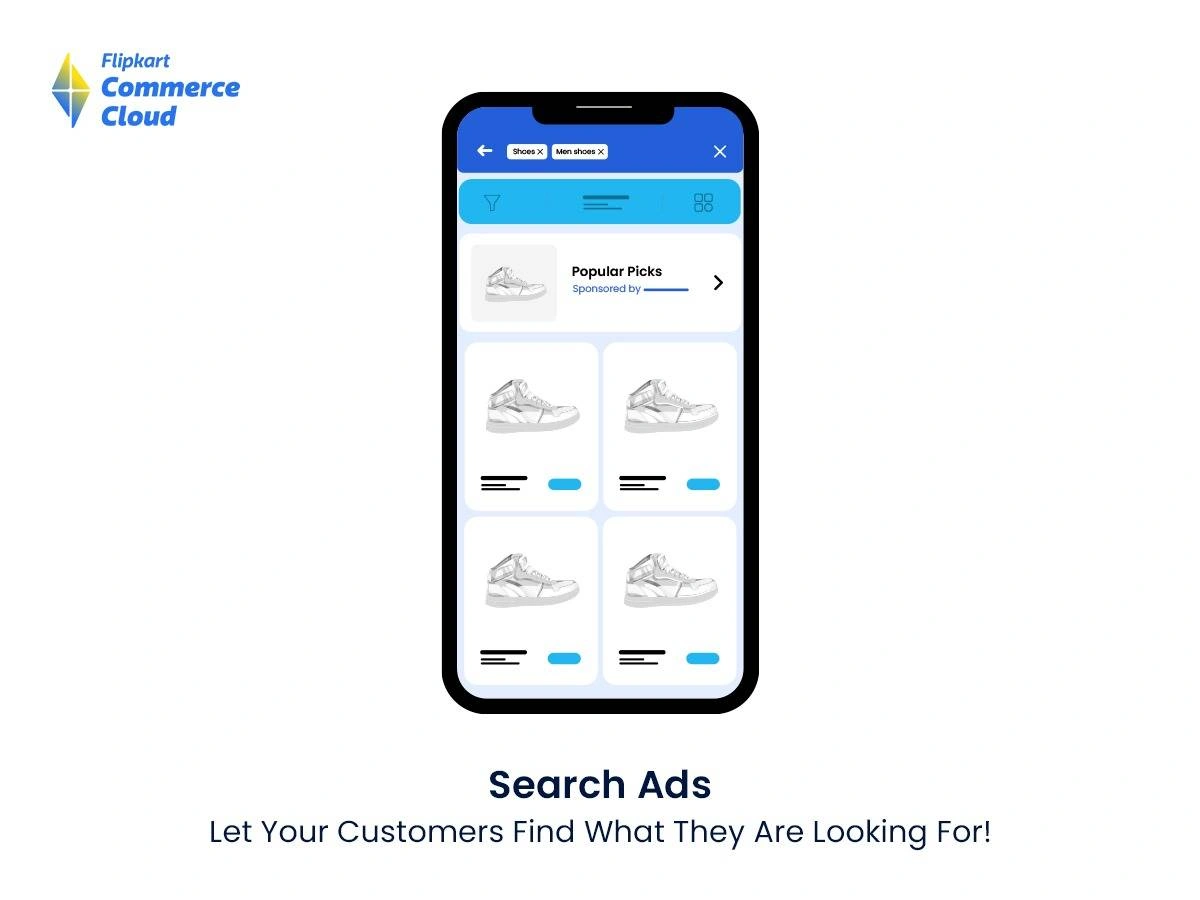
Over the past decade, digital advertising has evolved alongside e-commerce marketplaces, with ad formats moving closer to the point of purchase. While behavioral advertising has been widely used to serve relevant ads based on user behavior, increasing privacy regulations and the gradual shift toward a cookieless future are pushing brands to reconsider how they target shoppers. In this environment, contextual approaches are gaining renewed attention because they can reach high-intent shoppers without relying on third-party cookies or extensive personal data.
This article explains what contextual search is, how contextual search advertising works in an e-commerce marketplace, and why these placements can strengthen performance while supporting user privacy and brand safety.
What Is Contextual Search Advertising?
Contextual search advertising is a form of contextual targeting where ads appear based on the meaning of a shopper’s query and the content of a web page or search environment they are viewing in a marketplace. Instead of building profiles from historical browsing, contextual systems evaluate the immediate context, such as the search term, category, product attributes, and surrounding content, to determine which ad is most relevant at that moment.
Contextual search refers to targeting that responds to what a shopper is looking at right now, rather than who the shopper is believed to be based on past activity.
This differs from behavioral targeting, which uses signals like browsing history, prior purchases, and cross-site tracking (often tied to the use of cookies) to infer interests. Contextual search ads can still be highly effective because marketplace searches typically reflect strong intent. A shopper searching for “ceramic coffee mug set” or browsing “Home and Appliances” is already expressing a need, which makes context-based relevance especially powerful.
Modern contextual systems are also more sophisticated than keyword matching alone. Many platforms aim for AI-powered ecommerce search by using machine learning, artificial intelligence, and natural language processing to interpret the query and page context, including synonyms, product attributes, and category relationships. This helps contextual targeting align ads with intent even when shoppers use broad or non-technical language.
Also read: Contextual Vs Behavioral Targeting: Which one is best?
How Contextual Search Ads Work on E-Commerce Marketplaces
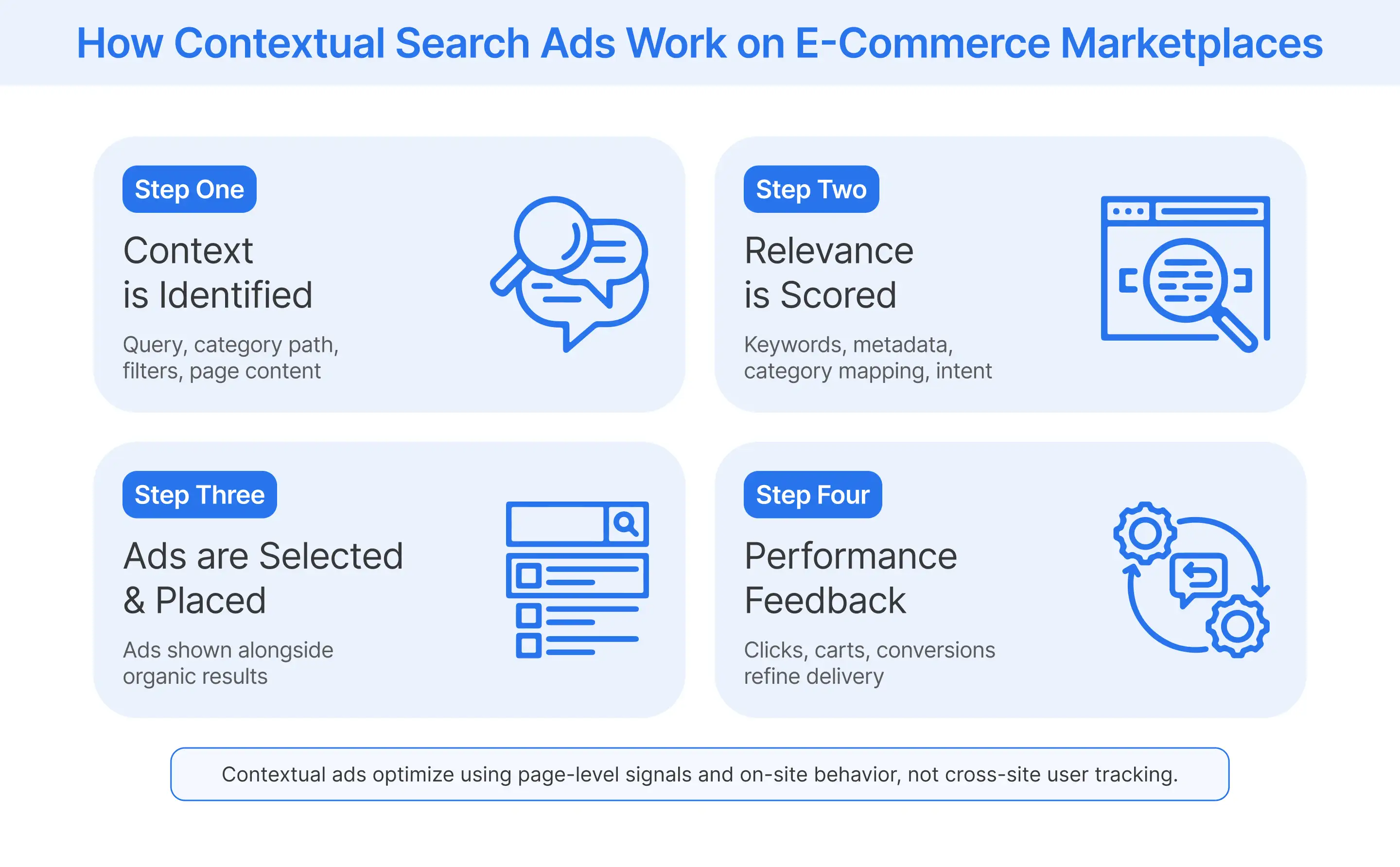
Contextual ad delivery on marketplaces typically combines query interpretation with on-site context signals, then selects the best ad candidate based on relevance and performance constraints.
At a high level, contextual search advertising works through the following steps:
-
Context is identified. The marketplace evaluates the shopper’s search terms, category path, filters, and the content of the page they are viewing. For example, a shopper may search “coffee mugs” and filter for “set of 6,” “ceramic,” and “dishwasher safe.”
-
Relevance is scored. The system matches ads to this context using product metadata, keywords, category mapping, and additional signals. More advanced systems use natural language understanding to interpret intent beyond specific keywords, which reduces overreliance on exact phrasing.
-
Ads are selected and placed. Ads may appear at multiple positions in the results page—often alongside organic listings—similar to how search results work in other environments. On marketplaces, these are frequently presented as sponsored ads placements that resemble product listings, which can improve shopper trust and user experience when relevance is high.
-
Performance feedback improves future delivery. Marketplaces continuously learn from outcomes such as clicks, add-to-cart events, and conversions. While contextual ads do not require cross-site tracking, they can still optimize based on on-site behavior and outcome data aggregated at the campaign level.
These mechanics are commonly delivered through marketplace ad systems that resemble programmatic advertising in the way inventory is auctioned and optimized. However, the key difference is that contextual delivery prioritizes the immediate page and query environment rather than persistent user profiling.
Why Contextual Search Ads Matter in a Cookieless Future
A major driver behind contextual growth is the changing privacy landscape. With stronger privacy regulations and browser-level constraints on third-party cookies, ad strategies that depend heavily on behavioral profiling are becoming more difficult to execute at scale—particularly outside logged-in environments. Contextual targeting offers an alternative that can still reach shoppers in high-intent moments without extensive reliance on personal identifiers.
This is especially relevant on e-commerce marketplaces because marketplace searches function like product-focused search engines. Shoppers use them to evaluate options, compare features, and buy quickly. Contextual search ads align closely with that behavior because they focus on the moment of intent—showing relevant products based on what the shopper is actively seeking.
Another reason contextual ads matter is trust. When shoppers feel their privacy is respected and their search results remain useful, it supports a better overall experience. Marketplace advertising that appears aligned with the shopper’s query tends to feel less intrusive than ads that appear disconnected from the immediate task.
Significance of Product Contextual Ads for Advertisers
Contextual search ads are particularly valuable for advertisers because they operate near the bottom of the funnel, where intent is typically high. In many cases, a shopper searching within a marketplace is closer to purchase than someone browsing content on the open web.
This makes contextual placements useful for a wide range of advertiser goals and product types, including:
- New product launches that need visibility in relevant search results.
- Fast-moving items that benefit from capturing high-intent demand.
- Long-tail products that are relevant to specific search contexts but may not rank organically.
- Seasonal items where timing and category relevance matter more than broad audience reach.
Importantly, contextual approaches can complement other methods rather than replace them. Many advertisers use a mix of contextual and behavioral strategies. The main difference is that contextual search ads depend primarily on query and page context, while behavioral approaches incorporate historical browsing or identity-based targeting.
For brands operating on multiple channels, contextual marketplace ads can also fit into a broader marketing strategy that includes paid search, product listing ads, and organic merchandising. The advantage is that marketplace contexts are rich with purchase intent and product discovery signals.
How Contextual Search Ads Support Marketplace Strategy
Marketplaces are uniquely positioned because they combine advertising with commerce signals, inventory visibility, and conversion tracking. When executed well, contextual ads can help advertisers coordinate performance with operational realities such as pricing, stock levels, and seasonal demand.
1) Better alignment with shopper intent at the right time
A marketplace search query is often a direct expression of intent. Contextual search advertising allows brands to show up at the right time, when a shopper is actively evaluating products in that category. This “moment-based” relevance can be more efficient than broad awareness methods, particularly when budgets need to prioritize conversion outcomes.
2) More control over relevance and customer experience
Because contextual ads are linked to the query and page environment, brands can plan campaigns around categories, attributes, and search themes. This tends to support a cleaner user experience, especially when ads match what shoppers expect to see. Poorly matched ads may feel disruptive, but well-matched contextual placements can feel like helpful suggestions.
3) Faster optimization using marketplace signals
Marketplace ad systems can optimize based on performance outcomes and shopping actions. While not all marketplaces expose “real time” reporting, many offer timely insights that help advertisers adjust bidding, product selection, and merchandising tactics. Combined with automation, advertisers can refine which products show for which contexts without relying on identity-level tracking.
4) Scalable reach without cookie dependency
Contextual search ads can deliver meaningful volume because marketplaces have large audiences and frequent high-intent searches. While behavioral strategies may offer “broad reach” across the web, marketplace contextual placements offer reach inside the shopping environment, where conversion probability is often higher.
5) Brand safety advantages
Brand safety is a core benefit of contextual approaches, especially in commerce environments. Unlike open-web display network placements—where adjacency risks can exist—marketplace search results and category pages are typically controlled environments. That makes contextual search ads a practical option for advertisers that prioritize brand safety and placement predictability.
Key Benefits of Contextual Search Advertising
Contextual search advertising delivers value on both sides of the marketplace. When relevance is high, shoppers experience smoother discovery and faster decision-making, while advertisers and platforms benefit from more efficient, privacy-resilient performance. The advantages differ by audience, but they are tightly connected through the same mechanism: intent-driven relevance.
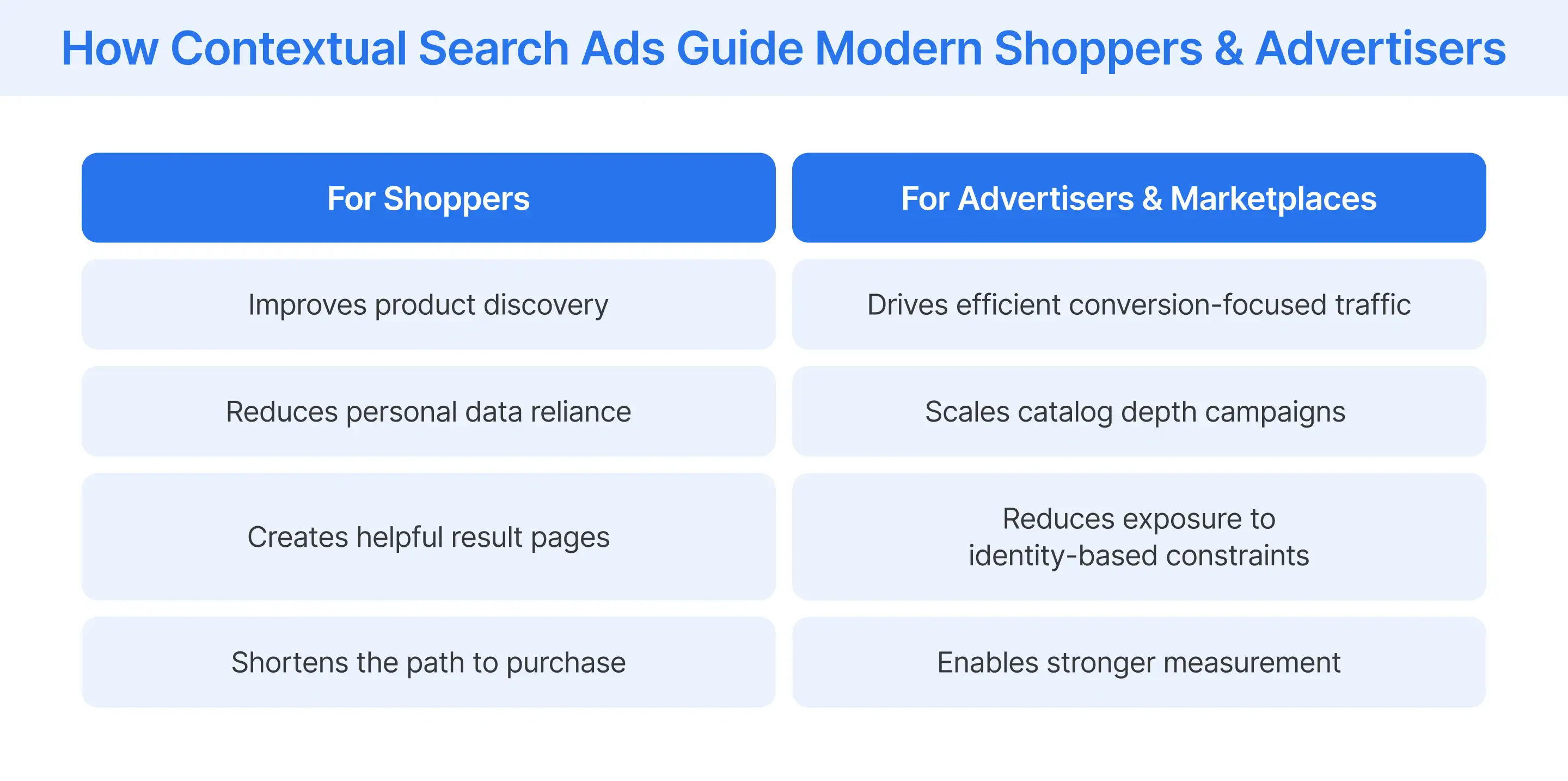
For Shoppers
-
Improved discovery of relevant products: When ads match the query and page context, customers can discover alternatives they might otherwise miss. This can be useful in categories where shoppers are comparing styles, features, sizes, or bundles.
-
Less reliance on personal data: Since contextual targeting does not require detailed profiling, it can support a privacy-conscious experience. Customers still see relevant recommendations, but relevance is driven by the content of the page and the immediate query rather than external tracking.
-
More useful results pages: Marketplaces can monetize search pages while keeping them helpful, as long as sponsored results remain relevant. When contextual relevance is high, shoppers often perceive ads as part of the search experience rather than unrelated clutter.
-
A smoother path from intent to purchase: Shoppers searching within a marketplace are often ready to act. Contextual ads can help shorten the path to purchase by surfacing the right products early, especially when product information is complete and comparable.
For Advertisers and Marketplaces
For advertisers and marketplaces. contextual search ads can contribute to both performance and long-term brand outcomes.
-
Efficient conversion-focused traffic: Marketplace search is inherently commercial. When ads align with intent, they can drive higher-quality clicks and stronger conversion rates compared to tactics that reach audiences earlier in the funnel.
-
Campaign scalability across catalog depth: Contextual approaches can work across a broad product assortment because they connect products to contexts—queries, categories, and attributes—rather than relying on narrowly defined audience segments. This makes contextual search ads particularly helpful for large catalogs.
-
Reduced exposure to identity-based constraints: As privacy norms evolve, strategies that require heavy identity resolution may become more constrained. Contextual search advertising can remain viable because it does not depend on cross-site identifiers or third-party cookie persistence.
-
Stronger measurement within marketplaces: Many marketplaces provide closed-loop measurement tied to on-site outcomes, such as sales and revenue. While reporting sophistication varies, the commerce context often makes it easier to attribute performance compared to open-web environments.
Also read: 6 Benefits of Contextual Targeting Every Marketer Should Know
Types of Contextual Advertising Commonly Used Alongside Search
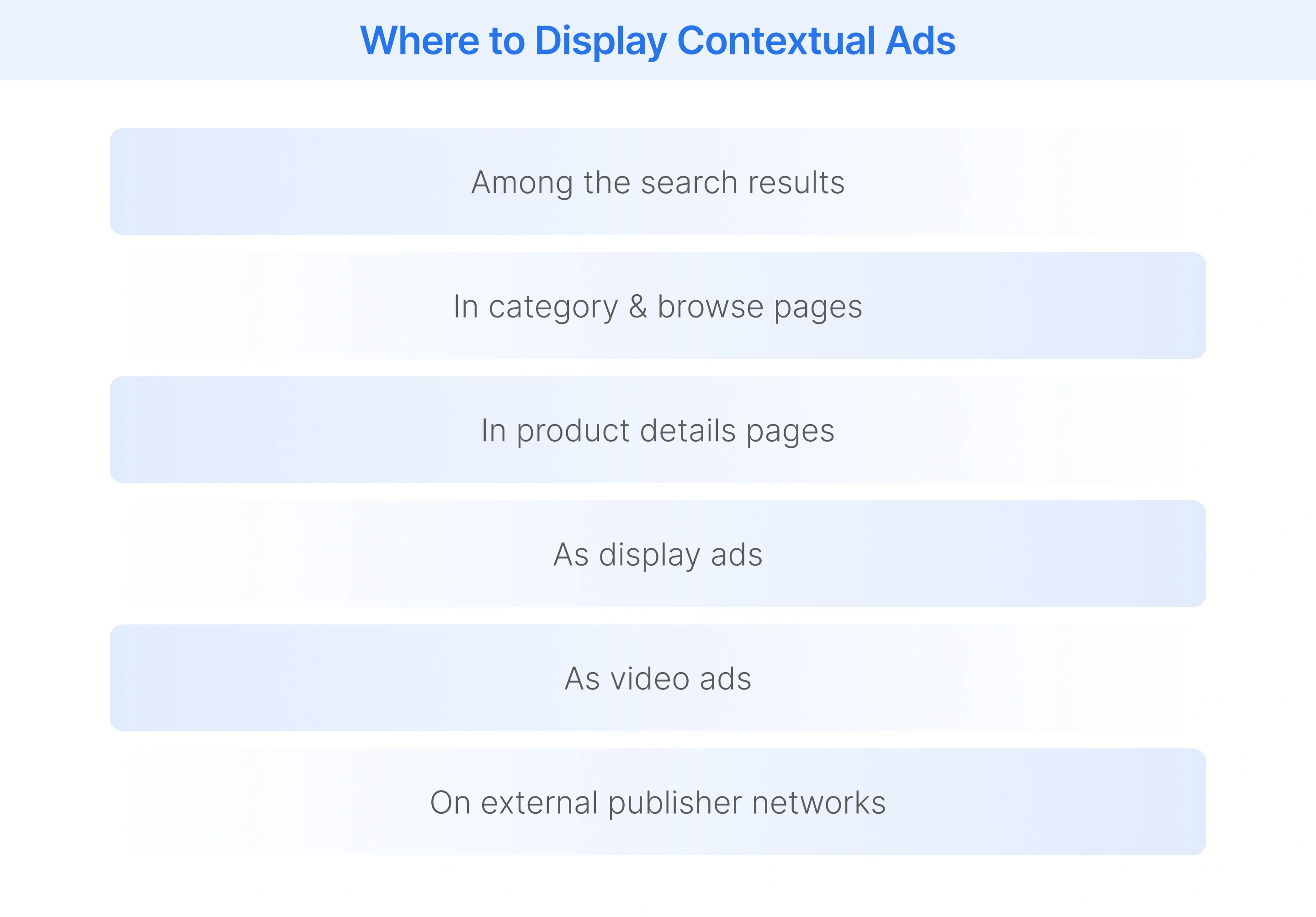
Contextual search ads are one part of a broader contextual ecosystem. Many brands also use contextual placements in other on-site locations where page content indicates intent or interest.
Contextual search ads are one part of a broader contextual ecosystem. Many brands also use contextual placements in other on-site locations where page content indicates intent or interest. These placements work best when they stay aligned with what the shopper is doing in that moment, browsing, comparing, or deciding.
Search results placements
Search results are the most direct contextual environment because the shopper’s intent is expressed in plain language. Ads shown here are typically matched to the query and refined by marketplace signals like category mapping, filters applied, and product attributes. When relevance is strong, sponsored listings can blend naturally with organic results and feel like useful options rather than distractions.
Key use cases include capturing high-intent queries, supporting launches that need visibility, and ensuring key SKUs appear in competitive search terms where organic ranking may be difficult.
Category and browse pages
Category and browse pages are contextual by design because the page itself signals what the shopper is shopping for even when they haven’t typed a specific query. Ads in these placements are typically driven by category taxonomy, navigation paths, sorting behavior, and filter selections (for example, “Home & Kitchen → Drinkware → Mugs,” filtered to “ceramic” or “sets”).
This format is especially useful for shoppers in exploration mode, where they’re narrowing choices by attributes rather than searching for a single known product.
Product detail pages
Product detail pages (PDPs) create a high-quality context because they contain rich signals: brand, price range, attributes, material, size, compatibility, and even usage scenarios. Contextual ads placed here usually appear as “sponsored related products” or “similar items,” and their effectiveness depends heavily on good attribute matching and smart adjacency rules.
This placement works well for conquesting competitors, promoting alternatives when the viewed item is out of stock, and encouraging upgrades or bundles that still align with the shopper’s immediate goal.
Display ads within marketplace environments
Display ads inside marketplaces often appear on homepages, deal pages, editorial hubs, and recommendation modules. In contextual delivery, these placements rely less on who the shopper is and more on what the page represents seasonal themes, category focus, or shopping missions like “Back to School” or “Kitchen Essentials.”
When executed well, contextual display can build awareness without feeling random, because the creative and products are tied to the surrounding page content and the shopping theme.
Video ads in context-driven placements
Video can work contextually when the platform can interpret the content of the placement and match ads to the theme or category. In marketplaces, video may appear in discovery feeds, product storytelling modules, brand stores, or category landing experiences.
Contextual video is most effective when it supports exploration, helping shoppers understand differences, see product use in action, or build confidence, while still staying aligned with the category or shopping task they’re currently in.
Contextual Advertising Beyond Marketplaces (External Networks)
Some advertisers also deploy contextual methods through external publisher networks (for example, systems historically associated with Google AdSense or the Google Display Network) that place ads based on page content rather than user tracking. While these approaches can support awareness and reach, they are typically less commerce-centric than marketplace environments. The key difference is intent: marketplace contextual ads respond to active shopping signals, whereas external contextual placements often respond to informational or editorial content. As a result, marketplace contextual advertising tends to drive clearer performance outcomes tied to commerce activity.
Also read: Best Contextual Advertising Examples and Strategies
Practical Optimization Tips for Contextual Search Ad Campaigns
Effective contextual search advertising depends on relevance, coverage, and control. The goal is to appear in the right contexts with the right products, while filtering out mismatched placements.
-
Map products to intent-based themes. Group products by the contexts where they should appear: use cases, attributes, and category needs. This helps your ads align with shopper intent without overloading campaigns with overly generic terms.
-
Use negative keywords to reduce waste. Even contextual systems benefit from guardrails. Negative keywords help ensure that ads do not appear for irrelevant searches where conversion likelihood is low or where the product would disappoint the shopper.
-
Prioritize listings and content quality. Contextual relevance is not only about targeting; it is also about what the shopper sees after the click. Strong titles, images, bullets, and attribute completeness improve conversion and support better learning for optimization systems.
-
Balance automation with oversight. Many platforms use machine learning to optimize delivery, but advertisers still need to monitor performance, category coverage, and relevance. Automated delivery is most effective when the inputs—product data, targeting structure, and exclusions—are well managed.
-
Measure outcomes beyond clicks. Contextual ads can generate clicks, but the best optimization happens when you track conversion outcomes and profitability. In marketplaces, look for reporting that links ad exposure to sales and repeat behavior, where available.
Disadvantages and Limitations to Consider
Contextual approaches are not without constraints, and understanding them helps set realistic expectations.
-
Limited personalization compared to behavioral methods. Contextual targeting focuses on the moment, not the individual. That can be a benefit for privacy, but it may reduce performance in scenarios where repeated exposure to known high-value audiences is critical.
-
Dependence on content and query interpretation. If product data is incomplete or category mapping is poor, contextual matching can be less accurate. Advanced systems using natural language processing reduce this risk, but data quality still matters.
-
Competition in high-intent contexts. Marketplace search results are valuable inventory. Popular contexts often come with higher competition and costs, so advertisers need a clear strategy for which contexts to prioritize and which products to promote.
Conclusion
Contextual search ads help shoppers find relevant products by matching advertising to immediate intent, such as search queries and the surrounding marketplace content. As privacy expectations rise and third-party cookie strategies become less reliable, contextual search advertising offers a practical, privacy-aligned way to reach customers at high-intent moments.
For marketplaces, contextual placements can monetize search and category experiences while preserving relevance and brand safety. For advertisers, the strongest results typically come from strong product data, thoughtful targeting, and careful exclusions, all focused on serving the right products to the right contexts—without depending on intrusive tracking.
If you want a resilient approach that performs well in commerce environments and aligns with the shift toward privacy-first advertising, contextual search ads are increasingly worth including as a core part of your marketplace advertising mix.

FAQ
Contextual search advertising differs from behavioural advertising because it focuses on the immediate context of the search or page (such as keywords, category, or content) instead of using historical user data like browsing history, past purchases, or third-party cookies. This makes it more privacy-friendly and easier to deploy on large marketplaces where platforms like Flipkart Commerce Cloud can rely on real-time intent instead of invasive tracking.
Contextual search advertising works by scanning the search query or page content, classifying it into topics or categories, and then matching it to relevant ads from an inventory of campaigns. In a commerce environment, a platform such as Flipkart Commerce Cloud can use product feeds, search terms, and marketplace taxonomies to automatically serve ads that align with what shoppers are currently looking for.
The main benefits of contextual search advertising for advertisers include higher relevance, better alignment with active intent, reduced reliance on third-party cookies, and simpler compliance with privacy regulations. When implemented on a marketplace through a solution like Flipkart Commerce Cloud, it can also translate into improved click-through rates, more efficient spending, and incremental sales driven at the moment of purchase intent.
Potential drawbacks of contextual search advertising include limited use of rich historical data, the risk of oversimplifying intent when queries are ambiguous, and dependence on the accuracy of the platform’s categorisation algorithms. It may also be less effective for campaigns that rely heavily on long-term user behaviour, upper-funnel brand storytelling, or highly niche audiences that are not easily captured through page or query context alone.
The difference between contextual search advertising and standard search advertising is that standard search ads are typically triggered by explicit user queries on a search engine, while contextual search ads can also be triggered by the broader context of a page, category, or on-site experience. On commerce platforms, standard search ads might show for a specific keyword, whereas contextual search ads can extend into category pages, recommendation carousels, and other placements powered by the same intent signals.
Ad networks and platforms implement contextual search advertising by using crawlers and classification models to understand page content, taxonomies to group similar topics, and matching engines to pair those topics with suitable ads in real time. Retail media platforms like Flipkart Commerce Cloud layer in product catalog data, pricing, and availability so that contextual ads not only fit the content but also promote in-stock, high-intent products.
To maximise contextual search advertising performance, advertisers should structure campaigns around clear themes or product categories, use tightly aligned keywords, and provide high-quality creatives that speak directly to the user’s current need. On platforms like Flipkart Commerce Cloud, it’s also useful to keep product feeds clean, optimise titles and attributes, and work with native bidding tools to find the right balance between visibility, ROAS, and marketplace competition.
Contextual search advertising is most appropriate for mid- to lower-funnel goals such as driving product discovery, increasing add-to-cart rates, and boosting conversions from high-intent traffic. On marketplace environments powered by Flipkart Commerce Cloud, it’s especially effective for promoting relevant assortments, cross-selling within categories, and capturing demand from shoppers who are actively searching but haven’t yet decided which brand to buy.
One real-life example of a successful contextual search advertising campaign is the British Army’s “This Is Belonging” recruitment push, where the media plan used contextual search ads so that queries about topics like Army salary or benefits triggered search ads tailored to that exact concern (for example, salary-focused copy for salary-related searches), helping convert interest into applications among 16–24-year-olds.
More Blogs
See how retailers and brands are winning with FCC

Everything About Price Skimming Strategy Explained
Read More
What is a High-Low Pricing Strategy?
Read More
Ultimate Guide To Dynamic Pricing Strategy In 2026
Read More
Retail Pricing Strategies: Winning with Promotion Pricing in Competitive Markets
Read More
Ad Tags: Enhancing Ad Serving Efficiency in Large-Scale Campaigns
Read More