
August 20, 2025
What is Behavioral Advertising?
Behavioral advertising delivers personalized marketing messages to consumers based on their past online actions and expressed interests. This approach leverages browser data to connect users with highly relevant products and services, enhancing the potential for engagement and conversion.
Drishti, Manager - Digital Marketing

Table of Contents
- What is Behavioral Advertising?
- How Does Online Behavioral Advertising Work in Retail?
- What Are the Most Effective Online Behavioral Advertising Examples in Ecommerce?
- Which Types of Behavioral Advertising Are Most Effective for Retailers?
- How Does Behavioral Advertising Differ From Contextual Advertising in Retail?
- What Benefits Does Behavioral Advertising Offer to Ecommerce Businesses?
- How Can Retailers Measure the Effectiveness of Their Behavioral Advertising Campaigns?
What is Behavioral Advertising?
Behavioral advertising is a powerful marketing tool that tailors advertisements to individual consumers by tracking and analyzing their behavior and digital footprints. It uses data on browsing history, search queries, and content engagement to present highly relevant ads within retail and e-commerce platforms.
This method aims to improve ad effectiveness by ensuring promotional content aligns directly with user preferences and potential purchasing intent at the right time. Here are the key aspects of behavioral advertising:
- Retailers track customer website navigation on a particular site to understand product preferences and shopping habits.
- Purchase history provides insights into behavioral data about consumer preferences, enabling relevant product recommendations.
- Email interactions reveal engagement patterns that inform future email campaigns and strategies.
- Users past actions help identify specific product interests and purchase intent.
- Cross-device tracking enables the creation of comprehensive user profiles, ensuring consistent online behavioral advertising experiences across devices.
How Does Online Behavioral Advertising Work in Retail?
Behavioral advertising utilizes sophisticated mechanisms to collect and process consumer data, enabling retailers to target ads with precision. E-commerce platforms leverage various technologies to understand customer behavior.
- Data Collection Methods: Retailers collect a wide range of data points, including web page visits, product views, and cart additions. This information provides insights into consumer preferences and shopping intentions.
- Tracking Technologies Utilized: Cookies and pixel tags track user navigation across various digital platforms, including mobile apps. These tools build comprehensive profiles of individual online behavior.
- Algorithmic Processing: Advanced algorithms analyze collected personal data to identify patterns and predict future consumer interests. This processing allows for intelligent audience segmentation.
- Audience Segmentation: Consumers are grouped into specific groups based on similar interests and behaviors. This enables highly targeted marketing campaigns for different purposes.
- Ad Matching and Delivery: Algorithms match segmented audiences with relevant product advertisements from your inventory. Display ads are then delivered across various online channels in real time.
What Are the Most Effective Online Behavioral Advertising Examples in Ecommerce?
This form of digital advertising is frequently used in e-commerce, providing retailers with powerful ways to engage customers. You encounter these tailored advertisements daily across various platforms.
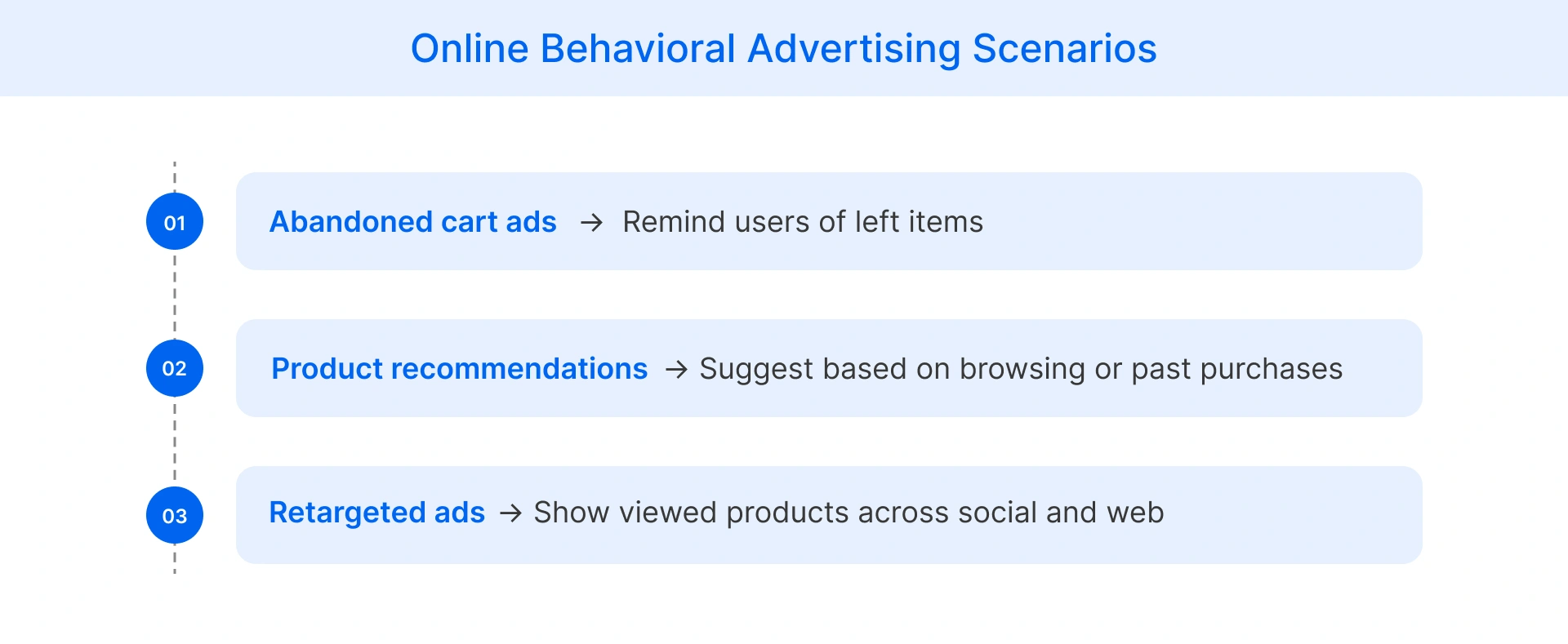
- Abandoned Cart Recovery Emails: When shoppers leave items in their online carts without completing purchases, automated email sequences featuring the abandoned products with compelling offers encourage return visits. This timely reminder often includes discount incentives or free shipping to motivate purchase completion. , especially during peak shopping seasons like Black Friday.
- Product Recommendation Carousels: Ecommerce sites implement "Customers Also Viewed" or "You Might Also Like" sections that display products based on browsing history and previous purchases. These dynamic recommendation engines analyze customer behavior patterns to suggest complementary or similar items that match individual preferences.
- Retargeted Social Media Advertisements: After viewing specific products on retail websites, consumers encounter these same items while browsing social media platforms. These precisely targeted advertisements feature previously viewed merchandise with persuasive messaging that maintains brand awareness and encourages shoppers to complete their interrupted purchase journey, enhancing the overall user experience.
Which Types of Behavioral Advertising Are Most Effective for Retailers?
Retailers leverage various behavioral targeting campaigns to reach customers at different stages of their shopping journey, each offering unique advantages for specific marketing objectives:
Retargeting/Remarketing
This method displays advertisements to users who have previously visited a retailer's website or interacted with their brand online. Retailers use it to remind consumers about products they viewed, or items left in abandoned shopping carts, thereby encouraging return visits and ultimately driving purchase completion.
Behavioral Email Marketing
Retailers can send personalized emails that are triggered by specific user actions on their website, such as viewing particular product categories or abandoning a shopping cart. These targeted messages deliver highly relevant content directly to a customer's inbox, fostering engagement and encouraging further interaction with the brand.
Product Recommendations
E-commerce platforms dynamically suggest products to customers based on their past browsing behavior, purchase history, or the preferences of similar users. This form of online advertising significantly enhances the overall shopping experience by offering highly relevant choices, leading to increased customer satisfaction and potential sales.
Audience Segmentation
This technique involves grouping users based on shared characteristics like their browsing history, purchase behavior, or demographic data. Retailers create distinct audience segments to deliver highly targeted advertisements, ensuring marketing messages resonate with specific consumer groups and improve campaign efficiency.
Onsite Behavioral Ads
These advertisements appear directly on a retailer's website, often recommending products based on the user's current browsing session or past behavior. This approach provides immediate, personalized suggestions to the shopper, similar to contextual targeting, but driven by individual user insights, enhancing their on-site experience.
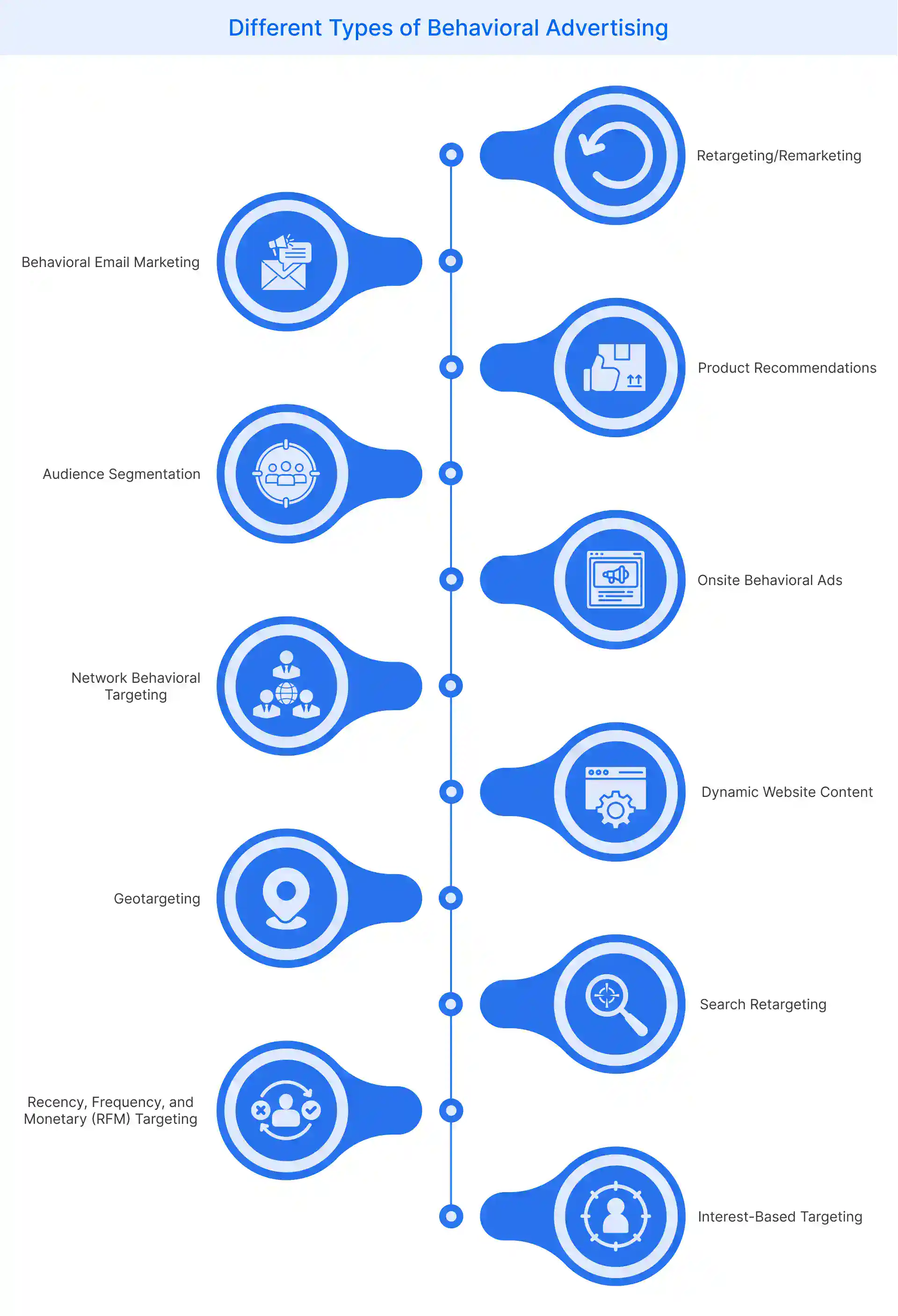
Network Behavioral Targeting
Advertisers use data collected through cookies and user login information to target users across different websites based on their observed online behavior. This allows retailers to extend their reach beyond their own site, consistently engaging potential customers with relevant ads as they browse the broader internet.
Dynamic Website Content
A website's content can be dynamically adjusted based on a user's behavior and preferences. Retailers can personalize offers, recommendations, and even layout, ensuring that the online experience feels highly customized to each individual, thereby increasing engagement and conversion rates.
Geotargeting
Advertisements are precisely targeted based on a user's geographical location, which retailers can determine through IP addresses or GPS data from mobile devices. This allows businesses to deliver localized promotions or relevant information to customers within a specific area, driving foot traffic or regional sales.
Search Retargeting
This method targets users who have previously searched for specific keywords on search engines or within a retailer's site. Retailers leverage these search queries to serve highly relevant advertisements for products or services that the user has explicitly expressed interest in, increasing conversion potential.
Recency, Frequency, and Monetary (RFM) Targeting
Retailers segment customers based on their purchase history, specifically considering when they last made a purchase (recency), how often they make purchases (frequency), and the total amount they spend (monetary value). This allows for highly tailored marketing strategies to different customer value groups.
Interest-Based Targeting
Ads are shown to users based on their expressed or inferred interests, which retailers derive from their online activity, such as websites visited or content consumed. This ensures that advertisements for products and services align directly with the consumer's established preferences, maximizing ad relevance.
How Does Behavioral Advertising Differ From Contextual Advertising in Retail?
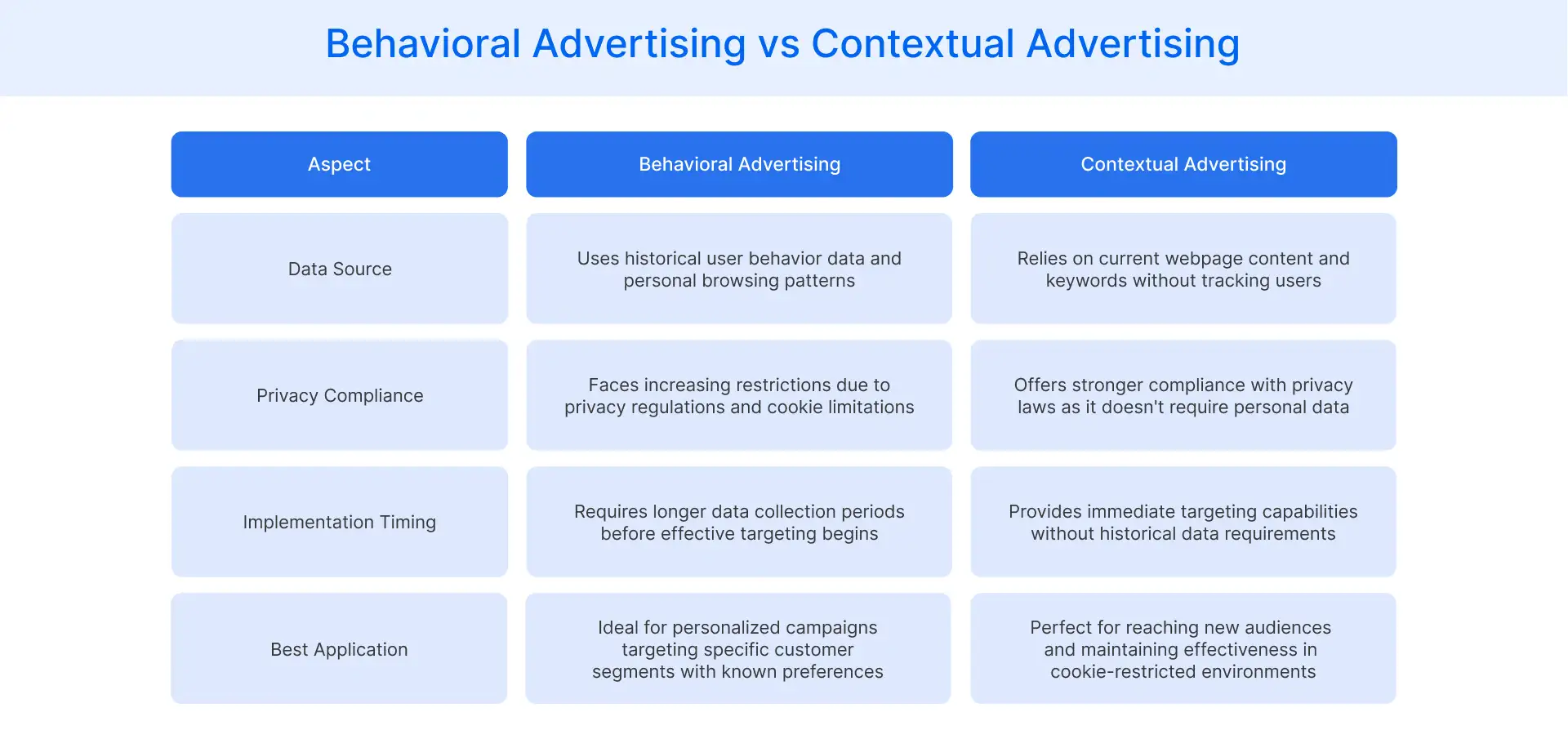
The fundamental distinction between behavioral and contextual advertising lies in their data utilization approach. While behavioral advertising analyzes user browsing history and interactions to deliver personalized content, contextual advertising matches ads to webpage content without requiring individual user data. With third-party cookies being phased out, contextual advertising provides retailers a privacy-compliant alternative that remains effective without tracking personal browsing habits.
What Benefits Does Behavioral Advertising Offer to Ecommerce Businesses?
Implementing behavioral advertising strategies provides significant advantages for e-commerce operations.
- Increased Conversion Rates: Targeting specific interests and behaviors means ads reach highly receptive audiences. This precision significantly boosts the likelihood of turning ad views into actual purchases.
- Improved Return on Investment (ROI): By showing ads only to users likely to convert, retailers reduce wasted ad spend. This efficient allocation ensures marketing budgets yield better financial returns.
- Enhanced Customer Experience: When customers see relevant products and offer, their online shopping journey improves. Personalized advertisements make their experience more intuitive and satisfying.
- More Efficient Ad Spend Allocation: Behavioral advertising allows retailers to focus resources on specific, high-value segments. This targeted approach optimizes budgets, ensuring every dollar works harder for their business.
- Stronger Customer Loyalty: Delivering personalized content shows retailers understand their customers' needs. This tailored approach builds trust and fosters stronger, long-term relationships with their brand.
How Can Retailers Measure the Effectiveness of Their Behavioral Advertising Campaigns?
Measuring behavioral advertising campaigns is crucial for optimization and demonstrating value. Retailers can employ various metrics and tools to assess performance effectively.
- Conversion Rate: This tracks the percentage of users completing desired actions after seeing ads. It indicates campaign success in driving sales.
- Click-Through Rate (CTR): This monitors how many users click ads relative to impressions. A higher CTR signifies compelling ad content.
- Return on Ad Spend (ROAS): This calculates the revenue generated for every dollar spent on advertising. The metric directly reflects campaign profitability.
- Cost Per Acquisition (CPA): This determines the average cost to acquire a new customer through campaigns. Retailers aim for a lower CPA.
- Customer Lifetime Value (CLV): This assesses the total revenue a customer generates over their relationship. Behavioral advertising often improves CLV.
- Website Engagement Metrics: This analyzes time spent on site, pages per session, and bounce rate from ad traffic. These show ad quality and user interest.
- Attribution Modeling: This helps understand which touchpoints contribute to conversions across the customer journey. It optimizes multi-channel strategies.
- A/B Testing: This compares different ad creatives, targeting parameters, or landing pages. It helps identify the most effective campaign elements.

Conclusion
Behavioral advertising helps retailers turn real customer actions into more relevant, high-converting experiences. When done right, it improves targeting, reduces wasted spend, and keeps customers engaged across their buying journey.
With Flipkart Commerce Cloud, you can turn behavioral data into actionable campaigns with better segmentation and real-time insights.
Book a demo to improve targeting accuracy, recover more revenue, and drive higher conversions across channels.

FAQ
Online behavioral advertising is a digital marketing strategy where retailers track and analyze users' online activity, including browsing history, search queries, and content engagement, to serve personalized ads across websites and platforms. Unlike broad targeting, online behavioral advertising connects specific users with products that match their demonstrated interests, improving relevance and conversion rates.
The 7 O's of consumer behaviour are Occupants (who buys), Objects (what they buy), Objectives (why they buy), Organizations (who influences the decision), Operations (how they buy), Occasions (when they buy), and Outlets (where they buy). Retailers use these behavioural dimensions to build more precise audience segments and sharper behavioral advertising strategies.
A common online behavioral advertising example is abandoned cart email recovery. When a shopper adds items to their cart but leaves without purchasing, an automated email featuring those exact products is triggered, often with a discount or free shipping offer. Flipkart Commerce Cloud's platform supports this type of personalized behavioral marketing to help retailers recover lost revenue efficiently.
Retailers must prioritize adherence to global data privacy laws like GDPR and CCPA. These regulations mandate transparent data collection, require user consent, and grant consumers rights over their personal information. Non-compliance can result in severe penalties and damage to brand reputation.
Behavioral advertising fosters loyalty by delivering personalized experiences, making customers feel understood and valued. When ads consistently offer relevant products, it enhances satisfaction. This tailored engagement encourages repeat purchases and deeper brand connection, ultimately increasing a customer's lifetime value for the retailer.
While commonly associated with B2C, behavioral advertising is also applicable in B2B e-commerce. Businesses can track professional users' online behavior, such as visits to specific product pages or whitepaper downloads. This allows for targeted advertising of relevant solutions and services to potential business clients.