
December 18, 2024
Wholesale Price Index
The Wholesale Price Index (WPI) is a key indicator of inflation, measuring overall changes in the prices of goods before they reach consumers.
Drishti, Manager - Digital Marketing

Table of Contents
- What is a Wholesale Price Index (WPI)?
- What is the Wholesale Price Index WPI formula?
- Why is WPI important?
- How a Wholesale Price Index Works?
- What Are the Pros and Cons of the Price Index?
- Conclusion
What is a Wholesale Price Index (WPI)?
The Wholesale Price Index (WPI) is a key economic indicator that measures the average change in prices of goods sold by producers to wholesalers. It is typically expressed as a percentage or ratio calculated by comparing the index at the start and end of a given cycle.
This index is particularly important as it measures price changes at various stages before goods reach the retail level. It’s widely regarded as a primary indicator of a country’s inflation level. Understanding WPI can help retailers make informed decisions about pricing and inventory management.
What is the Wholesale Price Index WPI formula?
Here is the formula to calculate WPI:
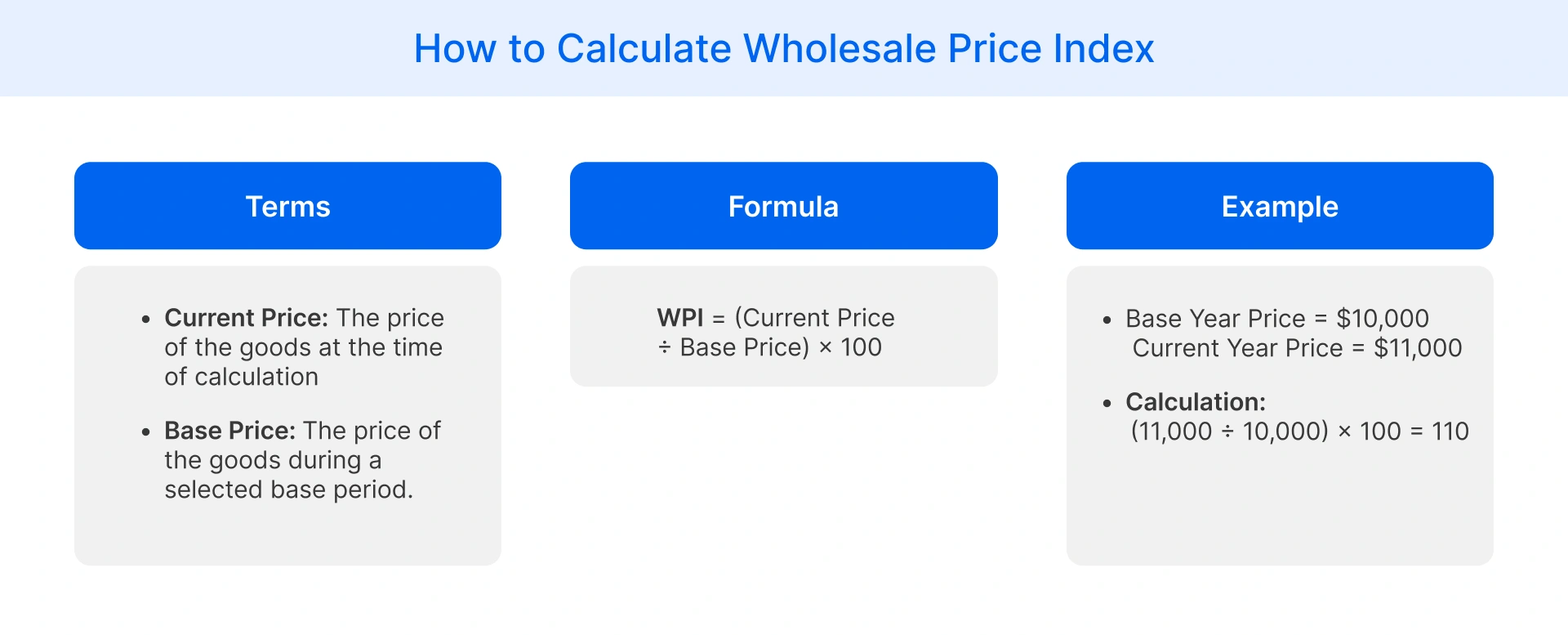
Wholesale Price Index = (Current Price / Base Price) × 100 Here,
Current Price: This is the price of the goods at the time of calculation.
Base Price: This is the price of the goods during a selected base period.
The WPI is calculated by comparing the current price with the base period price and then multiplying it by 100. This gives a percentage that represents the inflation rate.
Why is WPI Important?
Here are the essential aspects of WPI that make it an important metric for effective business management:
- Predicting Cost Trends: WPI offers insights into potential product price fluctuations before they reach retail shelves. This can help you anticipate cost changes and adjust your pricing and inventory strategies accordingly.
- Inventory Management: By monitoring WPI, you can make informed decisions about stock levels. Rising WPI might indicate future price increases, requiring you to adjust inventory to avoid losses.
- Negotiation Power: Knowledge of WPI trends can strengthen your negotiating position with suppliers. By understanding market price movements, you can secure better deals and improve profit margins.
- Financial Planning: WPI data aids in financial planning. You can estimate future expenses, pricing strategies, and profit projections based on anticipated wholesale price changes.
- Risk Management: WPI helps identify potential risks such as inflation or deflation. You can create strategies to manage these risks and protect your business.
How Does a Wholesale Price Index Work?
Understanding the functioning of the WPI is vital to know its impact on your retail business. The WPI is reported monthly, reflecting the average price changes of selected products. It compares the total cost of these products in a given year with their total cost in a base year, with the result expressed as a percentage change.
Let’s consider an example. Suppose January 2016 is your base year, and the total price of products in that year is $10,000. If the total price in August 2024 is $11,000, the WPI for 2024, based on 2016, is 110. This indicates a 10 percent increase in prices.
The WPI takes into account the prices of commodities, though the specific products included can differ across countries like the United States, United Kingdom and India. Every product is subject to price change, and the WPI reflects these changes to provide a snapshot of the current economy. When calculating the WPI, commodities at various stages of production are included, meaning some goods may be counted multiple times.
What Are the Pros and Cons of the Price Index?
The WPI is a key economic indicator that can offer valuable insights for your retail business. Let’s analyse its key benefits and challenges:
Benefits of WPI
- Economic Health Check: The WPI provides an estimate of inflation at the wholesale transaction level. This allows you to objectively assess the health of the economy and help you plan your retail strategy accordingly.
- Policy Impact: The WPI can inform government decisions about when to implement changes to combat rising inflation rates. These changes can indirectly impact your business.
- Price Control: The WPI can help retailers maintain a certain price level before it trickles down to the retail price. This can help you anticipate and plan for potential price changes in the next year or future years.
Challenges of WPI
- Service Prices Not Included: The WPI does not consider the price of services when measuring inflation. This means it may not provide a complete picture of inflation, especially if your retail enterprise deals in services.
- Consumer Price Gap: The WPI does not reflect the consumer price situation in the country. This could lead to gaps in understanding the inflation rate, which could affect the effectiveness of your strategies to address it.
Conclusion
The Wholesale Price Index (WPI) is a powerful lens into how prices move through the economy from producers and wholesalers, all the way to your store shelves. For retailers, understanding WPI means the difference between reacting to price changes and anticipating them. It sharpens your inventory decisions, strengthens supplier negotiations, and gives your financial planning a factual foundation rather than guesswork.
But tracking WPI and translating those signals into real-time pricing action is where many retail businesses fall short. Data alone is not enough; you need the tools to act on it, fast and accurately.
That's where Flipkart Commerce Cloud (FCC) makes the difference. FCC's retail management platform gives you the visibility to monitor market price shifts and the control to respond, whether that means adjusting your retail pricing strategy, optimising inventory levels, or walking into supplier negotiations backed by market data. From independent retailers to growing multi-location businesses, FCC turns economic insight into operational advantage.
Book a demo and see how smarter retail management can protect your margins and reduce pricing risk.

FAQ
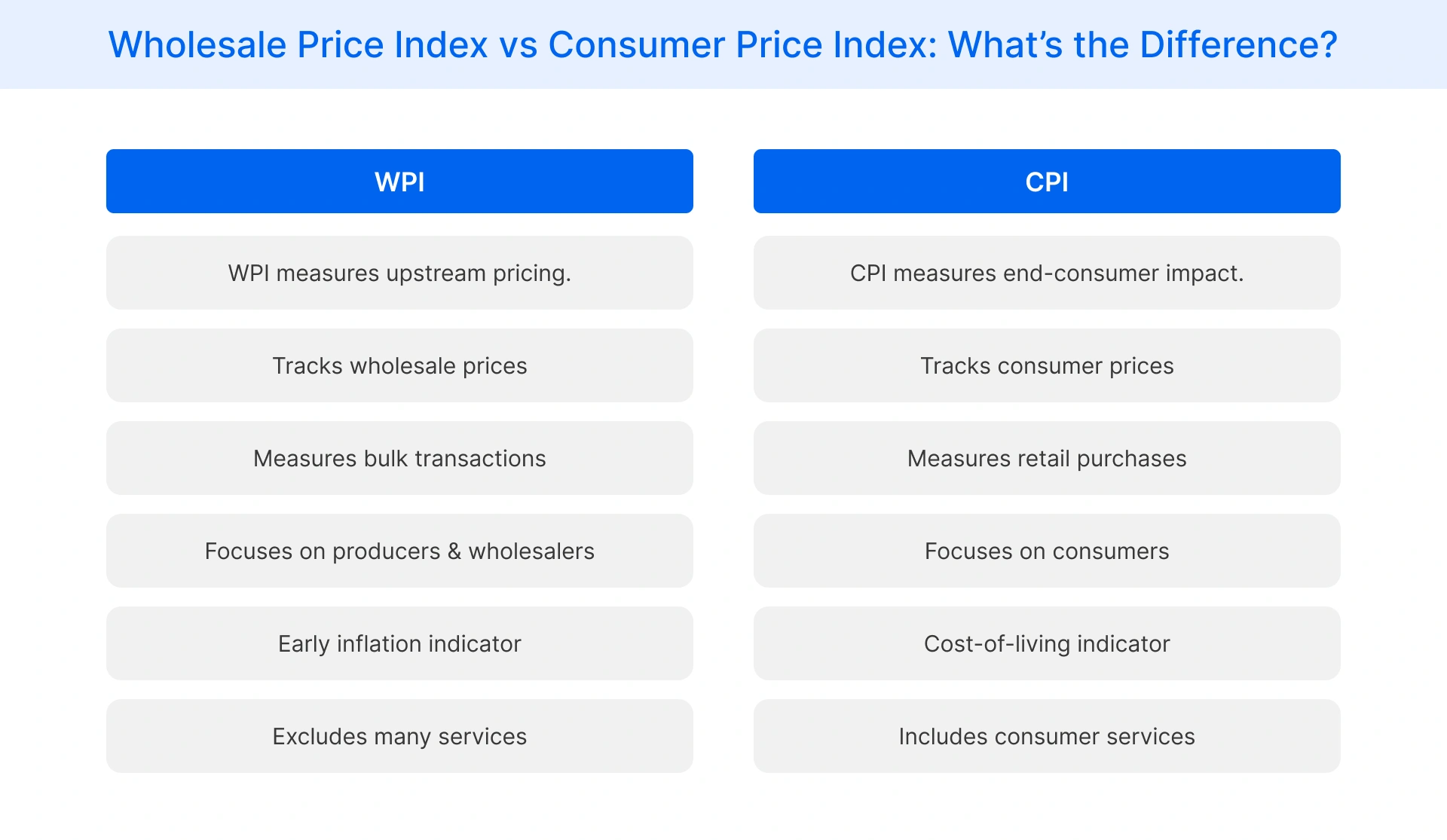
WPI (Wholesale Price Index) and CPI (Consumer Price Index) are both economic indicators that measure inflation, but at different supply chain stages. WPI tracks price changes at the wholesale level, between producers and wholesalers. CPI tracks what consumers pay at retail. Together, they give businesses a fuller picture of how inflation moves through the entire economy.
Yes, the Wholesale Price Index is calculated and released monthly. Each report compares the current price of a selected basket of goods against a base year, using data collected from producers and wholesalers. The monthly release allows businesses to track short-term price trends and adjust their pricing and procurement strategies before shifts reach the retail level.
To calculate the Wholesale Price Index, divide the current price of a selected goods basket by the base year price, then multiply by 100. If the base year price is $10,000 and the current price is $11,000, the WPI is 110 — a 10% price increase. FCC helps retailers act on these price shifts instantly.
The Wholesale Price Index is used by retailers to anticipate price changes before they hit store shelves, guiding pricing and inventory decisions. Governments use it to track inflation and shape monetary policy. Economists apply it as a GDP deflator. Platforms like FCC help retailers translate WPI signals into smarter, faster pricing action.
The Wholesale Price Index includes three broad categories: primary articles such as food and agricultural commodities, fuel and power, including petroleum and coal, and manufactured products covering chemicals, textiles, and processed goods. Services are excluded entirely. The exact basket composition and weighting vary by country, which affects how each nation's WPI is interpreted.
A rising Wholesale Price Index signals increasing costs at the wholesale level, which squeezes retail profit margins unless passed on to consumers. It disrupts inventory planning and weakens cash flow. Retailers who monitor WPI proactively can respond ahead of the curve, renegotiating supplier contracts, adjusting pricing strategies, and reordering stock before costs escalate further.
Both the Wholesale Price Index (WPI) and the Consumer Price Index (CPI) measure price changes in the economy, but they target different stages of the transaction process. The WPI measures the average change in commodity prices received on the bulk sale of goods, focusing on the wholesale level.
On the other hand, the CPI measures the changes in the general price level of a category of consumer goods, reflecting the retail level. It’s more relevant to consumers as it indicates the cost of living and the measure of inflation experienced by individual consumers.