
January 10, 2025
Anchor Price
Anchor pricing is a psychological pricing strategy where a high reference price is presented to consumers before offering a lower desirable price. It creates a perceived value difference, making the lowest price seem attractive and increasing the chances of purchase.
Drishti, Manager - Digital Marketing

Table of Contents
- What is anchor pricing
- How does price anchoring work?
- How to implement price anchor?
- When to use price anchoring?
- Why should you use an anchor price?
- Are there any downsides to using anchor pricing?
- Is price anchor an effective pricing strategy?
- Conclusion
What is Anchor Price?
Price anchoring is a retail pricing strategy where a high initial price, the 'anchor', is set before offering a product or service at a discounted price.
This anchor price serves as a reference point, shaping consumers' understanding of a reasonable price. The strategy aims to influence customers' perception of value, making the discounted price appear more attractive. Despite the discount, the final price remains profitable.
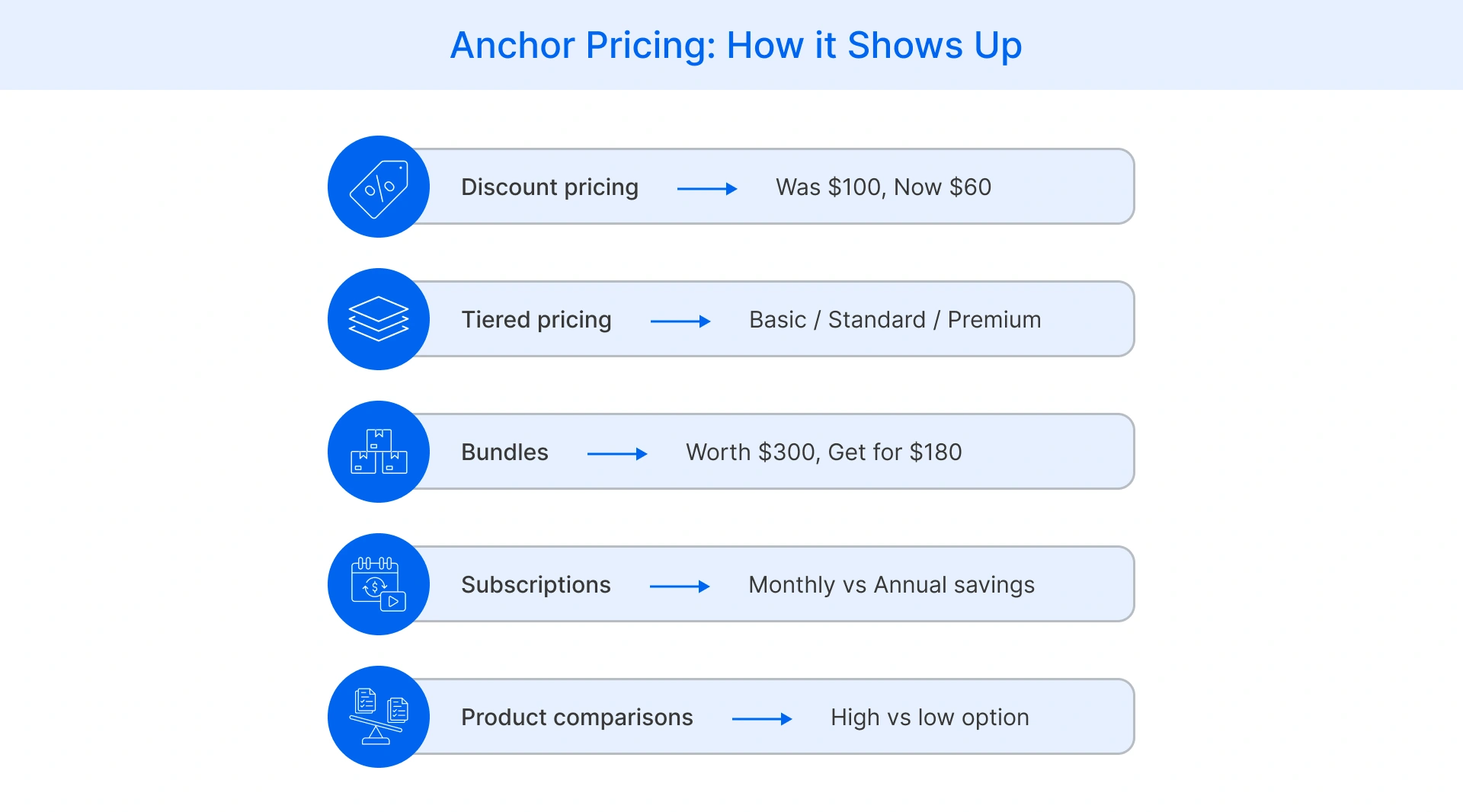
Beyond its basic definition, this anchoring effect has diverse applications in business, including displaying 'original' prices next to sale prices, tiered pricing structures, and pricing bundles.
It is a common strategy used by retailers and marketers to influence consumer behavior and boost sales.
How does price anchoring work?
Price anchoring, a popular marketing technique, uses the cognitive bias of consumers to steer purchasing decisions. It strategically presents various price points, establishing a reference frame that enhances the appeal of a specific option.
This technique is frequently paired with other pricing strategies.
For instance, the decoy effect, where an additional option makes another seem more attractive, or the compromise effect, where the middle option is often chosen.
These tactics collectively guide consumer choices, subtly nudging them towards options that maximize value for businesses.
Anchoring pricing example
Price anchoring is often seen in retail. For instance, a retailer might advertise a product at a high original price and then offer it at a discount.
This high original price serves as the anchor, making the discounted price seem to offer good value, even if it's still above the market price.
Another example is in laptop sales, where a basic model priced at $500 and a premium model at $1000 are presented.
The higher-priced model serves as an anchor, influencing the perceived relative value of the basic model. These tactics leverage the anchoring bias to influence purchasing decisions.
How to implement anchoring in pricing strategy?
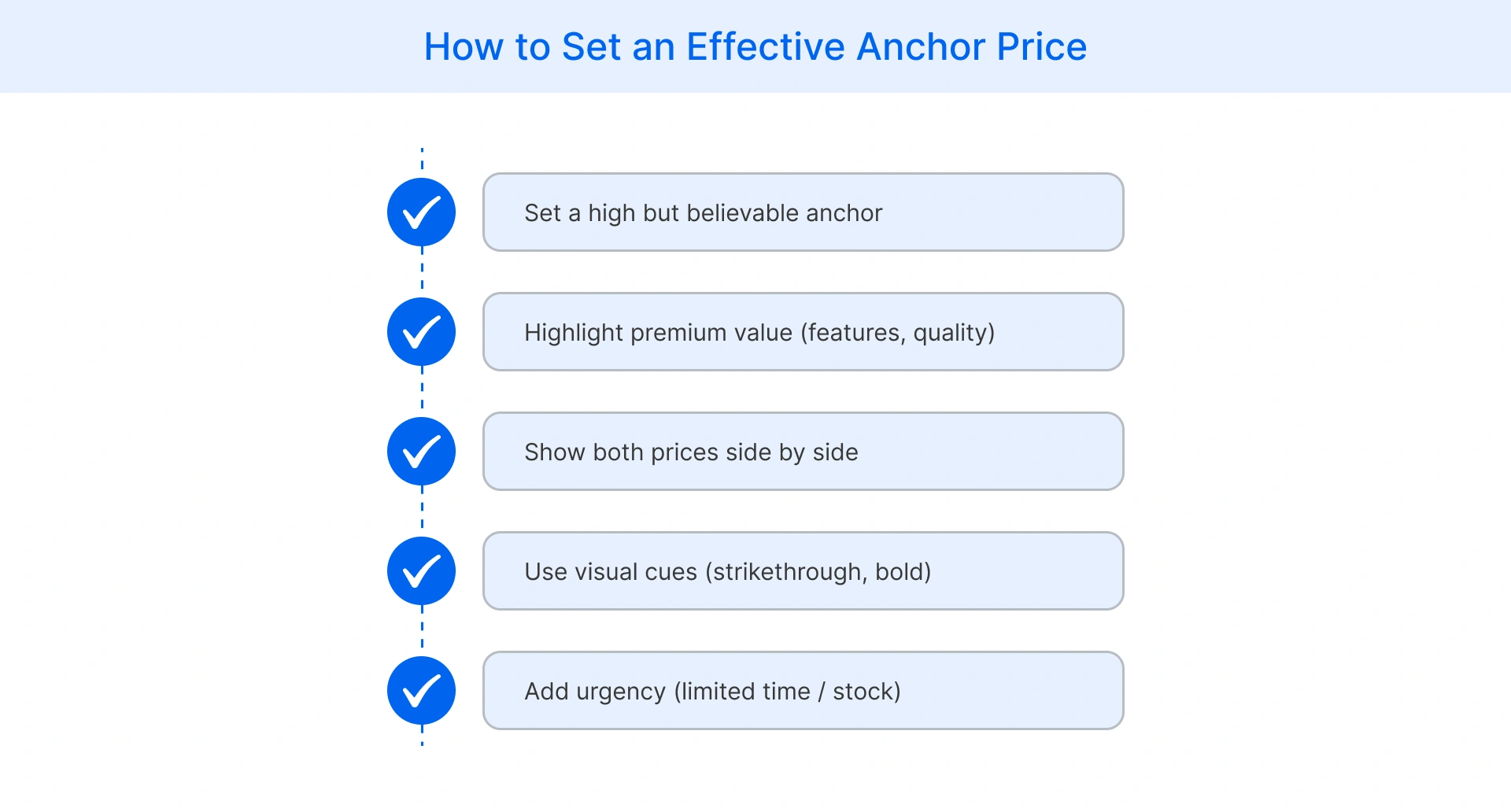
Implementing a price anchor involves several crucial steps. Begin by setting the highest price as the anchor, which should be more than your intended selling price yet still credible and justifiable to customers. Highlighting the product's premium features or benefits can help justify this initial high price.
Subsequently, display the anchor price prominently alongside the discounted price, using visual cues like strikethroughs or bold text to emphasize the price difference. Compare the anchor price to similar products to reinforce its perceived value, keeping in mind that price anchoring strategies always involve customer psychology.
Finally, create a sense of urgency or scarcity to encourage quick purchases. Limited-time offers, or limited availability can achieve this, further enhancing the discounted price's perceived value.
When to use price anchoring?
Let's explore some situations where price anchoring can be a beneficial strategy:
- Launching a new product: Setting a high anchor price for a new SKU in your portfolio can establish a feeling of value and quality, especially if the product offers innovative features or unique benefits.
- Repositioning a product: If you're targeting a higher-end market segment, price anchoring can justify the higher price by referencing the original lower price. This is particularly relevant for luxury products.
- Clearing inventory: To clear old stock, a high anchor price can instil a sense of urgency, encouraging customers to buy during markdown periods.
- Premium branding: For businesses aiming to be perceived as high-end, price anchoring is almost essential, especially in the luxury segment.
Why should you use an anchor price?
Here, we will explore some of the benefits of price anchoring that make it an effective marketing strategy:
- Profit Margin Boost: Anchoring with a premium product enhances the attractiveness of other options, potentially driving sales of high-margin items and boosting overall profit margins.
- Sales and Conversions Increase: Comparing discounts with higher original prices creates a sense of urgency and perceived savings, stimulating purchases and increasing conversion rates.
- Effective Product Positioning: Price anchoring serves as a communication tool, effectively conveying the value proposition of your product, whether it's a premium offering or a cost-effective solution.
- Market Entry: For new products, setting an appropriate anchor price helps establish a perceived value, easing market entry by positioning the product effectively against established competitors.
Are there any downsides to using anchor pricing?
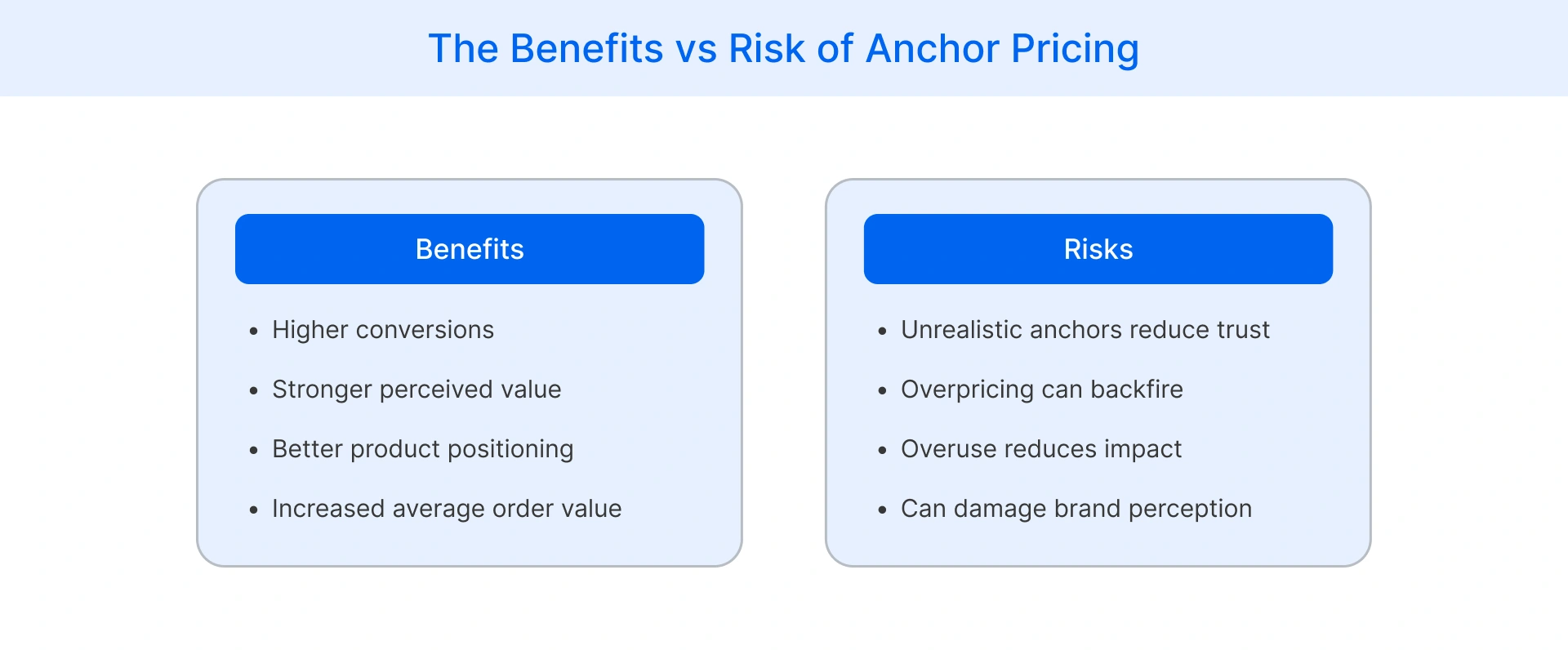
It is important to closely analyze the risks and challenges linked with price anchoring in sales. A significant risk is that consumers may perceive the anchor price as unfair, leading them to question the discount's validity. This can undermine consumer trust and negatively impact your store's price perception, ultimately harming long-term customer retention.
Another potential pitfall is setting the anchor price too high. Instead of viewing the discounted price as a good deal, shoppers may see the product as overpriced and switch to alternatives in other stores.
Lastly, avoid overusing price anchoring, as it can desensitize consumers, making them less responsive to future anchor prices and discounts. This can significantly reduce the strategy's effectiveness over time.
Is anchor pricing strategy effective?
Yes, price anchoring is a highly effective pricing strategy.
By strategically presenting a high reference price, marketers can significantly influence consumer perception of value. When a lower target price is introduced, it appears more affordable and attractive due to the contrast. This psychological phenomenon can lead to increased sales and higher perceived value for the product.
However, the effectiveness of price anchoring depends on factors such as the credibility of the anchor price, the product's perceived quality, and the consumer's decision-making process.
When implemented correctly, price anchoring can be a useful tool for retailers to drive revenue growth and enhance customer satisfaction.
Conclusion
Price anchoring works because it shapes perception before a customer even makes a decision. The right anchor can make your pricing feel intentional, your products more valuable, and your offers harder to ignore.
But the difference between a strategy that converts and one that backfires often comes down to execution. Anchors need to feel real, pricing needs to stay consistent, and every decision should be backed by actual customer behaviour, not guesswork.
Therefore, it is crucial to use this strategy judiciously, relying on data-driven insights from smart pricing solutions like Flipkart Commerce. With built-in pricing intelligence, experimentation tools, and real-time insights, you can test anchor pricing strategies, understand what drives conversions, and optimise faster without risking customer trust.
If you're looking to improve how your pricing performs across products, bundles, and promotions, it helps to see what works in your own setup.
Book a demo with Flipkart Commerce Cloud to test, refine, and scale pricing strategies that actually increase conversions and average order value.

FAQ
An anchor pricing strategy is a technique where sellers present a high reference price before offering a lower target price. The first piece of information a customer sees, the anchor, shapes their value perception. This strategy helps position products as a better value, influencing purchasing decisions by making the final price appear attractive and reasonable.
Anchor pricing is not illegal when the anchor price reflects a genuine past or comparative price. However, using fabricated or misleading anchor prices to deceive consumers violates consumer protection laws in many regions. Retailers must ensure their anchor pricing strategy is transparent and based on factual pricing history to stay compliant.
The anchor price theory originates from behavioral economics research by Tversky and Kahneman, showing that people rely heavily on the first piece of information they receive when making decisions. In pricing, this means an initial high price anchors perception, making subsequent lower prices seem like the best value or cheapest option available.
The five keys to effective anchoring in pricing strategy include setting a credible high anchor, presenting it prominently alongside the lower price, creating clear contrast, building perceived value through product features, and adding urgency with limited-time offers. These combined elements ensure customers consistently perceive the final price as the best value available.
To anchor price in sales, start by setting a high but credible anchor price that reflects premium value. Display it clearly next to your target price using visual cues like strikethroughs. Reinforce the value difference by highlighting product benefits, and create urgency through limited-time deals to drive faster purchasing decisions.
Price anchoring is crucial as it shapes consumer perception, making discounts appear more attractive. By initially setting a high price, retailers can highlight the value of their products, drive sales, and enhance profitability.
This strategy also aids in effective product positioning and segmentation, ensuring that different customer segments perceive the value appropriately, ultimately boosting overall market competitiveness.
Anchor pricing significantly influences consumer behavior by setting a high initial price, which serves as a reference point. This high anchor price makes subsequent prices appear more attractive and reasonable, encouraging purchases.
It leverages the psychological principle that consumers rely on the initial information they receive when making decisions. By shaping their perception of value, anchor pricing can drive sales, enhance perceived value, and increase willingness to pay.
Price anchoring and price referencing are distinct pricing strategies. Price anchoring sets a high initial price, the anchor, influencing customers' value perception and making subsequent prices seem more reasonable.
Conversely, price referencing uses a benchmark price, influenced by factors like market average, competitor pricing, or historical pricing, to help customers evaluate a product's value. This reference point guides customers' perception of a deal's worth.