
November 26, 2026
What Is a Bundle Pricing Strategy and How Does It Work?
A bundle pricing strategy combines multiple products into one offer at a set price. Retailers use it to encourage purchases and offer customers greater value.
Drishti, Manager - Digital Marketing

Table of Contents
- What Is a Bundle Pricing Strategy?
- What Are the Different Types of Bundle Pricing?
- How Is a Bundle Price Calculated?
- What Are Some Examples of Bundle Pricing in Retail?
- How Is Bundle Pricing Different From Multiple-Unit Pricing?
- What Are the Benefits of Bundle Pricing for Retailers?
- What Are the Challenges of Bundle Pricing?
- How Can Retailers Create an Effective Bundle Pricing Strategy?
- Conclusion
What Is a Bundle Pricing Strategy and How Does It Work?
A customer purchasing a laptop might also need a mouse and a protective case. Instead of selling these items separately, a retailer can offer complementary products together. The challenge is setting an attractive bundle price without reducing profit margins too far.
An effective bundle pricing strategy considers customer preferences alongside product costs and potential savings. This article explores the different approaches to bundle pricing, how bundle prices are calculated, practical retail examples, and the benefits and challenges retailers should consider.
What Is a Bundle Pricing Strategy?
A bundle pricing strategy involves offering two or more products or services together for a combined price, often lower than the total price of purchasing the items separately. Retailers use bundle offers to make related products more attractive to customers while considering the costs and profit margins associated with each sale.
Product bundling and bundle pricing are closely related but serve different purposes. Product bundling determines which individual products are grouped into a single package, while bundle pricing establishes what customers pay for that combination. A bundle may offer cost savings, but it does not always require a discount.
What Are the Different Types of Bundle Pricing?
The main types of bundle pricing are pure bundling and mixed bundling. The distinction depends on whether customers can purchase individual items separately or only as part of a bundle. Retailers can also offer discounted or custom bundles, which describe how the package is priced or assembled rather than separate pricing models.
|
Types of Bundle Pricing Strategies |
||
|---|---|---|
|
Approach |
How It Works |
Retail Example |
|
Pure bundling |
Products are available only as a single package, not individually. |
A limited-edition gift set sold exclusively as a complete collection. |
|
Mixed bundling |
Customers can buy individual products separately or purchase them together. |
A coffee maker and matching mugs offered individually or as a set. |
|
Discounted bundles |
Products are offered together at a discounted price compared with buying them separately. |
A shampoo and conditioner set priced below the cost of purchasing both individually. |
|
Custom bundles |
Customers select from eligible products to build their own package. |
A build-your-own gift box with a choice of skincare products. |
Discounted and customizable offers can operate within pure or mixed bundling. For example, a retailer may let customers customize a package while also offering its contents individually.
How Is a Bundle Price Calculated?
To calculate a bundle price, retailers first add the selling prices of the individual items. They then determine a discounted price by considering the combined product costs, intended customer savings, and desired profit margins. The final bundle price should offer customers value without making the sale unprofitable.
For example, suppose a retailer offers a phone case and screen protector together:
- Phone case: $20
- Screen protector: $10
- Total individual selling prices: $20 + $10 = $30
- Bundle price: $25
- Customer savings: $30 − $25 = $5 (approximately 16.7%)
- Combined product cost: $15
- Gross profit: $25 − $15 = $10
The customer saves $5 compared with purchasing both products separately, while the retailer earns $10 in gross profit before other business expenses. This distinction matters because an attractive bundle discount does not necessarily mean the offer is profitable.
What Are Some Examples of Bundle Pricing in Retail?
Retailers use bundle offers to bring together products that serve a common purpose or meet related customer needs. The following examples show how bundle pricing can be applied across different retail categories.
1. Grocery meal deals
A supermarket offers a sandwich, a drink, and a snack as one package deal. This allows customers to purchase a complete lunch in a single transaction rather than selecting each item separately. The retailer groups related products around a common purchasing occasion.
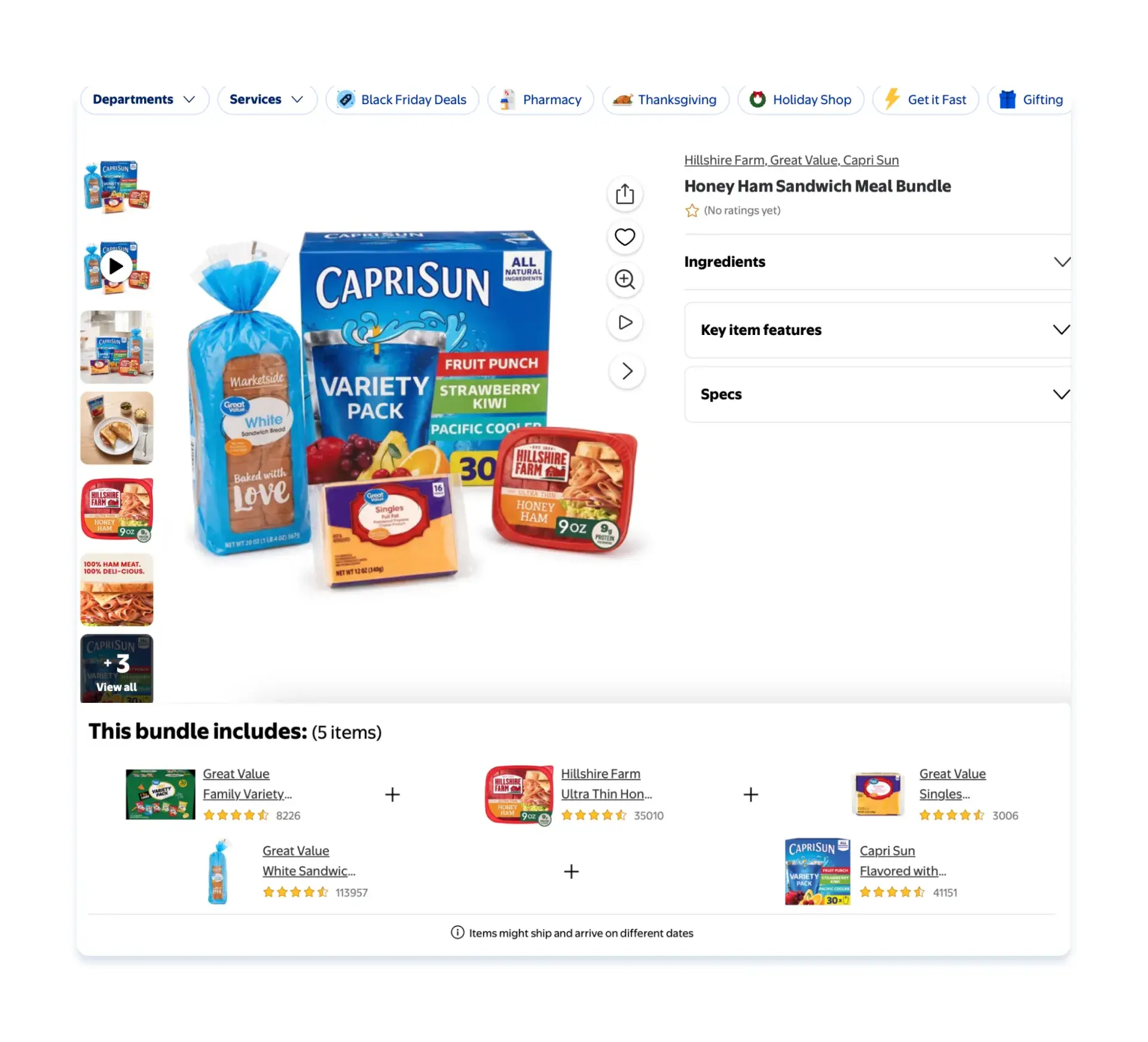
Walmart's Honey Ham Sandwich Meal Bundle, for example, was listed at $28.69, allowing customers to purchase five complementary grocery products at a single price.
2. Electronics accessory bundles
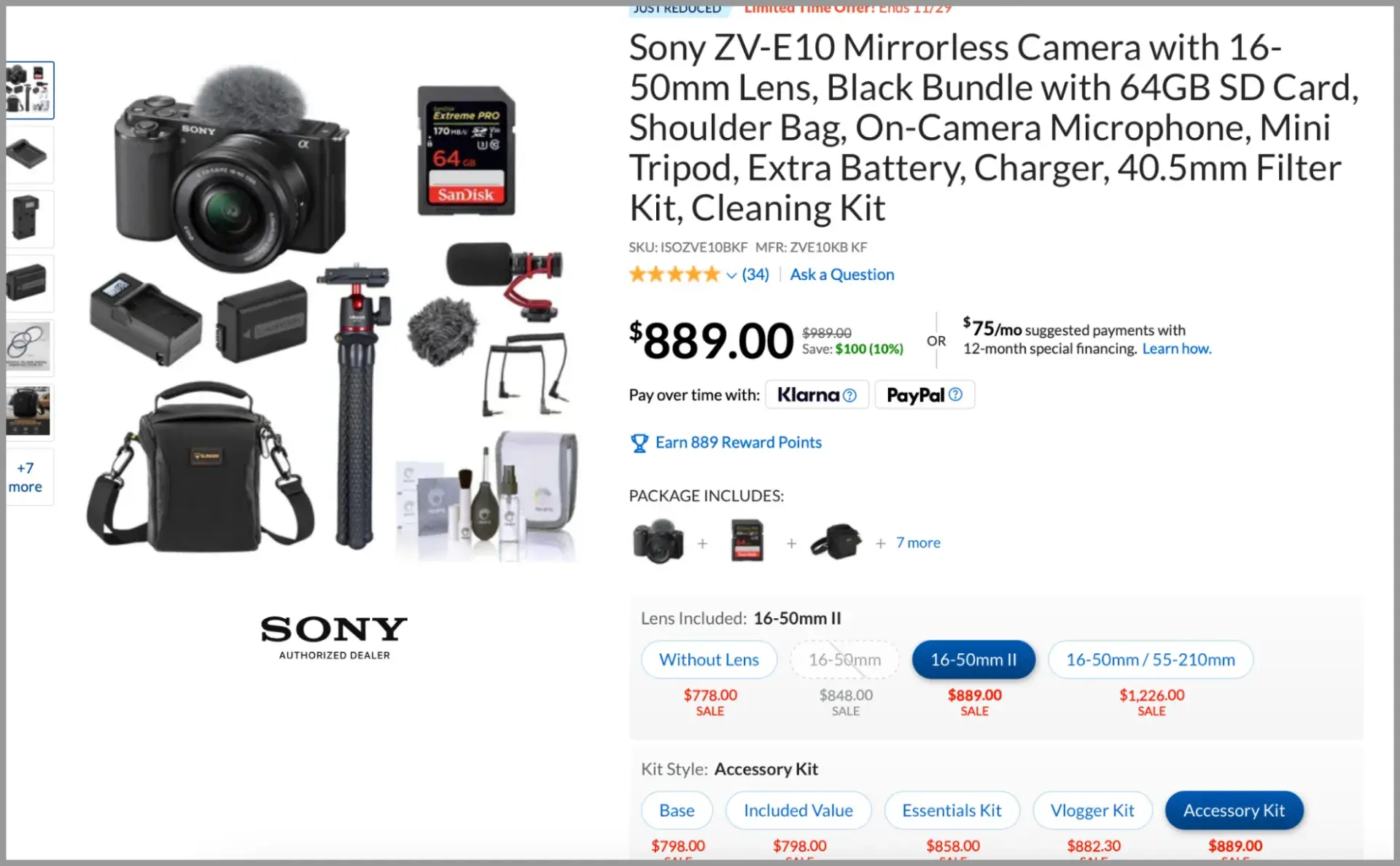
An electronics retailer offers a memory card, spare battery, and carrying case as a single package for camera buyers. These complementary products help customers get the accessories they need without searching for each item individually.
3. Skincare product sets
A beauty retailer combines a cleanser, moisturizer, and sunscreen into a daily skincare set. This introduces customers to products designed for different steps of a routine and allows them to purchase the items together instead of choosing from numerous individual products.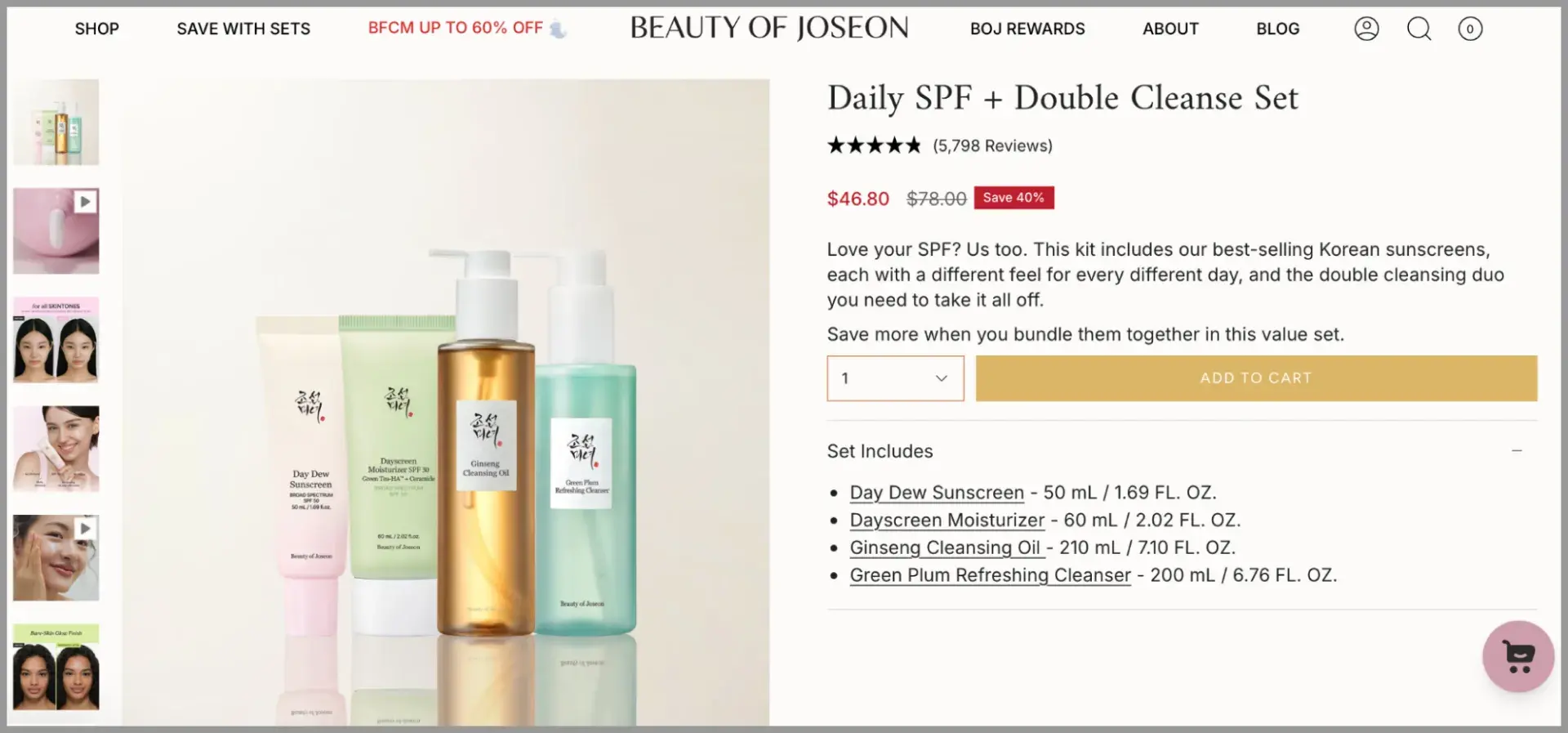
How Is Bundle Pricing Different From Multiple-Unit Pricing?
Bundle pricing typically combines different products into one offer, while multiple-unit pricing offers a specified quantity of the same product at a combined price.
For example, selling a towel and bath mat together for $30 is bundle pricing, while offering three identical towels for $30 is multiple-unit pricing. The two pricing approaches can overlap when bundles contain multiple units of the same or similar products.
What Are the Benefits of Bundle Pricing for Retailers?
Bundle pricing can help retailers increase the value of individual transactions and make better use of existing inventory. It also offers customers a more convenient way to purchase related products.
Key benefits include:
- Higher average order value: Customers who initially intend to purchase one product may spend more when related products are available together at an attractive price.
- Increased product exposure: Including less familiar products alongside popular items can encourage customers to try products they might otherwise overlook.
- Improved inventory turnover: Retailers can pair slower-moving products with high-demand items to reduce excess inventory and associated storage costs.
- Simpler purchasing decisions: Offering preselected product combinations reduces the number of choices customers need to evaluate before making a purchase.
- Greater perceived value: Customers may view a bundle as a more attractive offer when it provides meaningful savings compared with purchasing individual products.
These benefits depend on the relevance of the bundled products and whether the combined selling price supports the retailer’s desired profit margins.
What Are the Challenges of Bundle Pricing?
Bundle pricing can present financial and operational challenges for retailers, particularly when businesses manage multiple bundle offers across a large product assortment.
Common challenges include:
- Reduced profit margins: Excessive discounting can reduce the gross profit earned per transaction, particularly when retailers fail to account for the total cost of bundled products.
- Poorly matched products: Combining items that do not serve related customer needs can make an offer less appealing, even when it provides significant savings.
- Cannibalization of individual product sales: Customers who would otherwise purchase products at their regular selling prices may switch to discounted bundles, reducing the retailer’s potential profit.
- Inventory management complexity: A stock shortage affecting one product can make an entire bundle unavailable, even when the remaining items are in stock.
- Difficulty measuring performance: Retailers may find it difficult to determine whether bundle offers generate additional purchases or simply replace sales that would have occurred at regular prices.
Evaluating bundle performance requires looking beyond sales volume. Retailers must consider the incremental revenue and gross profit generated by each offer to determine whether it contributes to overall profitability.
How Can Retailers Create an Effective Bundle Pricing Strategy?
An effective bundle pricing strategy balances customer demand with business profitability. To achieve this balance, retailers can take the following steps when developing their bundle offers:
- Analyze customer purchasing behavior: Review transaction data to identify products customers frequently purchase together. Consider customer preferences and seasonal demand when identifying potential bundling opportunities.
- Select suitable product combinations: Choose products that complement one another or address a common customer need. Assess inventory availability and individual product performance before determining which items to include.
- Choose a bundling approach: Determine whether to sell products exclusively as a package, offer individual purchase options alongside the bundle, or allow customers to customize their selections.
- Establish pricing and offer conditions: Set bundle prices based on combined product costs, desired profit margins, and expected customer savings. Clearly communicate eligible products, purchase requirements, and promotional periods.
- Test and evaluate bundle performance: Experiment with different product combinations and price points. Track bundle sales, average order value, gross margins, and individual product performance to identify which offers support the intended business objectives.
Retailers should also review existing bundles as product costs, inventory availability, and customer preferences change. A combination that performs well during one period may not remain commercially viable over time.
Conclusion
An effective bundle pricing strategy requires retailers to balance customer expectations with business profitability. When developing bundle offers, retailers should keep three key considerations in mind:
- Product combinations should reflect customer purchasing behavior and serve related needs.
- Bundle prices should offer meaningful customer value while maintaining reasonable profit margins.
- Bundle performance should be evaluated based on profitability rather than sales volume alone.
Flipkart Commerce Cloud helps retailers create and manage bundle offers through its Promotion Management solution. With configurable product combinations, conditional discounts, and campaign analytics, retailers can develop promotional offers and monitor their performance.
Book a demo to see how FCC can help your business manage bundle promotions that align with your sales objectives