
November 23, 2025
What is Product Bundling?
Product bundling is a retail strategy where you sell multiple items or complementary products as a single package. This technique increases the average order value and offers convenience to your shoppers. Retailers use it to move inventory and simplify the purchasing decision for customers, often by offering a discounted price compared to purchasing individual items.
Drishti, Manager - Digital Marketing

Table of Contents
- What Is Product Bundling?
- What Are the Benefits of Product Bundling?
- What Are the Best Product Bundling Strategies?
- How to Create a Product Bundle That Sells
- Conclusion
Product Bundling: Strategies, Benefits, and Examples
Product bundling is a retail strategy that brings multiple products or services together as a single offering. By combining related products, businesses can create more value for customers while increasing sales opportunities and improving the overall shopping experience.
For retailers, product bundling can support different business goals, from increasing average order value to moving complementary products and creating more compelling offers. However, the success of a bundle depends on how products are selected, priced, and presented to customers.
This guide explains what product bundling is, the strategies businesses can use, its benefits, and practical examples of how retailers can create effective product bundles.
What Is Product Bundling?
Product bundling is a retail strategy where businesses combine two or more products or services and offer them together as a single package. The products may be complementary, related, or commonly purchased together, giving customers a more convenient way to make a purchase.
Unlike cross-selling or upselling, product bundling brings the selected products together as one offering. For example, a retailer could combine a camera, lens, and memory card into a photography bundle, or offer sunscreen and moisturizer as a skincare set.
Bundles can be offered at a single price, with or without a discount, depending on the retailer’s strategy. The approach can help simplify purchasing decisions while giving businesses a way to present related products as one cohesive offer.
What Are the Benefits of Product Bundling?
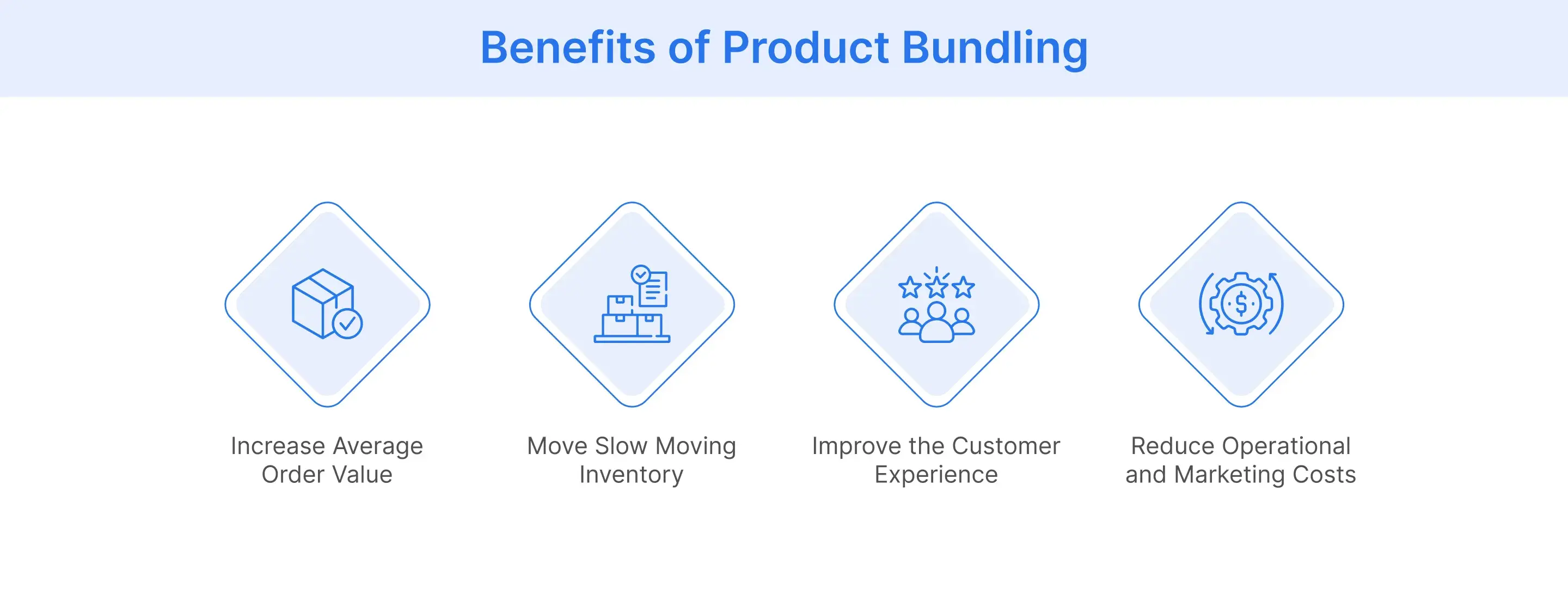
Product bundling can help retailers increase revenue while making it easier for customers to find and purchase related products together. When bundles are built around complementary products or a specific customer need, they can increase the value of each transaction, improve the shopping experience, and help businesses manage their inventory more effectively.
Increase Average Order Value
Bundling complementary products encourages customers to purchase multiple items in a single transaction, increasing the amount they spend per order. Instead of purchasing one product at a time, customers can choose a bundle that includes several related items, helping retailers generate more revenue from each purchase.
Move Slow-Moving Inventory
Product bundles can also help retailers move products that are not selling as quickly as expected. Pairing slower-moving items with popular products can encourage customers to purchase them together, helping businesses free up inventory while turning products that have been sitting in stock into sales.
Improve the Customer Experience
A well-designed bundle can make shopping more convenient by bringing related products together in one offer. Customers do not have to search for each item separately, particularly when the products are commonly used together. This can simplify the purchasing decision and make it easier for shoppers to find what they need.
Reduce Operational and Marketing Costs
Selling multiple products as one bundle can also make some retail processes more efficient. Consolidating products into a single offer can simplify picking, packing, and shipping, while promoting one bundle can reduce the need to market each individual product separately.
What Are the Best Product Bundling Strategies?
The right product bundling strategy can help retailers create offers that are relevant to customers while increasing the value of each purchase. Successful bundles typically bring together products that complement one another, solve a specific customer need, or make the purchasing process more convenient.
Combine Complementary Products
Group products that naturally work together or are commonly used for the same purpose. For example, a retailer could bundle a camera with a compatible lens and memory card, giving customers the essential products they need for a particular use case.
Offer Bundles at a Discount
Provide a bundle price that gives customers an incentive to purchase multiple products together. The discount should create a clear value proposition without reducing the profitability of the bundle.
Create Bundles for Specific Customer Needs
Build bundles around a particular use case, occasion, or customer segment rather than combining unrelated products. A skincare retailer, for example, could create a routine containing cleanser, moisturizer, and sunscreen for customers looking for a complete skincare solution.
Bundle Popular and Slow-Moving Products
Pair products with strong demand with slower-moving items to encourage sales of products that may otherwise remain in inventory. The combination should still provide a logical and useful offer for the customer.
Use Seasonal or Occasion-Based Bundles
Create bundles around seasonal demand, holidays, events, or specific occasions. This allows retailers to package relevant products together when customers are already looking for solutions for a particular occasion.
Personalize Product Bundles
Use customer preferences, purchasing behaviour, or product interests to recommend bundles that are more relevant to individual shoppers. Personalized bundles can make the offer feel more useful than a standard package presented to every customer.
Make Bundles Easy to Find and Understand
Present the products, pricing, and value of each bundle clearly so customers can quickly understand what they are getting. Clear product descriptions and visible savings can make it easier for shoppers to evaluate the offer.
Test and Optimize Bundles
Monitor how customers respond to different product combinations, prices, and offers. Retailers can use sales performance and customer behaviour to identify which bundles perform well and adjust weaker combinations over time.

How to Create Product Bundles That Actually Sell?
Creating an effective product bundle starts with understanding what customers need and selecting products that work naturally together. Retailers should consider customer purchasing behaviour, the value the bundle provides, and how the offer will be presented to customers.
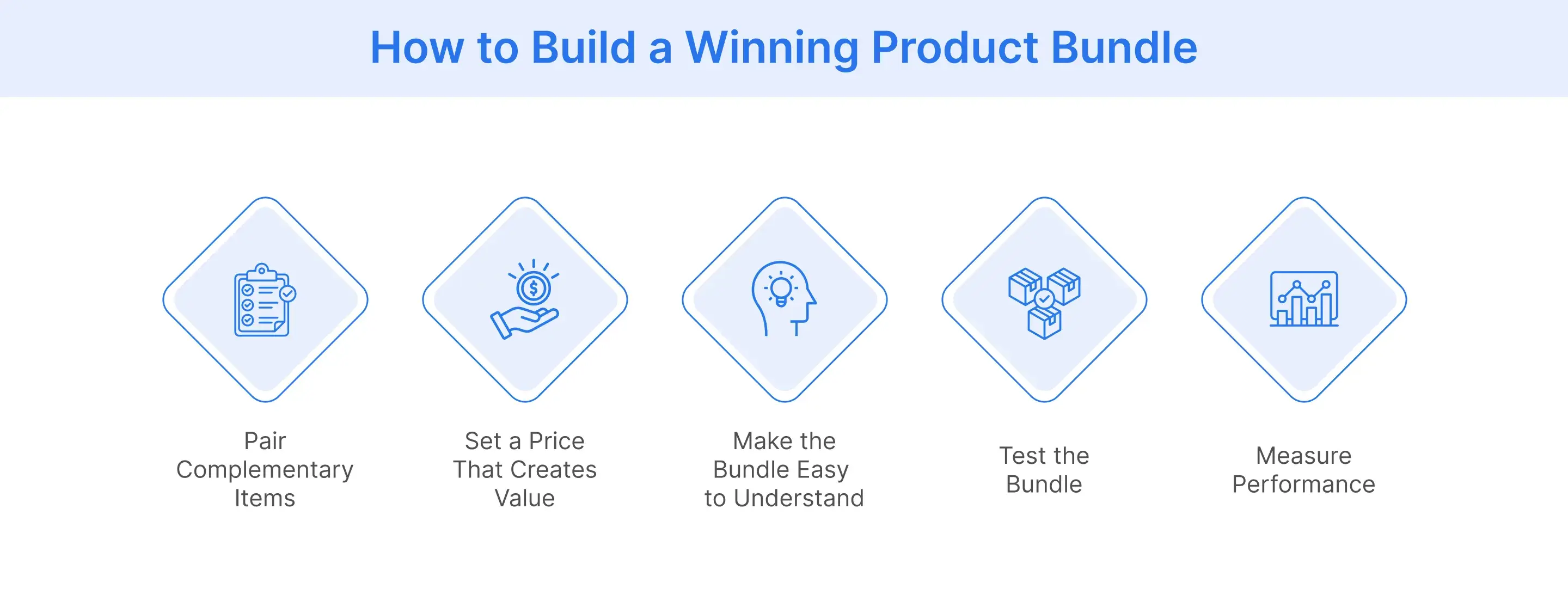
Choose Products That Complement Each Other
Start by selecting products that are naturally related or commonly purchased together. Sales and customer data can help identify products that customers already tend to buy together, making those combinations a useful starting point for a bundle.
Set a Price That Creates Value
Set a bundle price that gives customers a clear reason to purchase the products together while protecting the retailer’s margins. A discount can be part of the offer, but the pricing should reflect both the value customers receive and the business’s profitability.
Make the Bundle Easy to Understand
Clearly communicate what the bundle includes, how the products work together, and what customers will pay. A clear name, product description, and images can help shoppers quickly understand the bundle and its value.
Test the Bundle and Measure Performance
Track metrics such as sales, conversion rates, average order value, and profit margins to understand how the bundle performs. If a combination or price does not perform as expected, retailers can adjust the products, pricing, or presentation based on the results.
Conclusion
Product bundling can help retailers create more valuable offers while making it easier for customers to discover products that work well together. But the success of a bundle depends on more than the products included. Pricing, promotions, customer preferences, and margins all play a role in determining whether a bundle makes commercial sense.
With the right technology, retailers can use these factors to make more informed decisions about how products are combined and offered. Flipkart Commerce Cloud brings pricing, personalization, and promotion capabilities together to help retailers manage these decisions more effectively.
Book a demo to see how Flipkart Commerce Cloud can help you make smarter retail decisions.

FAQ
Product bundling in eCommerce is a merchandising technique where retailers group complementary items together and sell them as a single packaged unit. Offering curated packages at a slight discount creates added value for online shoppers, increases perceived product utility, and encourages customers to purchase multiple products in one transaction.
An example of product bundling is a retailer selling a camera, a matching lens, and a memory card together as a starter kit. By combining these essential items at a bundled price, merchants make the buying decision easier for consumers while moving related inventory much faster than selling components separately.
To create an effective product bundling strategy, merchants should analyze purchasing data to identify items frequently bought together. Leveraging advanced retail tools like Flipkart Commerce Cloud allows businesses to build dynamic cross-selling packages, set optimal price points, and showcase personalized bundle suggestions to shoppers across digital touchpoints.
Product bundles can significantly increase Average Order Value by encouraging shoppers to spend more per transaction. Depending on pricing and relevance, well-designed packages often boost order values by 15% to 30% by convincing customers that purchasing items together yields better overall value than buying single products individually.
Product bundles often outperform single products because they simplify consumer choice and increase perceived value. Combining complementary items into one convenient solution reduces decision friction for shoppers, addresses multiple needs at once, and makes purchasing a curated package far more attractive than purchasing items individually.
Product bundling is generally legal as long as it does not violate antitrust laws through coercive practices like illegal tying. Pure bundling or mixed bundling is completely legitimate unless a dominant market player forces consumers to buy unwanted items to obtain a monopoly product, stifling fair market competition.
Customers enjoy significant cost savings when they purchase bundled items compared to buying them individually. They also benefit from the convenience of getting a complete solution in one click. This saves them time and reduces the effort needed to find compatible products.
You should look at your sales data to see which items are frequently bought together. It is also smart to pair slow-moving stock with your bestsellers. Consider items that naturally complement each other to create a logical and useful package.
Yes, offering a discount is usually necessary to make the bundle attractive. The discount does not need to be huge to be effective. It acts as a psychological trigger that convinces the customer they are getting a better deal.