
January 24, 2026
Commerce Media
Commerce media is a collaborative advertising approach connecting marketers with audiences using large-scale transaction data. It extends beyond retail websites to reach consumers on the open web and video platforms.
Drishti, Manager - Digital Marketing

Table of Contents
- Commerce Media
- What is Commerce Media?
- Difference between Commerce Media vs. Retail Media
- How does the Commerce Media Ecosystem Work?
- Why First-Party Data Is the Fuel for Commerce Media
- Key Benefits of a Commerce Media Strategy
- Real-World Examples of Commerce Media in Action
- Future Trends Shaping Commerce Media
- How Flipkart Commerce Cloud Powers Commerce Media
Commerce Media
The world of digital marketing is shifting toward strategies that prioritize actual purchase behavior instead of broad demographic assumptions or guesswork. This evolution is allowing advertisers to connect with consumers based on verified transaction history and intent signals.
Commerce media represents this next generation of advertising by using first-party data to target audiences across the open internet. It enables a direct connection between ad spending and tangible business results like revenue or sales.
- This approach combines the precision of retail data with the scale of open web inventory and formats.
- Advertisers can target in-market shoppers with high intent rather than relying on vague interest categories.
- Publishers benefit by monetizing their audiences more effectively through high-value ads rooted in commercial intent.
- The strategy closes the loop between an ad impression and a final transaction for measurable ROI.
What is Commerce Media?
Commerce media is an elaborate network of advertising solutions that leverages commerce data to drive performance marketing outcomes. It helps retailers and brands to engage with consumers throughout their buying journey across channels like video, CTV, display, and social media.
This methodology differs from traditional media because it focuses heavily on the use of first-party transaction data. It prioritizes the delivery of relevant ads to consumers who have shown a clear propensity to purchase specific items. The commerce media market is rapidly expanding as brand advertisers seek more efficient ways to drive sales.
Difference between Commerce Media vs. Retail Media
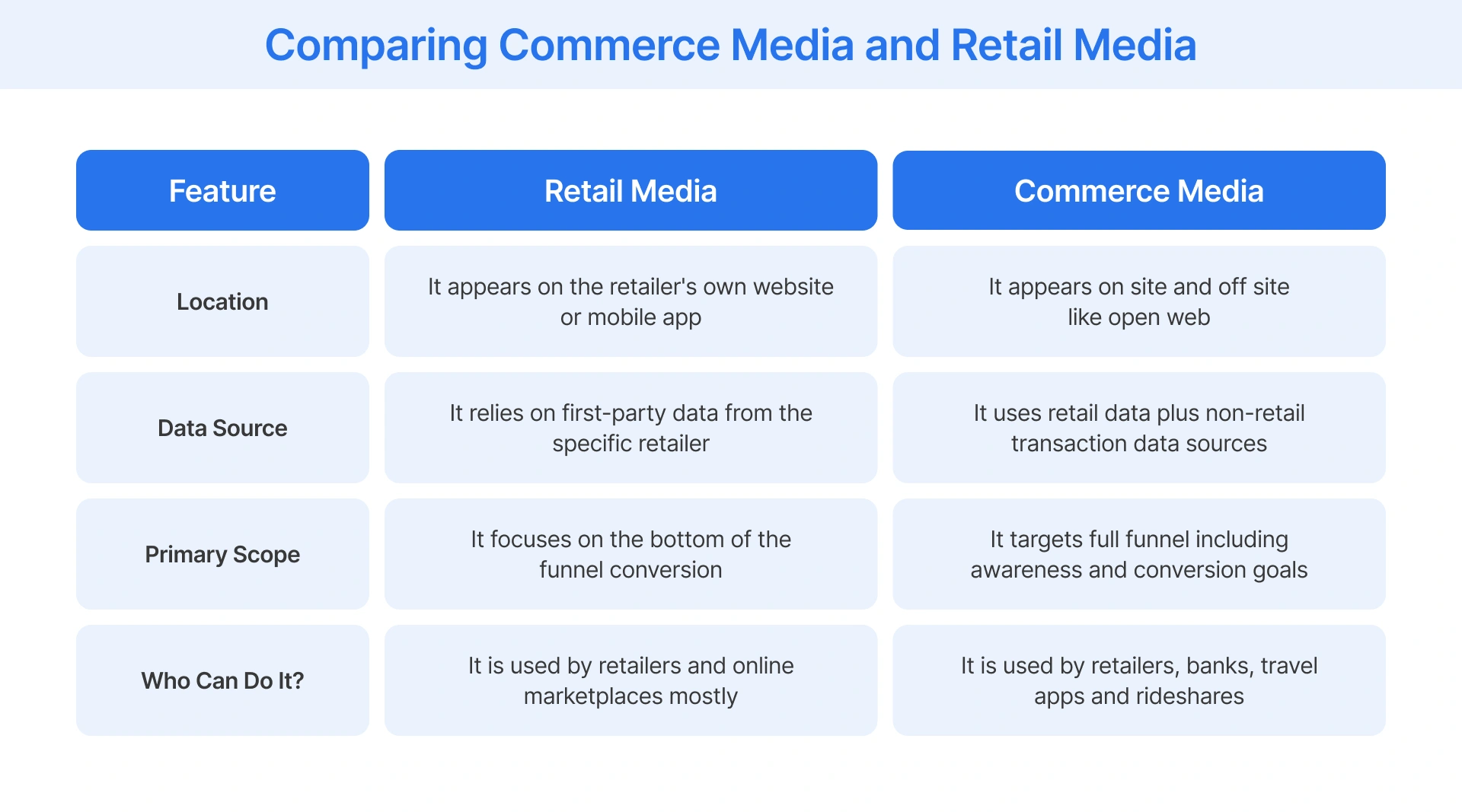
Retail media networks are often confined to the properties owned by a retailer while commerce media includes a broader ecosystem. Here is a comparative analysis of the distinct capabilities and reach associated with each of these advertising strategies.
How does the Commerce Media Ecosystem Work?
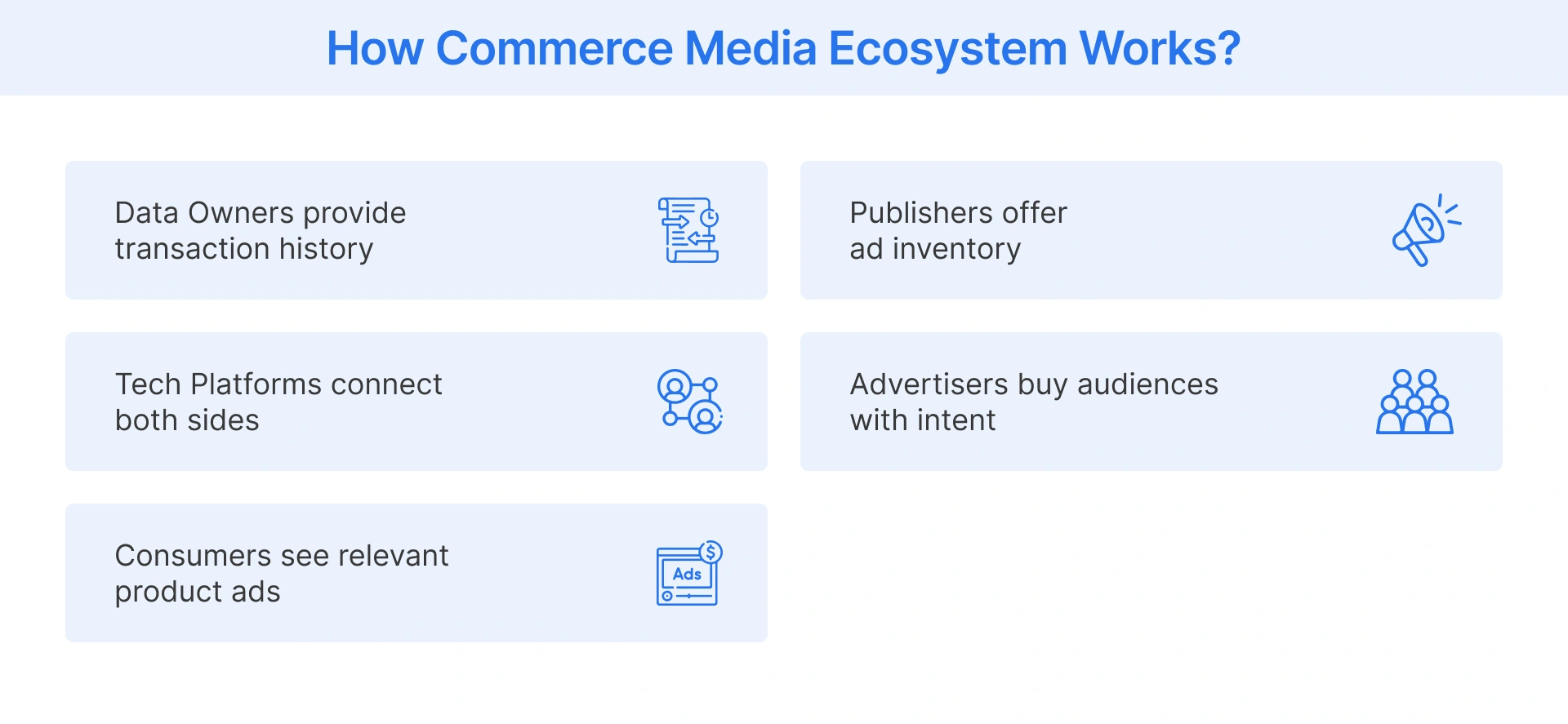
A successful ecosystem relies on the seamless integration of data providers and media publishers through complex technology platforms. Let’s understand the key players in this ecosystem.
- The Data Owners: They are entities like retailers and banks holding first-party customer data. For instance, a travel app knows exactly when a user books a flight to a specific destination.
- The Publishers: They represent the open web inventory where ads appear to engage users. This includes traditional publishers, news sites, and video platforms providing space for targeted advertisements to reach the right audience.
- The Tech: It consists of platforms that connect data owners with media publishers seamlessly. For instance, a Demand Side Platform allows brands to bid on specific ad inventory in real time.
Why First-Party Data Is the Fuel for Commerce Media
Advertisers previously relied on Third-Party Cookies (little trackers that followed you around the web) to target ads. But with privacy laws tightening and browsers blocking cookies, that old method is dead.
Commerce media solves this challenge by using real purchase data rather than relying on assumptions or tracking pixels. You do not have to guess if someone likes hiking; you know they bought hiking boots yesterday. This data provides granular audience insights that allow you to understand consumer behavior deeply.
This approach remains anonymized and privacy-safe while delivering superior targeting accuracy compared to traditional demographic methods. It allows you to leverage your proprietary data assets to create a new media business and improve campaign performance.
Key Benefits of a Commerce Media Strategy
Adopting this strategy allows you to diversify revenue streams while enhancing the precision of your marketing efforts significantly. It offers new ways to maximize enterprise value through smarter allocation of ad dollars.
- Closed-Loop Measurement: You can link ad impressions directly to sales outcomes to verify your true return on ad spend. For example, you will know if a specific video ad caused a customer to buy sneakers online immediately.
- Full-Funnel Reach: You engage customers during the discovery phase and guide them efficiently toward the final purchase event. For instance, you can target a user watching a cooking video with an ad for a new premium blender.
- Better Experience: Shoppers see ads for products they actually want rather than irrelevant interruptions to their browsing. For example, a parent buying diapers receives a helpful coupon for baby wipes instead of a random car insurance ad.
Real-World Examples of Commerce Media in Action
The following scenarios illustrate how data transforms a standard ad impression into a highly relevant service for the consumer.
Scenario A: The Non-Endemic Play
This example shows how a brand that does not sell on a platform can still leverage its data.
- You: You book a flight to Goa on a travel app for an upcoming vacation with your family.
- The Data: The app knows you are going to a beach destination in two weeks based on your booking.
- The Ad: While reading the morning news, you see an ad for sunscreen and sunglasses on a website.
- Why it works: The sunscreen brand is using the travel app data to find you at the perfect moment.
Scenario B: The Replenishment Nudge
This example demonstrates how predictive analytics can drive repeat purchases through timely and personalized ad delivery.
- You: You buy a 5kg bag of dog food on Flipkart every 45 days for your pet dog.
- The Data: The platform predicts you are running low based on your past purchase history and consumption patterns.
- The Ad: On Day 40, you see a 10% off coupon for that specific dog food on a site.
- Why it works: It captures the sale before you even think about going to a physical store for the item.
Future Trends Shaping Commerce Media
The industry is evolving rapidly as new technologies and channels emerge to enhance how brands connect with shoppers. We are seeing rapid growth in the United States and global markets as media companies adapt.
- Video and CTV: Ads are moving beyond static display banners to include shoppable ads and other engaging ad formats on connected TV platforms. Viewers can now purchase products directly from the screen while watching their favorite streaming shows at home.
- Non-Retail Players: Sectors like financial services and ride-sharing apps are entering the commerce media space to monetize their unique audience data. They are selling ad space based on real-time location history and verified spending power transaction data.
- AI Personalization: Machine learning and AI will automate creative optimization and audience segmentation to deliver hyper-relevant ads at scale. This technology ensures that the right message reaches the right consumer instantly without manual intervention or guesswork. Live commerce is also benefiting from these advancements, offering real-time product recommendations.
How Flipkart Commerce Cloud Powers Commerce Media
The ability to monetize data and media effectively is essential for retailers looking to scale their digital business. Retailers need a robust partner to navigate the complexities of ad tech and data privacy.
At Flipkart Commerce Cloud, we provide the technology and expertise required to build a thriving commerce media network. Our solutions utilize the massive scale of Flipkart's intelligence to power your advertising ecosystem.
We offer a comprehensive Ads Manager that simplifies campaign management alongside an intelligent Demand Side Platform (DSP). Schedule a demo with us to see how we can help you unlock new revenue streams today.
FAQ
Retailers and brands alongside publishers can all benefit significantly from this data-driven advertising approach. Retailers monetize their data while brands gain access to high-intent audiences. Publishers also see increased yield on their ad inventory because the ads displayed are more relevant and valuable to their users who are viewing them.
Success is typically measured through closed-loop attribution which connects ad exposure directly to sales data. You should track metrics like Return on Ad Spend (ROAS) and conversion rates alongside incremental sales lift. This ensures that every dollar spent is contributing to tangible business growth and revenue for your company.
It relies on first-party data that retailers and brands collect directly from their customers during transactions. This data is consented and accurate because it is based on verified purchases. It allows advertisers to target audiences based on real behavior without needing invasive cross-site tracking cookies or external data.
It utilizes programmatic technology to buy and sell ad inventory but it is distinct in its data source. Programmatic advertising is the delivery mechanism while commerce media is the strategy centered on commerce data. It brings the precision of purchase data to the scale of programmatic buying for better results.