
September 1, 2026
What Is Click Fraud and How Does It Affect Retail Advertising?
Click fraud is the practice of generating fraudulent clicks on digital ads to manipulate advertising activity and consume ad spend.
Drishti, Manager - Digital Marketing

Table of Contents
- What Is Click Fraud?
- How Does Click Fraud Work?
- What Are the Common Types of Click Fraud?
- What Are the Signs of Click Fraud?
- How Does Click Fraud Affect Retailers?
- How Can Retailers Detect and Investigate Click Fraud?
- Is Click Fraud Illegal?
- How Can Retailers Prevent Click Fraud?
- Conclusion
What Is Click Fraud and How Does It Affect Retail Advertising?
Digital advertising gives retailers multiple ways to reach potential customers, from PPC ads on search engines to display ads and social media campaigns. These channels can help retailers drive traffic, generate engagement, and connect with shoppers. However, not every ad click represents a legitimate user or genuine interest.
Click fraud occurs when fraudulent clicks are generated on digital ads, often creating activity that can look like normal user behavior. These fake clicks can consume an ad budget without producing meaningful results, while also making campaign data less reliable. For retailers, this can affect how they assess advertising performance, conversion rates, and the effectiveness of their online advertising.
The impact can go beyond the immediate cost of suspicious clicks. Fraudulent activity can distort traffic sources and customer behavior data, making it harder to understand how real users interact with ads and campaigns. Understanding the warning signs, types of click fraud, and available detection and prevention measures can help retailers make more informed decisions about their advertising.
What Is Click Fraud?
Click fraud is the practice of generating fraudulent clicks on digital ads or links to manipulate advertising costs, traffic, or engagement. These clicks can come from people or automated systems designed to imitate the activity of a legitimate user.
For retailers, fraudulent clicks can create the appearance of genuine interest when there is no real customer intent behind the activity. Repeated or artificial clicks may therefore increase ad clicks and consume an ad budget without delivering corresponding business value.
How Does Click Fraud Work?
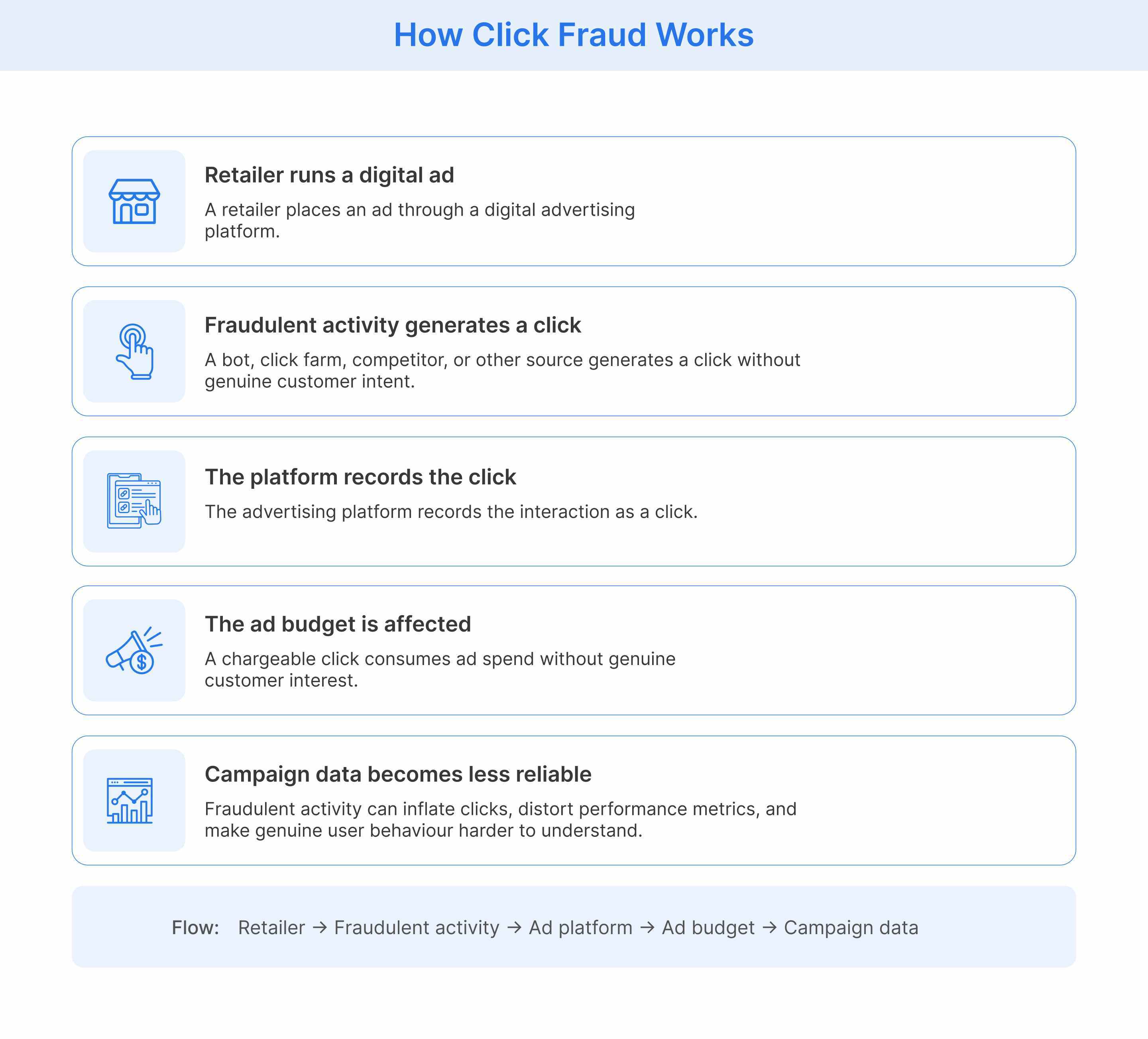
Click fraud works by generating ad clicks that appear to come from legitimate users, even when the activity is fraudulent. These clicks can be produced manually by human workers or automatically through click bots and bot networks. When this activity is repeated, it can increase the number of ad clicks recorded and consume a retailer’s ad budget without generating genuine customer interest.
Fraudulent traffic can also imitate normal user behavior, making it harder to separate fake traffic from genuine activity. In some cases, the activity is distributed across multiple IP addresses, devices, or traffic sources, making individual suspicious clicks less obvious.
How Do Click Bots Generate Fraudulent Clicks?
Click bots are automated systems that generate clicks on digital ads or other online content. They can produce repeated bot clicks at a scale that would be difficult for a human to maintain, creating artificial activity for an ad campaign.
How Do Botnets Make Click Fraud Harder to Detect?
Botnets can generate fraudulent traffic across thousands of IP addresses. Because the activity is distributed across many sources, it can be harder to identify a common pattern or determine that the clicks are part of the same fraudulent activity.
What Are the Common Types of Click Fraud?
Click fraud can take different forms depending on how the fraudulent activity is generated and who is behind it. Common types include bot-driven activity, click farms, competitor click fraud, and other forms of fraudulent activity involving ads and traffic sources.
Common Types of Click Fraud |
||
|---|---|---|
|
How it works |
Potential impact |
|
|
Bot-driven click fraud |
Automated systems generate clicks on ads |
Wasted ad spend and distorted campaign data |
|
Click farm fraud |
Human workers generate artificial clicks |
Fake traffic that can resemble real user activity |
|
Competitor-driven click fraud |
Competitors repeatedly click another retailer’s ads |
Increased costs and reduced ad visibility |
|
Publisher-driven click fraud |
Fraudulent clicks are generated to increase advertising revenue |
Advertisers pay for clicks without genuine interest |
|
Malware-based click fraud |
Malware generates clicks from compromised devices |
Artificial traffic and unreliable campaign data |
|
Domain spoofing |
Fraudulent traffic is made to appear as though it comes from a legitimate source |
Difficulty identifying the true traffic source |
Bot-Driven Click Fraud
This involves click bots or bot networks generating automated clicks on digital ads. The activity can create large amounts of bot traffic without genuine user interest.
Click Farm Fraud
Click farms use human workers to generate fake clicks or other interactions. Because the activity comes from human workers, it can resemble normal user behavior more closely than automated bot clicks.
Competitor-Driven Click Fraud
Competitor click fraud occurs when someone deliberately generates clicks on a competitor’s ads. The goal can be to increase the competitor’s advertising costs and consume their ad budget.
Publisher-Driven Click Fraud
Publisher-driven click fraud involves fraudulent clicks generated through websites or other advertising placements to increase advertising revenue or inflate ad clicks.
Malware-Based Click Fraud
Malware-based click fraud uses malicious software on compromised devices to generate fraudulent activity, including clicks on digital ads.
Domain Spoofing
Domain spoofing involves making advertising traffic appear to come from a legitimate website or domain when it does not. This can make fraudulent traffic sources more difficult to identify.
What Are the Signs of Click Fraud?
Retailers may notice several warning signs when fraudulent clicks affect their advertising campaigns. No single sign confirms click fraud, but unusual patterns in clicks, traffic, and conversions can indicate that an investigation is needed.
Common signs include:
- Unusual spikes in clicks that do not match normal campaign activity
- High numbers of clicks with unusually low conversion rates
- Repeated activity from similar IP addresses
- Unexpected traffic from particular geographic locations
- Unusual activity at specific times of the day
- Abnormally high bounce rates
- Increasing advertising costs without corresponding business results
Reviewing these patterns alongside normal campaign performance can help retailers identify suspicious activity and determine whether further investigation is necessary.
How Does Click Fraud Affect Retailers?
Click fraud can affect retailers beyond the immediate cost of fraudulent clicks. When advertising activity includes fake or suspicious clicks, the resulting data may no longer provide an accurate picture of campaign performance or customer behavior.
The main effects include:
- Wasted advertising budget: Fraudulent clicks can consume ad spend without contributing to genuine customer activity.
- Distorted campaign performance data: Artificial clicks can make campaigns appear to generate more engagement than they actually do.
- Unreliable conversion and customer acquisition metrics: When fraudulent traffic is included in campaign data, retailers may find it harder to assess conversion rates and customer acquisition performance accurately.
- Difficulty identifying genuine customer behavior: Fake traffic can make it harder to distinguish real shoppers from fraudulent activity.
- Poorer advertising and budget allocation decisions: Unreliable performance data can affect decisions about where retailers should allocate their advertising budgets.
- Reduced confidence in marketing performance: When retailers cannot rely on their campaign data, it becomes more difficult to evaluate marketing effectiveness.
- Potential loss of valuable customer and demographic data: Fraudulent activity can affect the quality of customer data available to retailers, including information that could otherwise help them understand prospective customers.
For retailers, this means click fraud is not only an issue of wasted ad spend. It can also affect the data used to understand customers and make advertising decisions.
How Can Retailers Detect and Investigate Click Fraud?
Retailers can investigate potential click fraud by looking for patterns that differ from normal customer behavior. Reviewing click activity alongside conversion and website data can help identify suspicious activity and determine whether further investigation is needed.
Retailers can:
- Analyse click and conversion patterns to identify unusual activity.
- Review IP addresses and geographic locations for repeated or unexpected activity.
- Examine click timestamps and traffic behavior for unusual patterns.
- Compare advertising data with website analytics to identify inconsistencies.
- Look for suspicious referrers and devices.
- Identify traffic patterns that differ from normal customer behavior.
- Use click fraud detection tools where appropriate.
What Data Should Retailers Review During a Click Fraud Investigation?
The following data can help retailers examine suspicious advertising activity:
- IP addresses
- Geographic location
- Click timestamps
- Device and browser information
- Traffic sources
- Conversion behavior
Is Click Fraud Illegal?
Click fraud can have legal and contractual consequences when the activity is deliberate and intended to manipulate advertising activity. However, the consequences depend on the nature of the activity and the laws that apply.
It is also important to distinguish intentional click fraud from accidental or invalid clicks. Not every invalid click is necessarily the result of deliberate fraud.
Advertising platforms may also take action against accounts involved in suspicious or fraudulent activity. This can include restrictions on advertising accounts, depending on the platform and the circumstances.
What Are Some Examples of Click Fraud Cases?
A 2021 case involving online golf retailer Motogolf illustrates how alleged competitor click activity can affect a retailer’s PPC advertising. In Motogolf.com, LLC v. Top Shelf Golf, LLC, Motogolf alleged that its direct competitor repeatedly clicked on its PPC ads to exhaust the number of clicks it had contracted for. According to the complaint, this caused the ads to disappear for other potential customers, increased Motogolf’s future advertising costs, and deprived the company of useful demographic data from prospective customers.
The case is an example of why repeated or suspicious clicks can have consequences beyond the immediate cost of an ad click. For retailers, fraudulent or potentially fraudulent activity can also affect ad visibility and the customer data generated through digital advertising.
How Can Retailers Prevent Click Fraud?
Retailers can reduce their exposure to click fraud by regularly monitoring advertising activity and responding to unusual patterns. Prevention involves identifying suspicious activity early, using available fraud protection measures, and continuing to monitor campaigns as fraudulent techniques change.
Retailers can:
- Monitor advertising campaigns regularly for unusual activity.
- Review click and conversion patterns for suspicious changes.
- Use fraud protection features provided by advertising platforms.
- Use click fraud detection tools where appropriate.
- Review traffic sources and investigate suspicious activity.
- Adjust targeting when unusual geographic or audience patterns emerge.
- Report suspected fraudulent activity to the relevant advertising platform.
- Continue monitoring campaigns because click fraud techniques can change over time.
Taking these steps can help retailers identify suspicious clicks earlier and maintain more reliable advertising performance data.
Conclusion
Click fraud can affect more than a retailer’s advertising spend. Fraudulent clicks can distort campaign performance, make it harder to identify genuine customer behavior, and reduce the reliability of customer and advertising data.
For retailers, having visibility into digital advertising performance and customer behavior is important for making informed decisions about campaigns and budget allocation. Monitoring suspicious activity, investigating unusual patterns, and using appropriate fraud prevention measures can help retailers maintain a clearer view of their advertising performance.
Flipkart Commerce Cloud helps retailers build and manage digital commerce experiences with greater visibility across their operations and customer journeys. Our retail solutions are designed to help businesses make better use of their data, understand customer behavior, and create more effective digital experiences.

FAQ
An example of click fraud occurs when a competitor repeatedly clicks on a paid ad targeting expensive keywords with no intention of buying. By generating lots of clicks, the bad actor intentionally depletes the merchant's advertising budget, forcing the listing offline so their own business gains higher visibility.
Retailers can identify competitor click fraud by monitoring ad platforms for sudden traffic spikes and unusual user behavior. Common indicators that a merchant is a victim of click fraud include high bounce rates, automated mouse movements, and repeated ad clicks originating from a single device that yield zero conversions.
The cost of click fraud for retailers includes wasted marketing budgets, skewed performance analytics, and significant ad fraud losses. Paying for non-genuine engagement drains vital promotional resources without generating revenue, corrupts campaign metrics, and prematurely exhausts campaign funds needed to attract actual shoppers across major digital channels.
Retailers can achieve effective click fraud prevention by deploying advanced bot management software and setting strict IP exclusion rules. E-commerce solutions like Flipkart Commerce Cloud help enterprise organizations detect fake interactions in real time, block malicious traffic, and safeguard advertising investments across every active ad network.
The most common types of fraud involve continuous bot activity designed to simulate natural human behavior. These automated scripts generate fake ad impressions and non-genuine clicks, allowing malicious operators to drain competitor campaign budgets while driving illegal financial gain across illegitimate digital publishing networks.