
October 19, 2026
Offline Marketing and Its Role in Modern Retail
Offline marketing involves promoting products or businesses through physical, in-person, and traditional media channels, such as storefront signage, print advertising, direct mail, and events. Retailers use these methods to increase brand awareness, attract shoppers, and support sales, sometimes connecting offline campaigns to ecommerce websites and other digital channels.
Drishti, Manager - Digital Marketing

Table of Contents
- What Is Offline Marketing?
- How Does Offline Marketing Work?
- What Are the Different Types of Offline Marketing?
- What Are the Benefits of Offline Marketing for Retailers?
- What Are the Challenges of Offline Marketing?
- What Are Some Examples of Offline Marketing in Retail?
- What Is the Difference Between Offline and Online Marketing?
- How Can Retailers Combine Offline and Online Marketing?
- How Can Retailers Plan Effective Offline Marketing Campaigns?
- Conclusion
Offline Marketing and Its Role in Modern Retail
Offline marketing remains part of how retailers reach customers beyond websites and social media. A storefront display can attract shoppers passing by, while a local event or direct-mail offer can draw attention to a product or store. For retailers with physical locations and ecommerce businesses alike, choosing the right activities means understanding the available channels, their benefits and limitations, and how they can work alongside online campaigns.
What Is Offline Marketing?
Offline marketing refers to promoting products, services, or businesses through channels that do not rely on the internet. These include print ads, direct mail, billboards, television and radio advertising, and in-person events.
Retailers use offline marketing to build brand awareness, reach potential customers, and encourage store visits or purchases.
How Does Offline Marketing Work?
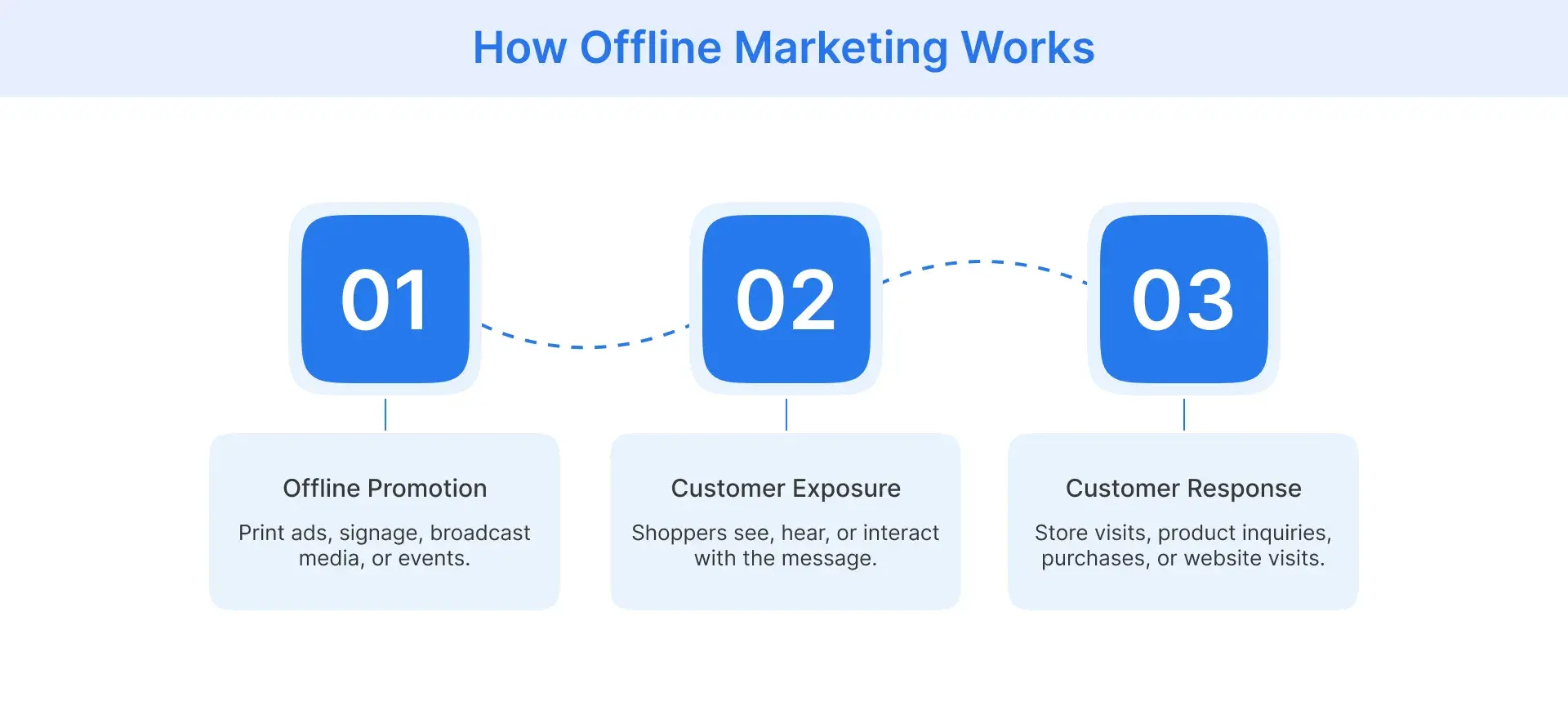
Offline marketing works by delivering promotional messages to potential customers through physical locations, traditional media, and face-to-face interactions. Retailers use channels such as store displays, printed materials, and local events to reach shoppers without relying on internet-based advertising.
For example, a retailer might display a weekend sale offer outside its store or distribute flyers in nearby neighborhoods. Customers who encounter the message may visit the store, inquire about a product, make a purchase, or look up the business online.
These interactions help connect marketing messages with customer actions, whether the purchase happens in a physical store or through an ecommerce website.
What Are the Different Types of Offline Marketing?
Retailers use different offline marketing channels depending on their target audience, location, and campaign objectives. Each method offers a different way to reach potential customers through physical spaces, traditional media, or direct interactions.
- Print advertising: This involves placing ads in newspapers, magazines, and other printed publications. Retailers can use print ads to promote store openings, special discounts, or new products to readers in a particular area.
- Direct mail: Retailers send physical marketing materials, such as postcards, catalogs, flyers, or coupons, to customers’ mailing addresses. For example, a local furniture store might distribute discount coupons to households in nearby neighborhoods.
- Out-of-home advertising (OOH): This form of offline advertising includes billboards, transit advertisements, posters, and other promotional displays in public spaces. Retailers can use these placements to build brand awareness or direct shoppers toward nearby stores.
- Television and radio advertising: Retailers promote products or offers through TV commercials and radio advertisements. Local broadcasts can help businesses reach audiences within specific geographic areas, while national campaigns can support wider exposure.
- Event marketing: Retailers participate in trade shows, local events, pop-up experiences, or product demonstrations to interact with potential customers. These activities allow shoppers to ask questions, examine products, and sometimes try product samples before purchasing.
- In-store marketing: This involves promotional activities within a retail store, including product displays, shelf signage, and checkout offers. Point-of-sale marketing, for example, uses displays or incentives near checkout areas to draw attention to products as customers complete their purchases.
Retailers may use several of these offline marketing methods together, depending on the customers they want to reach and the type of campaign they are running.
What Are the Benefits of Offline Marketing for Retailers?
Offline marketing helps retailers connect with potential customers through physical spaces, traditional media, and personal interactions. Depending on the channels used, it can support several business objectives.
- Increase local brand awareness: Storefront signage, local advertising, and community events can help retailers become more visible to shoppers in their area. Repeated exposure may also improve brand recognition among nearby customers.
- Reach customers beyond digital channels: Offline marketing allows retailers to reach people who may not encounter their social media posts, search ads, or other online campaigns. This can expand their reach beyond audiences already engaging with the business online.
- Build stronger customer relationships: Face-to-face interactions give retailers opportunities to answer questions, understand customer needs, and provide personalized assistance. These experiences can help build trust and encourage brand loyalty.
- Encourage store visits: Local promotions, outdoor advertisements, and in-store events can attract shoppers to physical retail locations. A well-placed advertisement may also introduce a nearby store to people who were previously unaware of it.
- Support product discovery and hands-on experiences: Product demonstrations and sampling allow customers to examine, try, or experience items before purchasing. This is particularly useful for products whose features, quality, or suitability are easier to assess in person.
- Reinforce broader marketing campaigns: Offline activities can complement online marketing efforts by presenting consistent offers and brand messages across different channels. For example, an in-store promotion can reinforce a campaign customers have already encountered online.
What Are the Challenges of Offline Marketing?
Offline marketing can help retailers reach customers through physical and traditional channels, but measuring results and managing campaigns can present challenges. The extent of these difficulties depends on the marketing methods, target audience, and campaign objectives.
- Measuring campaign performance: It can be difficult to determine how many purchases or store visits result directly from an offline advertisement. For example, shoppers may see a billboard and visit a store days later, making it harder to attribute the sale to that specific campaign.
- Estimating audience reach: Retailers may have limited information about who sees a printed advertisement, billboard, or promotional display. This can make it harder to assess whether the campaign is reaching the intended audience.
- Managing production and distribution costs: Printing flyers, producing promotional materials, purchasing advertising space, or organizing events can involve upfront expenses. Costs vary depending on the channel, campaign size, and geographic coverage.
- Making changes after launch: Some offline marketing materials are difficult to update once distributed or displayed. For example, correcting an offer printed on thousands of flyers may require additional production and distribution.
- Selecting suitable marketing channels: A campaign may reach the wrong audience if retailers choose advertising locations or publications that do not match their target customers. Even a well-designed message may deliver limited results if the channel is unsuitable.
- Maintaining consistent messaging: Retailers running campaigns across stores, printed materials, and digital platforms may struggle to keep promotional details consistent. Differences in pricing, offer dates, or eligibility conditions can confuse customers and affect their experience.
What Are Some Examples of Offline Marketing in Retail?
Offline marketing takes different forms depending on a retailer’s products, location, and target customers. The following examples show how businesses can use offline marketing activities to attract shoppers and encourage purchases.
- Local newspaper promotions: A neighborhood grocery store places an advertisement in a local newspaper to promote weekend discounts on fresh produce and household essentials. The campaign aims to reach nearby residents and encourage them to visit the store during the sale.
- Storefront displays: A fashion retailer creates a window display featuring its new seasonal collection. By showcasing selected outfits and accessories, the display can attract passersby and encourage them to enter the store to explore the products.
- Product sampling: A food retailer offers free samples of a newly introduced snack during a local shopping event. Customers can try the product before purchasing, helping the retailer introduce the item and encourage product trials.
- Direct mail campaigns: A home improvement retailer sends printed catalogs featuring seasonal products and promotional offers to households in its service area. The campaign helps customers discover relevant products and gives them a reason to visit the store or make a purchase.
- In-person product launches: An electronics retailer hosts a product launch where shoppers can test new headphones, compare features, and ask questions. The event creates an opportunity for direct customer engagement and helps shoppers make informed purchase decisions.
These examples illustrate how offline marketing can support different retail objectives, from attracting local shoppers to introducing products and encouraging purchases.
What Is the Difference Between Offline and Online Marketing?
The main difference between offline and online marketing is how businesses reach and engage their target audience. Offline marketing uses physical and traditional channels, such as print ads, direct mail, and billboards, while online marketing relies on internet-based platforms, including websites, search engines, social media, and email.
Both approaches can help retailers attract customers and promote products, but they differ in how campaigns are delivered, targeted, measured, and adjusted.
|
Offline Marketing vs. Online Marketing |
||
|---|---|---|
|
Aspect |
Offline Marketing |
Online Marketing |
|
Marketing channels |
Print ads, direct mail, billboards, television, radio, and in-store promotions. |
Websites, search engines, social media, email, and digital advertising. |
|
Audience targeting |
Reaches audiences through geographic locations, publication readership, or selected mailing lists. |
Can target users based on factors such as location, interests, search activity, and online behavior. |
|
Customer interactions |
Encourages in-person conversations, phone inquiries, store visits, and physical product experiences. |
Enables interactions through website visits, clicks, online chats, comments, and digital purchases. |
|
Performance measurement |
Uses indicators such as store foot traffic, coupon redemptions, surveys, and sales trends, though attribution may be limited. |
Uses digital analytics to track impressions, clicks, conversions, and other measurable customer actions. |
|
Campaign flexibility |
Some campaigns require additional production or distribution to change after launch. |
Digital campaigns can often be updated or adjusted more quickly after launch. |
Neither approach is inherently more effective. The right choice depends on the retailer’s target customers, campaign objectives, available budget, and the channels most likely to reach them.
How Can Retailers Combine Offline and Online Marketing?
Retailers can combine offline and online marketing by connecting physical advertisements and in-person experiences with their online presence, including ecommerce websites and social media. This allows customers to discover products through one channel and continue engaging with the business through another.
Here are some ways retailers can connect both approaches:
- Use QR codes on physical materials: Retailers can add QR codes to flyers, posters, product packaging, or store displays. When scanned, these codes can direct shoppers to product pages, online catalogs, or promotional offers.
- Connect offline advertisements to online promotions: A printed advertisement can include a campaign-specific website URL or promotional code that customers can use when shopping online. For example, a furniture retailer might distribute catalogs featuring an exclusive discount code redeemable on its ecommerce website.
- Keep promotional messaging consistent: Retailers running campaigns across physical stores, social media, and ecommerce websites should communicate the same offer details, including prices, promotional dates, and eligibility conditions. This helps customers understand what to expect regardless of where they encounter the campaign.
- Extend in-person interactions through digital channels: Retailers can encourage customers who attend product launches, trade shows, or local events to explore additional product information online. With customers’ permission, they can also use email marketing to share relevant updates or follow up after an event.
Combining these activities can help retailers create more connected shopping experiences while giving customers different ways to discover products, engage with offers, and make purchases.
How Can Retailers Plan Effective Offline Marketing Campaigns?
An offline marketing strategy involves choosing the right audience, channels, and promotional activities while managing costs and measuring results. The following steps can help retailers develop campaigns that align with their business goals.
-
Define clear campaign objectives. Decide what the campaign should achieve, such as increasing store foot traffic, promoting a new product, generating inquiries, or improving local brand awareness. Set measurable goals to help evaluate its performance.
-
Identify the target audience. Consider the customers most likely to respond to the campaign, including their location, shopping preferences, and product needs. This helps retailers determine where and how to reach potential customers.
-
Select suitable channels and locations. Choose offline marketing methods that match the audience and campaign objectives. For example, a neighborhood retailer might use local newspapers or flyers, while a larger business may consider billboards, trade shows, or radio advertising. Placement should reflect where the intended audience is likely to encounter the message.
-
Set a budget and prepare campaign materials. Account for advertising placements, printing, distribution, event costs, and any staffing requirements. Confirm that promotional materials are ready and arrangements are in place before the campaign begins.
-
Develop a clear message and call to action. Explain the offer or product benefit in language customers can understand. Include relevant details, such as promotional dates, store locations, and what shoppers should do next, whether that means visiting a store, making an inquiry, or redeeming an offer.
-
Measure results and evaluate performance. Use campaign-specific coupon codes, QR code scans, changes in store foot traffic, and sales trends to assess customer responses. Compare the results with campaign costs and objectives to estimate return on investment (ROI). Since offline customer journeys are not always directly traceable, these measurements may indicate campaign impact without proving that every sale resulted from a particular advertisement.
Retailers can use these findings to improve channel selection, promotional messaging, and budget allocation for future offline marketing campaigns.
Conclusion
Offline marketing gives retailers opportunities to reach customers through local advertising, physical spaces, and direct interactions. Its effectiveness depends on choosing suitable channels, delivering relevant messages, and understanding how customers respond.
To make offline marketing campaigns more effective, retailers should:
- Choose channels that align with their target audience and campaign objectives.
- Give customers clear reasons to engage, whether through store visits, product trials, or promotional offers.
- Measure results using indicators such as coupon redemptions, foot traffic, and sales trends.
For retailers connecting offline campaigns with digital customer engagement, Flipkart Commerce Cloud’s Omnichannel CRM software helps centralize communications across email, SMS, WhatsApp, and notifications, while providing engagement insights across these channels.
Book a demo to see how FCC can help your team coordinate customer communications and track engagement as shoppers interact with your business online.

FAQ
Offline marketing and traditional marketing are closely related, but they are not exactly the same. Traditional marketing generally refers to established channels such as print media, TV commercials, radio spots, direct mail, and billboards. Offline marketing also includes in-person promotions and events that reach consumers outside the digital world.
Local brick-and-mortar stores, boutique shops, and neighborhood retailers benefit particularly from offline marketing. These local businesses rely heavily on foot traffic and community awareness, making targeted offline marketing tactics like direct mailers, store signage, and neighborhood event sponsorships useful for reaching their local target market.
Yes, ecommerce businesses can successfully use offline marketing without maintaining a physical storefront. Pure-play digital brands often use offline media like package inserts, direct mail catalogs, and promotional items containing QR codes to capture customer attention in person and direct recipients to their online store.
Low-cost offline marketing methods for a small business include distributing flyers, leaving business cards at partner locations, and distributing promotional postcards locally. Retailers can also partner with non-competing merchants to share printing or event costs, using these activities alongside online posts in simple multichannel campaigns.
In an offline marketing advertisement, retailers should include a clear headline, eye-catching imagery, a compelling offer, and a direct call to action. Additionally, merchants must feature essential contact information, such as a physical store address, phone number, website URL, or email address, to guide prospective buyers seamlessly.